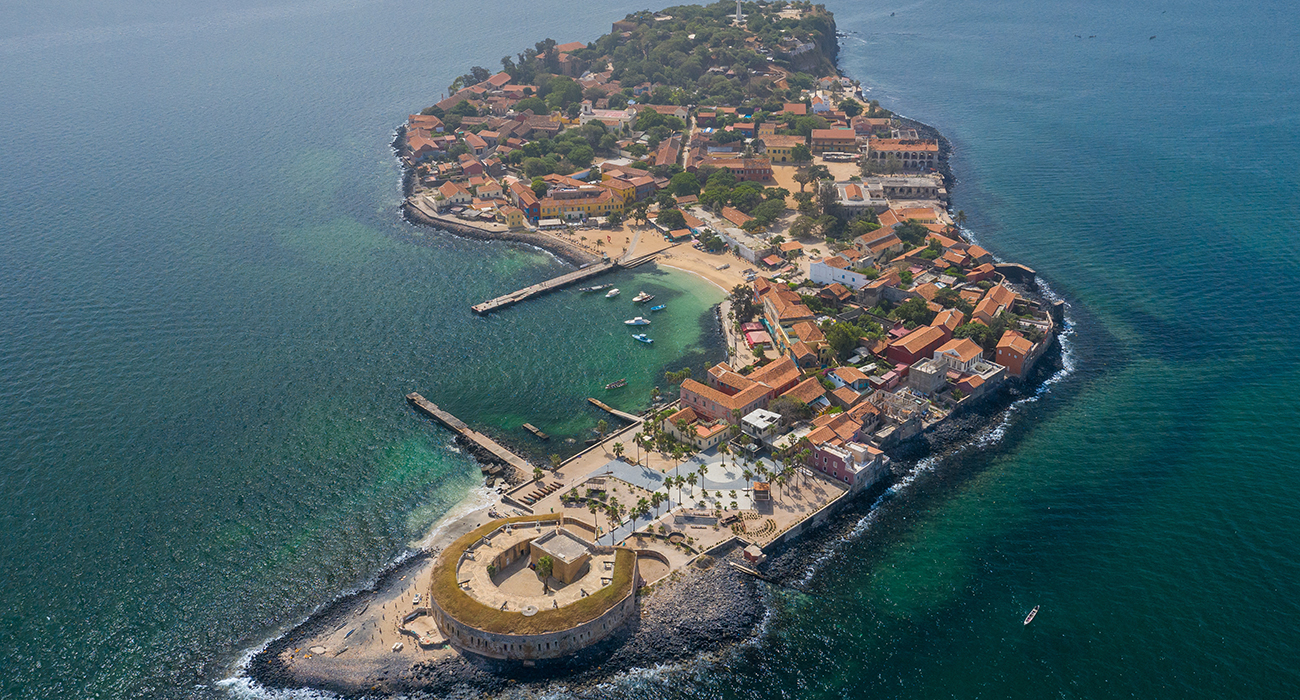
Located just 3 km off the coast of Dakar, Gorée Island is one of the most visited heritage and memorial treasures of Senegal and West Africa. Listed as a UNESCO World Heritage Site in 1978, it is the quintessential “memory island,” attracting thousands of visitors each year from around the world, coming to walk in the footsteps of a harrowing past: that of the transatlantic slave trade.
Accessible by a 20-minute ferry ride from the port of Dakar, Gorée also charms with its postcard-perfect scenery: cobblestone streets, ochre or pastel houses, bougainvillea, beaches, and art galleries offer a striking contrast to the memory of past suffering. A true museum island and living village, Gorée combines the duty of remembrance, cultural discovery, island tranquility, and unforgettable human encounters.
A past marked by the slave trade
From the 15th to the 19th century, Gorée was successively Portuguese, Dutch, English, and French, with each power exploiting the island’s strategic position as a transit point for trade (gold, gum, ivory) and especially slaves.
The House of Slaves, built in the 18th century by Nicolas Pépin, the paternal uncle of the signare Anna Colas Pépin. She later became the owner of the building, which remains the most moving witness to this past of the slave trade: its low cells, the “Door of No Return,” the shackles, and the courtyard all recall a dark chapter of world history. Between 900 and 1,500 captives passed through annually before being shipped to the Americas; in total, tens of thousands passed through Gorée, Saint-Louis, and other Senegalese ports.
Archives also recount resistance, revolts aboard ships, exchanges with local kingdoms, human tragedies, and the disrupted lives of men, women, and children sold or captured.
The Museums of Gorée
- The House of Slaves
An essential site of remembrance, now a museum and global sanctuary for the African diaspora. Testimonies, artworks, and messages throughout the tour encourage reflection and intergenerational transmission. - The Historical Museum of Gorée (Fort d’Estrées)
A dominant fortification built by the French, it traces the history of the island and Senegal, from prehistory to independence (tools, weapons, everyday objects, models…). - The Castel
A defensive plateau offering breathtaking views of Dakar and the sea: remnants of cannons, cisterns, and walls; ideal for understanding the island’s topography and defensive strategy.
A village with timeless charm
Along its cobblestone streets, Gorée exudes a peaceful atmosphere: colorful facades, blue shutters, art galleries and painters’ studios, schools, and small craft shops. Every step resonates with the nostalgic charm of colonial houses. Bougainvillea, free-roaming cats, and the comings and goings of residents (Goréens attached to their island and strong cultural identity) remind visitors that outside visiting hours, the island lives quietly away from the crowds.
The beach and local life
Beyond its solemn and festive dual image, Gorée preserves a family-friendly beach where children dive, families share meals, and fishermen repair their nets.
You can find impromptu concerts, beach soccer tournaments, temporary art exhibitions, and the constant kindness of locals guiding visitors in their discoveries. This duality – duty of remembrance and contemporary vitality – contributes to Gorée’s unique identity.
What to do on Gorée Island?
- Visit the House of Slaves: understand the universal history of the slave trade.
- Explore Fort d’Estrées / Historical Museum.
- Stroll through the streets, admire architecture, artists’ studios, and souvenir shops.
- Climb to the Castel at sunset: exceptional panorama of Dakar, surrounding islands, and the endless ocean.
- Enjoy the beach for swimming, lunch, or conversations with Goréens.
- Stop at the slave house or bookstores to deepen your visit from a literary or cinematic perspective.
Local anecdotes and living memory
- In the streets, children play “chase” and always run back to the House of Slaves, as if to dispel the shadows of history through play.
- The “signares,” free mixed-race women with significant economic and social power during colonization, are still honored in some island families.
- Some local guides are true storytellers, enriching the visit with anecdotes, tales of resistance, poems, or poignant songs.
Practical information
- Access: ferry every 30–60 minutes from Dakar port, 20-minute crossing.
- Hours: Departures from 7 a.m. to 11 p.m.; be aware of high traffic during holidays/weekends.
- Recommended duration: half a day for main museums; a full day to enjoy the atmosphere, relaxation, and encounters.
- Fare: approx. 5,200 FCFA (8 €) round-trip ferry (discounted for nationals and residents).
- Accommodation: overnight in guesthouses or boutique inns (reservation recommended during busy periods).
- Services: a few restaurants, craft markets, official multilingual guides, tourist concierge, water points, supervised beaches.
- Best period: year-round, but December–April = peak, remember to book ferry or accommodation.