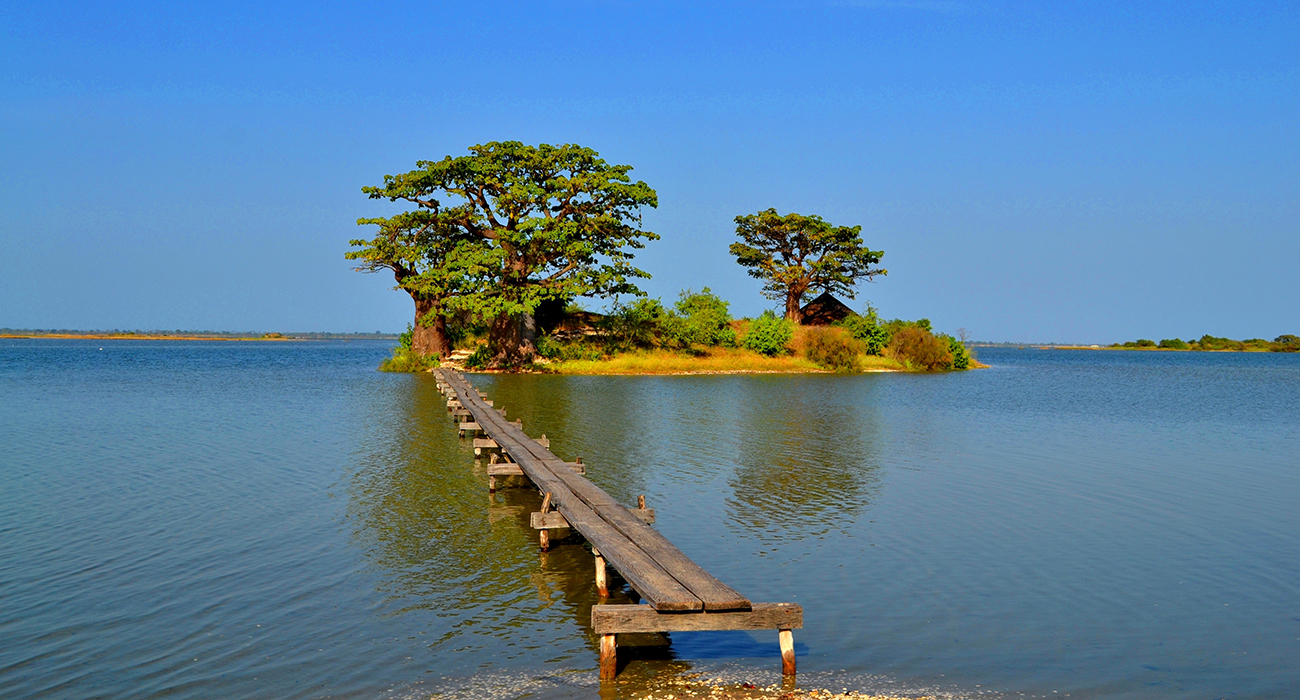
About 150 km south of Dakar, the Sine-Saloum Delta stands out as one of West Africa’s most fascinating ecosystems and one of Senegal’s most authentic destinations. Classified as a UNESCO Biosphere Reserve (1980) and a Ramsar site, this delta, formed by the confluence of the Sine and Saloum rivers, covers over 180,000 hectares. It is a land between river and sea, made up of bolongs (winding channels), lush mangroves, baobab forests, mysterious islands, and stilted villages. But Sine-Saloum is not limited to its exceptional landscapes: it also embodies the world of Serer, Mandinka, and Fula traditions maintained for centuries, where spirituality, music, artisanal fishing, livestock farming, salt processing, and crafts shape daily life.
History and culture
The delta was long the center of the Serer kingdoms of Sine (Diakhao) and Saloum (Kahone), whose “priest-kings” derived prestige and authority from their unique relationship with the surrounding waters and nature.
Villages, often built on stilts or isolated islets, are still the scene of animist rituals, initiation dances, agricultural festivals, and sacred fishing ceremonies. Here, traditional agriculture coexists with artisanal fishing, salt harvesting, and mangrove oyster collection. Crafts, batiks, mats, stilt granaries, and shell jewelry reflect skills passed down through generations, rooted in an environment that is both generous and fragile.
Landscapes and biodiversity
Sine-Saloum is a spectacular patchwork:
- Mangroves: dense forests of mangrove trees, serving as nurseries for fish, crustaceans, and birds.
- Bolongs: saltwater channels winding through the islands and savannah, ideal for discreet wildlife observation.
- Islands: around 200, some inhabited (Mar Lodj, Dionewar…), others wild and home to endemic species.
- Savannahs, forests, lagoons: habitats for diverse wildlife, from monkeys to dolphins, manatees to warthogs.
The biodiversity is impressive:
- Birds: over 400 species – pelicans, flamingos, herons, terns, egrets, ibises, African raptors. The delta is a major site for global ornithology.
- Mammals: monkeys, hyenas, warthogs, dolphins, manatees (rarer).
- Aquatic life: barracudas, carp, thiof, snappers, shrimp, oysters – supporting abundant fishing essential to local cuisine.
Must-Do activities
- Pirogue Ride: iconic delta experience – glide silently along mangrove-lined bolongs at sunrise or sunset.
- Birdwatching: spot migratory species during the dry season; binoculars recommended for flamingos, spoonbills, or fishing eagles.
- Sport Fishing: the delta attracts enthusiasts worldwide for its legendary fish.
- Hiking and Ecotourism: explore on foot or horseback through savannahs and islands; local guides are expert naturalists and storytellers.
- Cultural Experiences: visit Serer villages, join festivals, learn crafts, and see stilted millet granaries.
Key places in Sine-Saloum
- Mar Lodj Island: authentic village beneath baobabs, rich traditions, eco-lodges and campsites.
- Ndangane & Toubacouta: main departure points to explore bolongs; friendly lodges, markets, and birdwatching stops.
- Bird Island: reach by pirogue to observe thousands of terns and pelicans during nesting season.
- Fadiouth Island: see the Joal-Fadiouth section, famous for its shell-covered island.
Sine-Saloum Anecdotes
- In Mar Lodj, the village blessing involves circling the large kapok tree three times for luck and protection.
- A legend says that on every new moon, children can see “dancing” manatees haunting the waters for one night.
- During the dry season, “piroque competitions” animate the rivers: crews compete with songs and paddle rhythms before an improvised riverside jury.
- Many travelers recall being invited to taste monkey bread juice offered by village chiefs during major festivals – a warm welcome guaranteed.
Practical Information – Sine-Saloum
- Location: Between Joal-Fadiouth (north) and the Gambian border (south), Fatick region.
- Access: 3–4 hours by road from Dakar / 2 hours from Saly; roads and tracks may be sandy, collective transport or car rental with driver recommended.
- Recommended Duration: 2–3 days to fully explore bolongs, islands, villages, and enjoy the atmosphere.
- Accommodation: traditional village campsites, eco-lodges (Mar Lodj, Toubacouta, Simal…), some hotels in Foundiougne or Sokone.
- Best Time to Visit: dry season (November–May) for migratory birds, better road conditions, and livelier villages.
- Services: local guides, pirogues, markets, village festivals, conservation centers, birdwatching excursions.