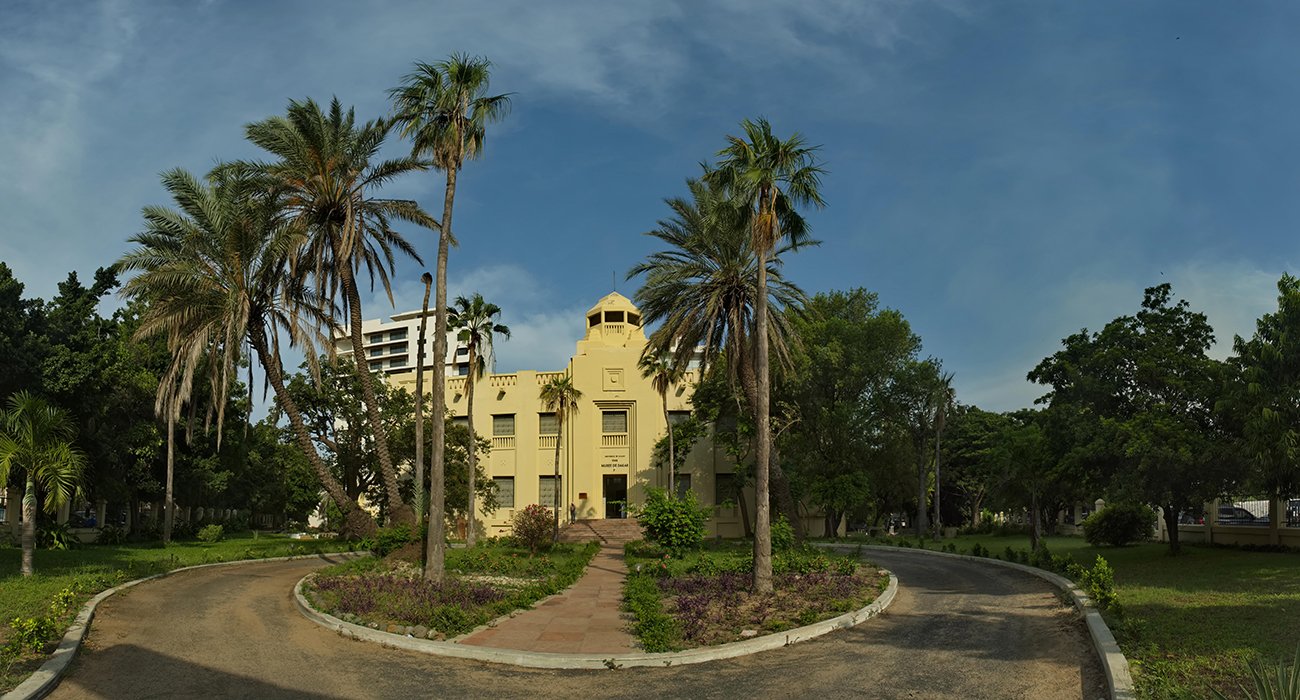
Located at Soweto Square, in the heart of the Plateau district in Dakar, the Théodore Monod Museum of African Art (formerly the IFAN Museum) is one of the oldest museums in West Africa and one of the most prestigious on the continent. Founded in 1938, it is dedicated to the arts and traditions of West Africa and houses nearly 9,000 objects (masks, statues, jewelry, textiles, instruments, ritual objects). Its name honors the eminent French ethnologist and naturalist Théodore Monod, who served as its iconic director and shaped its scientific and museological direction. It is a must-visit for anyone wishing to understand the richness of traditional African heritage.
History and identity of the museum
The museum was established in 1938 as a branch of the Institut Fondamental d’Afrique Noire (IFAN), in a Neo-Sudanese style building constructed in 1931–1932, formerly the palace of the commander of the Dakar district.
Initially, it served to collect and preserve African art with a scientific and museographical approach, quickly becoming a reference center in ethnology, particularly thanks to field missions carried out throughout West Africa.
In 2007, the institution was renamed in honor of Théodore Monod, the scholar who dedicated his life to studying and promoting African and Saharan societies and arts, and to defending African heritage against looting and colonization.
Architecture and organization
The museum occupies two main buildings in Neo-Sudanese and colonial styles, set within a landscaped garden.
- Building A (the oldest, 1932): houses the collection reserves, permanent exhibition on the ground floor (ritual objects, major masks), first-floor room for temporary exhibitions.
- Building B (added in 1991–1992): contemporary gallery for temporary exhibitions, conference room, hall for cultural events.
The museum also has a rare tropical garden in Dakar and educational and scientific spaces (workshops, studios). Its atmosphere is both intimate and academic, very different from the monumental and modernist style of the Musée des Civilisations Noires.
Collections and exhibitions
- Masks and Statues: The mask collection is exceptional, covering Dogon, Bamileke, Senufo, Bambara, Serer, and Diola societies… Also includes figurines and ancestor statues, stools, doors, and sculpted narratives from Mali, Nigeria, Ivory Coast…
- Ritual Objects: Fetishes, altars, divination statuettes illustrate the diversity of African spiritual practices, from ancestor worship to initiatory religions.
- Musical Instruments: Djembes, balafons, koras, sabar drums, hunting or circumcision instruments, highlighting the central role of music.
- Textiles and Adornments: Woven cloths, beads, jewelry, traditional hairstyles… reflecting the importance of adornment in African societies.
- Unexhibited Collections: Over 600 m² of storage with rarely seen items, supplying temporary exhibitions.
- Temporary Exhibitions: Regular exhibitions featuring contemporary artists or cultural themes (Dakar Art Biennale, Sahelian art, etc.).
Scientific and cultural role
The Théodore Monod Museum remains closely linked to scientific research (legacy of IFAN and Monod):
- Serves as a reference for researchers, students, anthropologists, and musicologists worldwide.
- Functions as an educational space, regularly visited by students, school groups, and workshops.
- Collaborates with numerous African, European, and American institutions and participates in the Dakar Biennale and multiple heritage promotion projects.
Anecdotes / Highlights
- Some of the museum’s collections were originally displayed in Paris as early as 1865, even before effective colonization.
- The Senufo and Dogon mask collection is one of the rarest in the world, acquired during ethnological missions from the 1940s–1960s.
- Théodore Monod sometimes slept in the museum or at collection sites to “keep the soul of the objects,” according to those close to him.
- Some educational workshops allow children to make their own papier-mâché masks.
- The museum building was briefly used by the colonial administration of French West Africa; today, debates among curators and researchers aim to “decolonize” the approach and highlight African communities’ voices.
What to do at the Théodore Monod Museum
- Explore the exceptional mask collection to understand their initiatory and ritual roles in African societies.
- Discover ritual objects and fetishes illustrating the link between art, spirituality, and daily life.
- Learn the history of instruments, admire textiles and adornments from both aesthetic and anthropological perspectives.
- Visit a temporary exhibition (contemporary art or ethnography) during the biennale or cultural cycles.
- Compare the experience with the Musée des Civilisations Noires to grasp the diversity of perspectives on ancient and modern Africa.
Practical information
- Location: 1, Soweto Square, Plateau, Dakar
- Access: Taxi or on foot from downtown, near the MCN.
- Hours: Tuesday to Sunday, 9:00–17:00 (closed Monday).
- Admission: 2,000–3,000 FCFA (3–5 €), reduced rates for youth and school groups.
- Recommended Duration: 1.5–2 hours to fully enjoy; audio guides sometimes available for major exhibitions.
- Services: Shop, educational workshops, conference room, tropical garden, temporary exhibition program.