Geography: relief, flora, climate, population, area
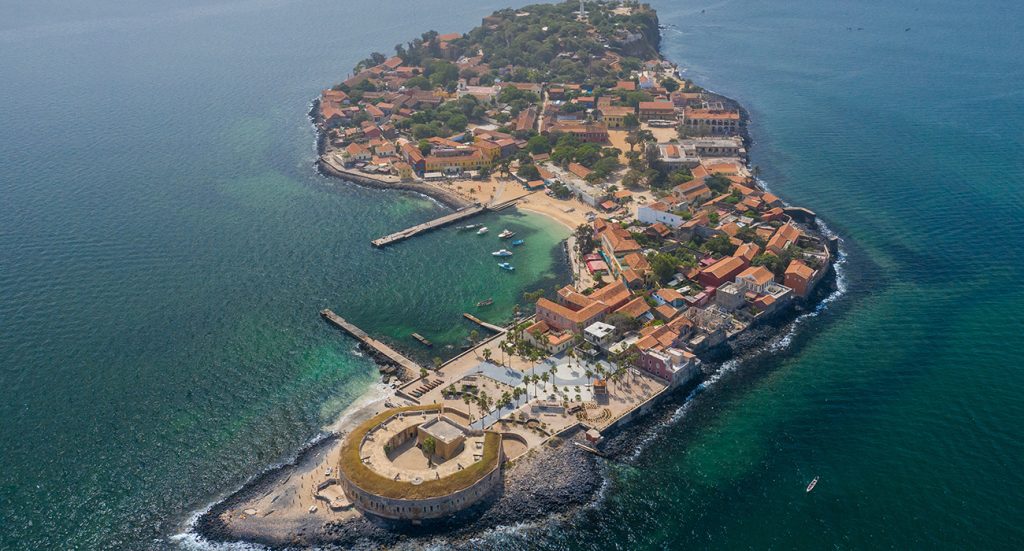
Joal-Fadiouth is located in the Thiès region, in the M’bour department, at the southern end of the Petite-Côte, a little over 110 km southeast of Dakar. The municipality stretches between Joal, situated on a sandy coastal strip, and Fadiouth, a shell island connected to the mainland by a bridge, at the heart of a tidal lagoon system.
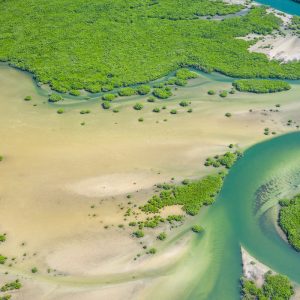
The terrain is generally flat, dominated by the coastal spit, the lagoon, salt flats, and bolongs, with a few slightly elevated points occupied by buildings or dikes. A large part of the municipal area is periodically flooded, shaping land use and the distribution of settlements.
The climate is coastal Sahelian with a semi-arid tendency, featuring a dry season from November to April, moderated by the maritime trade winds, and a wetter rainy season from July to October. Temperatures are generally mild during the dry season, making it the most pleasant time for tourist visits.
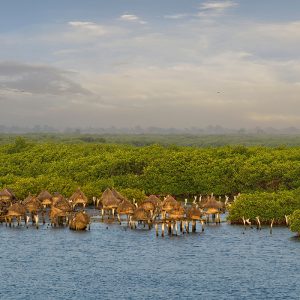
The flora is dominated by mangroves, mangrove trees, seagrass beds, and bush formations on slightly higher ground. This mosaic of habitats serves as an important nursery for fish, crustaceans, and waterbirds, forming a core part of the local fishing economy.
The municipality covers about 50 km², a significant portion of which is occupied by the lagoon and flood-prone areas. Its population is estimated at several tens of thousands, mainly Serer, with high density and visible coexistence between Christian and Muslim communities.
Urbanism and cityscape
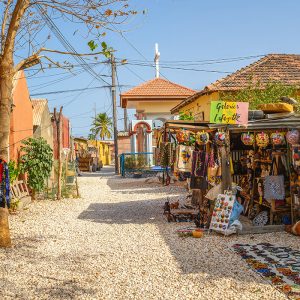
Joal stretches lengthwise along the coastal strip, structured by the coastal road, residential neighborhoods, and zones dedicated to fishing and port activities. Housing consists of individual homes, family compounds, and small sandy streets leading to the beach, landing sites, and markets.
Fadiouth, for its part, features a dense urban fabric of narrow streets, houses partially built on shell mounds, squares, and religious buildings. The island is organized into traditional districts, regulated by community structures and councils of elders that play a role in social and customary governance.
The city–lagoon interface is a major urban planning challenge: the expansion of housing into low-lying areas, fragile banks, erosion, and rising water levels require the municipality to develop adaptation strategies. At the same time, protecting the mangroves and regulating fishing and tourism activities are central local concerns.
Politics and Mayor of Joal-Fadiouth
Joal-Fadiouth is a fully functioning municipality in the Thiès region, part of the Sindia arrondissement in the M’bour department. It has a municipal council responsible for planning, urban services, fisheries management, tourism, and the environment.
The municipality is led by Ms. Aïssatou Sophie Gladima, the first female mayor of Joal-Fadiouth, elected in the latest local elections and also known for holding national ministerial positions. The mayor prioritizes attracting tourists, promoting heritage, combating coastal erosion, and modernizing infrastructure.
Local authorities work with the state, NGOs, and technical partners on projects related to coastal resilience, support for artisanal fishing, and promotion of lagoon ecotourism. This multi-stakeholder governance aims to balance economic development, environmental protection, and the preservation of Serer cultural identity.
Must-see sites and monuments
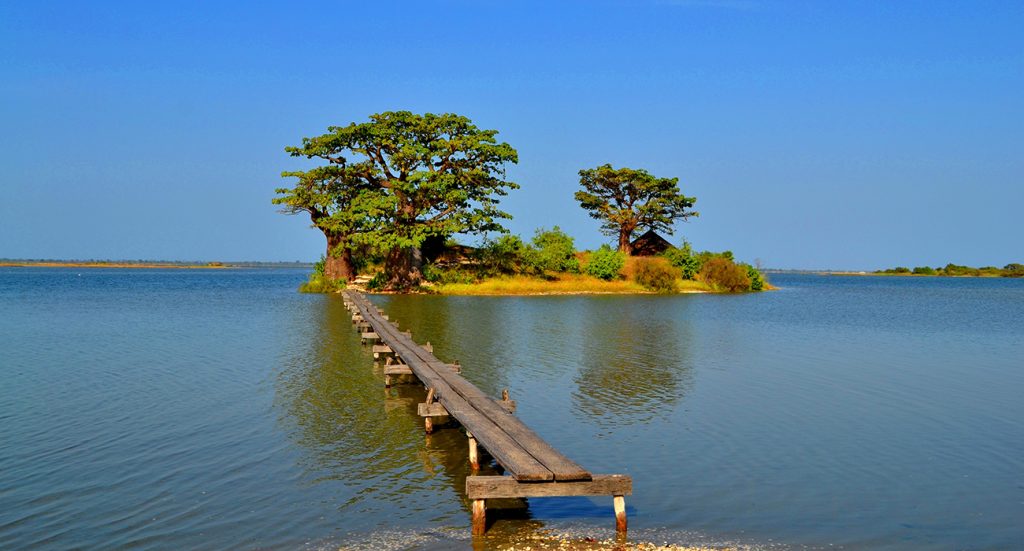
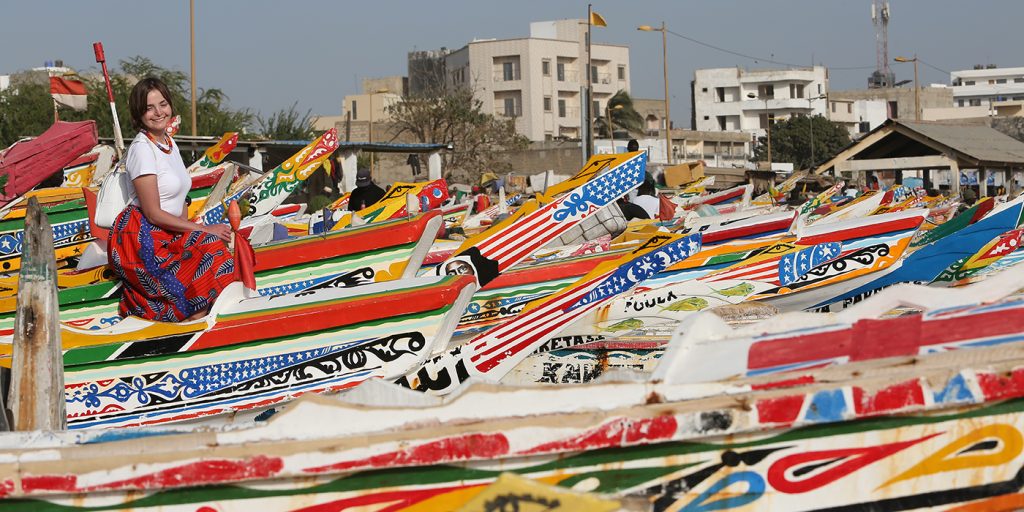
Fadiouth Island, nicknamed the “island of shells,” is the municipality’s emblematic site, entirely made up of accumulated shell mounds over centuries. It is accessible via a long wooden pedestrian bridge, several hundred meters in length, offering panoramic views of the lagoon, pirogues, and shell banks.
The mixed cemetery of Fadiouth, covered with shells, houses Christian and Muslim graves side by side, making it a strong symbol of tolerance and religious coexistence. Located on a separate islet accessible via a second bridge, it also offers remarkable views of the island and surrounding mangroves.
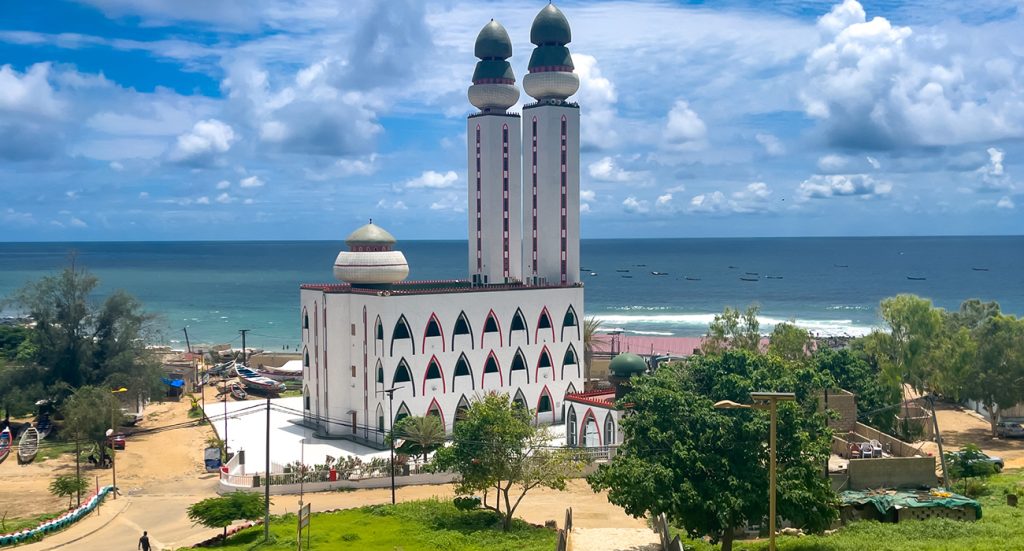
The Fadiouth church and the nearby mosque, sometimes photographed together, strikingly illustrate peaceful coexistence on a small territory. The Saint-François-Xavier Church, relatively recent, stands out for its simple architecture and large attendance during major Christian holidays.
The birthplace of Léopold Sédar Senghor, converted into a memorial and small museum (Mbïnd Diogoye), retraces the life and work of the poet-president as well as local history. Located in Joal, the 19th-century building, painted green and white with symbolic decorations, houses documents, photos, and objects related to Senghor.
The mangroves and bolongs of Joal are another major attraction, accessible by pirogue for rides among the mangrove trees. This biodiversity-rich environment is ideal for birdwatching, discovering fishing practices, and learning about conservation issues.
Cultural events and local life
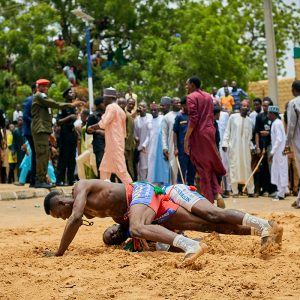
Serer culture strongly shapes social life in Joal-Fadiouth, with ceremonies linked to agricultural cycles, fishing, and ancestor worship. Some of these practices, even if discreet, can be partially observed with local guides, respecting prohibitions and community privacy.
Major Christian (Christmas, Easter) and Muslim (Korité, Tabaski) holidays involve masses, processions, prayers, and family gatherings, reinforcing Fadiouth’s image of harmonious coexistence. Village life is visible in the streets, around the church, the mosque, and gathering places.
Tourism has also led to thematic guided tours (on Senghor, the shell island, the mixed cemetery), sometimes accompanied by songs, stories, or artisan demonstrations. The municipality occasionally organizes cultural days or promotional activities to revive tourism while highlighting Serer identity and environmental richness.
Nearby attractions
North of Joal-Fadiouth is Ngazobil, known for its former Catholic seminary, historic buildings, a beach lined with filaos, and its role in Senegalese religious history. This stop can easily be combined with a visit to Fadiouth for travelers interested in Christian heritage and missionary history.
Joal-Fadiouth can also be included in a broader Petite-Côte itinerary, including Saly, Somone, and other seaside resorts. To the south, the road leads to Palmarin and the Sine-Saloum region, famous for its bolongs, ecotourism camps, and Serer villages.
Day trips or multi-day excursions allow visitors to explore the shell island, take pirogue rides in the mangroves, observe birds, and experience other Saloum villages. This makes Joal-Fadiouth a natural gateway to ecotourism in the Sine-Saloum delta.
Practical information
Joal-Fadiouth is accessible by car or public transport from Dakar via the Dakar–M’bour route, then the coastal road south, taking about two to three hours depending on traffic. Many excursions from Saly or Dakar offer guided day visits to Fadiouth, with or without a pirogue ride.
Accommodation is more limited than in large resorts, but there are guesthouses, camps, and small hotels, as well as more comfortable options in nearby towns. Dining highlights seafood (fish, shellfish) and classic Senegalese dishes, often served in small local eateries or family restaurants.
The best time to visit is generally from November to April during the dry season, when temperatures are moderate and heavy rain is less likely. Modest clothing is recommended for visiting churches, mosques, or the cemetery, and it is preferable to ask permission before photographing residents.
FAQ – Joal-Fadiouth
What is the best time to visit Joal-Fadiouth?The dry season, from November to April, offers more pleasant temperatures, lower humidity, and better conditions for pirogue excursions and island walks.
How much time should be planned on-site?Half a day is enough for a first look at Fadiouth, the bridge, the cemetery, and the church, but a full day allows visiting Senghor’s house and taking a pirogue ride in the mangroves.
Is Joal-Fadiouth suitable for families?Yes, distances are short and the pace is calm; just stay vigilant with children on bridges, in pirogues, and near the lagoon.
What are the must-see sites for a first visit?Fadiouth Island, the wooden bridge, the mixed cemetery, the church, the nearby mosque, Senghor’s birthplace, and a pirogue ride in the mangroves form the essential circuit.
How should one dress and behave?Modest clothing (covered shoulders and knees) is recommended for religious sites and the cemetery; discretion and asking permission before taking photos are highly appreciated by residents.
Can Joal-Fadiouth be visited on a day trip from Saly or Dakar?Yes, many agencies and guides organize day trips from Saly, M’bour, or Dakar, including transport, a guided tour of Fadiouth, and sometimes lunch or a pirogue ride.