Senegal & dance: from the sabar circle to the world stage
The word sabar means at once the Wolof drum, the dance it drives and the party where the two meet. The principle is simple and formidable. The drummers set up, the crowd forms a circle, and the dancers step in one after another for a short, fast dance made of jumps, kicks and flung arms. The lead drummer sets the rhythms, but a complicity develops between him and the woman dancing: he spurs her on, she challenges him, and the sequence ends sharply on a drumbeat. Sabar goes with weddings, naming ceremonies and neighbourhood parties.
It is first and foremost a women’s tradition: the men hold the drums, the women dance. Male dancers shine at it too, and in class the rule does not apply: men and women learn side by side.
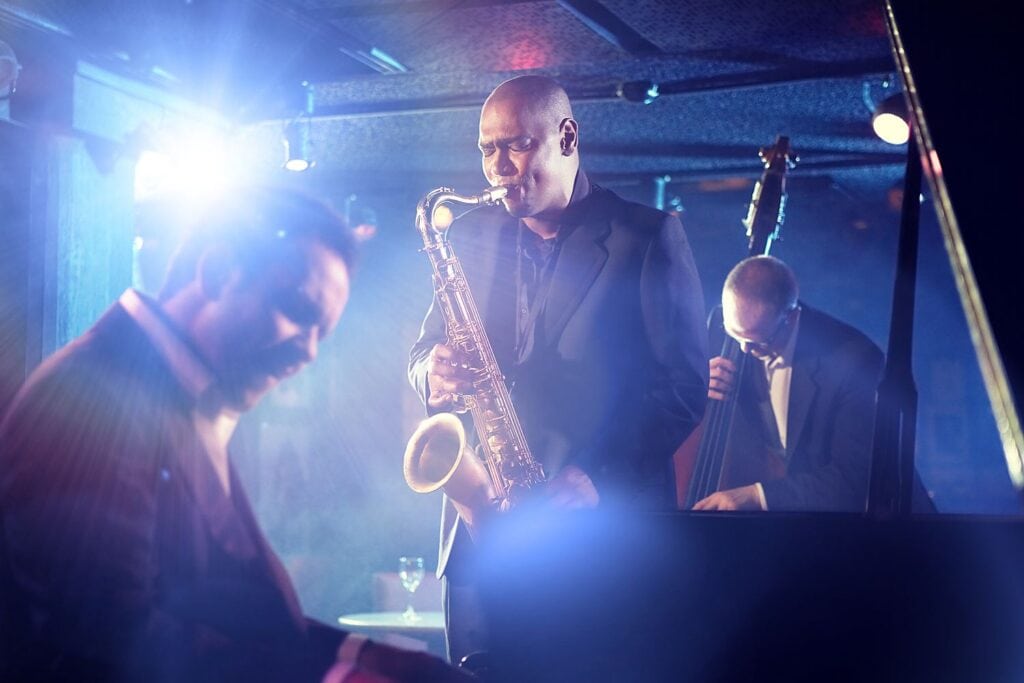
From sabar came mbalax, the popular music you will hear in every taxi. It emerged in the 1970s, blending sabar rhythms with soul, jazz and Latin music, sung in Wolof rather than French. Youssou N’Dour, who rose to fame with the Étoile de Dakar, took it to stages around the world. The dance followed: mbalax is danced in nightclubs as much as at weddings, with hip and knee movements locked onto the breaks of the drum.
The country is not just Wolof country. In Casamance, the Diola have their own dances, driven by the bougarabou drum, and a figure no one forgets once they have seen it: the kumpo. This mask, dressed in long fibres of palm leaves and topped with a stick planted on its head, spins in the middle of the circle to the cheers of the women. It comes out at festivals and some weddings. On stage, it is the “La Linguère” National Ballet that carries this heritage: part of the Daniel Sorano National Theatre company, founded in 1965 under Senghor, it has been touring the world for decades. Its name comes from the title lingeer, which means queen or princess in Wolof and Serer.
Senegal also gave Africa its grande dame of contemporary dance. Born in Benin in 1944, Germaine Acogny ran Mudra Afrique from 1977 to 1982, the dance school founded in Dakar by the choreographer Maurice Béjart with the support of President Léopold Sédar Senghor. There she forged her own technique of modern African dance, which starts from traditional movements to build a choreographic language. Later settling in Toubab Dialaw, on the coast south of Dakar, she trained generations of dancers from across the continent. She is known as the “mother of contemporary African dance”.
Formats: what you learn in class
Every class in the category is open to beginners. What changes is the style, the length and the way the price is worked out.
- The class in Dakar (1 hour): you choose your style from a wide range, from traditional and sabar to assiko, contemporary, afro-dancehall and hip-hop. There is a djembe option for children, and private lessons. The price is per person.
- The African dance class in Saly (2 hours): a long session to djembe and sabar rhythms, with an adult option and an option for 10 to 14-year-olds. The price is a flat rate for the session.
- The afro or hip-hop class in Rufisque (1 hour): one style of your choice, for up to ten people, from age 5. A flat rate for the group, handy for a family or a group of friends.
- Kizomba in Nguéniène (45 minutes): the partner dance born in Angola, to learn the posture, the basic steps and the art of leading and following. A flat rate for a couple, a pair or a small group.
- The djembe and sabar percussion class in Saly: also attached to this category, it takes you to the other side of the circle, the one that sets the rhythm.
Remember the difference: in Dakar, everyone pays for their own place; in Saly, Rufisque and Nguéniène, the flat rate covers the session, and it becomes very good value in a group.
Where to take a dance class in Senegal
- Dakar: the capital of sabar and mbalax, and the place with the widest choice of styles. A class fits in at the end of the day, and at the weekend you stand every chance of coming across a party where you can put it into practice.
- Rufisque: on the doorstep of Dakar, for afro and hip-hop in a small group, with children from age 5.
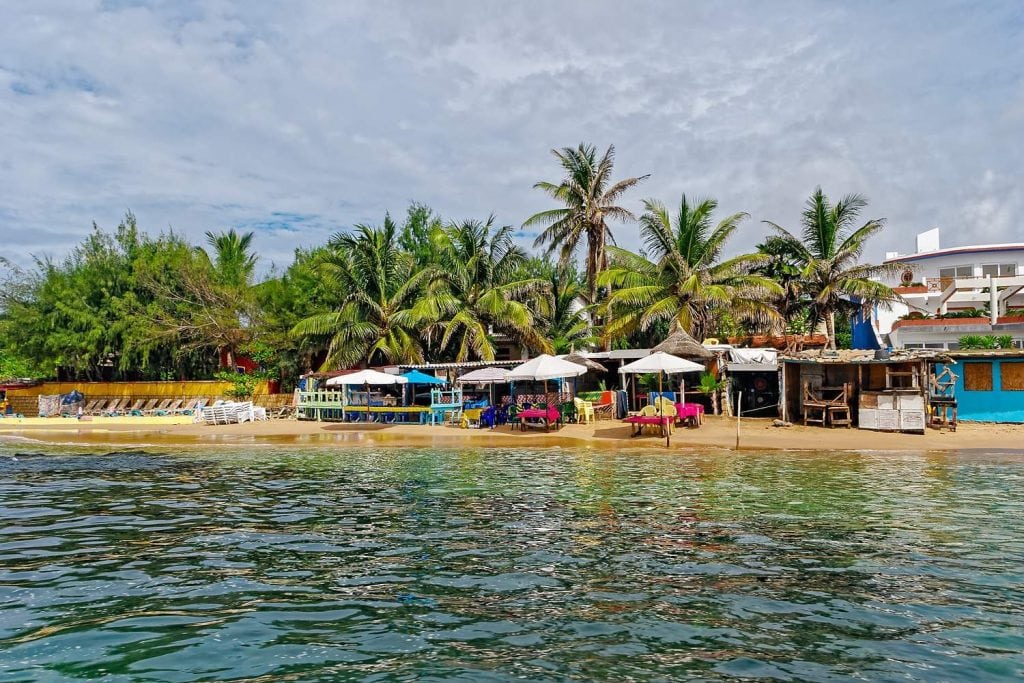
- The Petite Côte: Saly for African dance and percussion, and Nguéniène, a village in the Petite Côte hinterland, for kizomba. A session happily fills a late afternoon between two beach days.
- Toubab Dialaw: the village where Germaine Acogny settled, now a stopover for dancers from all over the world. The catalogue offers no classes there for now, but the stop makes sense if you have caught the dance bug.
- Casamance: the land of Diola dances and the kumpo, with no classes in the catalogue. To see them, aim for Abéné between Christmas and New Year, during its percussion and dance festival, with Kafountine as your base.
When to dance
You can take a class all year round. The dry season, from November to May, is the most comfortable: the air is less heavy and you will sweat less for the same effort. The rainy season (hivernage), July to October, is hot and humid; go for late-afternoon or early-evening slots. As for occasions, keep an eye on weekends: that is when neighbourhood parties and weddings bring the drums out into the street. And if Casamance tempts you, the last week of December is the week of the Abéné festival: book your accommodation well in advance.
Good to know & budget
No experience is required. Come in loose clothing you do not mind sweating in, with a bottle of water. Depending on the class, you dance barefoot or in trainers: sabar and traditional dances are often worked barefoot, afro and hip-hop with shoes on. Sabar is a real cardio workout, made of short, repeated jumps: if you have weak knees or a weak back, tell the teacher from the start. The first fifteen minutes are rarely elegant; that is normal, rhythm comes before style.
On Que Faire Sénégal, the price shown on each activity is the price of the class itself. Depending on the listing, it is per person or a flat rate for the session, and the listing always says which. You pay 20% to secure your booking (the booking fee). The balance is paid on site, on the day of the class. If you live in Senegal, you get the resident rate: up to 30% off (the exact rate is shown on each listing). For a dance class, there are no additional official fees.
Who is it for?
For the visitor, it is a key to understanding the whole trip. Take your class early in your stay: the day a circle forms in front of you at a wedding or in a street, you will recognise the drum’s call, and you might even dare to step in. The resident, on the other hand, has every reason to aim for regularity: one class a week for a few months, and you will no longer dance like a guest at your neighbours’ and colleagues’ celebrations. It is also an excellent way to exercise without thinking about it, and the resident rate makes the habit affordable. Families will find options from age 5 in Rufisque and for 10 to 14-year-olds in Saly. Couples will head to Nguéniène for kizomba, and groups of friends or colleagues will make the most of the flat rates for an outing that makes a change from dinners.
In February 2021, the Venice Dance Biennale awarded its Golden Lion for Lifetime Achievement to Germaine Acogny, then aged 76. The woman who had started out in Dakar looking for ways to bring traditional dances into dialogue with the contemporary stage was receiving one of the highest honours in world dance. Her technique, born in Senegal, links the village circle to the stage: that is exactly the path you travel, on your own scale, the day of your first class.
Frequently asked questions
Do you need to know how to dance to take a class?
No. Every class in the category welcomes beginners. You learn by imitation, step by step, and the teacher adapts the pace to the group.
What is sabar?
It is at once a Wolof drum, the dance it accompanies and the party where they meet. The dancers take turns stepping into the circle for a short, fast dance, in dialogue with the lead drummer. It is danced at weddings, naming ceremonies and neighbourhood parties.
Can men learn sabar?
Yes. At parties, sabar is traditionally danced by women, but male dancers have made a name for themselves in it, and the classes are open to everyone. Afro, hip-hop and kizomba are also taught in mixed groups.
Are there classes for children?
Yes: in Rufisque from age 5, in Saly with an option for 10 to 14-year-olds, and in Dakar with a djembe option for children. Each listing states the age and the length.
How do you book and how much should you budget?
The price is shown on each activity, per person or as a flat rate depending on the listing. You pay 20% to secure your booking (the booking fee), and the balance is paid on site, on the day of the class. Residents get the resident rate: up to 30% off, and there are no additional official fees.