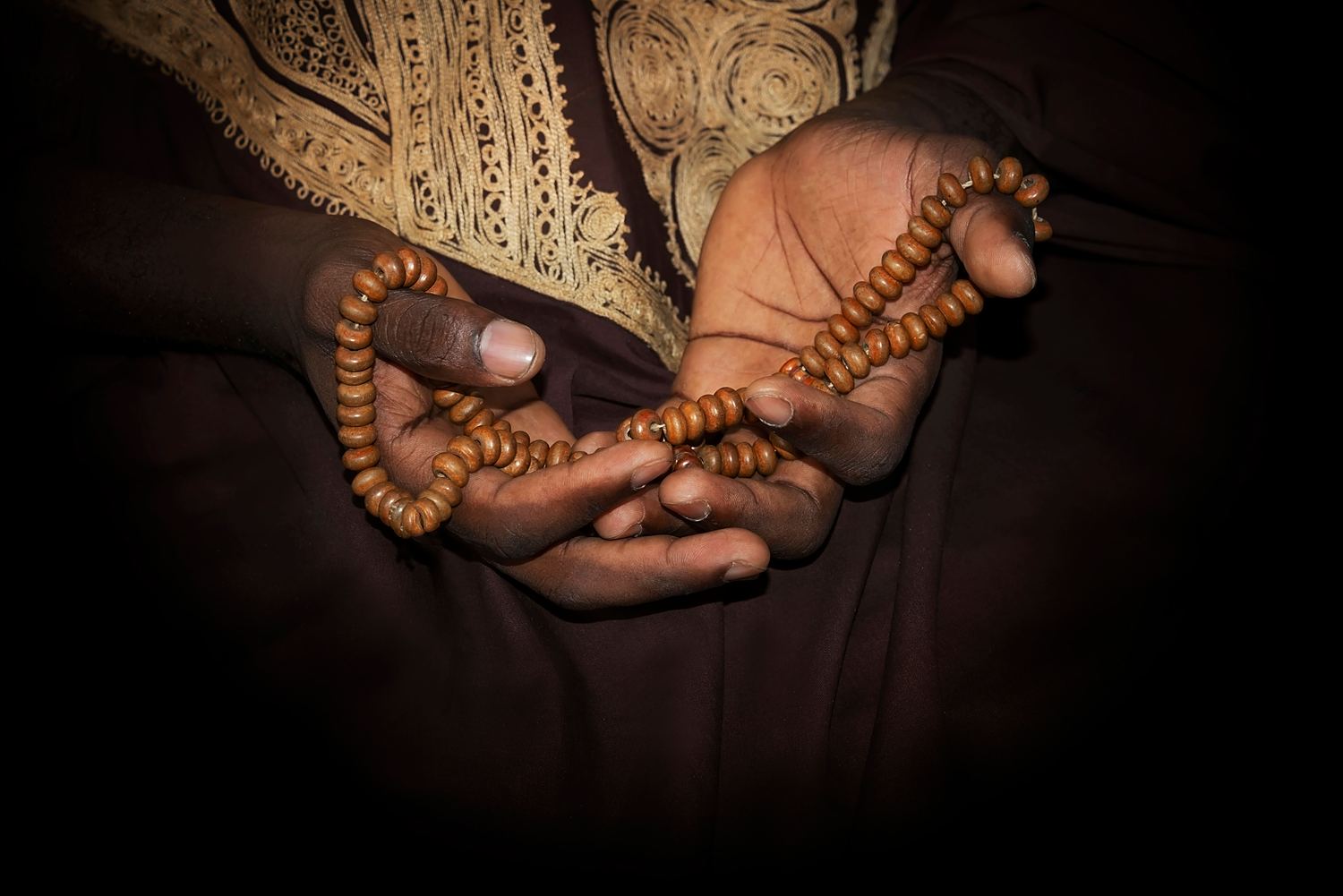
Look up prayer times in Dakar and you will find tables full of minutes: forget them, they will be wrong in a few days. In Senegal, the five prayers follow the sun, not the clock, and it is by understanding their logic that you will know when to expect the muezzin’s call, when to visit a mosque and when your driver will take a short break. Here are the names you will hear in the street, the reasons for these variations and the right habits for a respectful guest.
At a glance
| The five prayers | Fajr (dawn), Dhuhr (after midday), Asr (afternoon), Maghrib (sunset), Isha (night) |
| In Wolof | Fadiar or souba, tisbar, takussan, timis, guéwé (spellings vary) |
| Why they change | They depend on the position of the sun, which varies every day and from one town to another |
| Range over the year in Dakar | About an hour for dawn and sunset, about half an hour for midday |
| Between towns | Touba prays a few minutes before Dakar; Ziguinchor up to ten minutes or so before, depending on the prayer and the season |
| On Fridays | The great communal midday prayer fills the mosques and the surrounding streets |
| Where to find today’s times | The notice board at your local mosque, the muezzin’s call, timetables published by the national press during Ramadan |
| For a mosque visit | Mid-morning, on a weekday, well away from Friday midday and religious holidays |
The five prayers, from dawn to night
Islam prescribes five daily prayers, each tied to a moment of the day. In Senegal, they are most often referred to by their Wolof names, even when speaking French: you will hear “see you after takussan” far more often than “after the Asr prayer”. The spelling varies from one newspaper to the next, because Wolof is written in several ways; the pronunciation, however, is unmistakable.
| Arabic name | Name commonly used in Senegal | Time |
|---|
| Fajr (or Subh) | Fadiar, fajar; souba | At dawn, before sunrise |
| Dhuhr | Tisbar, tisbaar | After the sun has passed its highest point, in the early afternoon |
| Asr | Takussan, tàkkusaan | In the afternoon, when the shadows lengthen |
| Maghrib | Timis | Just after sunset |
| Isha | Guéwé, gée | At nightfall |
For dawn, some Senegalese timetables show two successive lines, fadiar then souba: both refer to the moment when day breaks. These names are also used to tell the time: timis means the prayer as much as dusk itself.
Why the times move every day
Each prayer is defined by a point in the sun’s course, and the sun does not rise or set at the same time from one day to the next. In Dakar, sunset, and therefore the timis prayer, shifts by about an hour over the year: it is earliest in November and latest in July. Dawn follows a similar movement, in the opposite direction, with later mornings in January and February. The midday prayer moves less, by about half an hour, following the small irregularities in the sun’s apparent course.
Another surprise: in Dakar, the sun reaches its highest point well after noon by the clock. Senegal runs on Greenwich Mean Time (UTC+0) all year round, with no summer time, even though Dakar lies well to the west of that meridian. The result: tisbar falls in the early afternoon, and the evenings stay light for longer than you might expect.
Finally, dawn and night are calculated according to a convention, since someone has to decide from what point the sky is “light enough” or “dark enough”. In West Africa, the most widespread method sets these thresholds at 18 degrees below the horizon for dawn and 17 degrees for night. Two timetables using different conventions can therefore differ by a few minutes, and the time at which a mosque gathers its worshippers can also differ slightly from the calculated time.
Dakar, Touba, Ziguinchor: a few minutes apart
The further east you go, the earlier the sun rises and sets; the further south you go, the less the length of the day varies. With a single time zone, the towns therefore do not pray at the same minute.
| Town | Difference from Dakar |
|---|
| Touba | About six to seven minutes earlier, for all prayers and all year round |
| Ziguinchor | From almost nothing to ten minutes or so earlier, depending on the prayer and the season: the gap is small at sunset in winter and at dawn in summer, more marked at sunset in summer |
| Saint-Louis | A few minutes earlier: the gap narrows at sunset in summer and at dawn in winter |
| Kédougou | Among the largest gaps in the country: around twenty minutes earlier |
Remember the practical rule: Dakar’s timetable is only valid for Dakar. If you are heading to Touba or to Casamance, check the times for the town where you will be, especially during Ramadan, when the breaking of the fast comes down to the minute.
Friday, the day of the great prayer
On Fridays, the midday prayer takes on another dimension. It is performed together, at the mosque, preceded by a sermon, and brings together worshippers who pray at home or at work for the rest of the week. Around the large mosques, the crowd spills out onto the pavements and nearby streets, where mats are rolled out; traffic slows for the duration of the prayer. In Dakar, the surroundings of the Great Mosque, in the Médina, give you a sense of its scale.
For visitors, the consequence is simple: do not plan a mosque visit or a trip through a densely populated neighbourhood between late morning and mid-afternoon on a Friday. Watched from a distance and in silence, however, it is a beautiful moment: festive boubous and the sudden calm of a usually noisy street.
Brotherhoods: the same prayer, different paths
Senegalese Islam is largely organised into Sufi brotherhoods, which share the same five prayers but differ in their spiritual guides, their chants, their holy cities and their great gatherings. The Tijaniyya has its centres in Tivaouane and in Médina Baye, near Kaolack. The Mouride brotherhood (Mouridiyya), founded by Cheikh Ahmadou Bamba, is centred on Touba, whose Great Mosque hosts the Grand Magal every year. The Qadiriyya, a Sufi order born in Baghdad in the 12th century, also has its followers and its places of gathering. Finally, the Layène are rooted in Yoff, north of Dakar, where the Call of Seydina Limamou Laye is celebrated.
No official statistics measure membership of the brotherhoods: the national statistics agency does not publish any, and researchers’ estimates differ. Bear in mind that each community has its own customs, and that a question asked with curiosity and respect almost always opens up the conversation.
Where to find today’s times
The most reliable source is the closest one: your local mosque. Many display the week’s times at the entrance, and the muezzin’s call reminds you of them five times a day. Ask your host, your driver or your guide too: it is an everyday question, and you will get an immediate answer.
During Ramadan, the national press publishes the times of prayer and of the breaking of the fast every day. For the dates of the lunar months, and therefore of the start and end of Ramadan and of the major religious holidays, the official announcements come from CONACOC, the national body for consultation on the sighting of the crescent moon, relayed by radio, public television and the press. Other religious bodies, such as the Coordination des musulmans du Sénégal (Coordination of Senegalese Muslims), make their own announcements, which explains why holidays are celebrated on two different dates in some years.
Resident or visitor: living to the rhythm of the prayers
If you live in Senegal, you know this rhythm, but build it into your outings: a meeting “around timis” during Ramadan or a trip to Touba on the eve of a religious holiday will change your day. The smart move: plan your getaways for mid-morning, and check the dates of the religious holidays before blocking out a weekend.
If you are discovering the country, there is no need to know the times by heart. Remember three things: your driver or guide may stop for a few minutes to pray, so allow for it and do not take offence; you never walk in front of someone who is praying; and Friday midday is not the time to visit a mosque.
Visiting a mosque: choosing your moment
The large mosques can be visited outside prayer times. The best slot is mid-morning, on a weekday, well away from tisbar: the light is soft and the esplanades are calm. Late afternoon offers beautiful colours, but takussan and timis are approaching: do not linger.
Best avoided if you are visiting: Friday between late morning and mid-afternoon, the days of Tabaski (Eid al-Adha), Korité (Eid al-Fitr) and Tamkharit (Ashura), and evenings during Ramadan. At the Great Mosque of Dakar, as at the Mosque of the Divinity in Ouakam, you are free to explore the outside; access to the interior depends on the agreement of those in charge. At the Great Mosque of Touba, non-Muslim visitors are accompanied, in keeping with the rules of the holy city.
Everywhere, clothing covers the shoulders, arms and legs, for men and women alike, and women bring a headscarf; you take off your shoes before entering prayer areas; you never photograph worshippers at prayer, and you ask before taking any portrait. No official entry charge is published for these places of worship.
Ramadan, Korité, Tabaski: the 2027 dates
The Islamic calendar is lunar, about eleven days shorter than the solar year: each religious holiday therefore comes round that much earlier from one year to the next. The dates below are astronomical estimates; the actual date depends on the sighting of the crescent moon, give or take a day, and may differ from one community to another in Senegal.
| Event | Estimated date in 2027 |
|---|
| Start of Ramadan | Around Monday 8 February 2027 |
| Korité (Eid al-Fitr, end of Ramadan) | Around Tuesday 9 or Wednesday 10 March 2027 |
| Tabaski (Eid al-Adha) | Around Monday 17 May 2027 |
During Ramadan, traffic gets tense in the late afternoon, before the breaking of the fast, then everything calms down at sunset. Many restaurants and shops stay open for those who are not fasting; a little discretion when eating and drinking in the street is appreciated. Around Tabaski, the whole country is on the move: many people go home to their families, and the roads and bus stations are saturated in the days before. Book your journeys early at that time.
Planning your activities with QFS
To discover the mosques of Dakar with someone who knows the customs, see our guided cultural tours, often combined with the Médina, Gorée or the Corniche. For Touba, the most relaxed option is not to drive yourself: our intercity transfers and day-long vehicle hire with driver, priced per vehicle, leave you time for the visit. For Casamance, arriving in Ziguinchor is easiest with our Airport / Cap Skirring – Ziguinchor transfers. For an overview, see the Transport & transfers section.
You pay 20% to secure your booking (the booking fee), and the balance is paid on site, on the day of the activity. The mosques have no published official entry charge; motorway tolls, depending on the listing, are either included or payable on site and not included in the price. Live in Senegal? You get the resident rate: up to 30% off depending on the activity (the exact rate is shown on each listing).
Frequently asked questions
What are the five prayers called in Wolof?
People say fadiar or souba for dawn, tisbar for midday, takussan for the afternoon, timis for sunset and guéwé for night. The spelling varies from one newspaper to another, but the pronunciation stays the same.
Why do prayer times change every day?
Each prayer is linked to the position of the sun, which rises and sets at a different time every day. In Dakar, dawn and sunset shift by about an hour over the course of the year.
Are the times the same in Dakar, Touba and Ziguinchor?
No. Touba prays about six to seven minutes before Dakar, and Ziguinchor up to ten minutes or so before, depending on the prayer and the season. Always check the times for the town you are in.
Where can I find today’s prayer times?
At your local mosque, which often displays the times, or from your host or guide. During Ramadan, the national press publishes the times every day; the dates of religious holidays are announced by CONACOC, the national body responsible for the sighting of the crescent moon.
When should I visit a mosque in Senegal?
Mid-morning, on a weekday, well away from prayer times. Avoid Friday between late morning and mid-afternoon, religious holidays and evenings during Ramadan, and wear modest clothing.
When will Ramadan and Tabaski fall in 2027?
According to astronomical estimates, Ramadan should begin around 8 February 2027 and Tabaski should fall around 17 May 2027. The actual dates depend on the sighting of the moon, give or take a day.