Mamelles Lighthouse: visit, view and history | QFS
Accueil » iconic locations » Mamelles Lighthouse: Dakar's oldest watchman, at the top of the city

Home › Locations › Dakar Region › Dakar › Mamelles Lighthouse: Dakar’s oldest watchman, at the top of the city

DAKAR

Mamelles Lighthouse: Dakar’s oldest watchman, at the top of the city

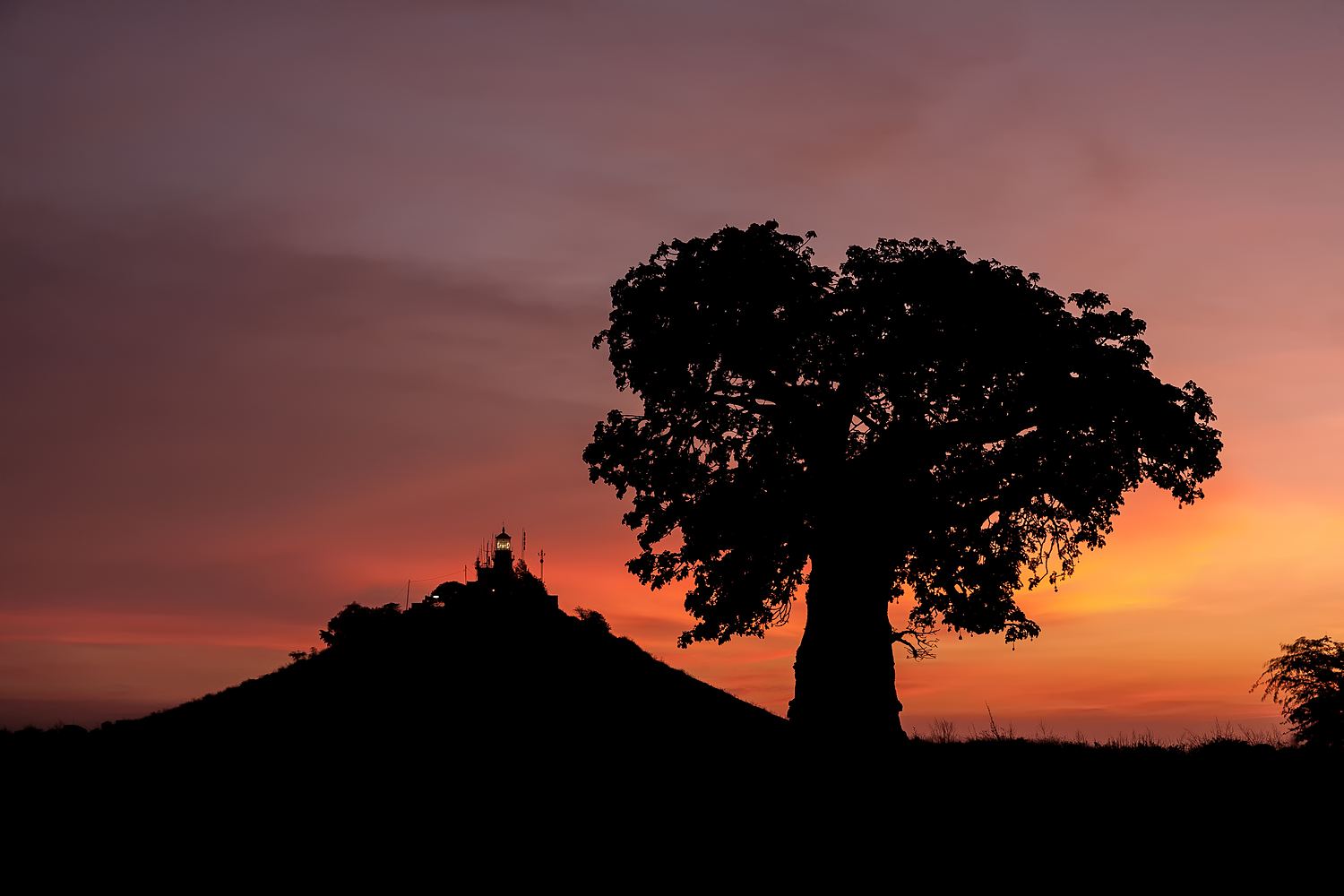
In service since 1864 and still kept by lighthouse keepers, the Mamelles Lighthouse watches over Dakar from the highest hill on the peninsula. You climb up on foot for the view, and stay for the story of a lighthouse that guided ships and then the pioneers of aviation.

Everyone photographs the African Renaissance Monument; few people bother to climb the other hill. Yet it is here, at the Mamelles Lighthouse, that you get the truest view of Dakar: from the highest point in the city, with the statue facing you rather than beneath your feet. And you will be inside a real lighthouse, lit since 1864, still manned by keepers and still tasked with announcing the peninsula to passing ships. Walk up in the late afternoon, and take the time to hear its story before watching the sun sink into the ocean.

At a glance

RegionDakar Region, Dakar department; the Mamelles hills, Ouakam district municipality (commune d’arrondissement)
TypeWorking maritime lighthouse, open to visitors, with a small exhibition on its history
Getting there from central DakarAlong the Corniche Ouest or the airport road, about ten kilometres from the Plateau, 20 minutes to almost an hour depending on traffic; then a short walk up from the foot of the hill
Recommended time1 to 1½ hours including the climb; longer if you stay for sunset
Official feesCharged for, payable on site and not included in the price: 3,000 FCFA for a non-resident adult, reduced rate for school pupils; closed on Mondays
Best time to goNovember–May for a clear panorama; late afternoon all year round
Related QFS activitiesGuided cultural tours of Dakar, hikes and bike rides along the Corniche, boat trips off the Almadies

Resident or visitor: a summit within easy reach

If you live in Dakar, you see this lighthouse flashing every evening without giving it a thought, and you may never have been up there. It makes an ideal Sunday outing: the climb on foot makes a short walk, the view will make you fall for the city all over again, and the story of the place appeals to children and adults alike. The lighthouse remains a neighbourhood spot, where people come with family, with friends or to run up the slope. For activities you book around it through QFS, you get the resident rate: up to 30% off depending on the activity.

If you are passing through, put the lighthouse at the start of your discovery of Dakar, not at the end. From the top, the geography of the peninsula falls into place: the Pointe des Almadies, Ngor and its island, Ouakam below, the Madeleine Islands offshore and, on a clear day, the city stretching all the way to the Plateau. An hour here will save you from getting lost later on. And unlike the Monument, you are not looking at Dakar from a symbol: you are looking at it from a working tool, the one that still guides the ships.

The watchman of the peninsula

A lighthouse older than the port

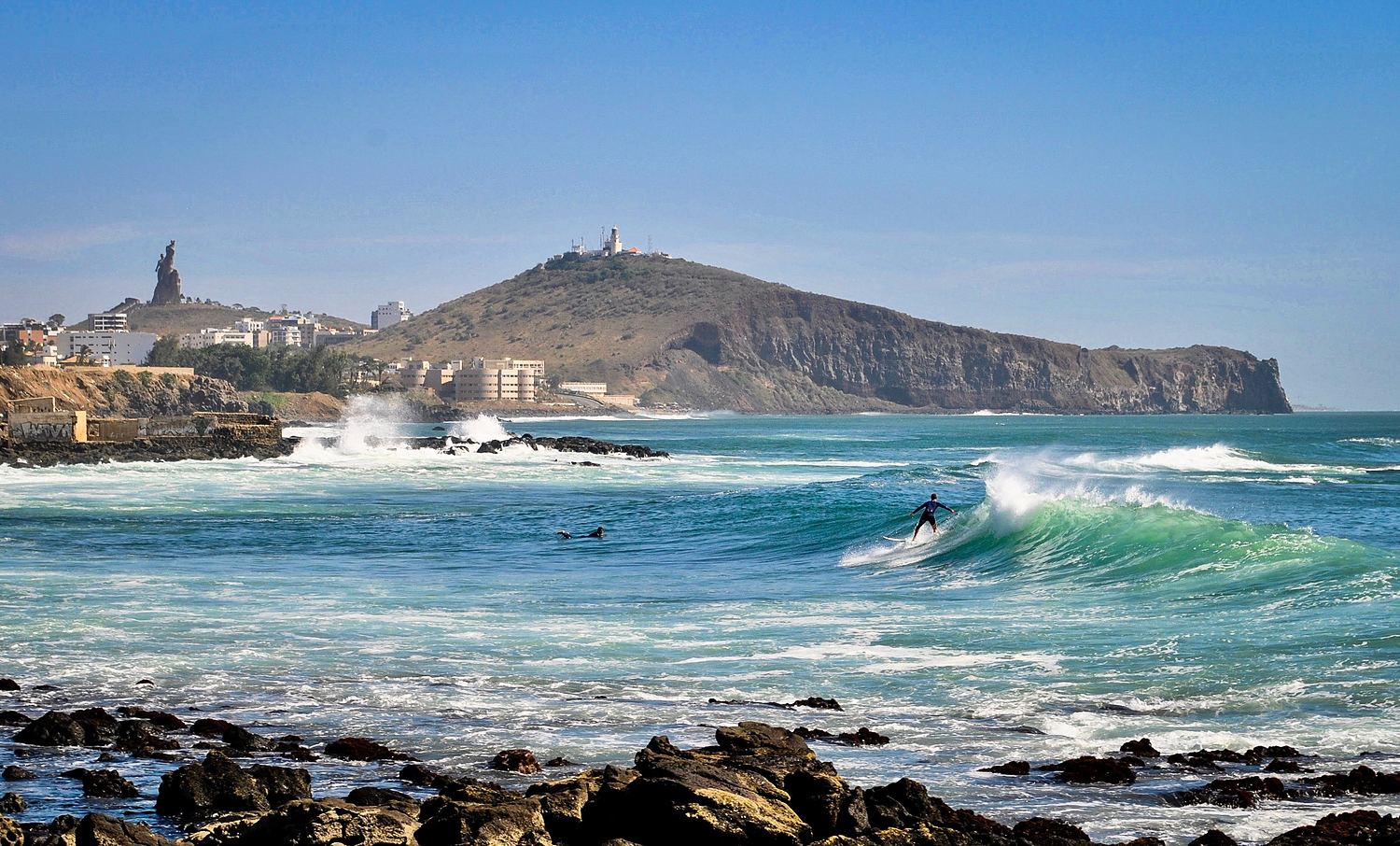
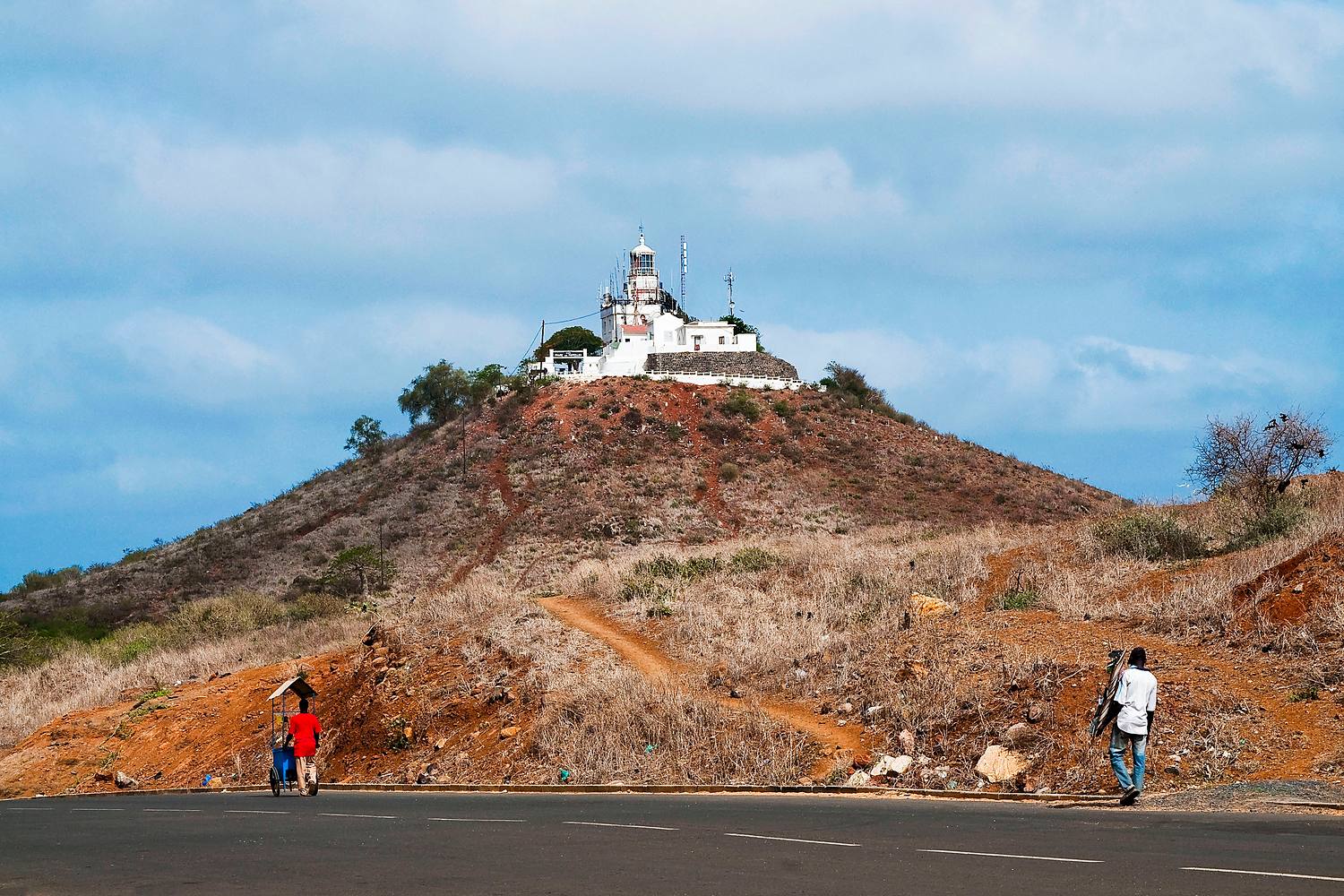
The Mamelles Lighthouse was built in 1864 by the French colonial administration, at a time when Dakar was still only a modest settlement facing Gorée. The choice of site was obvious: the two Mamelles, hills of volcanic origin, are the only high ground on a very flat peninsula, and the lighthouse stands on the higher of the two. Its light therefore shines about 120 metres above the sea, even though the tower itself is only 16 metres tall. The hill does the work.

It watches over the Cap-Vert peninsula, right next to the Pointe des Almadies, the westernmost tip of mainland Africa, where the shipping lanes between Europe, South America and the Gulf of Guinea pass by.

A lens that turns on mercury

The heart of the lighthouse is a Fresnel lens, an assembly of glass prisms that concentrates the light into a single beam. It rests on a bath of mercury, which allows it to turn almost without friction. The result can be read from the sea every night: one white flash every five seconds, visible some fifty kilometres away.

From ships to aeroplanes

The lighthouse did not only serve sailors. In the early 20th century, it became a landmark for the Aéropostale pilots, including Jean Mermoz and Antoine de Saint-Exupéry, who linked France to South America via Dakar. For these pioneers, catching sight of the Mamelles light meant that the African coast and their stopover were in view.

A lighthouse that is still kept

In a world where most lighthouses are automated, the Mamelles Lighthouse is still kept. It comes under the Lighthouses and Beacons subdivision of the Autonomous Port of Dakar, and its keepers look after the maintenance and the lighting of the lamp. They are the ones who show you round the tower. Entry fees help to maintain the site. That is what makes the visit so special: you are not entering a museum, but a working installation, explained by the people who keep it running.

  • Paddle, kayak & canoe

    Transparent kayak and drone outing in Dakar

    Dakar · 45min to 1h30


    From38 500 CFA
    Resident price36 575 CFA−5 %
  • Paddle, kayak & canoe

    Kayaking around Gorée and the Madeleine Islands

    Dakar · 30 min, 45 min, 1h


    From5 500 CFA
    Resident price4 950 CFA−10 %
  • Boat cruises & boat hire

    Group sea fishing trip from Ngor beach

    Dakar · Half-day


    From71 500 CFA
    Resident price57 200 CFA−20 %

Key facts & figures

FactFigure
Built1864
Height of the tower16 m
Height of the light above the seaAbout 120 m
HillThe higher of the two Mamelles, Dakar’s highest point, at more than a hundred metres
SignalOne white flash every 5 seconds
Range53 km
OpticsFresnel lens turning on a bath of mercury
ManagementLighthouses and Beacons subdivision, Autonomous Port of Dakar
StatusWorking lighthouse, manned by keepers, not automated

Getting there & official fees

The lighthouse is in Ouakam, on one of the two Mamelles hills; the African Renaissance Monument occupies the other. From the Plateau, follow the Corniche Ouest north-west; from the northern neighbourhoods and Léopold Sédar Senghor Airport in Yoff, take the airport road. Allow 20 minutes to almost an hour depending on traffic.

You leave the car or the taxi at the foot of the hill. From there, you walk up the path that climbs to the summit: 10 to 20 minutes depending on your pace, with the view opening up at every bend. If you would rather avoid the effort, ask at the car park whether there is a way to go up by vehicle.

The visit is charged for. These are official fees, payable on site and not included in the price, separate from any activity booked on QFS.

Entry feeAmount
Non-resident adult3,000 FCFA
School pupilsReduced rate

The site is open from Tuesday to Sunday, during the day and until late afternoon; it is closed on Mondays, which are set aside for maintenance. The exact opening hours vary depending on the source and the season: ask on site or aim for mid-afternoon.

What to see

The climb. It is part of the experience. As you go up, Ouakam, the Corniche and the Monument come into view; it is also the best angle for photographing the statue in profile.

The ground-floor exhibition. A small exhibition traces the history of shipping routes, how lighthouses work and the memory of the keepers. It takes just a few minutes to go round and gives you the keys to understanding what comes next.

The staircase and the lantern. The guided tour takes the tower’s spiral staircase up to the Fresnel lens. Seeing this great piece of glass up close, and understanding how it turns, is the highlight of the visit.

The panorama. From the gallery and the esplanade, your gaze sweeps towards the Pointe des Almadies, Ngor and its island, the Madeleine Islands, then back towards the city. Opposite, the African Renaissance Monument rises on the other hill: this is where you best appreciate its size and silhouette.

The esplanade at sunset. The summit has an open-air eating area, livened up on some evenings by music. Even without sitting down at a table, the esplanade is one of the finest balconies in Dakar for watching the sun go down.

Nearby

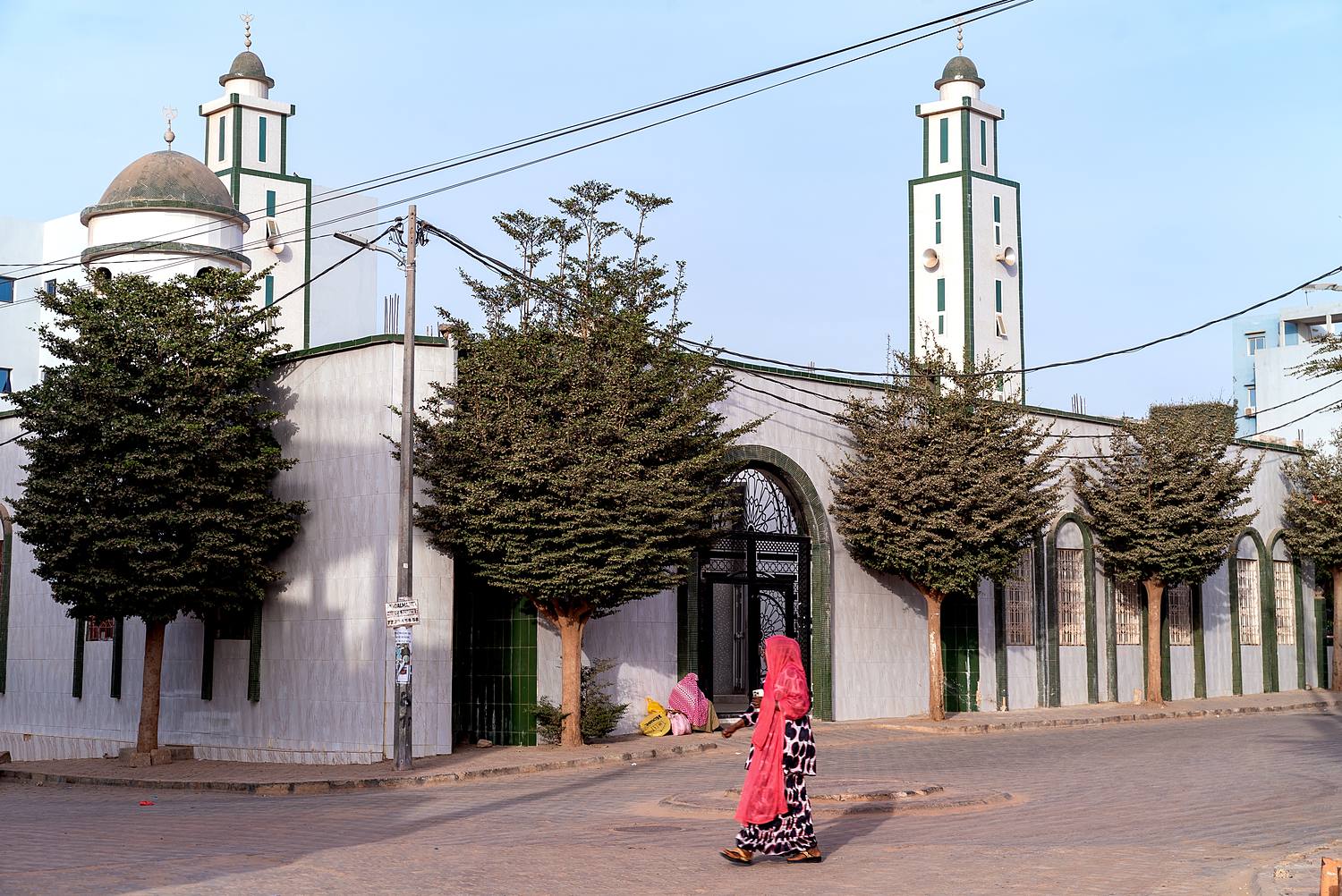
On the neighbouring hill, the African Renaissance Monument offers the city’s other great panorama, from its viewing platform. Below, the Mosque of the Divinity can be seen from the Corniche and the beach at Ouakam, a former Lebou village where the pirogues are hauled up onto the sand. Further north, the Pointe des Almadies closes off the peninsula, followed by Ngor, its beach and Ngor Island. Offshore, Madeleine Islands National Park can be visited on an organised outing. To the south-east, the Corniche leads to the Plateau, the Museum of Black Civilisations and the ferry terminal for Gorée. To plan your days, the ideal 3-day itinerary in Dakar and our Dakar page group the visits by area.

  • Shooting photo & vidéo

    Event photo and video packages in Dakar

    Dakar


    From275 000 CFA
    Resident price261 250 CFA−5 %
  • Shooting photo & vidéo

    Ceremony and wedding coverage in Dakar

    Dakar


    From88 000 CFA
    Resident price83 600 CFA−5 %

The right time

From November to May, the dry season brings clear skies and a sharp view all the way to the islands. During the rainy season (hivernage), from July to October, the humid heat and the showers sometimes blur the horizon, but the light after the rain can be superb.

During the day, early afternoon is the quietest time for visiting the tower. Late afternoon is the best choice if you are only coming once: go up an hour before sunset, do the tour, then stay on the esplanade to watch the sun plunge into the ocean, with the Monument lit from the side. An idea for a half-day: the Monument in the morning, the Mosque of the Divinity and Ouakam beach at midday, the lighthouse at the end of the day.

At weekends, there are more families and groups of friends, especially in the evening. On Mondays, the site is closed: do not plan your visit for that day.

Practical tips

  • The climb is in full sun. Water, a hat and closed shoes: the path is short but steep.
  • Reduced mobility. The tower is visited by way of a narrow spiral staircase. Visitors with reduced mobility can enjoy the esplanade and the view, but not the lantern.
  • Children. Younger visitors love the tour; hold their hands on the staircase and on the gallery.
  • Respect the place. The lighthouse is a working installation: follow the keepers’ instructions and do not touch the equipment without their permission.
  • Photos. Photographing the lighthouse and the panorama is no problem at all. Ask before photographing the keepers or families.
  • What to wear. No particular requirements for the lighthouse; cover your shoulders and knees if you are going on to the Mosque of the Divinity.
  • Getting back after dark. If you stay for sunset, arrange your return in advance: taxis are easier to find on the road at the foot of the hill.

Book an activity here with QFS

The lighthouse is not an activity in itself, but it features in several outings you can book on QFS. The guided cultural tours of Dakar often combine it with the Monument, Ouakam and the Corniche. If you are fit, look at the guided hikes, which include bike rides along Dakar’s beaches setting off from the Corniche Ouest and the lighthouse, as well as outdoor personal training & fitness. To see the lighthouse from the sea, choose from the boat trips (sunset, islands & sport fishing) or the boat cruises & boat hire off the Almadies. To string together the sites along the Corniche, consider vehicle hire with driver.

You pay 20% to secure your booking (the booking fee), and the balance is paid on site, on the day. Entry to the lighthouse is an official fee, payable on site and not included in the price. If you live in Senegal, you get the resident rate: up to 30% off depending on the activity (the exact rate is shown on each listing).

Frequently asked questions

Can you visit the Mamelles Lighthouse?
Yes, from Tuesday to Sunday; it is closed on Mondays for maintenance. The keepers show visitors round the tower up to the lens, and a small exhibition traces its history.
How much does entry to the Mamelles Lighthouse cost?
A non-resident adult pays 3,000 FCFA, and school pupils get a reduced rate. It is an official fee, payable on site.
Can you walk up to the lighthouse?
Yes, along the path that starts at the foot of the hill: allow 10 to 20 minutes depending on your pace. The climb is short but steep and in full sun.
How long has the Mamelles Lighthouse been in operation?
It was built in 1864 and is still working. It gives one white flash every five seconds, visible 53 km out to sea.
Who runs the Mamelles Lighthouse?
It comes under the Lighthouses and Beacons subdivision of the Autonomous Port of Dakar. It is still manned by keepers and is not automated.
Can you see the African Renaissance Monument from the lighthouse?
Yes, it stands on the other Mamelles hill, directly opposite. The lighthouse offers one of the best viewpoints of its silhouette, especially in the late afternoon.

Read also