Senegal & sea outings: a country facing the sunset
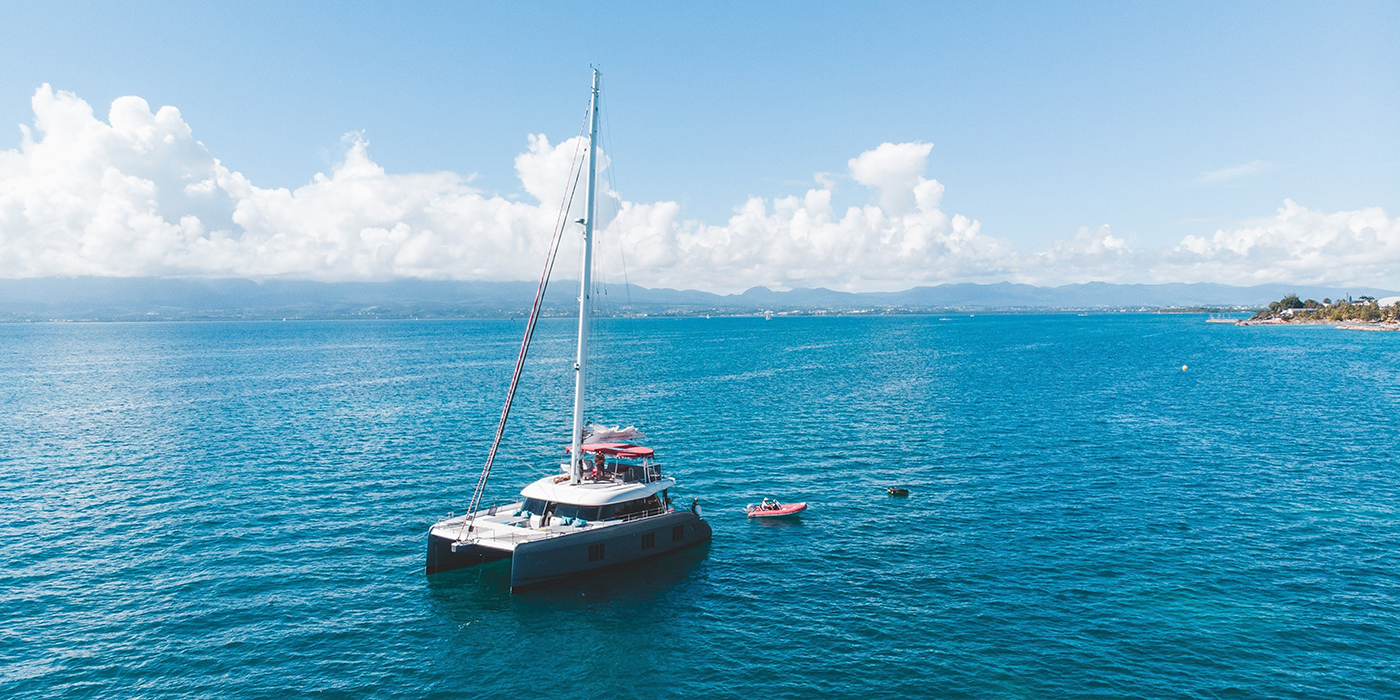
One look at a map explains it. Dakar sits on the Cap-Vert peninsula, and the Pointe des Almadies is the westernmost tip of mainland Africa. In the evening, then, the sun sets over the sea, with nothing between it and you. From the deck you see the cliffs of the Corniche Ouest, the Mamelles Lighthouse on its hill, Soumbédioune Bay and Gorée, a UNESCO World Heritage Site since 1978, sitting opposite the port.
Yet the sea is not first and foremost a backdrop. It is a workplace. On the Petite Côte, Mbour is one of the country’s great artisanal fishing ports: the painted pirogues come home loaded with sardinella, the fish that feeds thousands of families, and the beach fills with fish traders, porters and women who will dry and smoke the day’s catch. Seeing it from the water, among the hulls coming ashore, teaches you more than any book.
Further south, the Sine-Saloum changes scale: a delta of channels, islands and villages, a UNESCO World Heritage Site since 2011, where the boat is still the only real way to get around. This is home to the Atlantic humpback dolphin, Sousa teuszii, a species found only along Africa’s Atlantic coast and listed as critically endangered since 2017. Senegal holds one of the largest known populations. Meeting one is a privilege, never a given: sightings are rare, and they happen at a distance, engine idling, without ever chasing the animals.
Formats: four moments of the day
- The morning, as the fishermen come home: a half-day in a motorised, capsize-resistant pirogue from Saly, life jackets provided, so you are on the water when the pirogues return to Mbour and the beach comes alive.
- The coastal trip: two or three hours from the Plateau port or Soumbédioune, in Dakar, along the Corniche to the waters around Gorée, without stopping; or two hours at the Somone, from the lagoon out to the coast at Ngaparou when the tide allows.
- The sunset: it is not a separate boat, it is a time slot. On the outings that offer an afternoon or late-day departure, in Dakar as at the Somone, choose the last one: you will come back in the low, raking light, then under an orange horizon.
- The day out to the islands: pick-up on the Petite Côte, sailing through the wide channels of the Saloum, fishing villages, islets and a swim stop depending on the tide.
- The outing where you watch for dolphins: in Casamance, a pirogue around Carabane combines a fishing village and the estuary, with a chance, no more, of glimpsing dolphins; in the Saloum, the island excursion sometimes crosses their path. No outing can promise them: come for the sea and the villages, and take the encounter as a gift if it happens.
- The beginners’ fishing morning: a half-day from Ngor beach, rods, bait and life jackets provided. For big fish and trolling offshore, move on to sport fishing.
Where to take a boat trip in Senegal
- Dakar: the urban outing par excellence, along the Corniche Ouest, with Gorée offshore and Ngor for fishing. No additional official fees on these outings. To land on Gorée, you take the public ferry, with a ticket from the ferry terminal counter and a commune tax payable on site.
- The Petite Côte: Saly for the open sea and the fishermen coming home to Mbour; the Somone for a gentle outing, from the lagoon to the ocean, with the boat trip included in the relevant listing. If you add the pirogue through the lagoon’s mangroves, a nature reserve and Ramsar Site, its entry charge is payable on site and not included in the price.
- The Sine-Saloum: the full day, departing from the Petite Côte. The Saloum Delta National Park permit is an official fee, payable on site and not included in the price.
- Casamance: Carabane and the mouth of the river, for the pirogue and the villages; the dolphins, if luck lends a hand. No additional official fees for the islands and villages.
The Madeleine Islands, a national park since 1976 a few kilometres from Dakar, can only be visited on a supervised outing: do not expect to land there on a coastal trip.
When to go
The dry season, from November to May, is the most reliable: clear skies, very little rain. The trade wind sometimes kicks up a chop off Dakar; the lagoon and the channels of the Saloum stay sheltered. The rainy season (hivernage), July to October, brings heavy heat and stormy downpours: outings carry on, simply leave yourself some leeway on the date. For swimming, the water ranges from around 20 °C at its coolest (February–March) to 28 °C at its warmest (September–October).
Through the day, each moment has its outing. Morning for flat seas and the fishermen. Late afternoon for the light and the sunset, with a return that is often a little cooler. In the Saloum and at the Somone, the tide is in charge: the crew may push the departure back half an hour to get through a passage at the right moment, and it is for the sake of your outing.
Good to know & budget
The first thing to check, even before the duration, is the price basis. Both exist side by side in this section. The coastal trips from Dakar and the Somone, the day in the Saloum and the half-day of the fishermen’s return from Saly are priced per person. The fishing morning at Ngor is a flat rate per boat, for up to four people: the same price for two or for four. Saly’s other outings are a flat rate per boat, the Carabane pirogue is paid for the whole pirogue, up to eight passengers, and the Saloum island excursion covers a small group. On your own or as a couple, the per-person price often wins; from four people upwards, the per-boat rate quickly becomes better value.
On Que Faire Sénégal, the price shown is the price of the service. You pay 20% to secure your booking (the booking fee). The balance is paid on site, on the day. If you live in Senegal, you get the resident rate: up to 30% off (the exact rate is shown on each listing). Official charges, such as the Saloum park permit or entry to the Somone reserve, are payable on site and not included in the price; elsewhere, the listing states that there are no additional official fees.
On board, bring a hat, sunglasses, sun cream, a bottle of water, a light jumper for the evening return and a waterproof pouch for your phone. A life jacket should be provided: insist on one for children and wear your own on the open sea. If you are prone to seasickness, start with the Somone or the channels of the Saloum rather than the open water. If the sea picks up, the crew may shorten or postpone the outing: that is simply caution.
Who is it for?
For couples, the last departure of the day makes a ready-made birthday treat. Families will start with the Somone, a short outing on calm water, before the open sea. Curious minds will go for the fishermen’s return, which says more about the country than a museum visit. Novice anglers will find at Ngor a morning with no gear to buy.
If you are a resident, the calendar is on your side: wait for a Saturday of flat sea, book the evening slot and rediscover your city from the water; the resident rate makes it easier to go again from one season to the next. Visitors, for their part, will do well to fit a coastal trip in at the start of their stay, to understand the geography of Dakar or the Petite Côte before exploring it, and to set aside a proper day for the Saloum.
In the Saloum, every dolphin has an identity card. The researchers who follow the species photograph the dorsal fin of each animal they encounter: its nicks and scars, unique to each one, make it possible to recognise it from one outing to the next and to track its movements from one channel of the delta to another. If a grey fin breaks the surface near you, it may already be listed in a scientific catalogue.
Frequently asked questions
Is the price per person or per boat?
It depends on the outing, and the listing says which. The coastal trips, the day in the Saloum and the fishermen’s return from Saly are priced per person; the fishing morning at Ngor is a flat rate per boat for up to four people. If you’re a group, compare the two.
How is this different from boat hire?
Here, you take a seat on an outing with a set programme. With Boat cruises & boat hire, the boat is for your group and the programme adapts to you.
Will you definitely see dolphins?
No. The Atlantic humpback dolphin lives in the Saloum Delta and is sometimes seen around Carabane, but it is a rare, critically endangered species. Sightings are never guaranteed and happen at a distance, without chasing the animals.
What time should I leave for the sunset?
Choose the afternoon or late-day departure offered on the listing, in Dakar or at the Somone.
Are there any charges to pay on site?
First, the balance of the outing: you pay 20% to secure your booking (the booking fee), and the balance is paid on site, on the day. In the Saloum, the national park permit, and at the Somone, the reserve entry for the mangrove pirogue, are payable on site and not included in the price. Elsewhere, the listing states that there are no additional official fees.
Is there a special rate for residents?
Yes. If you live in Senegal, you get the resident rate: up to 30% off depending on the outing (the exact rate is shown on each listing). It does not apply to official fees.