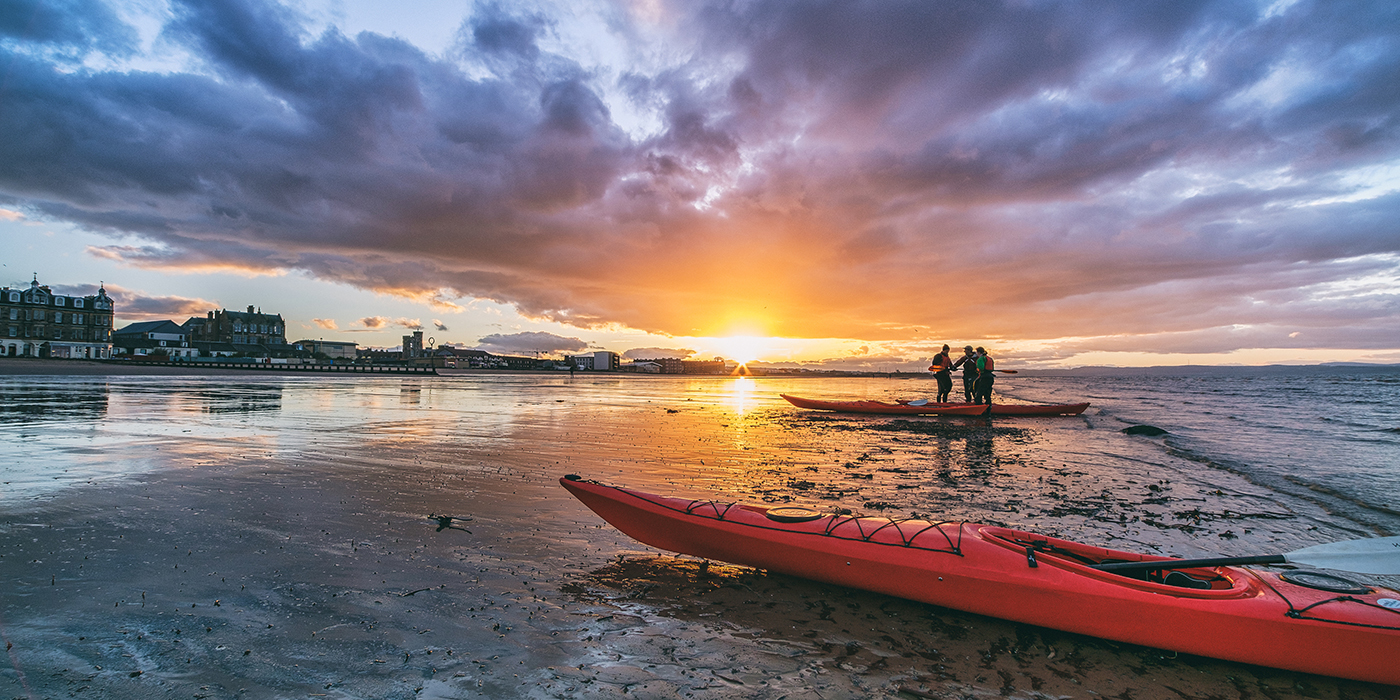
Senegal & paddling: the art of finding shelter
Senegal has a long Atlantic seaboard, but much of it is pounded by the swell that keeps surfers happy. Paddlers look for the opposite. And the country has plenty to offer them: south of Dakar, the Petite Côte turns gentle; behind Ngor Island or around Gorée, the sea settles in fine weather; the Somone lagoon, Lac Rose and the river at Saint-Louis form enclosed stretches of water; and further south, the Saloum and Casamance deltas cut the land into thousands of saltwater channels, the bolongs.
On the water, you will not be alone. The pirogue, gaal in Wolof, is the everyday boat here, and the fishermen, the salt harvesters of Lac Rose and the women who gather oysters in the mangroves know the tide better than any app. Kayaks and paddleboards do not replace this water culture: they let you get closer to it, slowly, where motorised pirogues do not venture.
Paddling has its sporting side too. At the Paris 2024 Olympics, the Franco-Senegalese canoeist Yves Bourhis represented Senegal in slalom and qualified for the final of the men’s single canoe. And from 31 October to 3 November 2026, Saly beach will host coastal rowing at the Dakar 2026 Youth Olympic Games (YOG): proof that these sheltered waters can host competition as well.
Formats: hire, go guided or look through the hull
- Self-guided hire: a paddleboard, canoe or kayak, alone or for two, from half an hour to a full day depending on the place, with the paddle and, on most listings, the life jacket. The format for independent paddlers, in the Somone, Saly and Dakar.
- Guided mangrove trip: in Lower Casamance, from an hour to try it out to a full day in the bolongs, including a four-hour trip out to Egueye Island.
- Supervised session: an hour of canoeing and kayaking, or rowing, on the Senegal River in Saint-Louis, suitable for anyone who has never paddled.
- Round-the-island trip: around Gorée in thirty minutes or an hour, to see the shoreline from the water.
- Clear kayak: the hull lets you see the bottom, in Ngor or at Lac Rose, for fifteen to thirty minutes; in Dakar, it also comes as a pack with a drone and a photo shoot, for one to three people.
- Pedalo: in Saly, for a family outing with no technique needed.
The kneeboard in Saly, towed by a boat or a jet ski, is a different thing altogether: see towed sports.
Where to paddle in Senegal
- The Somone lagoon: the ideal stretch of water for beginners, calm and shallow, 1¼ hours or more from Dakar on the motorway, depending on traffic. It has been a community nature reserve since 1999 and a Ramsar Site since 2017: you paddle at a distance from resting birds, without landing in the mangroves. Depending on the activity, a reserve fee is payable on site and not included in the price; the listing says so. Everything about the site: the Somone lagoon.
- Dakar and its islands: paddleboard and kayak hire, clear kayak off Ngor Island, a trip around Gorée. This is the sea, not a lagoon: outings depend on the weather and the state of the sea.
- Saly and the Petite Côte: the breakwaters create sheltered pools, perfect for a first half-hour on a paddleboard or a family pedalo.
- Lac Rose: a quarter of an hour or half an hour in a clear kayak in the middle of the lake. The colour, lost after the 2022 floods and back in spring 2025, varies with the time of day and the season: it is never guaranteed. No additional official fees.
- Saint-Louis: the Senegal River around the UNESCO-listed island, by canoe, kayak or rowing boat.
- Casamance: from Cap Skirring, the country’s most intimate mangroves, from one bolong to the next.
- The Sine-Saloum: the delta, a UNESCO World Heritage Site since 2011, is a dream setting for paddling, around Toubacouta or Ndangane. The catalogue here mainly offers pirogue trips; the tidal current is strong, and you never head out alone the first time.
When to paddle
The dry season, November–May, is the most pleasant: clear skies, calmer water and, from November to March, migratory birds from Europe on the mudflats of the Somone and the deltas. The water is around 20 °C at its coolest, in February–March, and rises to around 28 °C at its warmest, in September–October: in winter, a dunk in the water is more refreshing than you would think. From July to October, the rainy season (hivernage) brings humid heat, downpours and mosquitoes around the mangroves; paddling is still possible, with an eye on the sky.
During the day, aim for the morning. The wind often picks up in the afternoon, and on a paddleboard, an offshore wind pushing you out to sea is hard to paddle against. On the lagoons and in the bolongs, the real clock is the tide, high and low twice a day: at high tide, you can slip right up to the mangroves; at low tide, the channels empty and the mudflats are exposed. The current is strongest in between, and near the channels linking the lagoon to the ocean.
Good to know & budget
Paddling is gentle, and safety matters just as much. Wear the life jacket, which most listings provide; insist on one for children. On a paddleboard, attach the leash to your ankle: the board is your float. Stay close to the shore and inside sheltered areas, avoid channels and river mouths, and turn back if the wind gets up. Hat, sunscreen, sunglasses and water, even for half an hour: the glare is strong. In the mangroves, do not break roots, do not land on bird roosts and leave nothing behind.
When it comes to price, read the unit carefully. Some listings charge per person, such as the Gorée trip, the Saint-Louis session or the clear kayak at Lac Rose. Others charge per craft: canoe or paddleboard hire in the Somone, paddleboarding in Saly, canoe or kayak hire in Dakar, and the clear kayak in Ngor, which takes up to two people. The Casamance mangrove trip and the drone packs are group flat rates.
On Que Faire Sénégal, the price shown is the price of the service. You pay 20% to secure your booking (the booking fee). The balance is paid on site, on the day of the outing. If you live in Senegal, you get the resident rate: up to 30% off (the exact rate is shown on each listing). Official charges, such as the Somone reserve fee for some activities, are payable on site and not included in the price; at Lac Rose, there are no additional official fees.
Who is it for?
For almost everyone. The pedalo and the two-seater canoe suit families; the paddleboard suits curious types who do not mind falling in once or twice; the Casamance mangroves and the river at Saint-Louis suit those who want to paddle properly. Birdwatchers will prefer a kayak to any other craft: it gets close without scaring the birds.
Residents have the advantage of time. An hour of paddleboarding in Dakar before work, a Saturday in the Somone for the morning tide, then a return visit as the seasons change to watch the lagoon transform: with the resident rate, paddling becomes a habit. Visitors are better off booking their outing early in their stay, while they are still fresh and not too sunburnt, and in the morning rather than the windy afternoon.
At the Somone, the mangrove you glide through has not always been there. At the end of the 1990s, the mangroves were dying; people from the village, with the women leading the way, raised the alarm and replanted. In 1999 a locally managed reserve was born, and Ramsar Site status followed in 2017. Every paddle stroke in the lagoon is taken through a forest rebuilt by hand.
Frequently asked questions
Do I need to be sporty to go paddleboarding or kayaking?
No. On the Somone lagoon, in the sheltered pools of Saly or on the river at Saint-Louis, you can head out for the first time with no experience. Paddleboarding takes a little balance, kayaking almost none. If you’re a beginner, go for a supervised session or a short half-hour hire.
Is the price per person or per craft?
It depends on the listing, which makes it clear. The Gorée trip, the Saint-Louis session and the clear kayak at Lac Rose are per person; hire in the Somone, Saly and Dakar, like the clear kayak in Ngor, is per craft; the Casamance mangrove trip is a group flat rate.
Are there any charges to pay on site?
The balance of the activity, first of all: you pay 20% to secure your booking (the booking fee), and the balance is paid on site, on the day. For some activities, the Somone reserve entry fee is payable on site and not included in the price. At Lac Rose, there are no additional official fees.
Can I go kayaking in the Sine-Saloum?
The delta lends itself to it, but the tidal current is real: you don’t head out alone. To discover it, the catalogue mainly offers pirogue trips from Ndangane or Toubacouta.