Senegal & private boats: where and why here
There is no old yachting tradition here, and nobody will try to sell you one. There is something better: a geography that makes the boat the best vantage point on the country. Dakar occupies the Cap-Vert peninsula, whose Pointe des Almadies is the westernmost tip of mainland Africa. The result is a city with ocean on three sides, whose finest views are seen from the water: the cliffs of the Corniche Ouest, the Mamelles Lighthouse on its hill, Soumbédioune Bay where the pirogues come home, then Gorée Island, a UNESCO World Heritage Site since 1978, lying opposite the port.
All around, islands. Ngor, a few minutes by pirogue from the beach. The Madeleine Islands, two rocky islets about four kilometres off the coast, a national park since 1976: you can only land there on a supervised trip. And Gorée, which a private boat can sail past, but where you go ashore by the public ferry, with a ticket from the counter.
South of Dakar, the Petite Côte changes pace: long beaches, a sea that is often more manageable, and fishing villages whose pirogues come back in late morning at Mbour. Further south still, the Sine-Saloum opens up another world, that of the bolongs, saltwater channels lined with mangroves. A national park since 1976, a Ramsar Site, and a UNESCO World Heritage Site since 2011 for its shell mounds and the life of its communities, the delta is explored over a day, from island to island, with a crew who know the tide.
And then there is the river. In the north, the Senegal River was long the country’s great highway, and that memory can still be sailed: every dry season, a former river vessel travels up from Saint-Louis to Podor in a week, stopping at Djoudj, Richard-Toll and Dagana. This cruise is not in our catalogue; to plan a trip to the north, read our Saint-Louis Region page.
Formats: what you can hire
Each activity’s listing says exactly what it includes. Here are the main formats on offer.
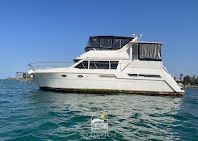
- The private launch on the Dakar Corniche: two or three hours by motorboat with captain and crew, leaving from the port in the Plateau or from Soumbédioune Bay. Cliffs, Mamelles Lighthouse, Mosque of the Divinity, then Gorée offshore depending on the sea, without stopping. One option for couples, another for six to eight people, drinks on board.
- The tailor-made sea trip from Saly: a half-day to watch the fishermen come home at Mbour, or a half-day and a full day with no tight schedule, at the group’s pace, with a snack.
- The day in the Saloum Delta: sailing through the bolongs and the mangroves, between fishing villages and islands, with birdwatching and a swim stop depending on the tide. Transfer included from the Petite Côte.
- The motorboat ride on the Somone lagoon: about two hours in the mangroves and out towards the river mouth, calm water, guide on board; depending on the tide, the trip carries on out to sea along the coast.
- The group fishing morning: a half-day from Ngor beach, with captain, crew and tackle provided. To go further, see sport fishing.
Where to hire a boat in Senegal
- Dakar: the boat for seeing the city differently, from the Corniche Ouest to the waters off Gorée. Departures from the Plateau, Soumbédioune or Ngor depending on the listing; no additional official fees.
- The Petite Côte: Saly for the sea trip by motorised pirogue, life jackets provided, and the Somone for the lagoon, a nature reserve and Ramsar Site; the boat trip is included in the listing concerned.
- The Sine-Saloum: the full day, the format that really gives you the measure of the delta. The Saloum Delta National Park permit is an official charge, payable on site and not included in the price.
- The Senegal River: the multi-day cruise between Saint-Louis and Podor is booked outside our catalogue. Locally, a pirogue around the island of Saint-Louis or out to the pelicans of Djoudj gives you the river in short form.
When to go
The dry season, from November to May, is the safest bet: clear skies, little rain, a steady trade wind that sometimes whips up a chop on the open sea off Dakar; the lagoon and the bolongs stay sheltered. The rainy season (hivernage), July to October, brings heavy heat and stormy downpours: you can still go out, with some flexibility on the date. For swimming, the water ranges from about 20 °C at its coolest (February–March) to 28 °C at its warmest (September–October).
During the day, two moments stand out. Morning, for a flat sea and the pirogues coming home. Late afternoon, for the light on the Corniche as the sun sinks into the Atlantic. In the Saloum and at the Somone, the tide is in charge: the crew may shift the departure time to go through at the right moment.
Good to know & budget
Before comparing two listings, look at the price unit. In this section, both coexist. The Dakar launch, the day in the Saloum and the “fishermen’s return” half-day in Saly are priced per person. The other Saly outings are a flat rate per boat, and the fishing morning in Ngor is hired per boat, for up to four people, at the same price whether there are two or four of you. With four, a flat rate per boat quickly becomes better value; with two, the per-person price is often the right call.
On Que Faire Sénégal, the price shown is the price of the activity. You pay 20% to secure your booking (the booking fee). The balance is paid on site, on the day of the outing. If you live in Senegal, you get the resident rate: up to 30% off (the exact rate is shown on each listing). Official charges, such as the Saloum park permit, are payable on site and not included in the price; elsewhere, the listing tells you if there are no additional official fees.
On board, bring a hat, sun cream, a light jumper for the way back and a waterproof pouch for your phone; if you are prone to seasickness, choose the lagoon or the bolongs over the ocean. Life jackets must be provided: insist on them for children. Meals and drinks are not always included: the listing says so.
Who is it for?
For groups of friends and families who want to be on their own: with six or eight people, a boat to yourselves often costs less than you would imagine. For couples, the two-person option on the Corniche makes a ready-made birthday treat. Children will start with the Somone lagoon, calm water and a short trip, before the open sea.
If you are a resident, you have an advantage: you choose your day. On a Saturday with a flat sea, in the late afternoon, Dakar reveals itself from an entirely new angle; the resident rate helps you do it again. Visitors, on the other hand, will do well to schedule the outing early in their stay, to grasp the city’s geography before exploring it, and to set aside a proper day for the Saloum, without squeezing it in between two transfers.
Before tarmac roads, the Senegal River had its liners. One of them, brought into service in 1950, carried goods and passengers between Saint-Louis and the old trading posts along the river until 1970, supplying stops that nothing else served. Restored for tourism, it now sails up the same river with travellers in place of sacks, the Mauritanian bank on one side, the Fouta on the other.
Frequently asked questions
Do you need a licence to hire a boat?
No. All the outings in this section have a captain or crew on board: you choose the plan, they do the steering.
Is the price per person or per boat?
It depends on the listing, which always says. Some outings are priced per person, others are a flat rate per boat, such as the fishing morning in Ngor, per boat for up to four people. If there are several of you, compare the two.
What’s the difference from a boat trip?
Here, the boat is for your group and the plan adapts to you. The Boat trips category covers crossings to the islands, dolphin trips and outings on a shared boat.
Can you go ashore on Gorée or the Madeleine Islands?
Not on these outings. The Dakar sea trip passes off Gorée without stopping; to visit the island, you take the public ferry, with a ticket from the counter at the ferry terminal. The Madeleine Islands are a national park visited on a supervised trip.
Are there any charges to pay on site?
First, the balance of the outing: you pay 20% to secure your booking (the booking fee), and the balance is paid on site, on the day. In the Saloum, the national park permit is an official charge, payable on site and not included in the price. The listing tells you if there are no additional official fees.
Is there a special rate for residents?
Yes. If you live in Senegal, you get the resident rate: up to 30% off depending on the activity (the exact rate is shown on each listing). It doesn’t apply to official charges.