At Lac Rose (Pink Lake), do not look for the colour first: look for the salt. It is the salt that tints the water, the salt that makes you float like a cork, the salt that men have been prising from the lake bed for decades, and it was the lack of it that, in 2022, switched the lake off for nearly three years. Once you have understood that, everything makes sense: why the pink is vivid at noon in March and dull on a September morning, why the banks are covered in white pyramids, why the people who live here watch the rain with concern. Here is Lac Rose, told through its main ingredient.
At a glance
| Region | Dakar Region, Rufisque department, Tivaouane Peulh-Niaga commune, in the north-east of the Cap-Vert peninsula |
| Type | Shallow hypersaline lake (Lake Retba), a former lagoon cut off from the Atlantic by a ridge of dunes |
| Getting there from Dakar | About 30 to 40 km to the north-east; 45 minutes to 1½ hours by road depending on traffic |
| Recommended time | Half a day; a full day to add the dunes, the beach and the villages |
| Official fees | Freely accessible site: no additional official fees |
| Best time to go | The dry season, November–June, in the middle of the day in bright sunshine; the rainy season (hivernage), July to October, makes the colour paler |
| Related QFS activities | Pirogue, quad and buggy, 4×4 in the dunes, horse and camel, villages and cooking, day trip to Lompoul |
Resident or visitor: the same lake, two strategies
Live in Senegal? Your advantage is flexibility. Lac Rose is a morning away from home: you can choose your day. Wait for a fine week in the dry season, a clear sky, a little wind, and leave early to arrive before noon, when the colour comes up. After a very wet hivernage, let a few weeks go by: the lake needs time to become concentrated again. And if you are taking family visiting from abroad, you will be the one with the right calendar in mind. On activities booked with QFS, you get the resident rate: up to 30% off depending on the activity.
Just passing through? You will probably only have one day, and it will not necessarily be the right one for the colour. That does not matter if you know what you are coming to see: a working lake, dunes, harvesters, water that holds you up. Schedule the visit for the middle of the day, keep the late afternoon for the dunes, and do not make the classic mistake of the twenty-minute photo stop. Remember too that the banks are a workplace: ask before photographing anyone.
Salt, the key to everything you will see
A lagoon that closed itself off
Lac Rose has not always been a lake. It was a lagoon open to the ocean, which the sands of the Grande Côte eventually cut off. Severed from the sea, the body of water was fed only by rain and groundwater, and it began to lose more through evaporation than it received. The result: it shrank century after century, until today it covers only about 3 km², with a depth of a few metres at most. And as it shrank, it grew saltier. It was in this water, several times saltier than the ocean, that the lake took on the face we know today.
A living colour, not a dye
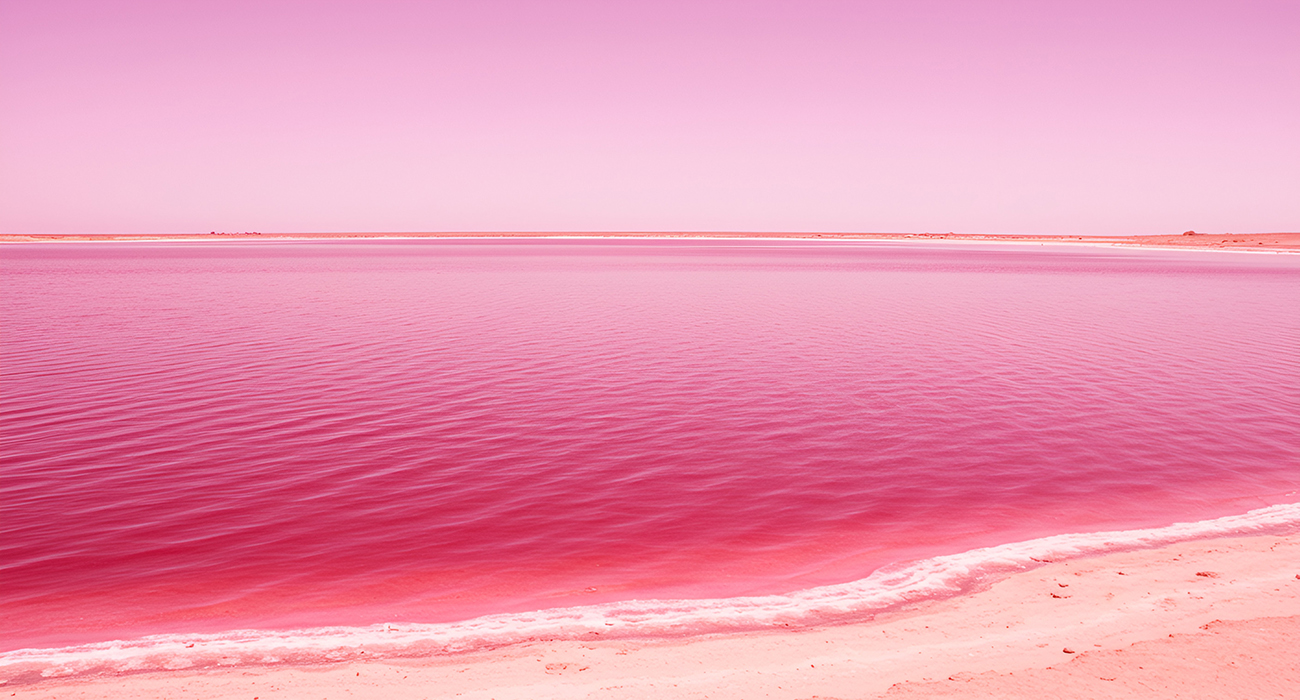
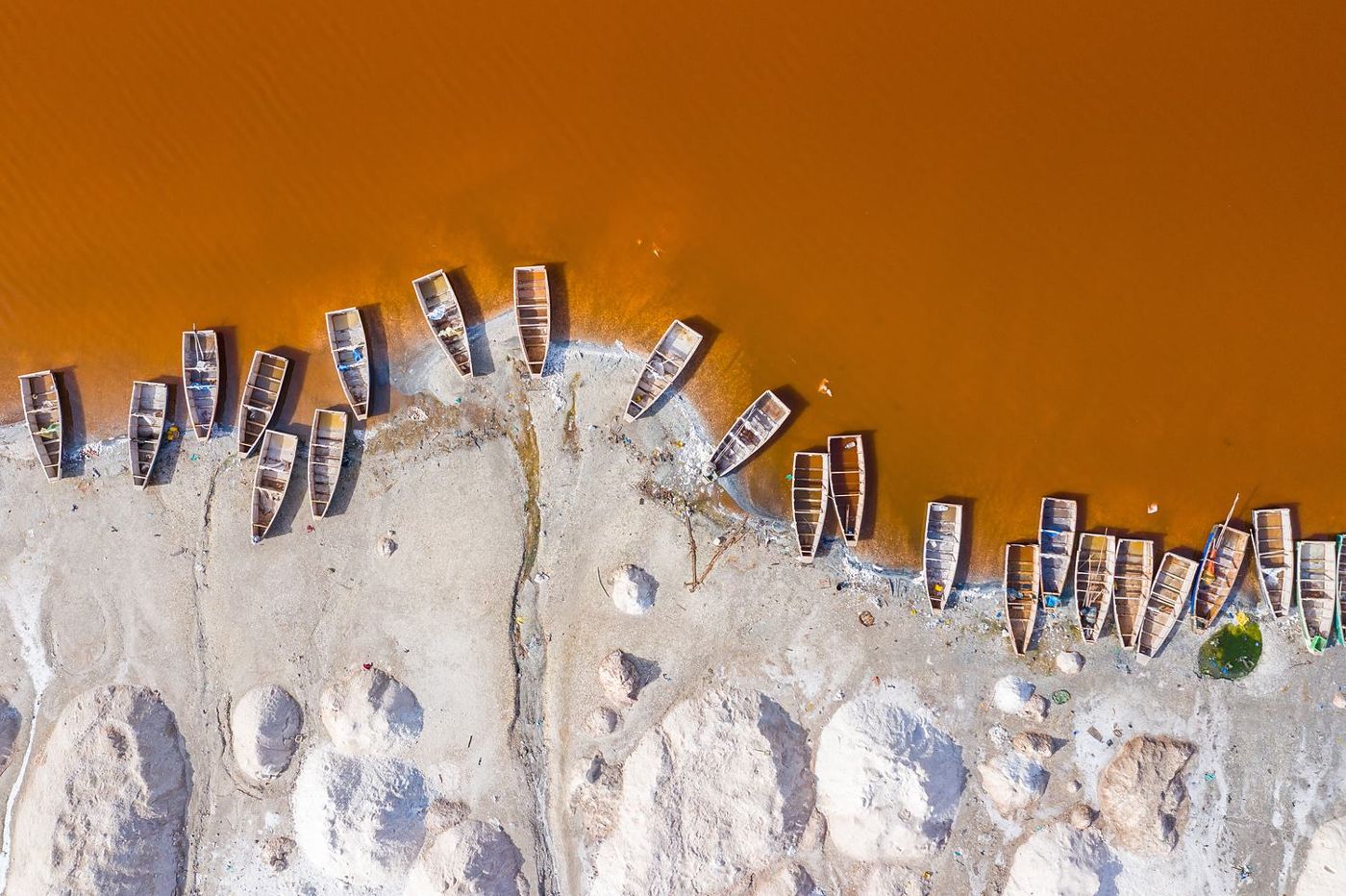
The pink comes neither from a mineral nor from pollution, but from a living thing: a micro-alga, Dunaliella salina, one of the few organisms able to thrive in water this salty. To protect itself from the intense sun, it produces a red pigment from the beta-carotene family. The saltier the water and the stronger the sun, the more it produces, and the more the lake turns pink, sometimes mauve in the late afternoon. That is why the colour is not an on-off switch: it varies with the season, the time of day, the wind and the sky. A sunny noon in the dry season is the peak; on an overcast morning in the hivernage, the lake can look greyish-green.
Water that holds you up
The same density of salt explains the most surprising experience of the visit: in Lac Rose, you float effortlessly on your back, just as people describe the Dead Sea. This is not a lake for swimming in; it is a curiosity to enjoy for a few minutes, with a few precautions that we detail below.
Salt as a wage
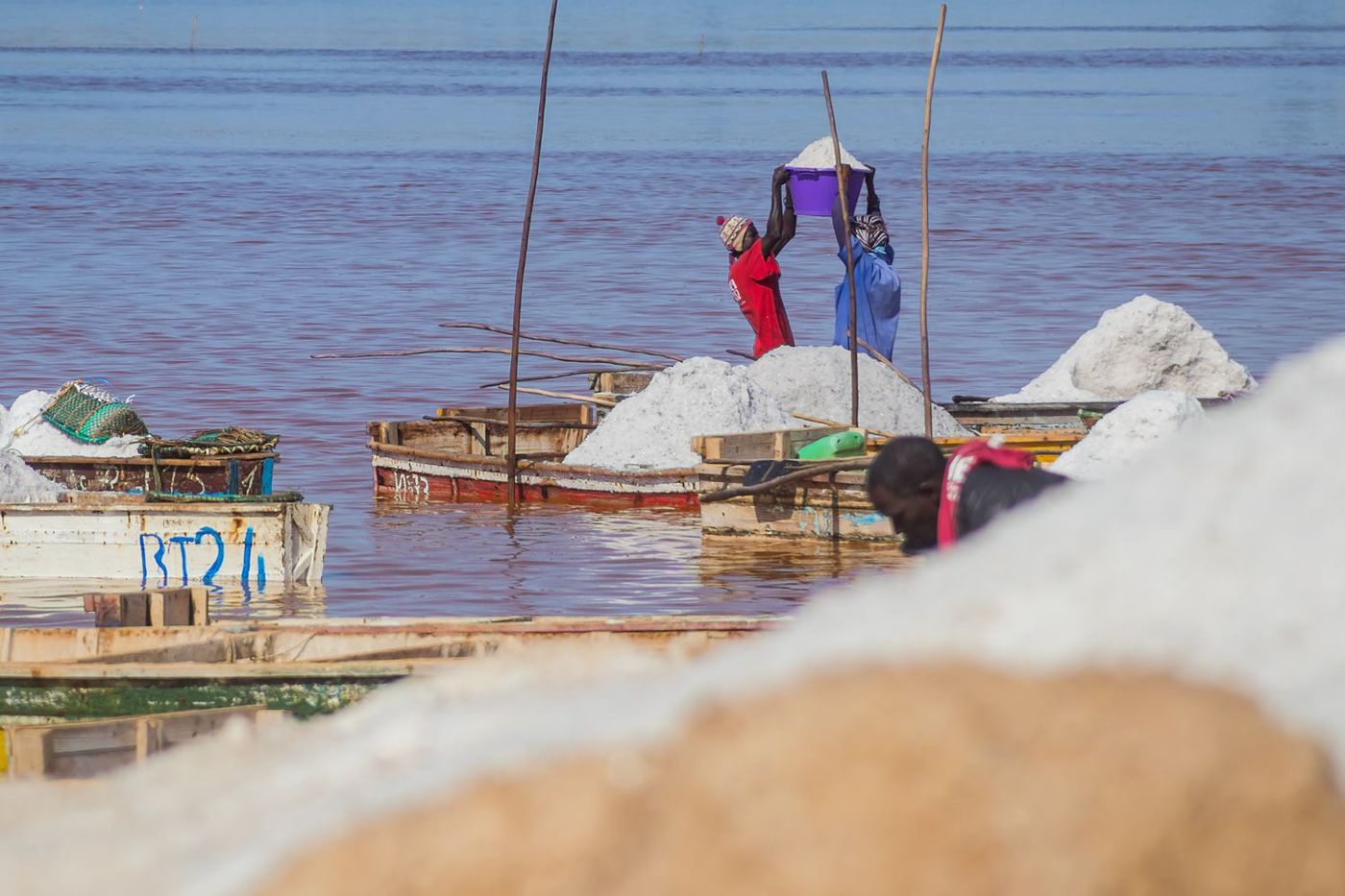
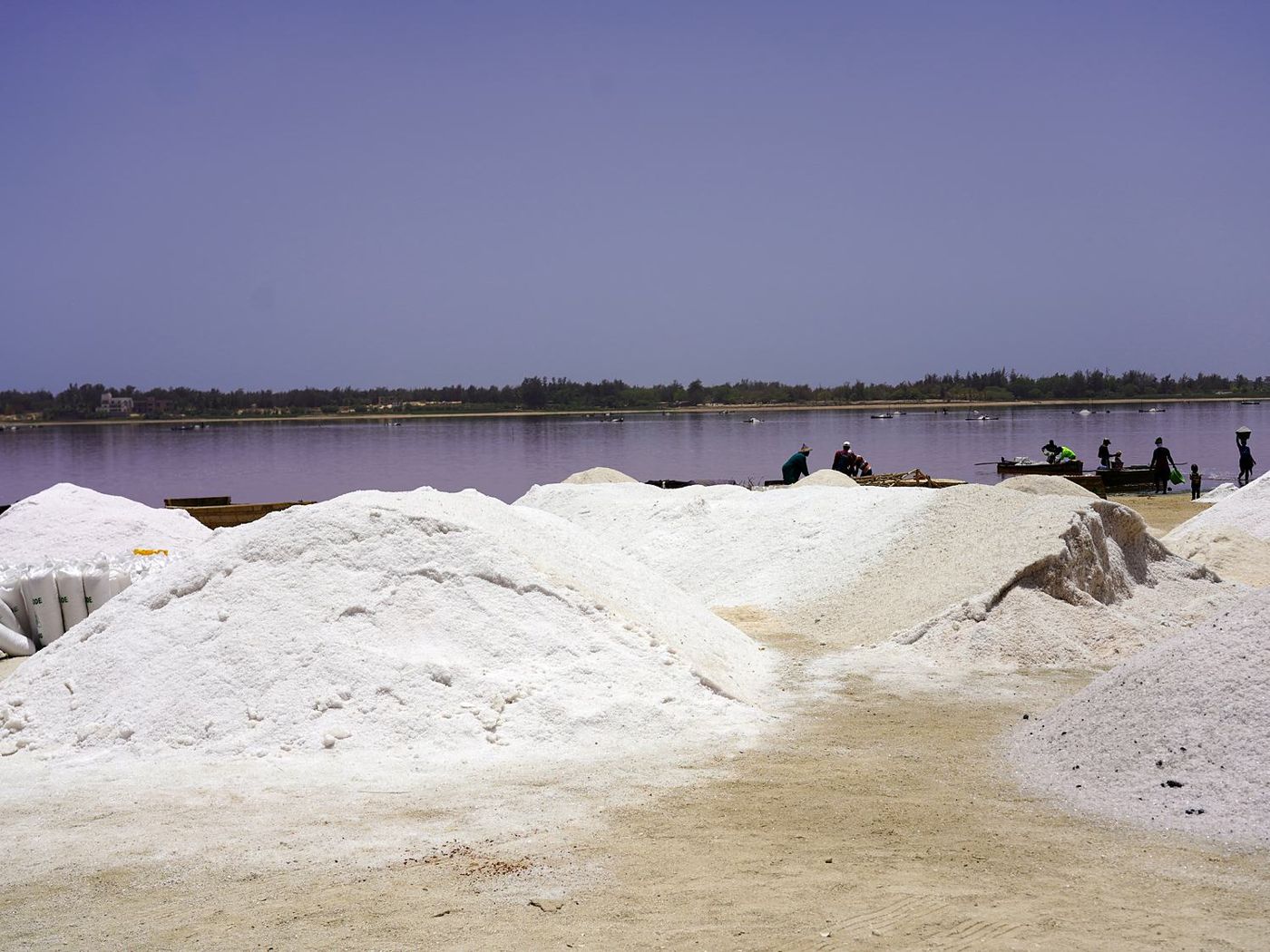
Finally, salt is an economy. For decades, around 3,000 harvesters have worked on the lake. Standing chest-deep in the water, they break up the crust that forms on the bottom with a pole, bring it up in baskets, load their pirogues, then unload the salt in heaps on the shore, where it dries. Before going into the water, the harvesters coat their bodies in shea butter to protect themselves from water that attacks the skin. The lake’s salt then travels all over the sub-region, much of it used to preserve fish. Depending on the year and the source, production runs into tens of thousands of tonnes: those white pyramids you are photographing are, for thousands of families, the month’s income.
2022: when fresh water switched the lake off
All of this depends on a balance, and the 2022 hivernage broke it. Exceptional rains flooded Dakar’s suburbs; to relieve the neighbourhoods under water, part of the rainwater was drained into the lake. The level rose within a few days, the fresh water diluted the salt, the alga stopped colouring the water and the salt stopped forming. The heaps stored on the banks melted away, the harvest stopped, and with it the pirogues, the sellers and a good share of the visitors. For nearly three years, Lac Rose was no longer pink.
The recovery came from the local people themselves. Harvesters’ associations and residents pooled their money, hired pumps and laid hundreds of metres of pipes to drain the excess water to the sea; the authorities then brought in additional pumping capacity. Little by little, the lake became concentrated again, and in spring 2025 the colour returned. Salt harvesting has resumed since 2025, at the pace at which the salt re-forms. The lesson is simple and applies to your visit: the pink is never a given; it depends on that year’s rain.
A legendary finish line, and a city drawing closer
The lake’s name went round the world long before social media. From its first edition in 1979 until 2007, the Paris–Dakar Rally most often held its finish on these shores, at the end of thousands of kilometres of desert. The 2008 edition was cancelled on the eve of the start, and the race moved to South America in 2009. The sand has kept the memory alive: the Africa Eco Race still celebrates the end of its route here, just before the official finish in Dakar, and in 2021 a round of an electric off-road championship was held on the same dunes. As early as 2005, the state added the lake to its UNESCO World Heritage Tentative List, where it still appears. Today, the danger is no longer just the water: housing estates and new neighbourhoods are spreading towards the lake, and local people are defending a balance that the city could also upset.