


Lieux emblématiques
Great Mosque of Touba: entering the holy city as a guest
In Touba, you do not arrive as a tourist but as a guest of the Mouride brotherhood. The history of the mosque,…
Read the article ›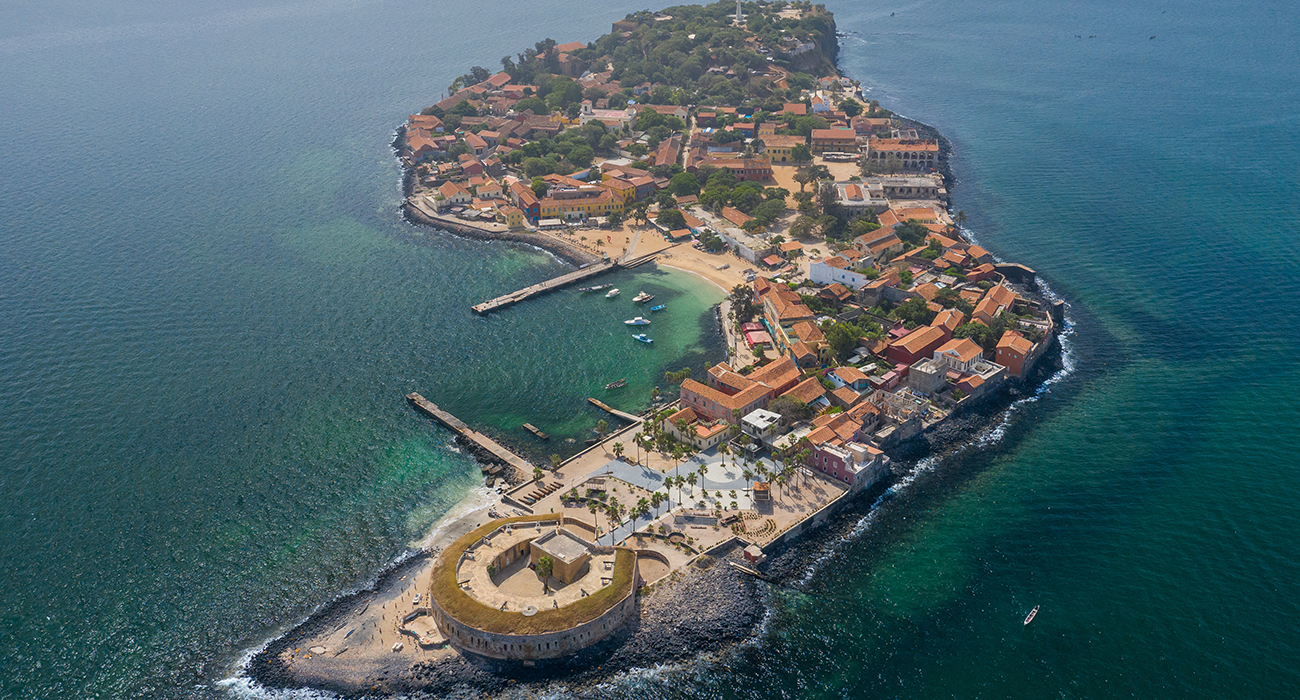
Home › Locations › Dakar Region › Dakar › Gorée Island: it is not one house that is listed, but the whole island
DAKAR
In 1978, UNESCO did not list a house, but an entire island. To understand Gorée, read it as a whole: forts, the Castel, merchants' houses, lived-in lanes, and a debate among historians that you are better off knowing about before you go.
On Gorée Island, almost all eyes turn to a single doorway, the one that opens onto the ocean at the back of the House of Slaves (Maison des Esclaves). Yet when UNESCO inscribed it as a World Heritage Site in 1978, it was not a house that it listed: it was an entire island, with its forts, its fortified plateau, its merchants’ houses and its lanes. If you take away only one piece of advice from this page, make it this one: read Gorée as a whole, and the memory of the slave trade will make far more sense than it ever can in front of a single threshold. Here is how to go about it, from the ferry ticket office to the top of the Castel.
| Region | Dakar Region, Dakar department; Gorée is one of the communes of the city of Dakar |
| Type | Inhabited, car-free island; historic site inscribed as a UNESCO World Heritage Site (1978) |
| Getting there from Dakar | By ferry only, from the ferry terminal at the port of Dakar; a crossing of under half an hour |
| Recommended time | A day; half a day at the very least |
| Official fees | Payable on site and not included in the price: return ferry (1,500 FCFA for a Senegalese adult, more for other categories, reduced for children), commune tax of 500 FCFA per visitor, site entry charges paid separately |
| Best time to go | November–May; weekdays rather than weekends; early in the morning |
| Good to know | The House of Slaves is closed on Mondays |
| Related QFS activities | Guided cultural tours, island excursions, art and craft workshops |
Live in Senegal? Gorée is probably the most accessible heritage outing in the capital: a ferry ticket at the national rate, a short crossing, and you are on an island without cars. The risk, for a resident, is thinking you know it because you saw it on a school trip. Come back with an adult’s eye: climb up to the Castel, go into the Fort d’Estrées, take the time to understand the layout of the island. It is also the ideal visit when family or friends come over from abroad. And if you book a guided tour with QFS, you get the resident rate: up to 30% off depending on the activity.
Just passing through? Do not make Gorée a two-hour stop squeezed in between two appointments. Allow the day, and be ready for an intense visit: at the House of Slaves, many visitors, particularly from the African diaspora, come to pay their respects. The rest of the island is a real village where families live. Bring cash, respectful clothing and good shoes, and note the time of the last ferry as soon as you arrive.
Gorée is tiny, barely thirty hectares or so, but it commands the harbour of Dakar. That is precisely what made it so coveted. The Portuguese landed here in the 15th century; they were followed by the Dutch, the English, then the French, who lost it and took it back several times before holding it until independence in 1960. Each occupier left its layer: fortifications, warehouses, multi-storey houses with inner courtyards, outside staircases, balconies. It is this ensemble, and not a single building, that UNESCO recognised as bearing witness to the Atlantic slave trade, describing it as a “symbol of human exploitation” and a “sanctuary for reconciliation”.
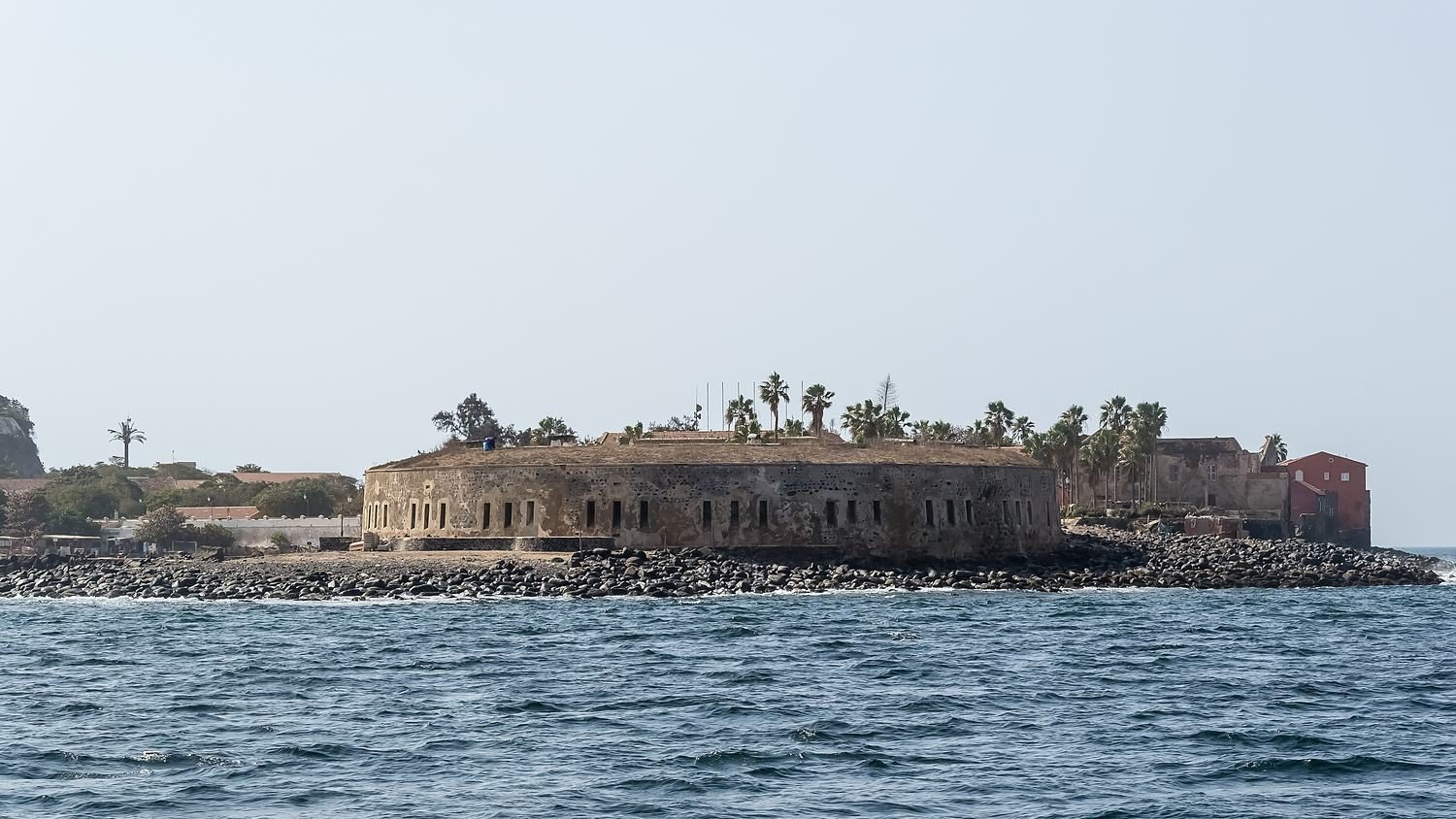
To the south, the Castel is the rocky plateau that towers over the island. You climb up through the lanes to find old cannons, military works, a memorial and the finest view of Gorée, the sea and Dakar opposite. To the north, facing the mainland, the Fort d’Estrées, a round fortress from the mid-19th century, houses the Historical Museum of Senegal, part of the Fundamental Institute of Black Africa (IFAN). Between the two lies the real setting of the slave trade and of colonial life: a military and trading post, where captives were held in several houses, not just one.
Gorée is also the story of the signares, women of mixed heritage who, in the 18th and 19th centuries, owned houses, ships and slaves, and carried great weight in the economy of the trading post. The House of Slaves itself is said to have been built at the end of the 18th century for the family of a signare. Understanding them means understanding that the island was not merely a place of transit: it was a society, with its hierarchies, its alliances and its violence.
This is where Gorée asks the most honesty of the visitor. The account passed on at the site since the 1960s, championed by Boubacar Joseph Ndiaye, for many years curator of the House of Slaves, speaks of captives by the million passing through this doorway. Many historians dispute these figures. Their estimates, based on trade records, speak of a few hundred people a year at the height of the activity, and a few tens of thousands over the whole period: a real but modest share of the more than ten million Africans deported across the Atlantic. The controversy broke publicly in December 1996 with an article in the newspaper Le Monde, and it provoked a strong reaction in Senegal.
The debate does not, however, pit Senegalese against foreigners. Senegalese researchers themselves have put forward low estimates while defending the site: the curator of the Historical Museum acknowledged that a simplified account had taken hold, while pointing out that memory needs strong symbols. The historian Ibrahima Seck, of Cheikh Anta Diop University, stresses that Gorée functioned mainly as a safe anchorage and a warehouse for a whole stretch of coast, and that the memory of a crime is not measured by a head count. Other archaeologists point out that captive populations leave few material traces.
Our position, to help you visit: hold on to both ends. The figures matter, and you have the right to know them. The symbol matters too: Gorée was not the largest departure port of the slave trade, but it has become the place where the trade is commemorated. That is indeed why Pope John Paul II came here in February 1992, and President Barack Obama in June 2013. For everything about the house itself, its visit and its precise history, see our page devoted to the House of Slaves.
Réservez votre sortie avec nos prestataires locaux. Le prix du service est distinct des éventuels coûts officiels réglés sur place.
Table d’hôtes dinner: West Indian specialities in Ngor-Almadies
Ngor · Welcome from 8 pm, single sitting at 9:30 pm
Guided visit of the Museum of Black Civilisations, Dakar
Dakar · 4h
Tour guide in Dakar: city visit and day excursions
Dakar · 3h-4h, Full day
| Fact | Figure | Note |
|---|---|---|
| World Heritage inscription | 1978 | The whole island, as a testimony to the Atlantic slave trade |
| Area | Thirty hectares or so | Published figures vary between sources |
| Status | Commune of the city of Dakar | Car-free island, no motor traffic |
| Construction of the House of Slaves | Late 18th century | Exact date debated among historians |
| Fort d’Estrées | Mid-19th century | Houses the Historical Museum of Senegal (IFAN) |
| Commune tax | 500 FCFA per visitor | Introduced in September 2022 |
| Captives who passed through Gorée | Figure debated | Millions according to the account passed on at the site; a few tens of thousands according to the most widely cited historical estimates |
The only way to reach Gorée is by ferry, from the ferry terminal at the port of Dakar, very close to the Plateau. The boats, for foot passengers only, run every day from early morning until evening, with different times at weekends and on public holidays. Tickets are bought at the ticket office on the day: you cannot book the crossing in advance. Keep some ID on you, as it may be asked for at the checkpoint. The crossing takes under half an hour. Timetables change with the season and the state of the fleet: rely on the board displayed on site, and check the time of the last return as soon as you step ashore.
| Official fee | Amount | Note |
|---|---|---|
| Return ferry, Senegalese adult | 1,500 FCFA | At the ferry terminal ticket office |
| Return ferry, other categories | Higher rate, displayed at the ticket office | Reduced rate for children |
| Commune tax | 500 FCFA per visitor | On top of the ticket; used for the upkeep of the island |
| House of Slaves, Historical Museum | Entry charged, depending on your category | Paid at the entrance to each site |
These amounts are official fees: they are paid on site, are not included in the price of activities booked on QFS, and no discount applies to them.
The Castel. The island’s high point and the best vantage point for understanding Gorée’s military logic. There are many artists’ workshops here, sand painting in particular: you will be welcome to watch; a polite refusal is enough if you do not want to buy.
The Fort d’Estrées and the Historical Museum of Senegal. The essential companion to the House of Slaves: here the slave trade is set within the long history of the country, from prehistory to the kingdoms, from colonisation to independence. If you have children, this is where they will understand it best.
The House of Slaves. The emotional heart of the visit, covered in detail on its own page. It is closed on Mondays.
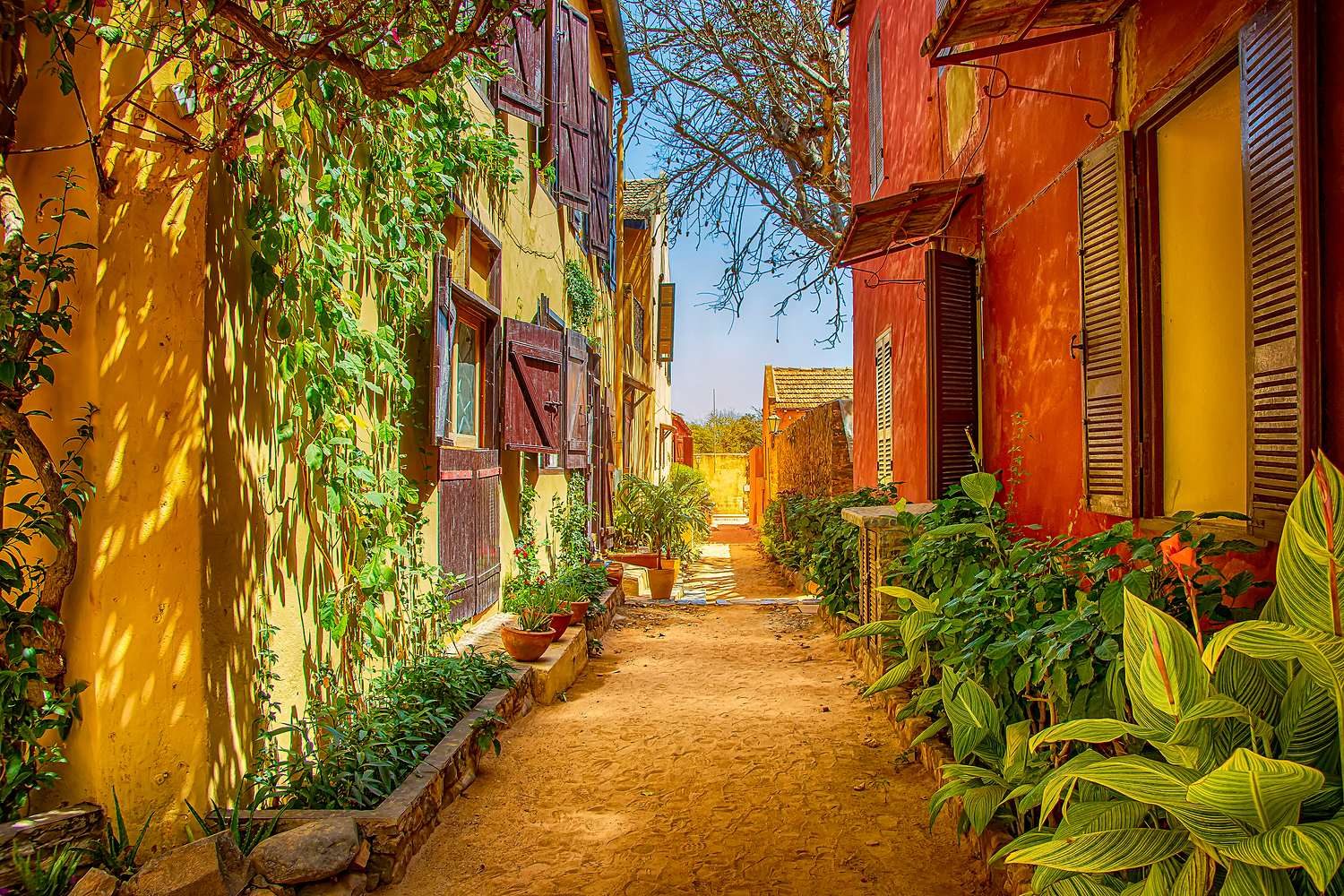
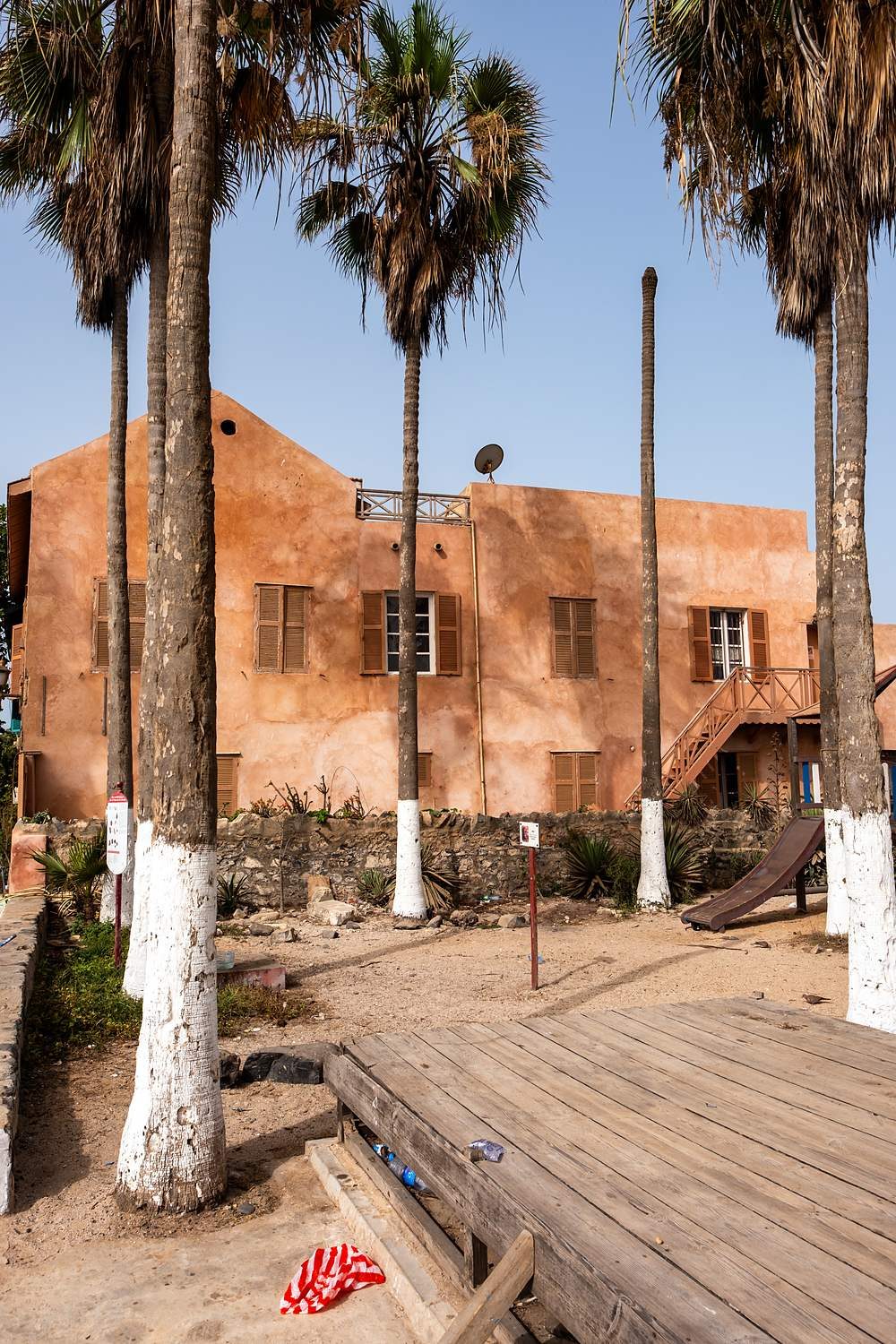
The lanes and the merchants’ houses. Ochre and pastel façades, bougainvillea, outside staircases, arcaded courtyards: walk without a map, the island is too small to get truly lost. Look out for the church and the mosque, which speak of the island’s religious coexistence.
The Museum of the Sea (Musée de la Mer). Another IFAN establishment on the island, it is the subject of a rehabilitation project: ask at the landing stage before adding it to your plans.
No longer on the island. The Henriette-Bathily Women’s Museum, which opened on Gorée in 1994, has moved to the Corniche Ouest in Dakar, at the Place du Souvenir Africain.
The little beach. Right next to the landing stage, a sheltered beach where the island’s families swim. Bring swimwear if you plan to stay for the afternoon.
Excursions, visites guidées et combinés : nos prestataires locaux organisent tout.
Guided visit of the Museum of Black Civilisations, Dakar
Dakar · 4h
Tour guide in Dakar: city visit and day excursions
Dakar · 3h-4h, Full day
Gorée and Pink Lake day excursion
Dakar · Full day
Gorée combines naturally with the mainland. Leaving the ferry terminal, you are in the Plateau, a stone’s throw from Dakar’s iconic markets. To follow the historical thread further, the Museum of Black Civilisations and the Théodore Monod Museum of African Art complement Gorée’s Historical Museum very well. At the end of the day, the African Renaissance Monument offers another, very contemporary perspective on the continent’s memory. If it is a quieter beach island you are after, see Ngor Island; for a nature outing at sea, the Madeleine Islands. To plan your stay, see our Gorée and Dakar pages and our ideal three-day itinerary in Dakar.
The dry season, from November to May, is the most comfortable for walking in the full sun. The rainy season (hivernage), July to October, is hot and humid, but the island is calmer then. The day of the week matters more than the season: at weekends and during the holidays, the ferries fill up and groups follow one after another; on weekdays, Gorée can breathe. Avoid Mondays if the House of Slaves is your priority.
During the day, the best order is as follows: the Fort d’Estrées and the Historical Museum in the morning, to set the context; the House of Slaves next, once you have the background; a fish lunch near the landing stage; then the Castel in the late afternoon, for the low light on the rooftops and the sun sinking into the Atlantic while Dakar lights up opposite.
The best way to read Gorée as a whole is to explore it with someone who knows its history, debates included. Find guided cultural tours and island excursions from Dakar. To round off the day on a creative note, see the workshops in painting & visual arts and crafts & traditional skills.
You pay 20% to secure your booking (the booking fee), and the balance is paid on site, on the day. The ferry, the commune tax and site entry charges are official fees, payable on site and not included in the price. If you live in Senegal, you get the resident rate: up to 30% off depending on the activity (the exact rate is shown on each listing).
In Touba, you do not arrive as a tourist but as a guest of the Mouride brotherhood. The history of the mosque,…
Read the article ›A good share of the water that runs from Dakar's taps comes from a lake in the Sahel, some 250 km to…
Read the article ›A Diola island with no road or bridge, deep in the *bolongs* (tidal creeks) of Oussouye, where the impluvium houses are homes,…
Read the article › Every Thursday · AYTHIA ÑU DEM
Good deals, news and highlights from Senegal, straight to your WhatsApp.
 On a computer? Scan this code to join the channel.


