Senegal & crafts: a country that wears its gold
To understand Senegalese crafts, start with gold. Jewellery-making is probably the country’s most prestigious skill, and its signature technique is filigree: very fine gold wire, drawn, twisted and then soldered into patterns so light they look like metal lace. The trade is passed down within families, from father to son or master to apprentice, in small workshops where people work with a blowtorch. In the 18th and 19th centuries, the signares, the wealthy mixed-race merchant women of Saint-Louis and Gorée, made it a mark of status: they paraded covered in gold jewellery. Their legacy lives on in a certain art of dressing well. Even today, a set of gold jewellery is made to order for a wedding, handed down from mother to daughter and counts as part of a woman’s wealth.
The second anchor is more recent: the Thiès tapestries. On 4 December 1966, shortly after independence, Léopold Sédar Senghor opened a state workshop in Thiès, which became the Manufactures sénégalaises des arts décoratifs, with the painter Papa Ibra Tall as its first director. The principle has not changed: an artist paints a cartoon, and weavers render it in wool on large high-warp looms. These tapestries hang in palaces, embassies and the United Nations headquarters in New York. The workshop has since expanded into ceramics and batik, and celebrates its 60th anniversary on 4 December 2026.
Between the goldsmith’s workshop and the state manufactory lies a whole country of trades. In Édioungou, near Oussouye, Diola potters take clay from the bolongs (tidal creeks), desalinate it, mix it with burnt, crushed shells, then fire their jars directly on the ground under dry wood and palm fronds; fruit juice gives them their burgundy glaze. The knowledge passes from mother to daughter, or from mother-in-law to daughter-in-law. In the Thiès Region, entire villages live off basketry: palmyra palm fibre in Lalane, rushes bound with coloured thread in the Wolof villages of the north-west, almost always in women’s hands. Further north along the same road, Ngaye Mékhé has made leather its signature, with its hand-stitched sandals, the dallu Ngaay. And in Dakar, reverse glass painting, suwer (from the French sous-verre), painted on the back of the glass, parades Cheikh Ahmadou Bamba, Lat Dior and scenes of everyday life (it has its place on the Painting page).
The meeting point for all these trades is the Soumbédioune craft village, on the Corniche Ouest, on the edge of the Médina. Founded in the early 1960s, it brings together woodcarvers, gold and silver jewellers, leatherworkers, basket weavers, glass painters and upcycling artisans. Since the tunnel was built, customers have become scarcer: going there also means supporting craftspeople who need it.
Formats: what you make with your hands
Each listing specifies the duration, the materials provided and what you take home. The workshops in this category fall into five families.
- Wood: an introduction to carving with gouge and mallet, starting from a simple shape, in a Dakar workshop.
- Beads and jewellery: beadwork, threading and assembly, to make a bracelet or necklace. This is the most child-friendly workshop.
- Needle and thread: crochet, sewing classes and training courses, from the first stitch to a simple piece, in one session or several.
- Upcycling: giving objects a second life, from a lamp made from repurposed materials to sculpture from bicycle parts in Saint-Louis. A true Senegalese tradition, where nothing is thrown away.
- Creative workshops: an African-inspired creative workshop for everyone, and a trades discovery workshop designed for children.
To see the great traditional skills on site, Édioungou pottery, the Thiès tapestries, the Soumbédioune workshops, look at the guided cultural tours and traditional sites & villages.
Where to try crafts in Senegal
- Dakar: most of what is on offer, plus Soumbédioune to round things off. Carving, beadwork, crochet, children’s workshops: enough to fill a Saturday without leaving the city. In the suburbs, Yeumbeul hosts a sewing course.
- The Petite Côte: a lamp-making workshop in Mbour and sewing classes in Nguékhokh, easy to slot in between beach days.
- Saint-Louis: the former capital of the signares, a town of jewellers, where bicycle parts are also turned into works of art.
- Thiès and its region: the Manufactures for tapestry, Lalane for basketry, Ngaye Mékhé for leather. A day on the road from Dakar, best organised with a driver.
- Casamance: the potters of Édioungou, by bike from Oussouye, to see the craft where it was born.
When to go
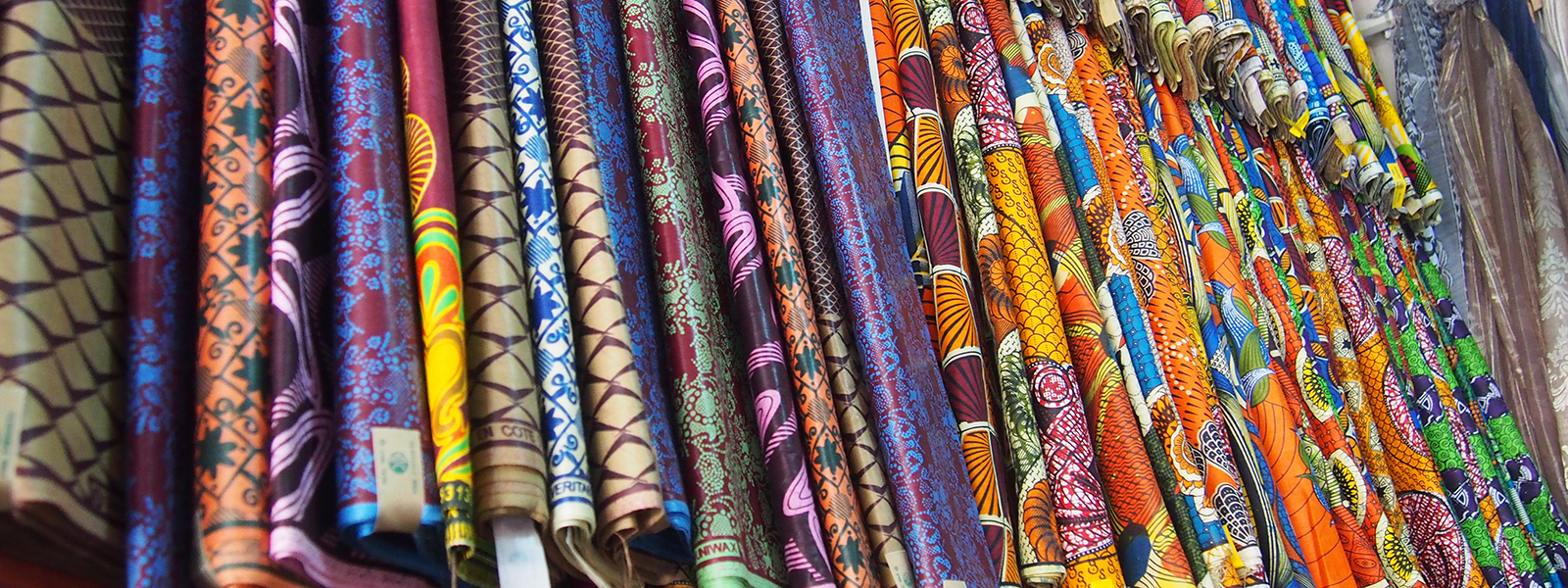
A craft workshop can be done all year round, indoors. The dry season, from November to May, is still the most pleasant for getting around, especially if you combine the workshop with Thiès or Casamance. During the rainy season (hivernage), July to October, the tracks of Lower Casamance sometimes turn muddy, but the Dakar workshops carry on as normal. Before Tabaski and Korité, when the whole country is preparing its outfits, tailors and workshops are swamped with orders: it is the time to see the machines whirring, not to ask for a made-to-measure piece within a few days. As for Thiès, note that the Manufactures celebrate their 60th anniversary in December 2026.
Good to know & budget
No prior experience needed: all these workshops are designed for beginners. Wear clothes you do not mind spoiling, as sawdust and glue get everywhere. A wooden object or a sewn piece sometimes needs finishing after the session: the listing tells you whether you leave with it the same day. And if the workshop makes you want to buy, buy directly from the craftsperson, at the craft village or the workshop. Senegalese basket weavers face competition from “Senegal-style” baskets made in Asia; every purchase made on the spot goes to the woman who wove it.
On Que Faire Sénégal, the price shown for each activity is the price of the service. It depends on the craft, the duration, the materials and the number of participants. You pay 20% to secure your booking (the booking fee). The balance is paid on site, on the day of the workshop. If you live in Senegal, you get the resident rate: up to 30% off (the exact rate is shown on each listing). For a workshop, there are no additional official fees.
Who is it for?
Families first of all: threading beads or trying crochet keeps children busy better than a screen, and the children’s workshops are made for them. Curious minds and lovers of beautiful objects, who want to understand a piece of jewellery or a statuette before buying it. And, finally, those who want a real trade in their hands, with the multi-session sewing courses.
Residents will find a regular hobby a couple of streets from home, and a chance to rediscover Soumbédioune, which they drive past without stopping. A sewing or crochet course can even become a useful everyday skill. Visitors gain two hours away from the souvenir shops, an encounter with a craftsperson, and an object that tells the story of their trip. Book the workshop early in your stay: you will look at the markets differently afterwards.
In the early 1960s, an American art historian, Marian Ashby Johnson, settled in Dakar and began visiting goldsmiths’ workshops. There she discovered that the craftsmen were melting down old jewellery to make fashionable new designs: every order erased a piece of history. So she started buying whatever she could save, more than 250 pieces over the years. Her collection, donated to the Smithsonian’s National Museum of African Art in Washington, was shown there under the title Good as Gold. That is what a filigree jewel is too: a skill that survives only if someone keeps practising it.
Frequently asked questions
Do I need any experience to join a craft workshop?
No. Carving, beadwork, crochet and sewing can all be tackled with no experience at all: the craftsperson adapts the technique to each person. The multi-session sewing courses suit those who want to go further.
How is this different from the Dyeing, textiles & sewing category?
Everything to do with dyeing and weaving, indigo, thioub, batik, Manjak cloth, has its own page. Here, you work with wood, beads, thread, upcycled materials and clay.
What is Senegalese filigree?
It’s the signature technique of the country’s jewellers: very fine gold wire, twisted and soldered into openwork patterns, like metal lace. The signares of Saint-Louis and Gorée made it a symbol of status, and gold jewellery is still handed down from mother to daughter.
Where can I see craftspeople at work in Dakar?
At the Soumbédioune craft village, on the Corniche Ouest, on the edge of the Médina: woodcarvers, jewellers, leatherworkers, basket weavers and glass painters work and sell their pieces there.
Do I take home what I make?
Usually, yes. Some pieces need drying or finishing: each activity’s listing tells you what you take away and when.
How do I book and how much should I budget?
The price is shown on each activity. You pay 20% to secure your booking (the booking fee), and the balance is paid on site, on the day of the workshop. You get the resident rate: up to 30% off, and there are no additional official fees for a workshop.