Lieux emblématiques
Great Mosque of Touba: entering the holy city as a guest
In Touba, you do not arrive as a tourist but as a guest of the Mouride brotherhood. The history of the mosque,…
Read the article ›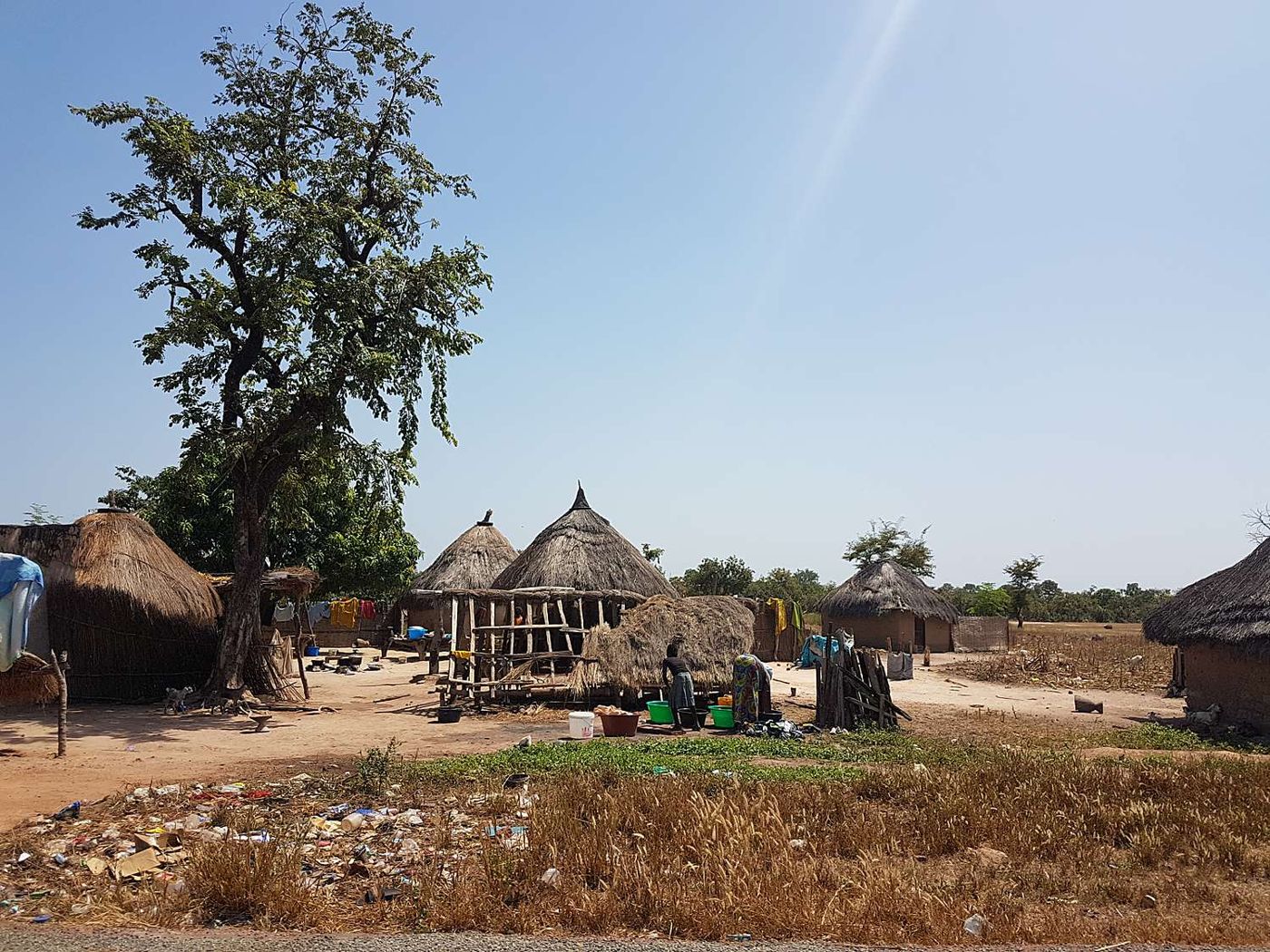
Home › Locations › Casamance › Éloubaline › Éloubaline Island: at the end of the creek, the houses that drink the rain
CASAMANCE
A Diola island with no road or bridge, deep in the *bolongs* (tidal creeks) of Oussouye, where the impluvium houses are homes, not museum pieces. You arrive by pirogue; you leave having understood a whole region.
On Éloubaline Island, the journey begins before you arrive: there is no road and no bridge, just a pirogue that leaves the Oussouye bank and slips into the mangrove. At the end of it lies a Diola village where the impluvium house (case à impluvium), a banco (mud brick) dwelling whose thatched roof dips into a funnel to collect the rain, is still lived in. The mistake would be to come looking for a stage set. Come as a guest, with a guide from the village, and let the crossing do half the work.
| Region | Casamance — Ziguinchor Region, Oussouye department, Loudia Ouoloff arrondissement, Oukout commune |
| Type | Diola island village in the mangrove of the bolongs; inhabited impluvium houses, rice paddies |
| Access | By pirogue only, from the Oussouye bank, usually from Édioungou: about 45 minutes to an hour |
| Getting there from Dakar | A long day on the road via the Gambia, a night on the ferry to Ziguinchor, or a flight to Casamance; then the road to Oussouye |
| Recommended time | Half a day, boat trip included |
| Official fees | No additional official fees |
| Best time to go | Dry season, November–May |
| Related QFS activities | Pirogue trips, island excursions, traditional sites & villages, guided cultural tours |
Live in Senegal? The impluvium house features in every textbook, on postcards and in every speech about Casamance’s heritage. Few people have seen one lived in, with washing drying, rice waiting to be pounded and children running across the courtyard. Éloubaline is the chance to fill that gap over a long weekend in Oussouye or Cap Skirring. On outings booked through QFS, you get the resident rate: up to 30% off.
Just passing through? Do not squeeze Éloubaline in between two mornings on the beach as a box to tick. Set off early, accept the pace of the pirogue and the tide, and let the guide introduce you before you go in anywhere. You are visiting a village where people live, work and pray: greet people, ask before taking photos, and keep away from sacred places.
Éloubaline is an island in Lower Casamance, set in the maze of saltwater channels, the bolongs, that cut through the delta east of Oussouye. Administratively, it comes under Oukout commune, in Oussouye department. In practice, it depends on the water: everything that reaches the island, from a sack of rice to a visitor, arrives by pirogue.
This isolation explains what you find here. Where the mainland has seen breeze-block and corrugated-iron houses gain ground, Éloubaline has kept part of its traditional architecture. People live mainly off rice growing and fishing, and the traditional Diola religion, often described as animist, is still the majority faith here: sacred groves, shrines and ceremonies still set the rhythm of village life.
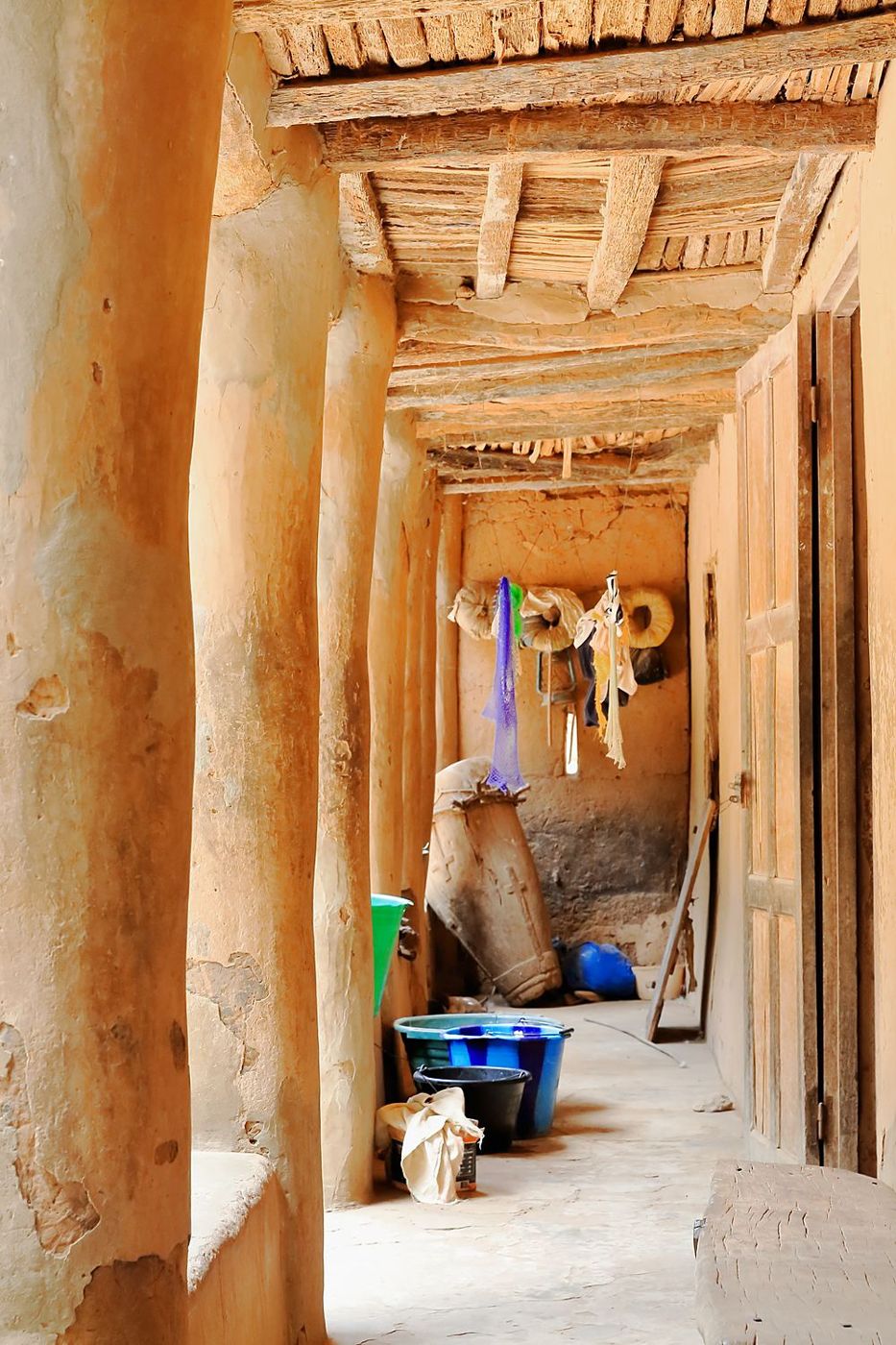
The house that drinks the rain. The impluvium house can be summed up in a single image. Rooms of banco, raw earth mixed with straw, are arranged in a ring around a small open-air courtyard. Instead of shedding rain outwards, the thatched roof slopes inwards, like a flower’s corolla, and channels it to the centre, where it is collected. The courtyard brings light and air into the rooms, the thick walls keep them cool, and several families can share the same roof. On an island surrounded by salt water, knowing how to harvest water from the sky is anything but a decorative detail.
You will find the same design at Énampore, in the former Bandial kingdom, and a small museum of Diola culture set up in an impluvium house in Mlomp. But it is on Éloubaline, with no road and no display case, that the house can best be read for what it is: a tool for living.
Rising salt. Isolation has its downside. Like the other islands of Lower Casamance, Éloubaline lives with the advance of salt water, which threatens rice paddies across the whole region. Keeping this in mind changes the visit: the rice you see growing has to hold its own against the salt every year.
Réservez votre sortie avec nos prestataires locaux. Le prix du service est distinct des éventuels coûts officiels réglés sur place.
Weekend stay at Oussouye and Saint-Georges Point
Casamance · Full day, 2 days, 3 days
Pirogue trip to Carabane Island: fishing village and dolphins
Carabane · Half-day
Three-day Diola villages tour in Casamance
Cap Skirring · 3 days
| Fact | Figure | Note |
|---|---|---|
| Administrative area | Oukout commune, Loudia Ouoloff arrondissement, Oussouye department | Ziguinchor Region, Lower Casamance |
| Neighbours | Énampore to the north, Oussouye to the west | Across the bolongs |
| Access | Pirogue only | No road, no bridge |
| Crossing from Édioungou | About 45 minutes to an hour | Depending on the boat and the tide |
| Housing | Banco impluvium houses, funnel-shaped thatched roofs | Inhabited |
| Village activities | Rice growing, fishing | Rice paddies along the bolong |
| Official fees | None | No entry charge |
Everything starts in Oussouye. From Ziguinchor, the tarmac road gets you there in about 45 minutes to an hour; from Cap Skirring, allow half an hour. Most often, the pirogue leaves from Édioungou, the potters’ village, a few kilometres from the town: make the most of it to watch a jar take shape before you set off.
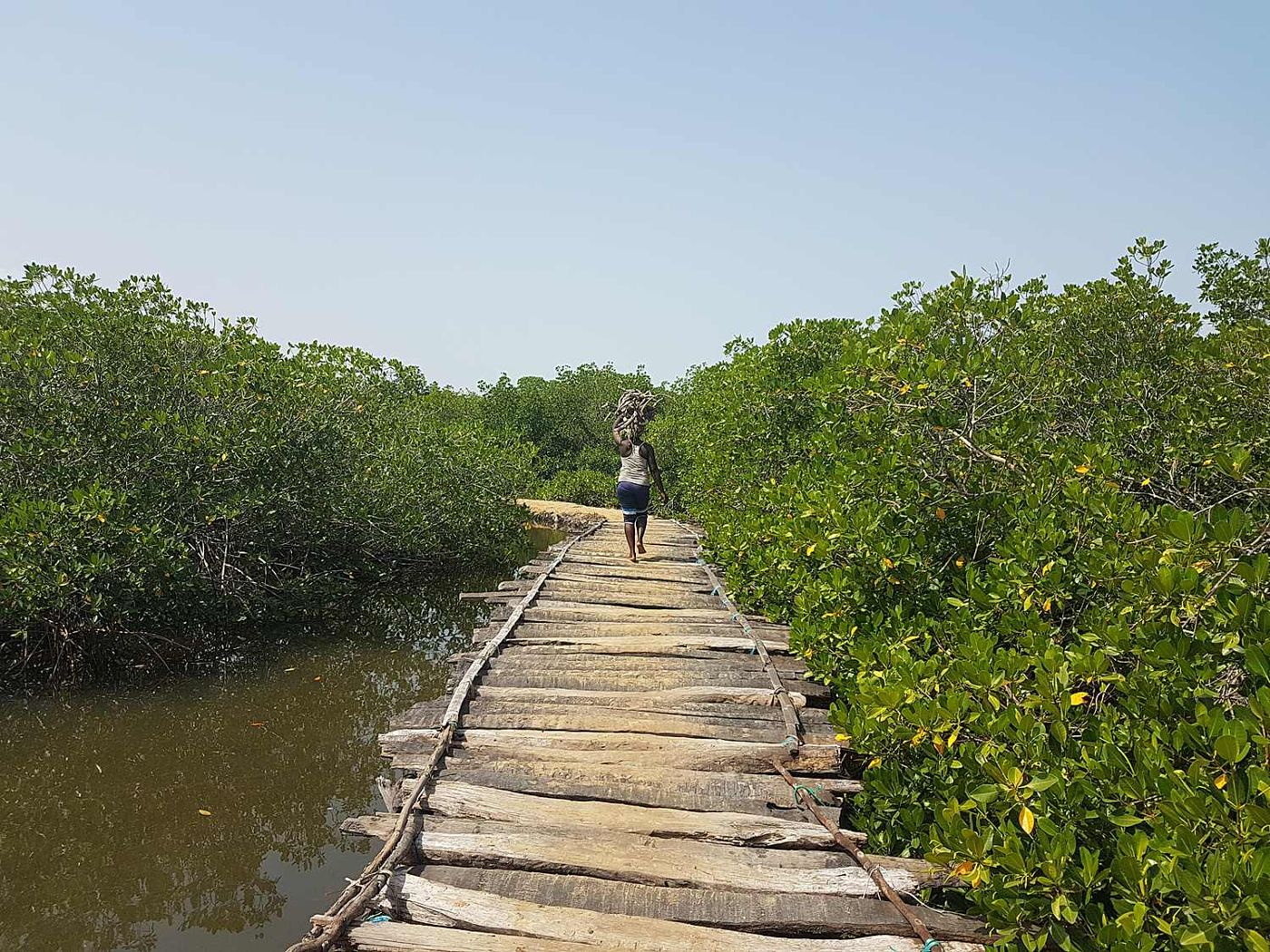
The crossing takes about 45 minutes to an hour, between two walls of mangrove trees, at the pace of the tide. From Dakar, there are three ways down: a flight to Casamance, the night ferry to Ziguinchor, or a long day on the road through the Gambia.
Official fees. No additional official fees: there is no entry charge for the island. On site, a guide from the village leads the visit; if you are asked for a contribution to the village, agree on it before you start and bring cash, withdrawn before you set off.
Excursions, visites guidées et combinés : nos prestataires locaux organisent tout.
Mountain bike and pirogue trip in Casamance
Casamance · 6h
On the bank, Édioungou and its potters are the natural starting point. About ten kilometres from Oussouye, Mlomp keeps its two-storey banco houses. To the north, Énampore shows off the impluvium houses of the Bandial country. Towards the river mouth, Elinkine opens onto Carabane Island, and Pointe Saint-Georges extends the day by pirogue. To organise everything, see our Éloubaline page and the overview of Casamance.
| Period | What happens | Our view |
|---|---|---|
| November–February | Dry season, milder air | The best window for the pirogue |
| March–May | Still dry, hotter | Very good, if you set off early in the morning |
| June–October | Rainy season (hivernage): green rice paddies, humid heat, mosquitoes | The most beautiful landscape, the toughest outing |
Set off in the morning: the light is soft on the mangrove and you are back before the heat. At the end of the rainy season, the festival of the king of Oussouye brings together the villages of the kingdom: a good reason to stay longer.
You reach Éloubaline with an independent local professional, setting off from Oussouye or the nearby bank: browse pirogue trips through the bolongs, island excursions, traditional sites & villages and guided cultural tours of Diola country. To combine cycling and pirogue, see the guided hikes; to get here, the airport / Cap Skirring – Ziguinchor transfers.
The price shown is the price of the service. You pay 20% to secure your booking (the booking fee), and the balance is paid on site, on the day, to the professional. There are no additional official fees. If you live in Senegal, you get the resident rate: up to 30% off (the exact rate is shown on each listing).
In Touba, you do not arrive as a tourist but as a guest of the Mouride brotherhood. The history of the mosque,…
Read the article ›A good share of the water that runs from Dakar's taps comes from a lake in the Sahel, some 250 km to…
Read the article ›A quarter of an hour to half an hour by pirogue from Ndangane, Mar Lodj is defined by what it does not…
Read the article › Every Thursday · AYTHIA ÑU DEM
Good deals, news and highlights from Senegal, straight to your WhatsApp.
 On a computer? Scan this code to join the channel.