Énampore: the impluvium house of Bandial country | QFS
Accueil » Points of interest – Ziguinchor region » Énampore: the house that drinks the rain, at the end of the Bandial road

Home › Locations › Casamance › Énampore › Énampore: the house that drinks the rain, at the end of the Bandial road

CASAMANCE

Énampore: the house that drinks the rain, at the end of the Bandial road

A Diola village in the former Bandial kingdom where the impluvium house is not a showcase but a home. The road there has to be earned; what you come to understand is worth the trip.

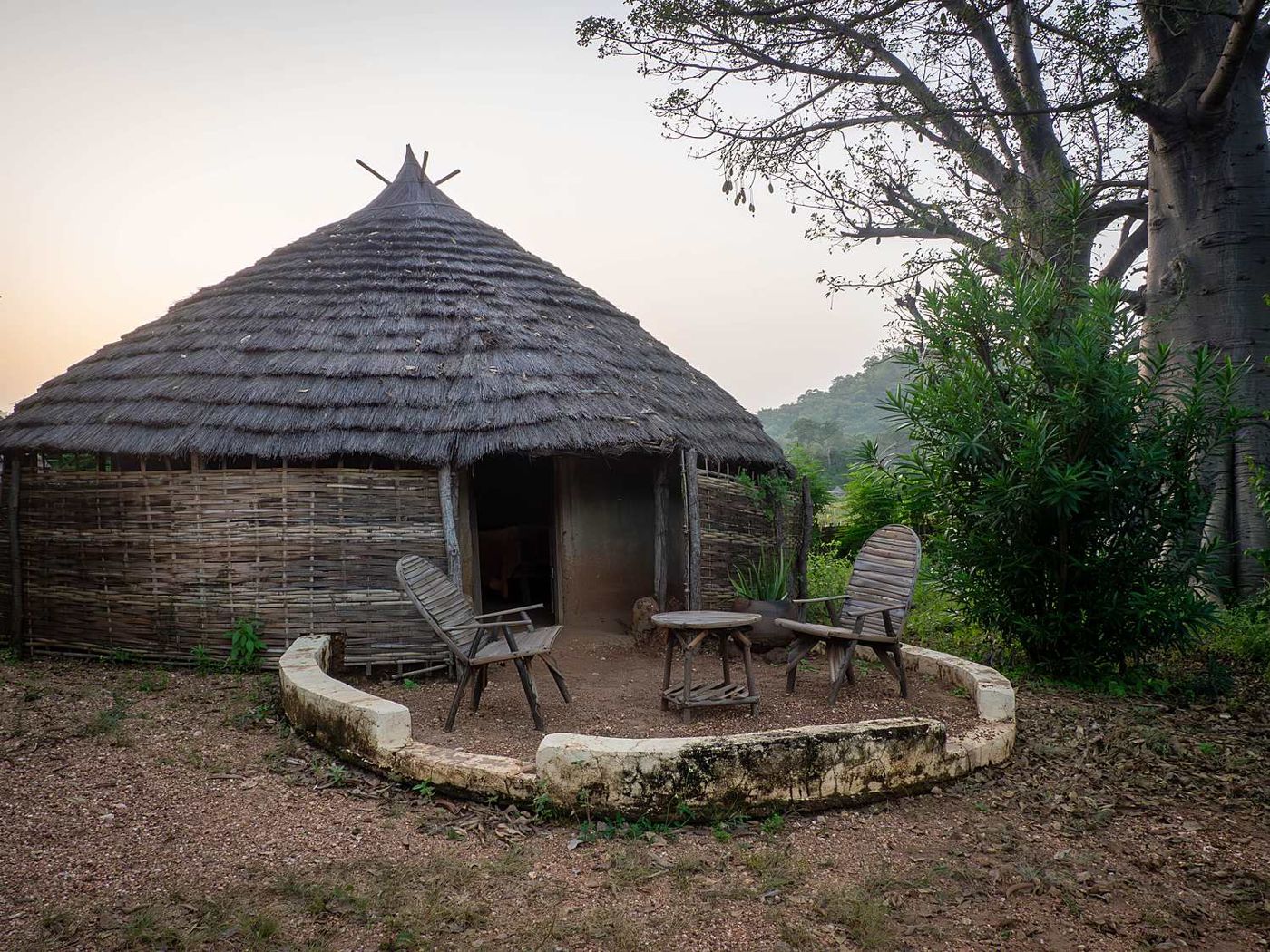
In Énampore, you do not come to see a house: you come to understand how a house can drink the rain. At the end of a forest track, in a Diola village of the former Bandial kingdom, the impluvium house hollows its thatched roof into a funnel open to the sky, and the whole building revolves around this water falling from above. The trap is to look at it for ten minutes and leave. Take the village guide, walk to the rice fields, skirt the sacred groves without entering them: that is where the house takes on its meaning.

At a glance

RegionCasamance — Ziguinchor Region and department, Nyassia arrondissement, main town of Énampore commune
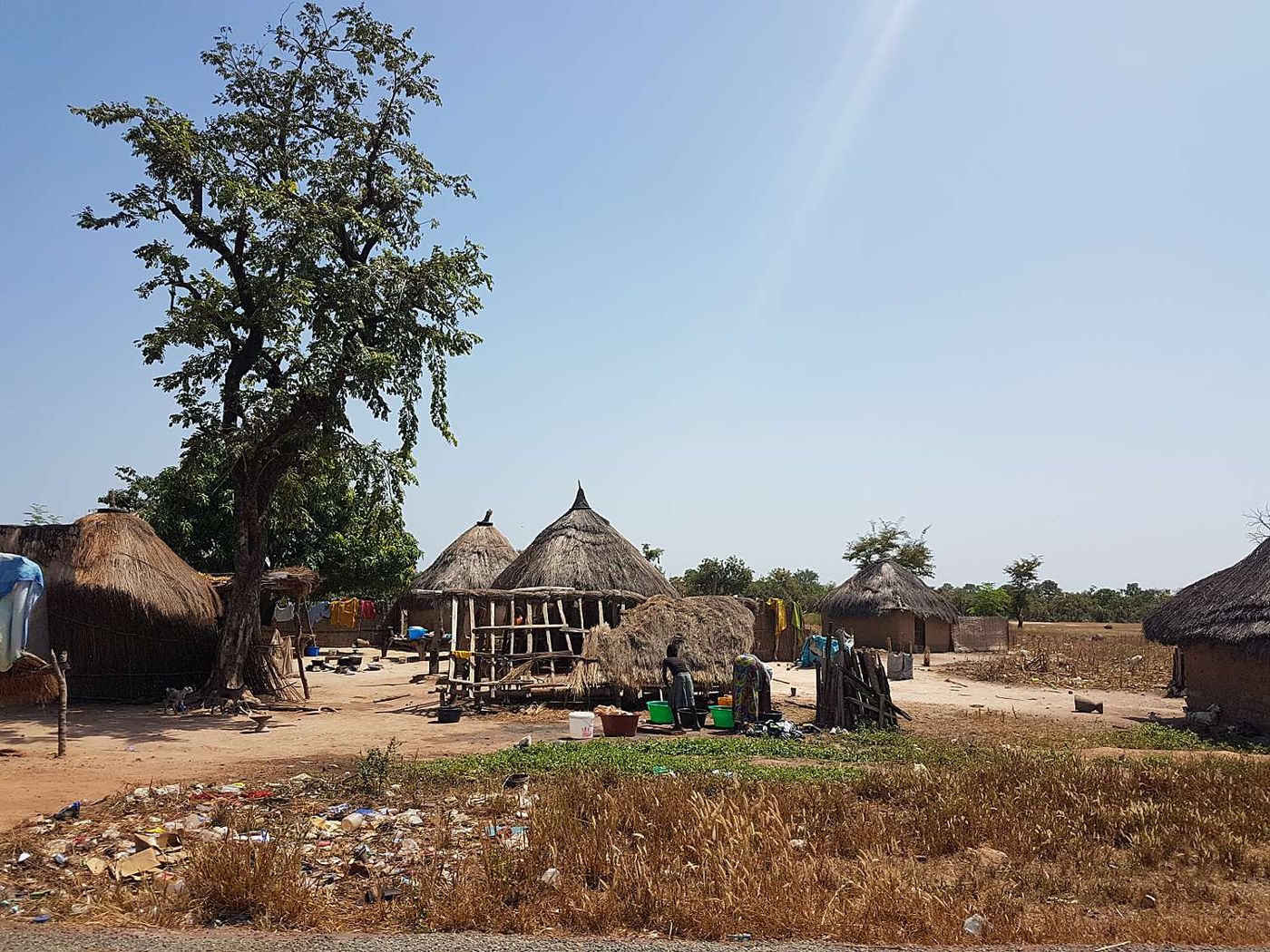
TypeDiola village in Bandial country; lived-in impluvium houses, rice fields, sacred groves
Getting there from ZiguinchorSome twenty kilometres: the Oussouye road, then a forest track from Brin; usually under an hour
Getting there from DakarA long day’s drive via the Gambia, a night on the boat to Ziguinchor, or a flight to Casamance
Recommended timeHalf a day from Ziguinchor; a night in the village to really experience it
Official feesNo additional official fees
Best time to goDry season, November to May
Related QFS activitiesGuided tour of the village (royal site, sacred groves, impluvium house), traditional sites & villages, pirogue trips

Resident or visitor: the same door, two reasons to open it

Live in Senegal, and especially in Ziguinchor? Énampore is the outing you keep putting off because it is “just next door”. Yet a morning is enough. Bring the children: sitting under the opening in the roof, they work out for themselves why it is cooler inside than out in the sun. On the tour booked through QFS, you get the resident rate: up to 30% off.

Passing through Lower Casamance? Do not turn Énampore into a photo stop between two beaches in Cap Skirring. Families live here. The guide introduces you, tells you where you may go in and what not to photograph. If your schedule allows, stay the night: when you wake up, the track is silent and the village feels a little more yours.

A house built around a hole in the roof

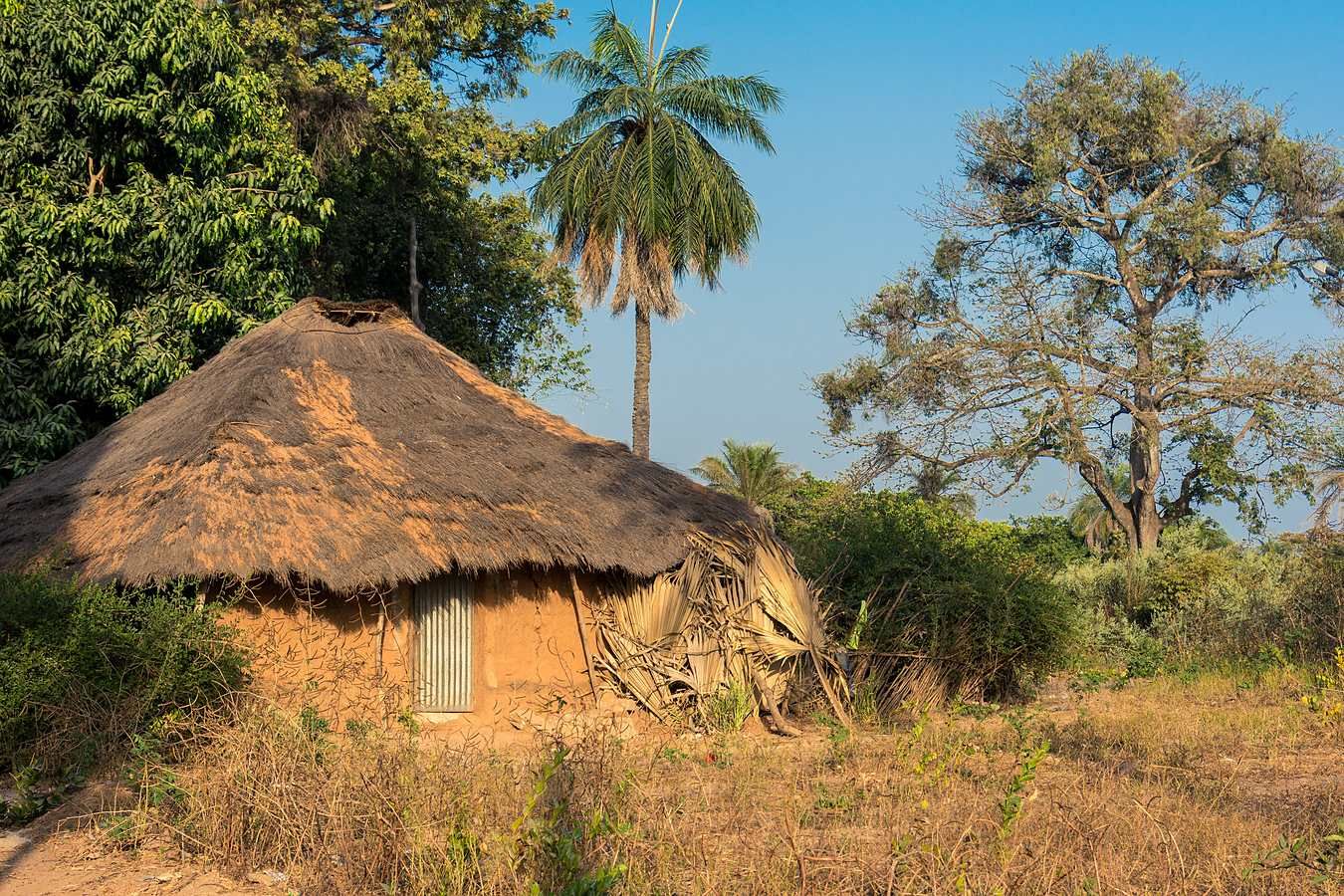
The impluvium house is the signature of Bandial country, the small Diola territory between the Oussouye road and the left bank of the Casamance River that was once called the kingdom of Mof Ëwi. Its principle comes down to one image: a ring of rooms in banco (mud brick), raw earth mixed with straw, around a small courtyard open to the sky. The thatched roof does not slope outwards as it does everywhere else; it falls inwards, like a corolla, and channels the rain into a basin in the centre. The courtyard lights the shared room, the thick banco keeps it cool, and several households used to share the same roof.

The impluvium houses of the Bandial kingdom, to which Énampore and its neighbour Séléki belong, are on the UNESCO World Heritage Tentative List. That is not protection: an earth house survives only if it is maintained, and concrete buildings are gaining ground. Your visit is part of what keeps them standing.

Énampore also holds a special place in the history of travel in Senegal. It was here, in the 1970s, that one of the country’s very first campements (village guesthouses) was born: accommodation built and run by the village itself, so that the visitor’s money stays with those who welcome them. The idea was then taken up by other villages in Casamance.

  • Traditional sites & villages

    Day in the Diola villages from Cap Skirring

    Cap Skirring · Day (8:30 am – 6 pm)


    From77 000 CFA
    Resident price73 150 CFA−5 %
  • Guided cultural tours

    Weekend stay at Oussouye and Saint-Georges Point

    Casamance · Full day, 2 days, 3 days


    From39 600 CFA
    Resident price37 620 CFA−5 %
  • Nature & culture discoveries

    Pirogue trip to Carabane Island: fishing village and dolphins

    Carabane · Half-day


    From22 000 CFA
    Resident price19 800 CFA−10 %

Key facts & figures

FactFigureNote
Administrative areaÉnampore commune, Nyassia arrondissement, Ziguinchor Region and departmentÉnampore is the main town of the commune
Historical territoryFormer Bandial kingdom (Mof Ëwi)With Séléki and Bandial, among other villages
HeritageImpluvium houses of the Bandial kingdom on the UNESCO World Heritage Tentative ListA preliminary step: not World Heritage status
Village tourismOne of Senegal’s first campements1970s
Distance from ZiguinchorSome twenty kilometresTarmac, then a forest track
Official feesNoneNo entry charge for the village

Getting there & official fees

From Ziguinchor. Take the Oussouye road, then leave the tarmac at Brin for a track through the forest. Usually allow under an hour, longer during the rainy season (hivernage). From Dakar, first get to Ziguinchor: by plane, by the night boat or by road via the Gambia.

The state of the Bandial road. Let us be frank: this is the weak point of the trip. The Brin–Bandial road, which serves Énampore and the neighbouring villages, is regularly described by residents, their elected representatives and the Bishop of Ziguinchor as one of the most difficult roads in the region, and there have been repeated calls for it to be rebuilt. In the dry season, the track can be driven without major difficulty, with patience; during the rainy season, ruts and puddles make it slow, and a high-clearance vehicle is better. Do not take it at night.

Official fees. No additional official fees: there is no entry charge for the village. On the guided tour booked through QFS, the visit to the impluvium house is included.

What to see

  • The impluvium house. The heart of the visit: the central courtyard, the basin, the large shared room and the ring of bedrooms. You go in with the guide, as you would enter someone’s home.
  • The royal site. The place associated with the former Bandial royalty, which the village guide presents along with its customs.
  • The sacred groves. Forests of prayer and initiation that you skirt without entering; you never photograph altars or fetishes there. The guide tells you how far to go.
  • The school museum. The guided tour also offers, as a short option, a stop at the village’s school museum. Do not confuse it with the museum of Diola culture housed in an impluvium house: that one is in Mlomp, near Oussouye.
  • The rice fields. Around the village, plots won from the low-lying land. At the start of the rainy season, the soil is turned with the kadiandou, the long Diola spade-shovel; by the end of the rainy season, everything is green.
  • The kapok trees. Huge trunks, buttress roots: these giants of the Bandial forest give the landscape its scale, among palmyra palms and oil palms.
  • Adventure & outdoors

    Bike hire in Cap Skirring

    Cap Skirring · Half-day


    From5 500 CFA
    Resident price5 225 CFA−5 %
  • Excursions & adventures

    Mountain bike and pirogue trip in Casamance

    Casamance · 6h


    From28 160 CFA
    Resident price22 528 CFA−20 %
  • Quad & buggy

    Quad biking in Cap Skirring

    Cap Skirring · 2h, Full day


    From49 500 CFA
    Resident price47 025 CFA−5 %

Nearby

On foot or by bike, a track leads to Séléki, Énampore’s neighbour, also known for its impluvium houses. To see more houses that are still lived in, take the pirogue to Éloubaline Island, from Édioungou and its potters. Mlomp adds its two-storey banco houses and its small Diola museum, and the town of Oussouye is the base for all of Diola country. Further on, Carabane Island. To plan your stay, our Énampore page; for the bigger picture, our Casamance page.

The right time

PeriodWhat happensOur view
November–FebruaryDry and mild, track passableThe best window for walking and getting around
March–MayDry and hotVery good: the coolness of the house comes into its own
June–OctoberRainy season: green rice fields, the impluvium really collects the rainSpectacular, but a slow track and mosquitoes

Arrive early: the walk to the rice fields is still done in the cool. Keep the afternoon for Séléki.

Practical tips

  • Photos: ask before photographing a person or the inside of a house; never in a sacred grove.
  • Clothing: modest clothing, closed shoes for the track and the rice fields.
  • Cash: in small notes, withdrawn in Ziguinchor; no card payments in the village.
  • Mosquitoes and sun: repellent at dusk, a hat, plenty of water.
  • Safety: drive the track by day and check your country’s official travel advice before heading to Casamance.

Book an activity here with QFS

The guided tour of Énampore, one of our guided cultural tours, is led by a guide from the village, in short, flexible formats: royal site, sacred groves, school museum, with the impluvium house included. To broaden your trip, see the traditional sites & villages of Lower Casamance, pirogue trips through the bolongs (tidal creeks) and guided hikes. To get here, see the airport / Cap Skirring – Ziguinchor transfers and intercity transfers.

The price shown is the price of the service. You pay 20% to secure your booking (the booking fee), and the balance is paid on site, on the day, to the local professional. There are no additional official fees in Énampore. If you live in Senegal, you get the resident rate: up to 30% off (the exact rate is shown on each listing).

Frequently asked questions

What is an impluvium house?
It’s the traditional Diola house of Bandial country: a ring of banco rooms around an open courtyard, under a funnel-shaped thatched roof that channels the rain into a central basin.
Is there a museum in Énampore?
The guided tour includes a stop at the village’s school museum. The museum of Diola culture housed in an impluvium house is in Mlomp, near Oussouye.
Do you have to pay to enter Énampore?
No, no additional official fees: there is no entry charge for the village. On the booked guided tour, the visit to the impluvium house is included.
Is the road to Énampore passable?
Yes, but it’s slow: tarmac as far as Brin, then a forest track known to be difficult, especially during the rainy season. Drive by day and choose a high-clearance vehicle in the rainy season.
How much time should you allow?
Half a day from Ziguinchor for the house, the royal site and the edges of the sacred groves. A night in the village lets you add the rice fields, Séléki and the morning light.
How is it different from Éloubaline?
Énampore is reached by road and explored on foot; Éloubaline is an island in the bolongs, reachable only by pirogue. Both still have lived-in impluvium houses and combine well.

Read also