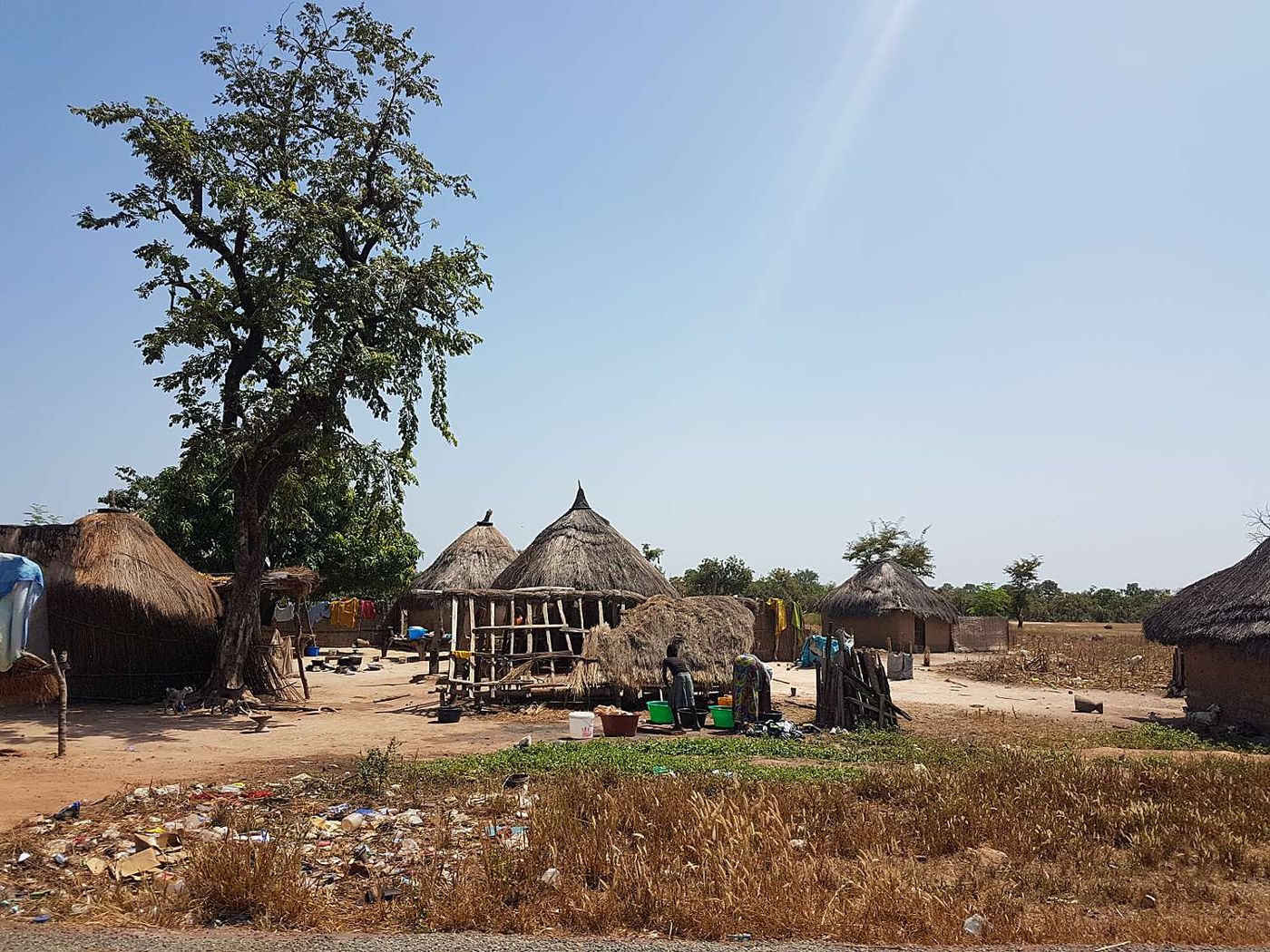
In Énampore, you do not come to see a house: you come to understand how a house can drink the rain. At the end of a forest track, in a Diola village of the former Bandial kingdom, the impluvium house hollows its thatched roof into a funnel open to the sky, and the whole building revolves around this water falling from above. The trap is to look at it for ten minutes and leave. Take the village guide, walk to the rice fields, skirt the sacred groves without entering them: that is where the house takes on its meaning.
At a glance
| Region | Casamance — Ziguinchor Region and department, Nyassia arrondissement, main town of Énampore commune |
| Type | Diola village in Bandial country; lived-in impluvium houses, rice fields, sacred groves |
| Getting there from Ziguinchor | Some twenty kilometres: the Oussouye road, then a forest track from Brin; usually under an hour |
| Getting there from Dakar | A long day’s drive via the Gambia, a night on the boat to Ziguinchor, or a flight to Casamance |
| Recommended time | Half a day from Ziguinchor; a night in the village to really experience it |
| Official fees | No additional official fees |
| Best time to go | Dry season, November to May |
| Related QFS activities | Guided tour of the village (royal site, sacred groves, impluvium house), traditional sites & villages, pirogue trips |
Resident or visitor: the same door, two reasons to open it
Live in Senegal, and especially in Ziguinchor? Énampore is the outing you keep putting off because it is “just next door”. Yet a morning is enough. Bring the children: sitting under the opening in the roof, they work out for themselves why it is cooler inside than out in the sun. On the tour booked through QFS, you get the resident rate: up to 30% off.
Passing through Lower Casamance? Do not turn Énampore into a photo stop between two beaches in Cap Skirring. Families live here. The guide introduces you, tells you where you may go in and what not to photograph. If your schedule allows, stay the night: when you wake up, the track is silent and the village feels a little more yours.
A house built around a hole in the roof
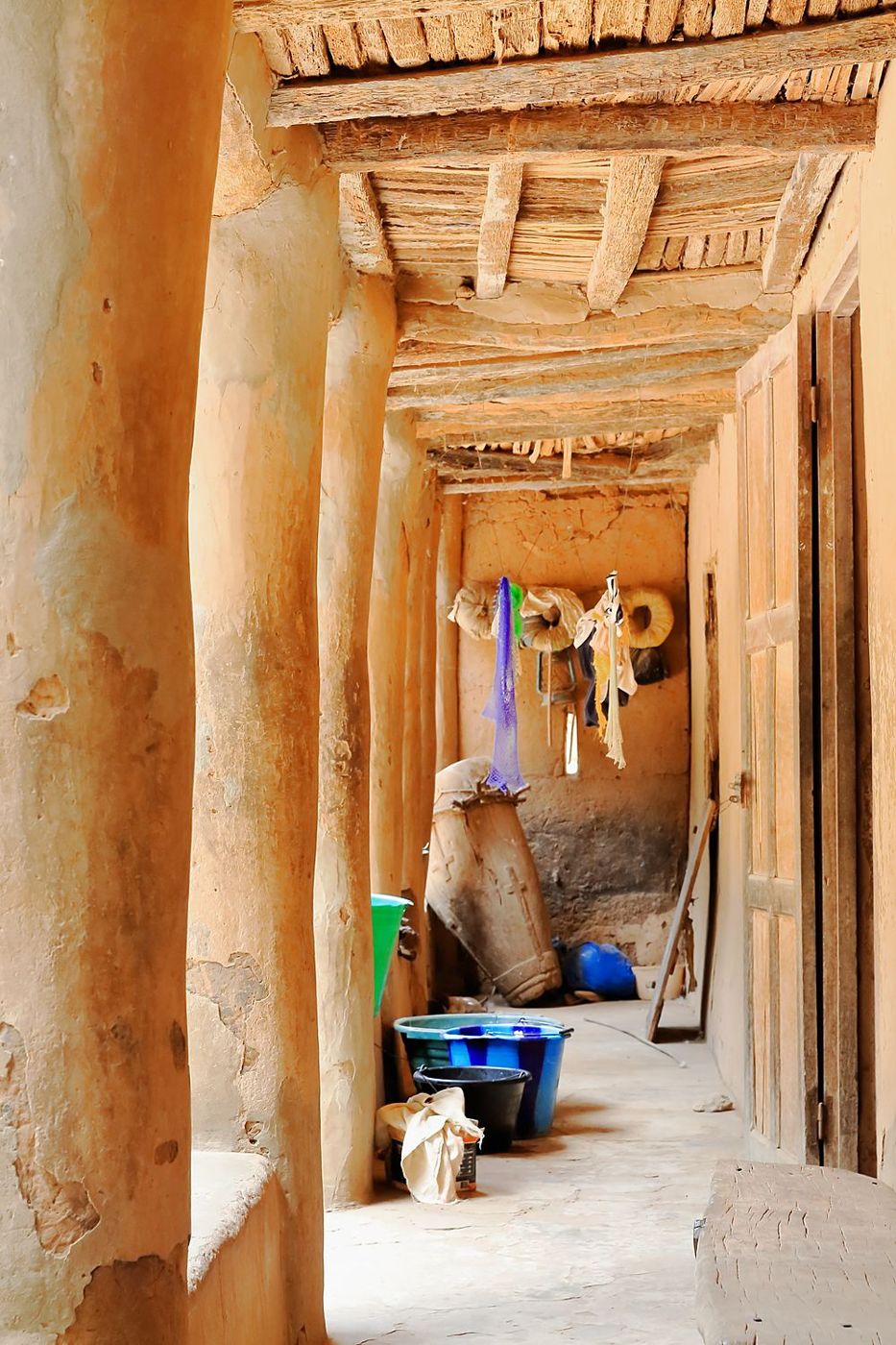
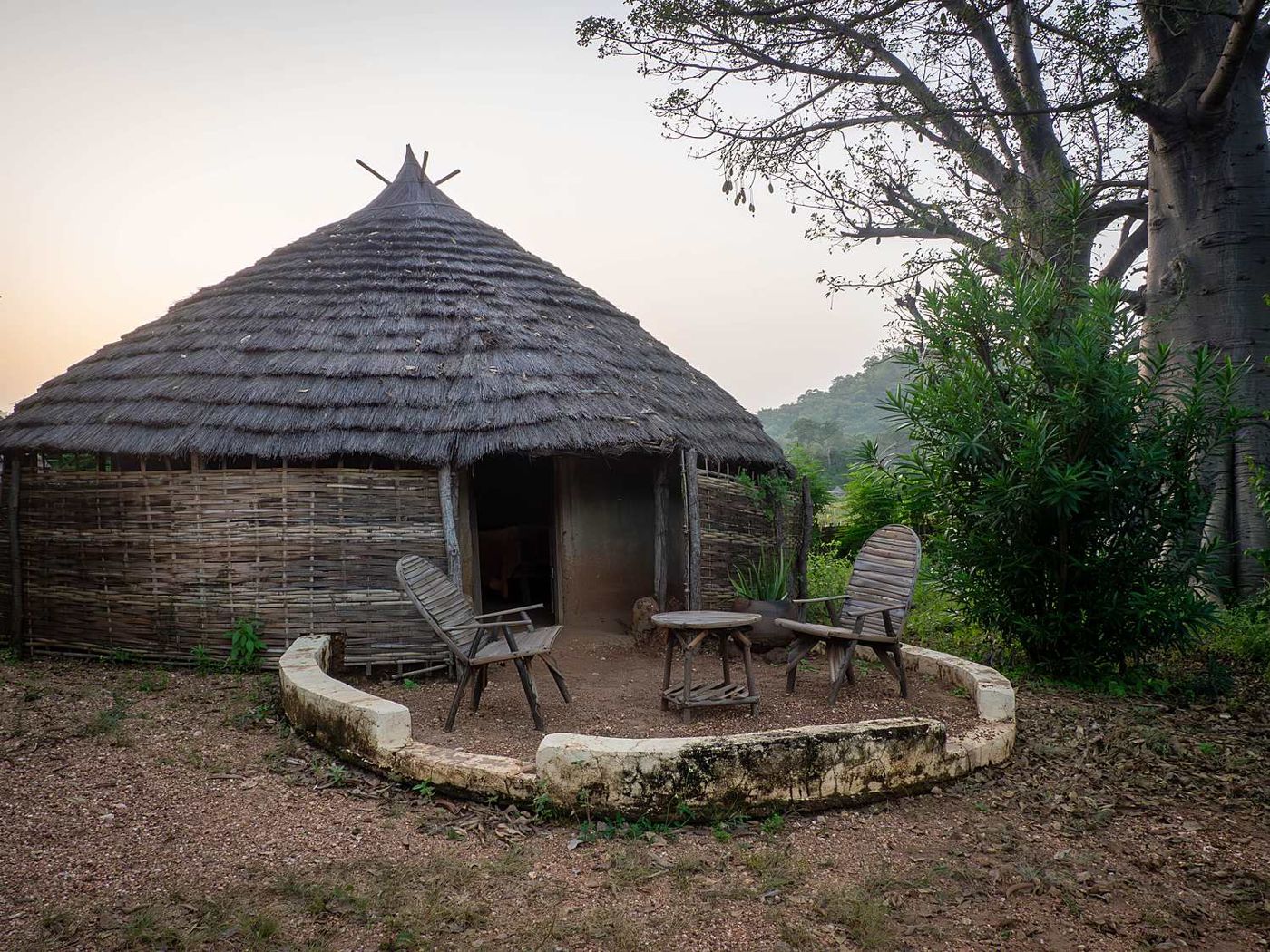
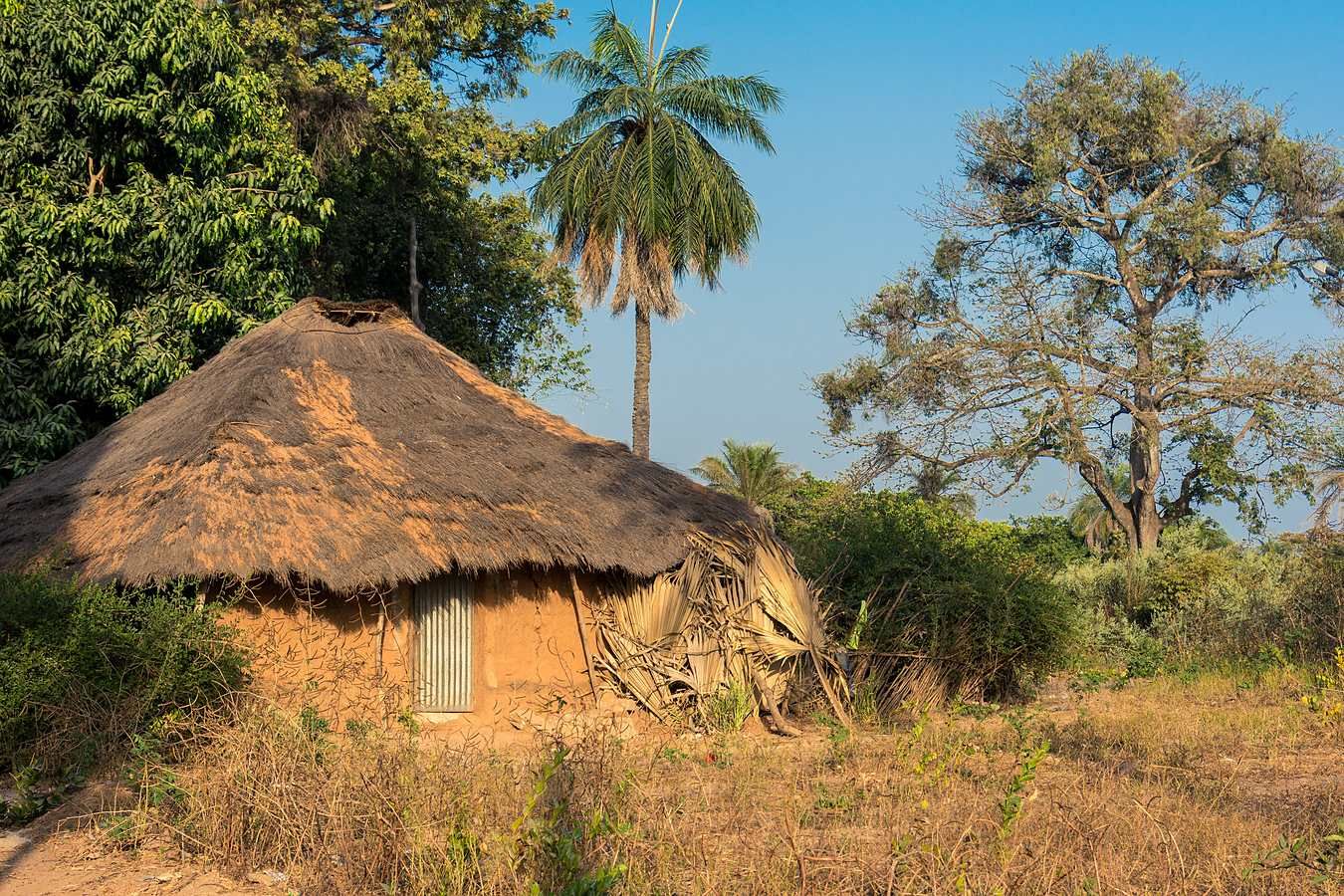
The impluvium house is the signature of Bandial country, the small Diola territory between the Oussouye road and the left bank of the Casamance River that was once called the kingdom of Mof Ëwi. Its principle comes down to one image: a ring of rooms in banco (mud brick), raw earth mixed with straw, around a small courtyard open to the sky. The thatched roof does not slope outwards as it does everywhere else; it falls inwards, like a corolla, and channels the rain into a basin in the centre. The courtyard lights the shared room, the thick banco keeps it cool, and several households used to share the same roof.
The impluvium houses of the Bandial kingdom, to which Énampore and its neighbour Séléki belong, are on the UNESCO World Heritage Tentative List. That is not protection: an earth house survives only if it is maintained, and concrete buildings are gaining ground. Your visit is part of what keeps them standing.
Énampore also holds a special place in the history of travel in Senegal. It was here, in the 1970s, that one of the country’s very first campements (village guesthouses) was born: accommodation built and run by the village itself, so that the visitor’s money stays with those who welcome them. The idea was then taken up by other villages in Casamance.