Mlomp: two-storey houses and giant kapok trees | QFS
Accueil » Points of interest – Ziguinchor region » Mlomp: two-storey houses of raw earth, in the shade of kapok trees

Home › Locations › Casamance › Oussouye › Mlomp: two-storey houses of raw earth, in the shade of kapok trees

CASAMANCE

Mlomp: two-storey houses of raw earth, in the shade of kapok trees

About ten kilometres from Oussouye, a Diola village has built two-storey houses out of earth, palmyra palm and mangrove wood. You stop for an hour, and you stay for half a day.

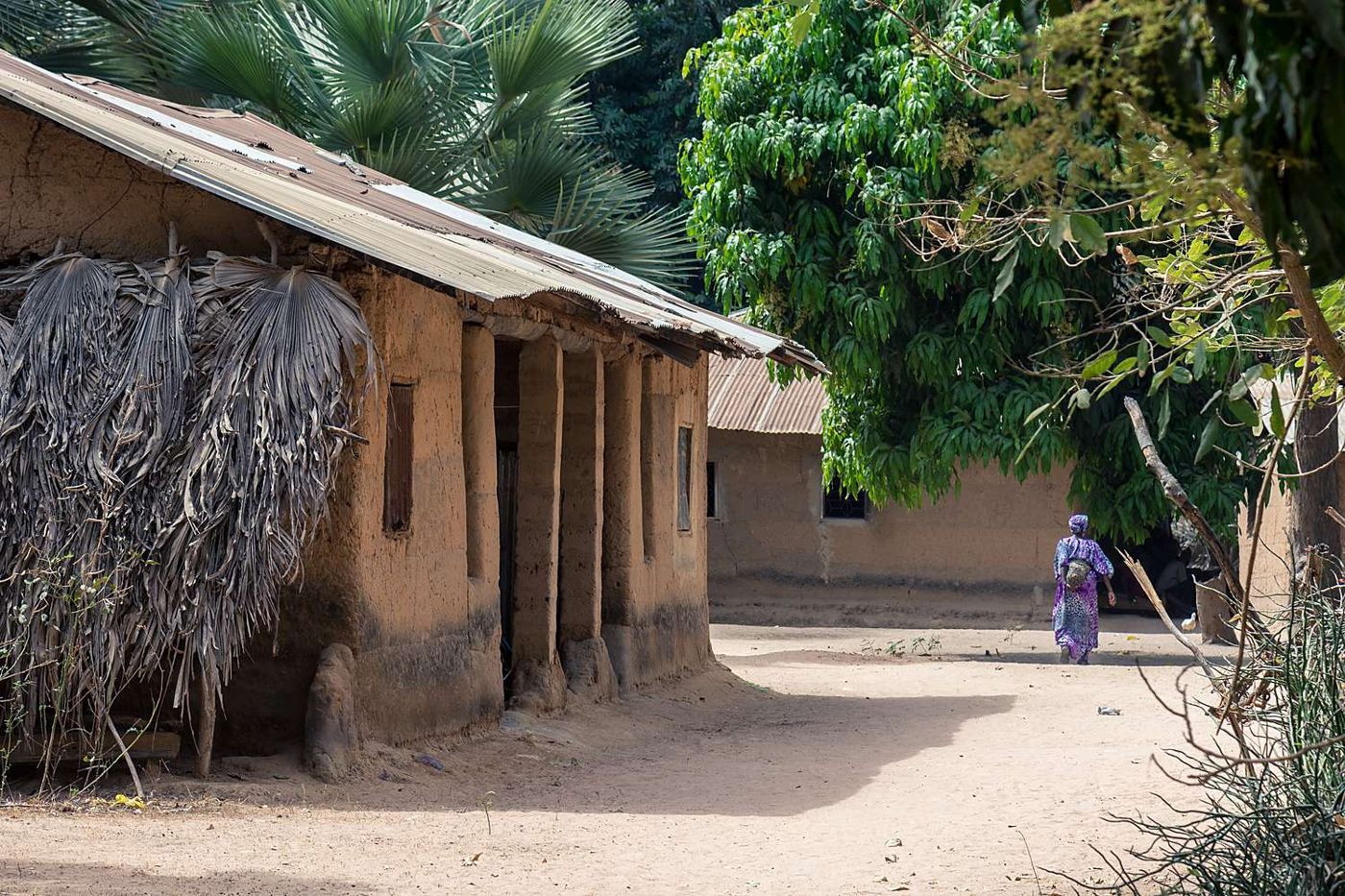
In Mlomp, you look up twice: first at the balcony of a two-storey house built of raw earth, then at the crown of a kapok tree that still towers over it. Most travellers pass through this Diola village in ten minutes, between Oussouye and Elinkine. Do the opposite: park the bike, go into the house that is open to visitors, stop at the small museum, and understand how former tirailleurs (colonial infantrymen) brought the idea of an upper floor back from Europe, then built it with what the forest and the mangrove gave them. The two-storey houses of Mlomp are a curiosity, but above all a lesson in architecture.

At a glance

RegionCasamance, Ziguinchor Region, Oussouye department, Loudia Ouolof arrondissement; seat of the commune of Mlomp
TypeDiola village: two-storey houses in banco (mud brick), kapok trees, a small museum, rice fields
Getting thereTarmac road from Oussouye to Elinkine, about ten kilometres from Oussouye; around forty kilometres from Ziguinchor
Getting there from DakarA flight to Ziguinchor or Cap Skirring, an overnight boat to Ziguinchor, or a long day’s drive through the Gambia; then on to Oussouye
Recommended timeHalf a day; a full day if you continue to Pointe Saint-Georges
Official feesNo official entry charge; a contribution is requested on site for the house and the museum
Best time to goDry season, November–May
Related QFS activitiesMountain biking and 4×4 trips from Oussouye, guided hikes, cultural tours, traditional villages

Resident or visitor: do not turn Mlomp into a mere photo stop

Do you live in Senegal? Mlomp is the best answer to anyone who thinks earth architecture comes down to round huts. Cycle over from Oussouye on a dry-season morning, and carry on along the track to Pointe Saint-Georges. On activities booked through QFS, you get the resident rate: up to 30% off, which makes it easy to come back during the rainy season (hivernage), when the rice fields turn bright green.

Just passing through? Do not settle for the façade seen from the road. Take a guide from the village: they will open up the house, tell you about the families who live there and show you where to step around the sacred trees. Half a day is enough, as long as you do not rush.

An upper floor from elsewhere, built with local earth

The return of the tirailleurs

The story told in the village is one of homecoming. Men from Mlomp, enlisted as Senegalese tirailleurs, saw houses with several levels in France. Back home, they wanted the same, without cement or iron, using local materials. Sources disagree on the date of the first one: some place it after the First World War, others just after the Second. Remember the essentials: these houses date from the last century, and other families later took up the model.

The technique

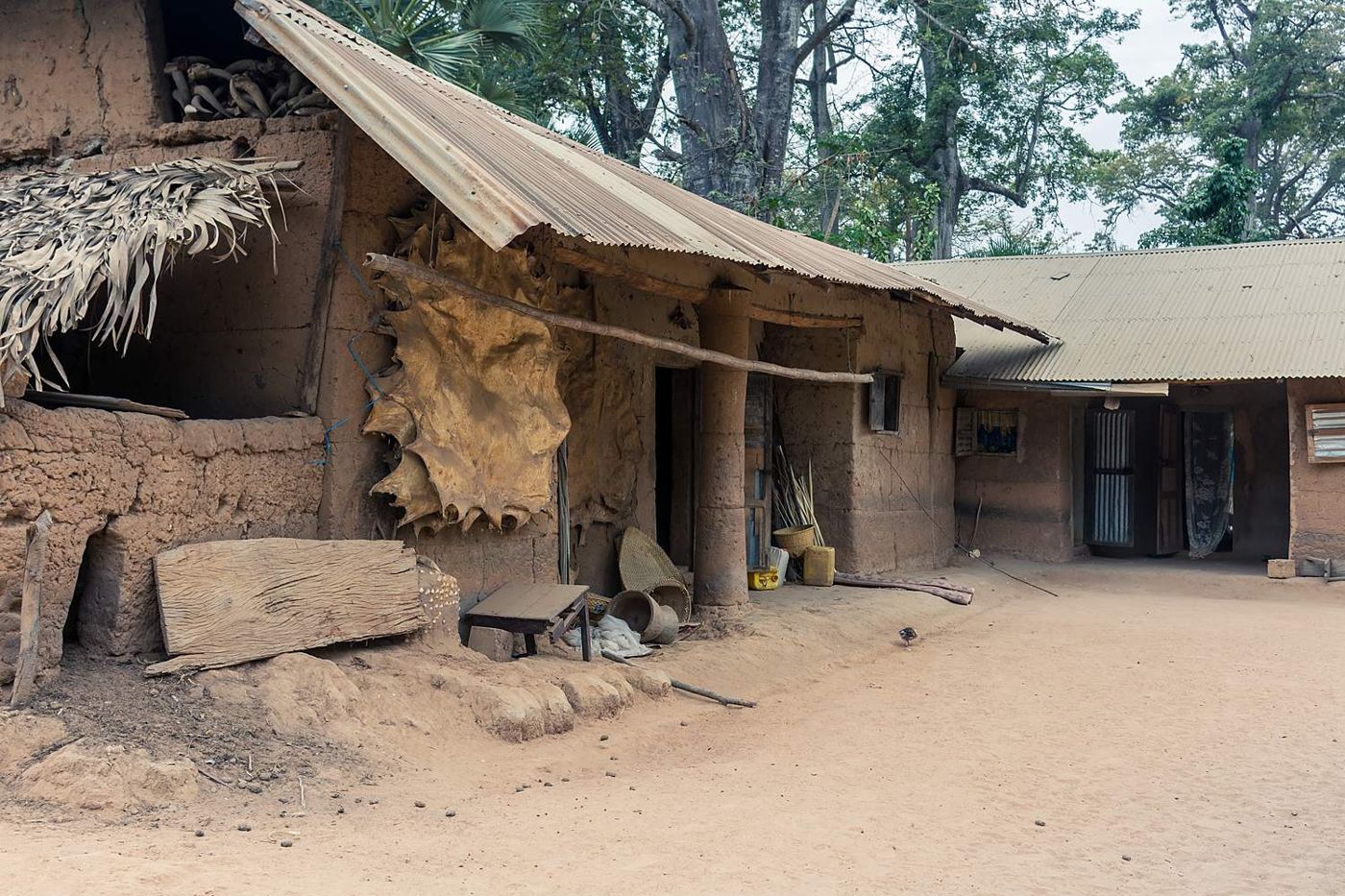
The walls are made of banco, a clay earth mixed with straw, built up in thick layers. The floors rest on palmyra palm timber and slats of mangrove wood. An inner staircase leads up to the first floor, where a balcony runs along the façade. The result is still standing, and keeps the inside cool all year round: that is the argument the inhabitants are happy to put forward against breeze blocks.

A lived-in heritage

There are a handful of them, along the road and in the village’s neighbourhoods. They were added to Senegal’s list of historic heritage in the early 2000s. These are not frozen museums: most are still lived in by the builders’ descendants, who maintain them themselves. One of them is open to visitors.

  • Traditional sites & villages

    Day in the Diola villages from Cap Skirring

    Cap Skirring · Day (8:30 am – 6 pm)


    From77 000 CFA
    Resident price73 150 CFA−5 %
  • Guided cultural tours

    Weekend stay at Oussouye and Saint-Georges Point

    Casamance · Full day, 2 days, 3 days


    From39 600 CFA
    Resident price37 620 CFA−5 %
  • Nature & culture discoveries

    Pirogue trip to Carabane Island: fishing village and dolphins

    Carabane · Half-day


    From22 000 CFA
    Resident price19 800 CFA−10 %

Key facts & figures

FactWhat you need to know
LocationOussouye department, between Oussouye and Elinkine, on the left (south) bank of the Casamance River
Distance from OussouyeAbout ten kilometres, under an hour by bike
Distance from ZiguinchorAround forty kilometres
Building materialsBanco, palmyra palm, mangrove wood; no cement or iron
Construction periodThe last century (date of the first one debated)
StatusListed as national historic heritage in the early 2000s
NamesakeAnother Mlomp lies north of the river, in Bignona department: do not confuse the two

Getting there & official fees

By road. From Oussouye, follow the tarmac road to Elinkine for about ten kilometres: the first two-storey houses appear at the roadside. Bush taxis and minibuses serve the route during the day. By bike, allow under an hour on flat ground, and it is the finest way to arrive.

Watch out for the namesake. If you ask for “Mlomp” in Ziguinchor, specify “Mlomp d’Oussouye”: another village with the same name lies north of the river, towards Bignona.

Fees. There is no official entry ticket. You visit the two-storey house and the museum with a villager, in return for a contribution requested on site that goes towards upkeep: bring cash in small notes.

What to see

The two-storey house open to visitors. Climb the staircase, look at the mangrove-wood floor, feel the thickness of the walls, then step out onto the balcony.

The small museum of Diola culture, housed in an impluvium house: farming tools, weapons, ritual objects, scenes of daily life. Modest, but it gives you the keys to the rice fields.

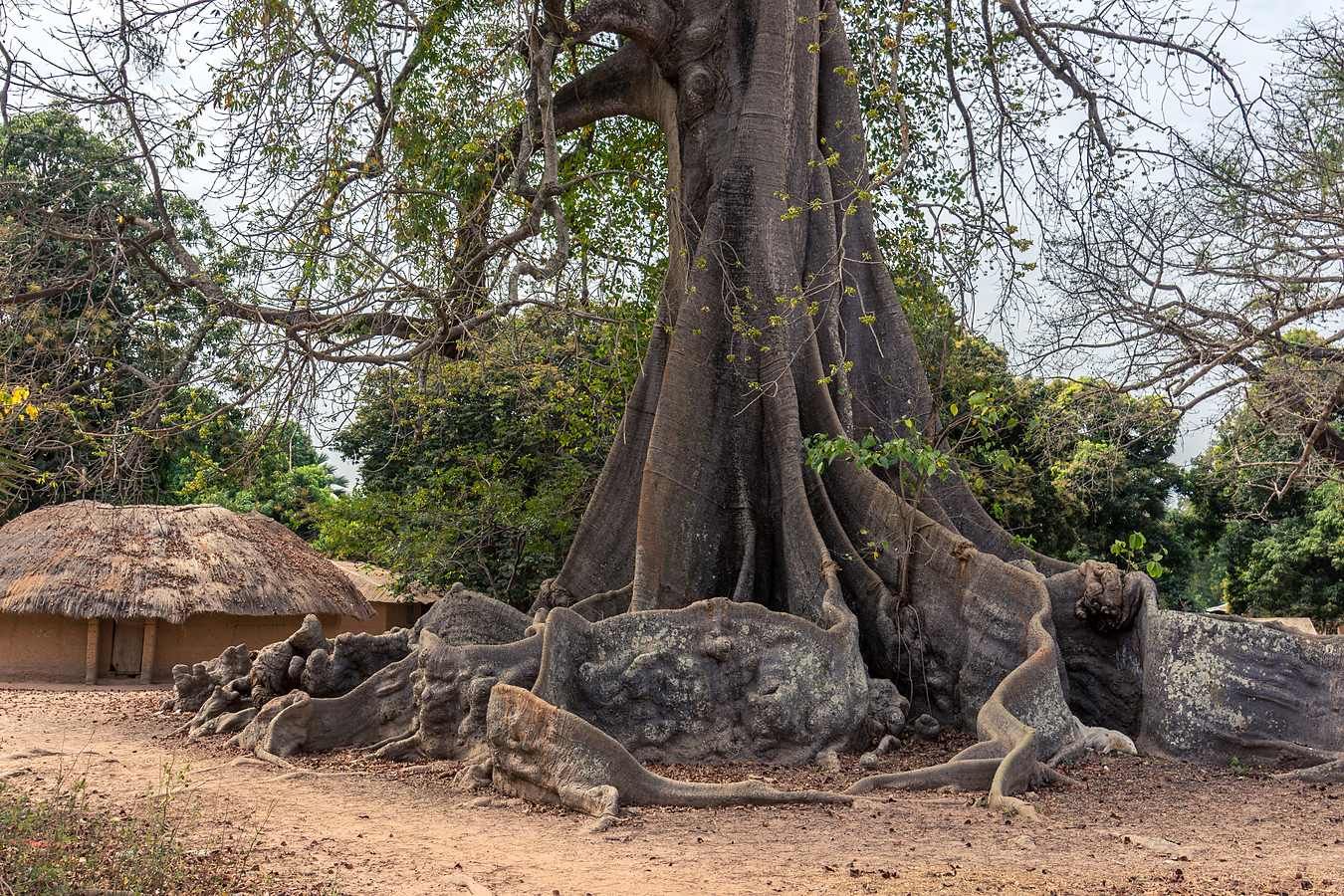
The giant kapok trees. They shade the neighbourhoods and stand far taller than the houses. One of them, in the centre of the village, is a sacred tree surrounded by fetishes: you do not step over them, and you do not photograph them without permission.

The rice fields. Around the village, the rice paddies set the rhythm of the year: transplanting during the hivernage, harvest in the dry season.

Nearby

  • Pointe Saint-Georges, at the end of the track to the north, less than ten kilometres away: mangrove, river and manatees, never guaranteed.
  • Oussouye, seat of the Diola kingdom and base camp for Lower Casamance.
  • Édioungou, the potters’ village, on the way back.
  • Elinkine, the fishing port at the end of the road, and Carabane Island by pirogue from its quays.
  • Éloubaline Island and its impluvium houses, by pirogue from the Oussouye side.
  • Énampore, to compare with the great impluvium house of Bandial country.
  • For the region as a whole, our Casamance page.
  • Adventure & outdoors

    Bike hire in Cap Skirring

    Cap Skirring · Half-day


    From5 500 CFA
    Resident price5 225 CFA−5 %
  • Excursions & adventures

    Mountain bike and pirogue trip in Casamance

    Casamance · 6h


    From28 160 CFA
    Resident price22 528 CFA−20 %
  • Quad & buggy

    Quad biking in Cap Skirring

    Cap Skirring · 2h, Full day


    From49 500 CFA
    Resident price47 025 CFA−5 %

The right time

The dry season, November–May, offers passable tracks and clear light on the ochre façades. Come in the morning: the heat rises quickly and the inhabitants have more time before midday. The hivernage, July to October, makes the rice fields spectacular, but the track to Pointe Saint-Georges becomes difficult. At the end of the hivernage, the king’s festival in Oussouye brings together the villages of the kingdom. As for the great initiations of the Diola country, they come round at long and irregular intervals, announced by the elders: do not build a trip around them.

Practical tips

  • Greet people before taking photos. The houses are lived-in homes: ask before framing a façade, a person or an interior.
  • Respect sacred places. Fetishes at the foot of the kapok trees, sacred groves around the village: do not walk on them, and do not enter without an invitation.
  • Clothing: shoulders covered preferably, closed shoes if you head out on the track, a hat and water.
  • Cash: there is no ATM in the village; small notes for the contribution and for crafts.
  • Safety: as everywhere in Casamance, travel by day and ask in Oussouye about the state of the tracks.

Book an activity here with QFS

Trips to Mlomp are run by independent local professionals. By bike from Cap Skirring or Oussouye, or by 4×4 to Pointe Saint-Georges, see guided hikes and 4×4 (safari & dunes); for a day in Diola country with a guide, guided cultural tours and traditional sites & villages; for the bolongs (tidal creeks), pirogue trips.

The price shown is the price of the service. You pay 20% to secure your booking: this is the booking fee. The balance is paid on site, on the day, to the professional. The contribution requested by the village for the house and the museum is payable on site and not included in the price, unless the listing states that visiting fees are included. If you live in Senegal, you get the resident rate: up to 30% off (the exact rate is shown on each listing).

Frequently asked questions

Where is Mlomp?
In Lower Casamance, in Oussouye department, about ten kilometres from Oussouye on the road to Elinkine. Another Mlomp lies north of the river, towards Bignona: do not confuse them.
Who built the two-storey houses of Mlomp?
Former Senegalese tirailleurs from the village, back from Europe in the last century, who reproduced two-storey houses using banco, palmyra palm and mangrove wood. The exact date of the first one is debated.
Can you visit the inside of a two-storey house?
Yes, one of them can be visited with a villager, as can the small museum of Diola culture. A contribution is requested on site.
Do you have to pay an entry fee in Mlomp?
There is no official entry ticket. The village asks for a contribution for the house and the museum: bring cash.
How much time should you allow?
Half a day for the village, a full day if you continue to Pointe Saint-Georges.
How do you get from Mlomp to Pointe Saint-Georges?
By a track heading north, less than ten kilometres long, by 4×4 or by bike in the dry season. During the hivernage, ask in Oussouye before setting off.

Read also