Do not go looking for “the” market of Dakar: the capital has half a dozen big ones, and each has its own trade. You choose Dakar’s markets the way you would choose a street of craftsmen: fabric at HLM or Tilène, crafts at Kermel or Soumbédioune, fish on the beach as the pirogues come in, second-hand clothes at Colobane, and at Sandaga, a whole city of pavements waiting for its great building to return. Choose according to what you want to take home, or what you want to understand about the city. And come in the morning.
At a glance
| Region | Dakar Region, Dakar department; markets spread across the Plateau (Sandaga, Kermel), the Médina (Tilène), the Corniche Ouest (Soumbédioune), Colobane and the HLM district |
| Type | Urban markets: food, fabrics, crafts, fish, second-hand clothes, electronics |
| Getting there | By taxi or on foot from the Plateau; the TER (Regional Express Train) to Dakar station, a few minutes from Kermel and Sandaga; from 30 minutes to over an hour from Les Almadies or Ngor depending on traffic |
| Recommended time | One to two hours per market; half a day to combine two neighbouring ones (Kermel and Sandaga, or Tilène and Soumbédioune) |
| Official fees | No additional official fees: entry to the markets is free |
| Best time to go | All year round, in the morning; November–May for milder heat; avoid the days before Tabaski (Eid al-Adha) and Korité (Eid al-Fitr) if you dislike crowds |
| Related QFS activities | Guided cultural tours, dyeing and textiles, crafts, Senegalese cooking classes |
Resident or visitor: the same market, two uses
If you live in Senegal, you no doubt have “your” market, the one in your neighbourhood, and you never set foot in the others. Yet each of Dakar’s big markets does one thing better than the rest. The fabric for a festive outfit is chosen at HLM or Tilène, by eye and by touch, before heading to the tailor. The freshest fish is bought at Soumbédioune as the pirogues hit the sand. And Kermel, which many people in Dakar leave to visitors, is one of the few places in the city where you do your shopping inside a monument. If friends or family come to visit, you are the one who will give them the right address and the right price: a market is best experienced with someone who knows it.
If you are passing through, do not make the mistake of trying to “see everything” in one morning. Dakar’s markets are places of work before they are attractions: people come to buy, compare and talk. Pick one or two depending on what you fancy (a craftsman’s souvenir, a length of wax print, the spectacle of the fish), come early with small notes, and be prepared to take your time. With a guide, haggling becomes an exchange rather than an ordeal, and you understand what you are looking at.
Six markets, six trades
Sandaga: the great market reborn on its pavements
For a long time, Sandaga was the commercial heart of Dakar. Its building, put up in the early 1930s in a neo-Sudanese style that stood out against the colonial façades of the Plateau, rose at the junction of avenue Lamine-Guèye and avenue Émile-Badiane, where the Plateau meets the Médina. According to the most widespread story, its name comes from a tree, the “dang”, which once marked the centre of the market.
Its recent history is that of a worn-out monument. In late October 2013, a major fire gutted the interior and weakened an already battered structure. In the years that followed, one rehabilitation project succeeded another without result. In August 2020, the stalls ringing the building were razed; in August 2021, the central building was demolished in turn, at night, despite the anger of architects who had argued for shoring it up. The authorities then promised a reconstruction faithful to the original architecture. The project then stalled for years, amid institutional disagreements and difficulties with the contractor.
Where do things stand in 2026? The new Sandaga is under construction on its historic site. In July 2026, the Minister of the Interior visited the works, presented as nearing completion, with a building that reproduces the original architecture while modernising the electrics, sanitation and circulation. At the end of September 2026, the Dakar press still described a market “under reconstruction”, with no opening date published. In the meantime, trade has never stopped: it spills over onto the pavements of avenue Lamine-Guèye, avenue Blaise-Diagne, avenue Jean-Jaurès and the neighbouring streets, where you will find clothes, shoes, fabrics, school supplies, phones and accessories. It is noisy, cramped and alive: commercial Dakar in its rawest form.
Kermel: the round market hall that survived the fire
A few streets from Place de l’Indépendance, Kermel market is the other face of the Plateau. Its round, metal-framed hall, with neo-Moorish touches and colourful façades, opened at the very start of the 20th century, around 1910, to serve the European town. In 1993, a violent fire ravaged it. It was rebuilt identically and reopened in 1997, with its original silhouette.
Today, Kermel sells fruit and vegetables, fish and seafood, flowers at the entrance, and all around the hall, craft stalls: sculptures, masks, jewellery, basketwork, fabrics. The Dakar press in 2026 describes a market looking for a second wind, with falling footfall. For you, that is a stroke of luck: Kermel is the calmest market in the centre, the one where you can take time to chat with the craftsmen and look at the architecture.
HLM: the temple of fabric
If you are looking for fabric, HLM is where to go. This neighbourhood market, far from the tourist circuits, unrolls hundreds of bolts of wax print, bazin, embroidered fabrics, lace and silks, along with the shoes, bags and jewellery to complete the outfit. Women from Dakar come here for the cloth for their boubous and festive outfits, and the tailors are never far away. Before Korité and Tabaski, the crowds become such that moving between the aisles is quite a feat. For a visitor, it is the best place to understand the role of fabric in Senegalese life.
Tilène: the market of the Médina’s own residents
Tilène market stretches over several blocks along avenue Blaise-Diagne, in the heart of the Médina, on the very spot where the district was founded in 1914. Outside, fruit and vegetables; inside, spices, kitchenware, second-hand clothes, jewellery and, above all, fabrics. It is a market for people from Dakar, not for visitors, and that is the whole point: you will see the city doing its shopping. Before the festivals, its fabric sellers work flat out, and the sewing workshops of the neighbouring Gueule Tapée district take over from there.
Soumbédioune: fish as the pirogues return, crafts next door
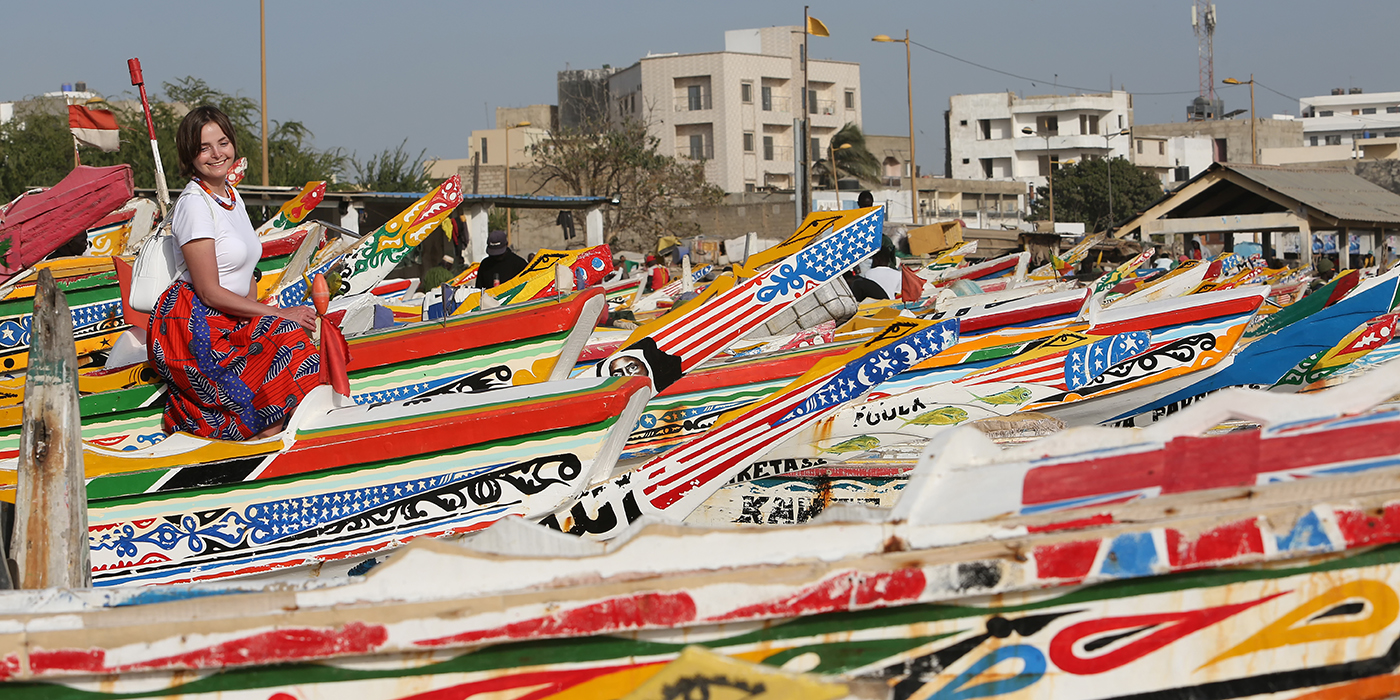
On the Corniche Ouest, Soumbédioune Bay brings together two markets that have nothing in common. On the beach, in the late afternoon, the colourful pirogues come in and the fish is landed: groupers, capitaine (threadfin), soles, prawns, depending on the day’s catch. Women grill on the spot what you have just bought. Right next door, the crafts village brings together sculptors, leatherworkers, jewellers, basket makers and instrument makers; the Soumbédioune tunnel has made it less visible from the road, and its craftsmen feel the drop in passing trade. A tip worth its weight in gold: the prices quoted at the entrance are often the highest, so head to the back of the aisles.
Colobane: second-hand clothes, and everything else
Colobane is Dakar’s great flea market. Second-hand clothes, shoes, used phones, books, small appliances: people in Dakar like to say that what you cannot find at Colobane does not exist. The stalls spread out onto the road with no apparent organisation, and it is paradise for anyone who loves to rummage. It is also the densest and most chaotic market on the list: come knowing what you are after, preferably with someone, and keep an eye on the traffic, as cars brush past the stalls.
Key facts & figures
| Market | District | Speciality | Note |
|---|
| Sandaga | Plateau, junction of Lamine-Guèye / Émile-Badiane | Fabrics, clothes, electronics, supplies | Neo-Sudanese building from the 1930s; fire in October 2013; demolished in August 2021; under reconstruction in 2026 |
| Kermel | Plateau, near Place de l’Indépendance | Fresh produce, flowers, crafts | Round hall opened around 1910; fire in 1993; rebuilt identically, reopened in 1997 |
| HLM | HLM district | Fabrics (wax print, bazin, embroidery, lace) | The go-to market for festive outfits |
| Tilène | Médina, avenue Blaise-Diagne | Fresh produce, spices, fabrics, second-hand clothes | On the site where the Médina was founded in 1914 |
| Soumbédioune | Corniche Ouest | Fish, crafts | Pirogues land their catch in the late afternoon; crafts village next door |
| Colobane | Colobane | Second-hand clothes, used goods, electronics | The city’s great flea market |
Getting there & official fees
The simplest option is to start from the Plateau. The TER drops you at Dakar station, from where Kermel and the Sandaga site are a few minutes’ walk away. Tilène and the Médina are about twenty minutes’ walk to the north, passing the Great Mosque of Dakar. Soumbédioune, HLM and Colobane call for a taxi: simply give the name of the market, every driver knows it, and agree the fare before getting in. From Les Almadies or Ngor, allow from 30 minutes to over an hour depending on the time of day.
Official fees: no additional official fees. Entry to all the markets is free; if someone asks you for a “visiting fee” at the entrance, politely decline.
What to see
The silhouette of Kermel. Walk around the hall before going in: the rotunda, the arches and the colours of the façades are best seen from the square around it. Then go in through the florists’ aisle.
The Sandaga building site. Even under construction, the site is worth a look: you will see the neo-Sudanese silhouette of a monument that generations of Dakar residents knew standing come back to life. Around it, the bustle on the pavements tells the story of the market better than any building.
The bolts of fabric at HLM and Tilène. Take the time to have a bazin or a wax print unrolled, and to feel several: the traders are happy to oblige, it is the heart of their trade.
The return of the pirogues at Soumbédioune. In the late afternoon, the beach becomes a stage: pirogues hauled up onto the sand, crates of fish, loud bargaining. Keep clear of the crews unloading.
The crafts village workshops. At Soumbédioune, they do not just sell you objects: wood, leather and silver are worked before your eyes. Ask to see the workshop before you buy.
Nearby
The central markets combine naturally with the rest of Dakar. On the Plateau, after Kermel, carry on to the Théodore Monod Museum of African Art or take the ferry to Gorée Island and its House of Slaves (Maison des Esclaves); a swim at Anse Bernard rounds off a morning at the market nicely. Between Sandaga and Tilène, the Great Mosque of Dakar marks the entrance to the Médina: look at it from the outside, outside prayer times. The Museum of Black Civilisations completes the day with the grand story of the continent. To fit all this in without rushing, follow our ideal 3-day Dakar itinerary.
The right time
Morning is the best time for almost every market: it is cooler, the produce is at its freshest and the traders have time to chat. Kermel is pleasant mid-morning, Tilène and HLM early, before the heat and the crowds build. Soumbédioune is the exception: the beach comes alive in the late afternoon, as the pirogues return, and the sun going down over the Corniche Ouest casts a lovely light on the boats.
On Fridays, around the Médina, the great midday prayer slows the whole district down: check our prayer times in Dakar to plan your visit. On the eve of Korité and Tabaski, HLM, Tilène and the pavements of Sandaga become very crowded: ideal for the atmosphere, much less so for browsing. As for the seasons, November–May makes walking pleasant; during the rainy season (hivernage), the heat is heavy and some streets turn into mud after a storm. During the Dakar 2026 Youth Olympic Games (YOG), from 31 October to 13 November 2026, expect heavier traffic throughout the city: favour the TER and walking.
Practical tips
- Haggling. Apart from food, the price is almost always open to discussion, and it is an exchange, not a fight. Ask the price, offer clearly less, smile, take your time. Do not start haggling over an item you have no intention of buying, and once a price is agreed, there is no going back on it. In fresh-produce markets, prices are more stable: haggling is less customary there.
- Money. Bring cash in small notes: few stalls take cards, and change is often short. Keep the day’s spending money separate from the rest of your cash.
- Pockets. As in crowds the world over, pickpockets take advantage of the crush, especially around Sandaga and at Colobane. Nothing dramatic: phone in a front pocket or a closed bag worn in front of you, no valuables on show, and all goes well in the vast majority of cases.
- Photos. Always ask before photographing a person or their stall; many are happy to agree, others refuse, and that refusal should be respected. Wide shots of architecture, at Kermel in particular, are no problem.
- Touts. At the entrance to the tourist markets, people will offer to “guide” you to this or that shop. A polite no is enough; if you have booked a tour, just say so.
- Clothing. Closed shoes (floors are sometimes muddy or cluttered), light, modest clothing, a hat and water.
- Traffic. At Sandaga as at Colobane, stalls take over the pavements and part of the road: watch where you walk, especially with children.
- Swimming. Soumbédioune Bay receives water from the city’s drainage channels: admire the pirogues, but do not swim there.
Book an activity here with QFS
Dakar’s markets are best understood with someone who does their own shopping there: a guide knows which market to choose, what time to come, how to haggle and whom to listen to. You will find these walks among our guided cultural tours, often combined with the Médina, the Great Mosque, Soumbédioune or Gorée. To take the experience further, buy your vegetables at the market before one of our Senegalese cooking classes, learn to dye a fabric yourself in a dyeing, textiles & sewing workshop, or get your hands dirty in a crafts & traditional skills workshop.
You pay 20% to secure your booking (the booking fee), and the balance is paid on site, on the day of the activity. The markets themselves involve no additional official fees. If you live in Senegal, you get the resident rate: up to 30% off depending on the activity (the exact rate is shown on each listing).
Frequently asked questions
Is Sandaga market open?
The historic building was demolished in 2021 and a new market is being rebuilt on the same site, announced as faithful to the original architecture. No opening date has been published, but trade carries on in the streets around the building site.
Which market should I choose to buy fabric in Dakar?
HLM market is the go-to place for wax print, bazin, embroidery and lace. Tilène market, in the Médina, is the other major address, with tailors close by.
Where can I buy crafts in Dakar?
At the Soumbédioune crafts village, on the Corniche Ouest, where the craftsmen work on site, and around the hall of Kermel market, on the Plateau. Head to the back of the aisles and compare before you buy.
Do you have to haggle in Dakar’s markets?
Yes, for almost everything that is not food. Haggle with a smile, without rushing, and do not go back on a price once it is agreed.
Are Dakar’s markets safe?
Yes, with the usual precautions for very busy places: keep your phone and wallet out of reach, especially around Sandaga and at Colobane, and watch out for traffic near the stalls.
When can I see the fishermen return at Soumbédioune?
In the late afternoon, when the pirogues come in and the fish is landed on the beach. You can buy your fish and have it grilled on the spot.