Joal-Fadiouth: shell island and mixed cemetery | QFS

Home › Joal-Fadiouth: the island where people are buried together, and the town where Senghor was born

Joal-Fadiouth: the island where people are buried together, and the town where Senghor was born

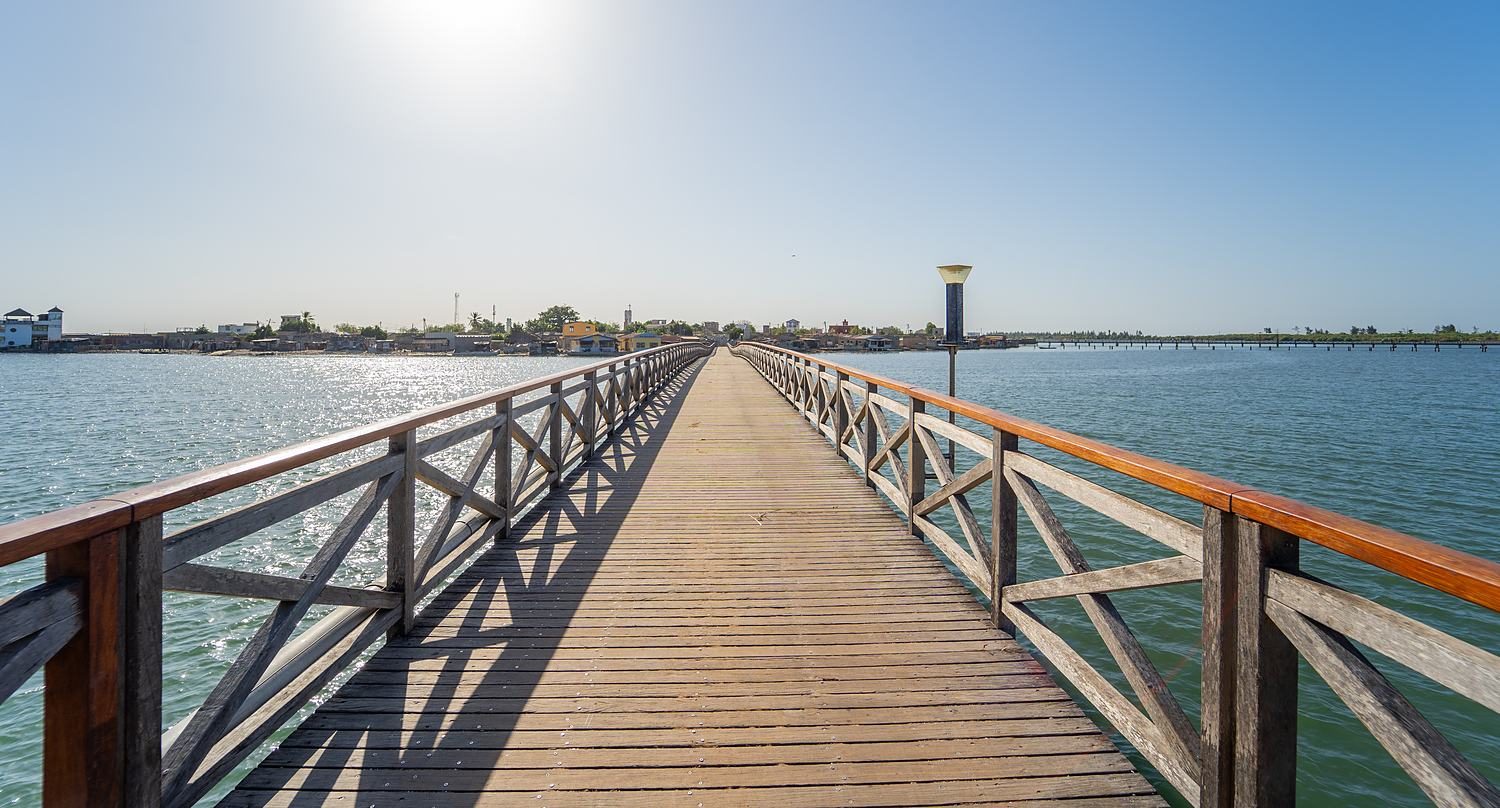
In Joal-Fadiouth, the most striking thing is not what you walk on but what you cannot see: a dividing line. On this island of shells, linked to the mainland by a long wooden bridge, Christians and Muslims share families, festivals and even the cemetery, where crosses and crescents stand on the same white mound. Many visitors cross the bridge, take the photo and head back to the beaches. We suggest the opposite: cross both bridges slowly, climb up to the cemetery, look at the granaries from the water, then come back to Joal, where Léopold Sédar Senghor was born in 1906. It is there, between the two shores, that Joal-Fadiouth makes complete sense.

At a glance

RegionThiès Region, Mbour department, Joal-Fadiouth commune, at the southern end of the Petite Côte
TypeInhabited, car-free island built on shells; mixed cemetery on a neighbouring islet; fishing town on the mainland
Getting there from DakarJust over 100 km; about 2 to 3 hours by road depending on traffic, via Mbour
From Saly or MbourThirty to forty kilometres or so, 30 to 45 minutes
Recommended timeHalf a day for the island and the cemetery; a full day with the pirogue, the port and Senghor’s house
Official feesNo additional official fees for the island; the guided tour organised on the Joal side is charged for, payable on site and not included in the price, unless the listing includes it
Best time to goDry season, November–May; early in the morning or late in the afternoon
Related QFS activitiesIsland excursion, guided cultural tour, pirogue trip in the mangrove, traditional villages, birdwatching

Resident or visitor: two ways to cross the bridge

Live in Senegal? If you are settled in Saly, Mbour, Warang or Nianing, Joal-Fadiouth is the nearest cultural outing, and probably the most underrated. People come once with friends who are visiting, then forget about it. That is a mistake: the island changes with the time of day, the tide and the season, and the late afternoon, when the bridge turns golden and the granaries are backlit, is nothing like the midday visit. Go on a Saturday in the dry season, add a pirogue at sunset, then a fish dinner on the Joal side. On activities booked through QFS, you get the resident rate: up to 30% off.

Just passing through? Do not treat Fadiouth as a twenty-minute stop between two Petite Côte beaches. You are entering a lived-in village, with its streets, its church, its squares and its families, and a cemetery that is still in use. Take a guide who speaks Serer and knows the families: they turn a picturesque stroll into a real encounter. Bring closed shoes and cash in small notes, and keep an hour for Joal on the way back: half the story is on the mainland.

An island made of meals, prayers and patience

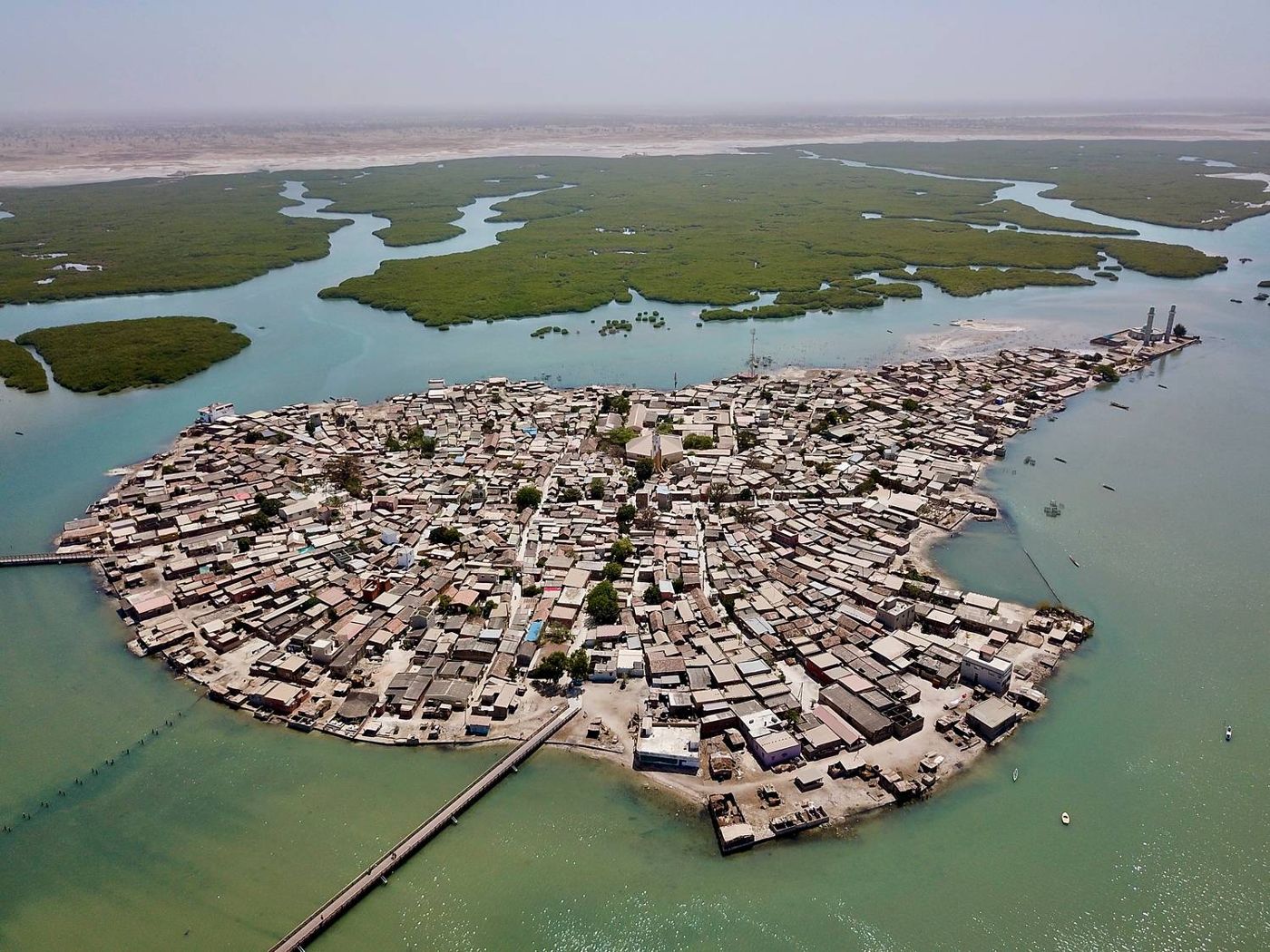
Fadiouth sits on a mound of shells built up over the centuries by residents who gathered cockles and oysters in the lagoon. The empty shells, thrown away year after year, ended up forming ground, then an island. They are everywhere: underfoot in the alleys, mixed into the mortar of some houses, and even in the graves. Here you walk on the very concrete memory of thousands of meals.

The village is explored on foot, with no cars, between white houses, small shady squares and the church of Saint-François-Xavier. The island’s population is overwhelmingly Christian, which is rare in a Muslim-majority Senegal; but in many Fadiouth families, Christians and Muslims live under the same roof. One resident interviewed by the press sums it up in a sentence: in almost every family there are Muslims and Christians, and everyone is related. That is the key to what you are about to see on the other side of the second bridge.

The mixed cemetery, heart of the visit

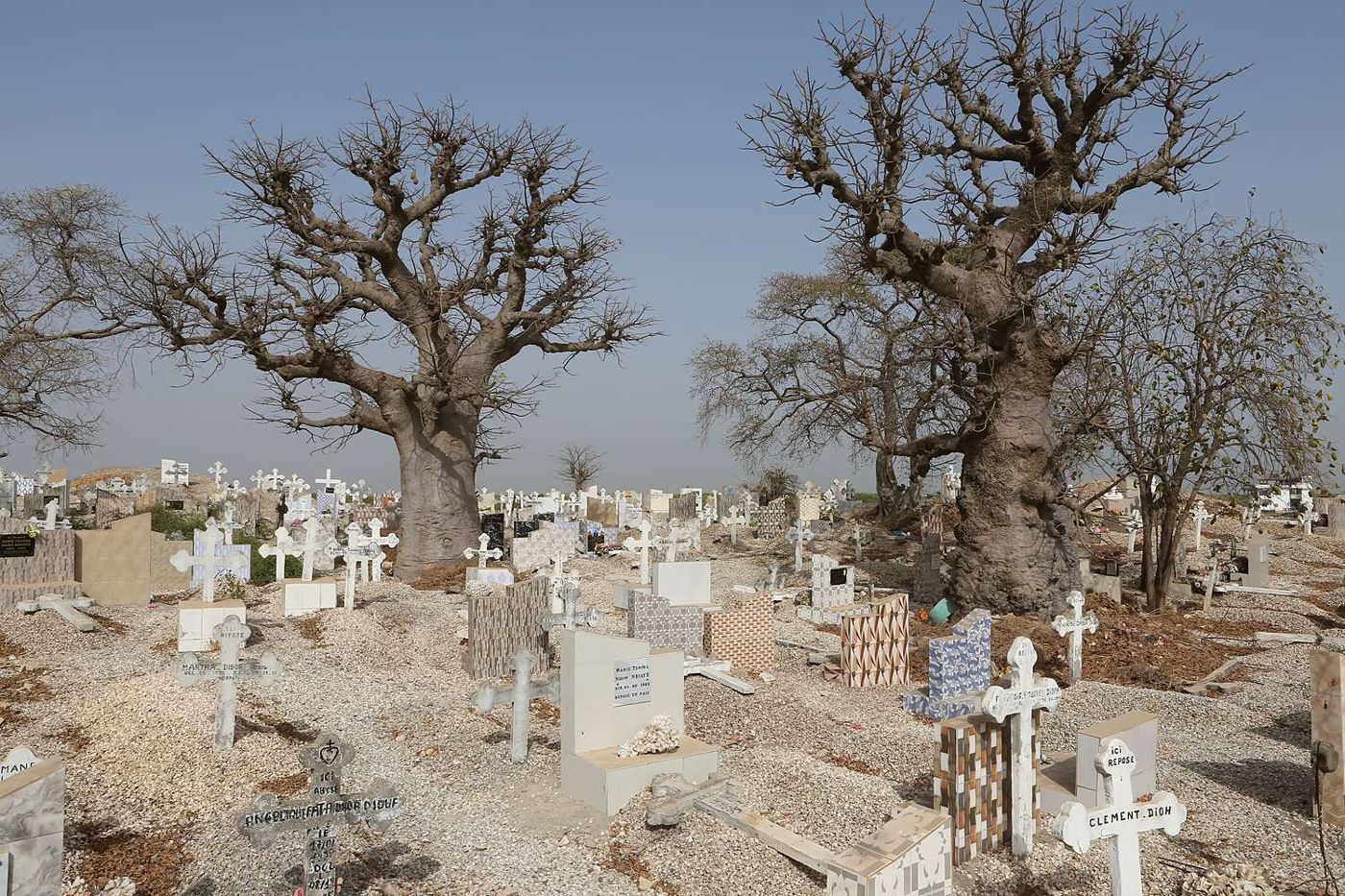
On a neighbouring islet, reached by a second, shorter wooden bridge, stands the cemetery of Fadiouth: a mound of sun-bleached shells bristling with crosses. Look more closely and you will also see Muslim graves. The two communities lie in the same earth, each in its own area, with no wall between them. It is not a curiosity invented for visitors: it is the natural extension of village life, and the Senegalese press regularly cites it as a model of tolerance.

Climb to the top of the mound. From up there you can see the island, the bridge, the lagoon and the granaries on their stilts: it is the best viewpoint in all of Joal-Fadiouth. But remember that families come here to pay their respects: dress respectfully, speak quietly, and do not photograph people or ceremonies.

The millet granaries on stilts

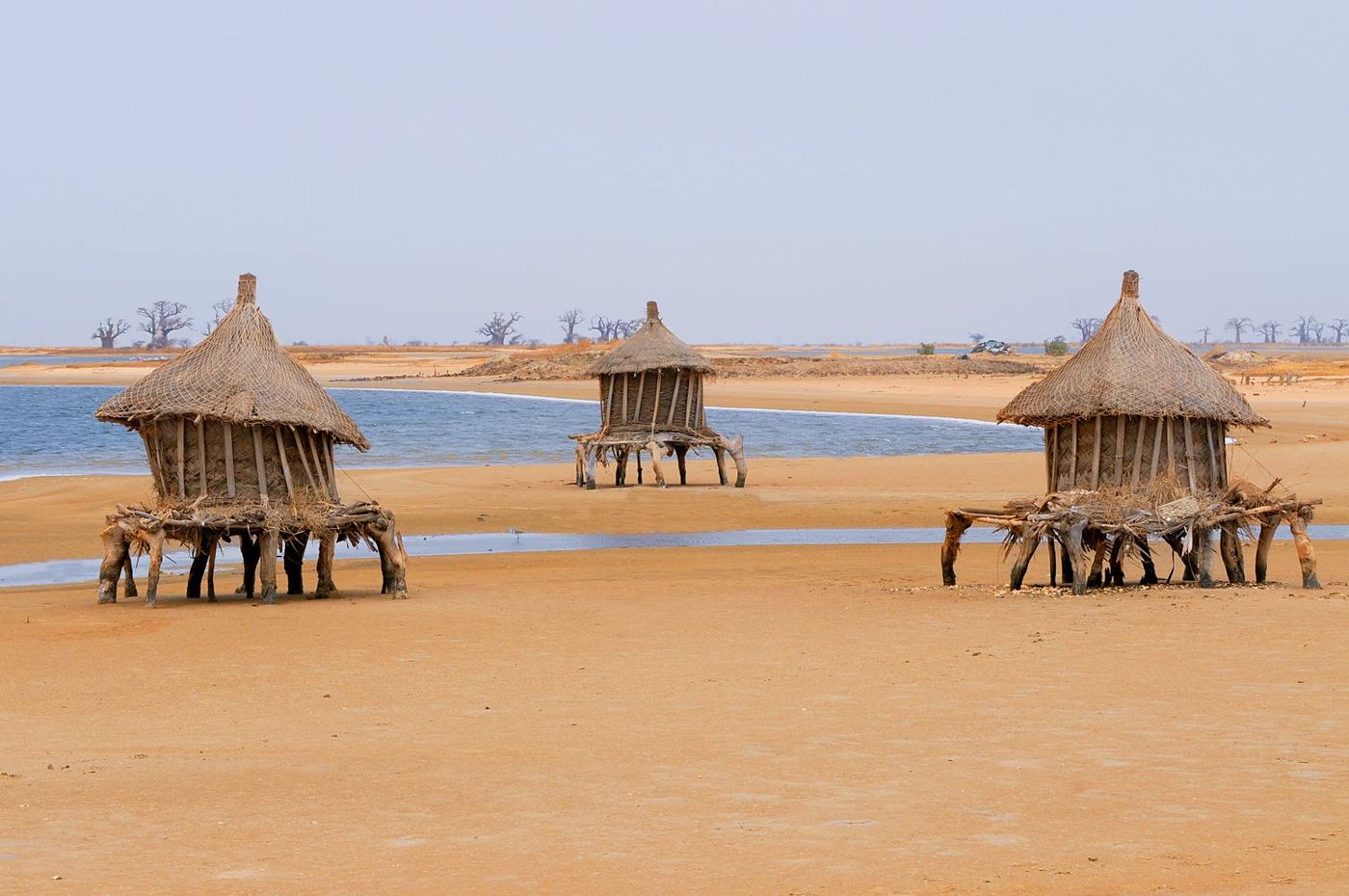
In the lagoon, near the cemetery, millet granaries stand on stilts above the water. Harvests used to be stored here, safe from fire, rodents and damp, away from the houses. You can glimpse them from the bridges, but it is by pirogue, along the mangrove, that you really get close. Their silhouette of round huts perched over the water, at the end of the day, is the image most visitors take home.

  • Traditional sites & villages

    Joal-Fadiouth pirogue trip: shell island and wooden bridge

    Joal-Fadiouth · 2h


    From44 000 CFA
    Resident price41 800 CFA−5 %
  • Guided cultural tours

    Nguéniène market and Joal-Fadiouth day excursion

    Fatick Region · Full day


    From101 200 CFA
    Resident price70 840 CFA−30 %
  • Nature & culture discoveries

    Shell Island half day at Joal-Fadiouth

    Fatick Region · Half-day


    From11 000 CFA
    Resident price10 450 CFA−5 %

Joal, the other shore people forget

Joal is the mainland town: a very busy artisanal fishing port, a market, and neighbourhoods where fish is smoked and dried. And it was here, in 1906, that Léopold Sédar Senghor was born, poet of Négritude and Senegal’s first president.

His family home, Mbind Diogoye, the “house of the Lion” in Serer, belonged to his father and stands in the centre of Joal, opposite the market, in the shade of a great baobab. It houses a small museum devoted to his life and work. Let us be honest about what you will find: in 2026 the Senegalese press describes a run-down building, with a damaged roof and crumbling walls, and calls for its restoration are growing. Do not come for a museum display; come for the place itself, the courtyard, the tree, and the idea that the young Senghor grew up within these walls before leaving for Dakar and then Paris.

The port is best visited when the pirogues come back: painted hulls lined up on the sand, crates of fish carried on heads, women processing the fish a little further along. It is a workplace, not a backdrop: stay clear of the unloading and ask before every photo.

Key facts & figures

FactFigureNote
Administrative areaJoal-Fadiouth commune, Mbour department, Thiès RegionFatick Region begins just to the south, with Palmarin
Access to the islandPedestrian wooden bridge several hundred metres longLength varies between sources; no cars on the island
CemeteryOn a neighbouring islet, linked by a second bridgeChristian and Muslim graves on the same mound
Senghor born in Joal1906Senegal’s first president
Senghor’s family homeMbind Diogoye, centre of JoalSmall museum; run-down building, restoration awaited (2026)

Getting there & official fees

From Dakar, head to Mbour by the motorway or the main road, then go south on the coast road through Warang and Nianing to Joal: allow about 2 to 3 hours depending on when you set off and the traffic. From Saly or Mbour, it is thirty to forty kilometres or so, 30 to 45 minutes. Shared taxis link Mbour and Joal; to carry on to Palmarin or the delta, a vehicle with a driver is still the simplest option.

Once in Joal, everything is on foot: the bridge starts on the mainland, and no boat crossing is needed to reach the island. As for charges, there are no additional official fees for the island; the guided tour organised on the Joal side is charged for, payable on site and not included in the price, unless the listing includes it. Where that applies, it is settled on site and is not included in the price of the activity booked through QFS. The pirogue trip round the island, for its part, is an activity in its own right.

What to see

  • The wooden bridge: cross it slowly, the lagoon on either side, the island growing bigger ahead of you. It is the first sight of the visit.
  • The alleys of shells: squares, white houses, workshops and village meeting places; let the guide introduce you to the families.
  • The church of Saint-François-Xavier: the heart of the island’s Catholic life.
  • The mixed cemetery: over the second bridge; climb to the top of the mound for the panorama.
  • The millet granaries on stilts: from the bridges, and even better by pirogue.
  • Mbind Diogoye, in Joal: Senghor’s family home, opposite the market.
  • Joal fishing port: when the pirogues return, in the late morning or mid-afternoon.
  • Nature & culture discoveries

    Nguéniène bush market half day

    Fatick Region · Half-day


    From85 800 CFA
    Resident price60 060 CFA−30 %

Nearby

Joal-Fadiouth closes the Petite Côte to the south. To find out everything about the commune, see our Joal page. To the north, Nianing lines up its long fishermen’s beach, followed by Mbour and Saly. Inland, the weekly market at Nguéniène combines very well with the island, and the hamlet of Simal opens onto the bolongs (tidal creeks) of the Saloum.

To the south, just under an hour away by road, Palmarin marks the entrance to the Sine-Saloum Delta, in Fatick Region: lagoons, mangrove and birds, with Djifère and the Pointe de Sangomar at the end of the road, and the island of Mar Lodj for a night in the delta. Admirers of Senghor will carry on to the village of Djilor, associated with his childhood, near Fimela. For the big picture, the Thiès Region page.

The right time

The dry season, from November to May, is the most pleasant: you walk on dry ground on the island, the lagoon is calm for the pirogue, the light is clear. From July to October, the rainy season (hivernage) brings humid heat, showers and mosquitoes around the lagoon, but also a very green mangrove and fewer visitors.

During the day, avoid high noon, when the shells throw back the heat and groups cross paths on the bridge. The right pace: Joal and the port in the late morning, when the pirogues come back; a fish lunch; then the island and the cemetery in the late afternoon, and the pirogue at sunset. The spot to remember for sunset: the top of the cemetery, or the pirogue stopped in front of the granaries, the sun behind the stilts.

Practical tips

  • Closed shoes: the shells crunch nicely but cut bare feet, especially at the cemetery.
  • Clothing: shoulders and knees covered on the island, and even more so at the cemetery and the church.
  • Photos: greet first, photograph afterwards, and only if you are told yes. At the cemetery, no photos of people or ceremonies.
  • Cash in small notes: cards are rarely accepted, for crafts as for any contribution on the spot.
  • Being approached: agree on the tour and what it includes before you start; an activity booked in advance saves you haggling at the entrance to the bridge.
  • Rainy season: mosquito repellent for the pirogue, and a hat all year round.
  • Respect: Fadiouth is a village where people live and pray, not an open-air museum.

Book an activity here with QFS

Outings in Joal-Fadiouth are run by independent local professionals. You will find them in the island excursions and guided cultural tours sections: half a day on the island and at the cemetery, or a full day combining it with the Nguéniène market or the Saloum Delta. The pirogue round the island is in pirogue trips, and the Serer hinterland in traditional sites & villages. Lovers of lagoon birds should look at birdwatching. From the Petite Côte, consider intercity transfers and vehicle hire with driver.

You pay 20% to secure your booking (the booking fee), and the balance is paid on site, on the day, to the professional. The guided tour organised on the Joal side is charged for, payable on site and not included in the price, unless the listing includes it. If you live in Senegal, you get the resident rate: up to 30% off (the exact rate is shown on each listing).

Frequently asked questions

Is Joal-Fadiouth in Thiès Region or Fatick Region?
In Thiès Region: Joal-Fadiouth commune is part of Mbour department, at the southern end of the Petite Côte. Fatick Region begins just to the south, with Palmarin and the Saloum Delta.
Do you have to pay to enter Fadiouth Island?
There are no additional official fees for the island; the guided tour organised on the Joal side is charged for, payable on site and not included in the price, unless the listing includes it. It is then settled on site and is not included in the price of the activity booked.
Is the cemetery really shared by Christians and Muslims?
Yes. On the cemetery islet, linked to the island by a second bridge, Christian and Muslim graves lie on the same mound of shells, each in its own area. It reflects families in which the two religions live side by side.
Can you visit Senghor’s house?
Yes, the Mbind Diogoye family home, in the centre of Joal, houses a small museum devoted to his life and work. The building is run-down and awaiting restoration: come for the memory of the place rather than for the museum display.
How much time should you allow for Joal-Fadiouth?
Half a day is enough for the island and the cemetery at a gentle pace. Allow a full day to add the pirogue round the granaries, Joal port and Senghor’s house.
Can you combine Joal-Fadiouth and the Sine-Saloum in the same day?
Yes: Palmarin, gateway to the delta, is just under an hour’s drive to the south. Do Fadiouth in the morning or late afternoon, and spend the night in the delta.