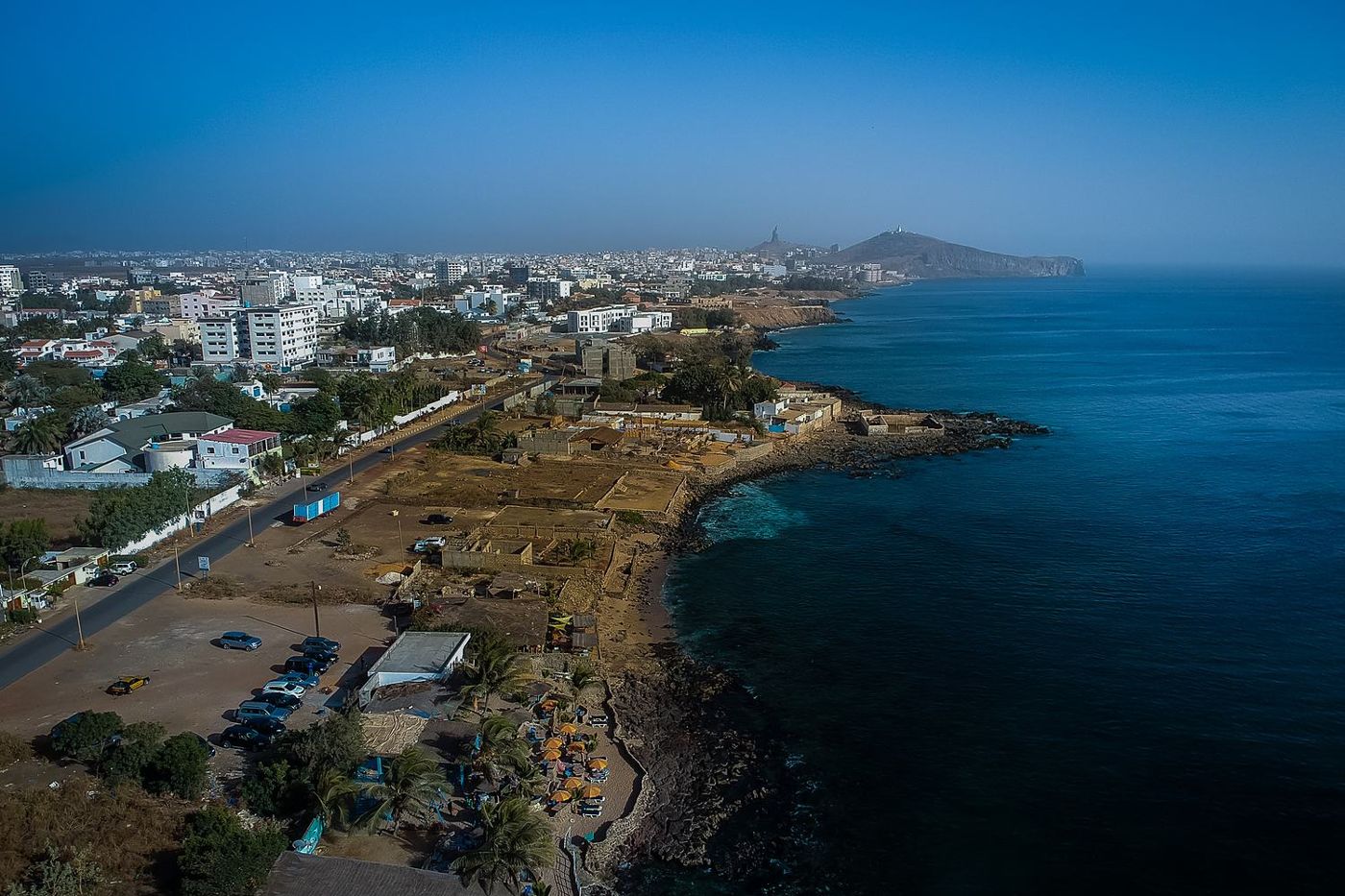
Ngor Island has two faces, and most visitors only ever see one. On the village side, sheltered coves where you swim looking back at Dakar; on the ocean side, a swell-battered reef, the one that put Senegal into surfing history. Our advice, before you even step into the pirogue: decide which side you are coming to spend the day on. The rest, the crossing, the sandy alleys and the sunset, falls into place very simply after that.
At a glance
| Region | Dakar Region, Dakar department; the island belongs to Ngor commune, on the north coast of the Pointe des Almadies |
| Type | Small inhabited, car-free island about 400 metres offshore, with beaches, a reef and surf spots |
| Getting there from Dakar | To Ngor beach: from 30 minutes to over an hour from the centre depending on traffic; then a few minutes by pirogue |
| Recommended time | Half a day; a full day for swimming, the walk round the island and the sunset |
| Official fees | No entry charge for the island; the pirogue crossing is payable on site and not included in the price |
| Best time to go | November–May for dry weather; November–March for the waves; weekdays for peace and quiet |
| Related QFS activities | Surf (lessons and camps), island excursions, diving and snorkelling, boat trips, pirogue trips |
Resident or visitor: the same island, two ways to use it
Live in Senegal? Ngor Island is the shortest escape from the capital, and that is precisely why people underestimate it. On a Saturday, half of Dakar has had the same idea as you: there is a wait for the crossing, the coves fill up, the music gets louder. Come on a weekday morning instead, or early on a Sunday, and you will find a silent island where all you hear is the surf. If you surf, watch for the winter swells rather than putting up with them; if you are a beginner, book a supervised lesson on QFS, where you get the resident rate: up to 30% off depending on the activity.
Just passing through? Ngor Island is the best way to get to the ocean without leaving Dakar: no need to hire a car or head off for the day to the Petite Côte. It goes very well with a morning of sightseeing on the Corniche. Bring cash in small notes for the crossing, sandals that do not mind getting wet, and check the time of the last boat back as soon as you arrive. And remember that families live here: the island is not a stage set.
One island, two faces
The village side: the bay for swimming
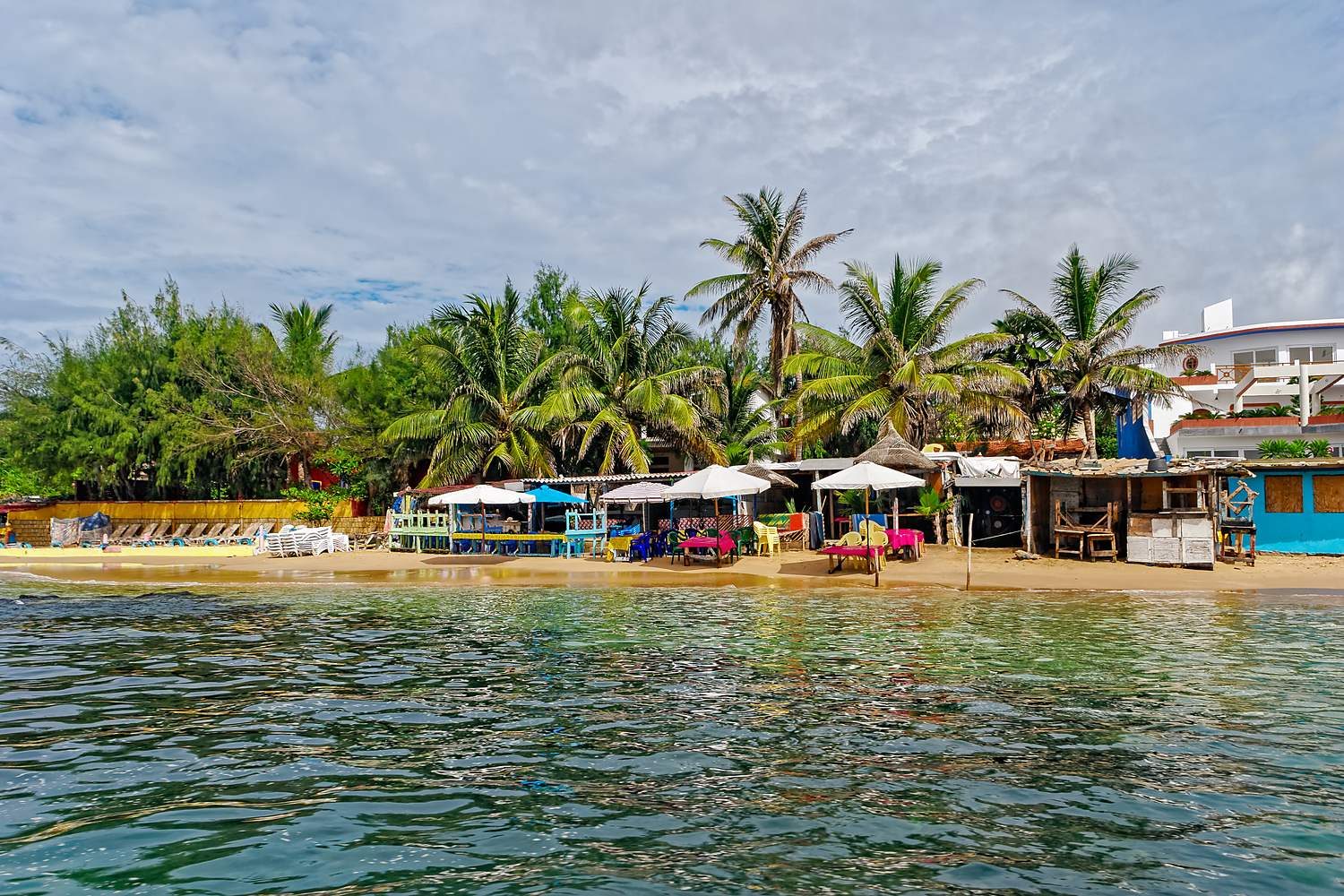
The island is about 500 metres long and 200 metres wide, and it turns its back on the open sea to face the mainland. Between the island and the village beach lies a small bay: this is where the pirogue drops you, and it is on this side, to the south, facing Dakar, that you will find the most sheltered beaches. The water is often clear, the waves softened by the island itself, and during the school holidays you will see whole families swimming here. This is Ngor’s “postcard” face, all towels in the sun and grilled-fish lunches looking across at the city.
This face has its limits, and it is worth knowing them. The island’s beaches are narrow: at high tide the sand shrinks a lot, and things quickly get crowded. On very busy days, the water in the bay can also lose some of its clarity. If you are coming to lay down your towel, check the tide times and aim for a falling tide.
The ocean side: the reef for surfing
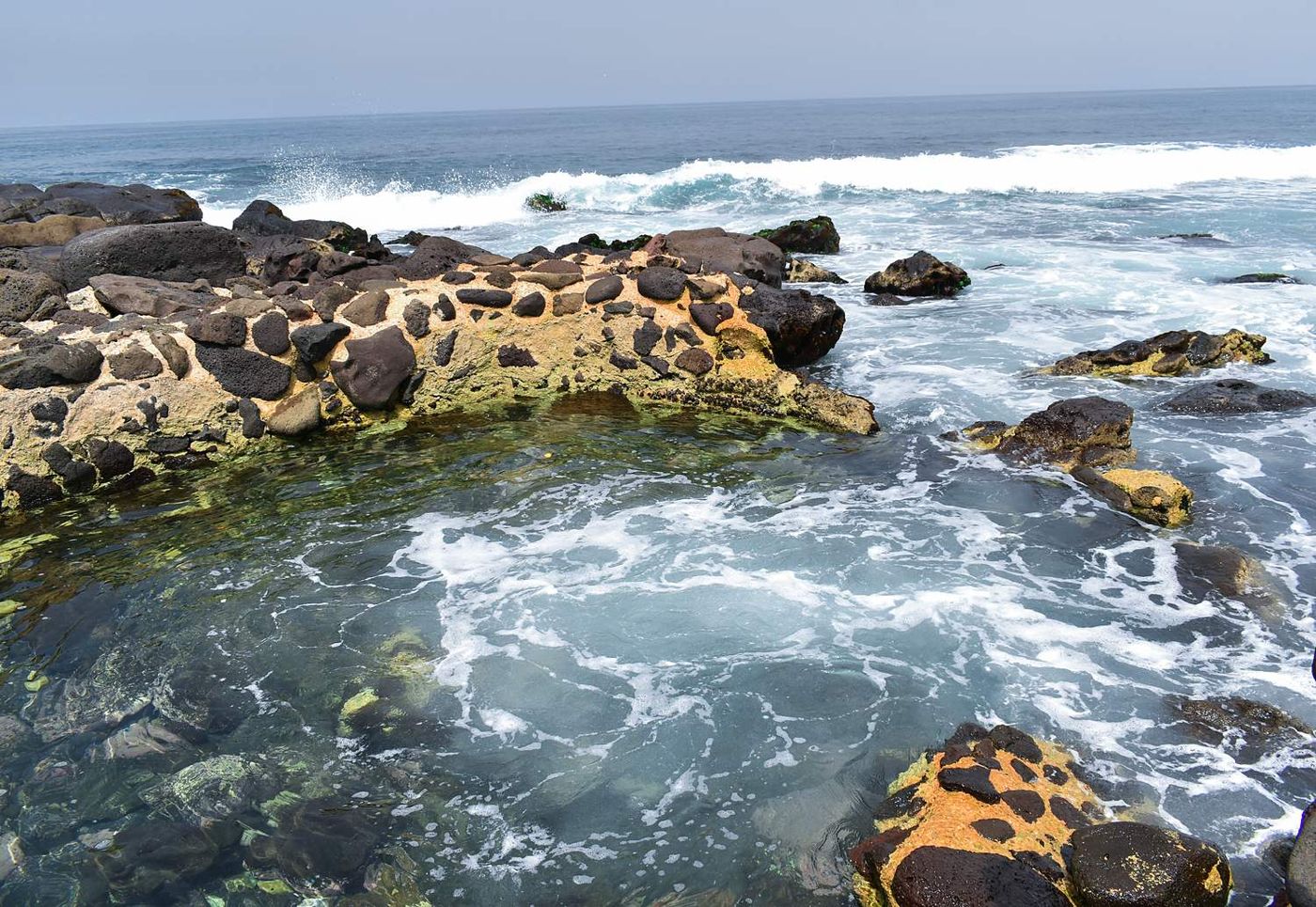
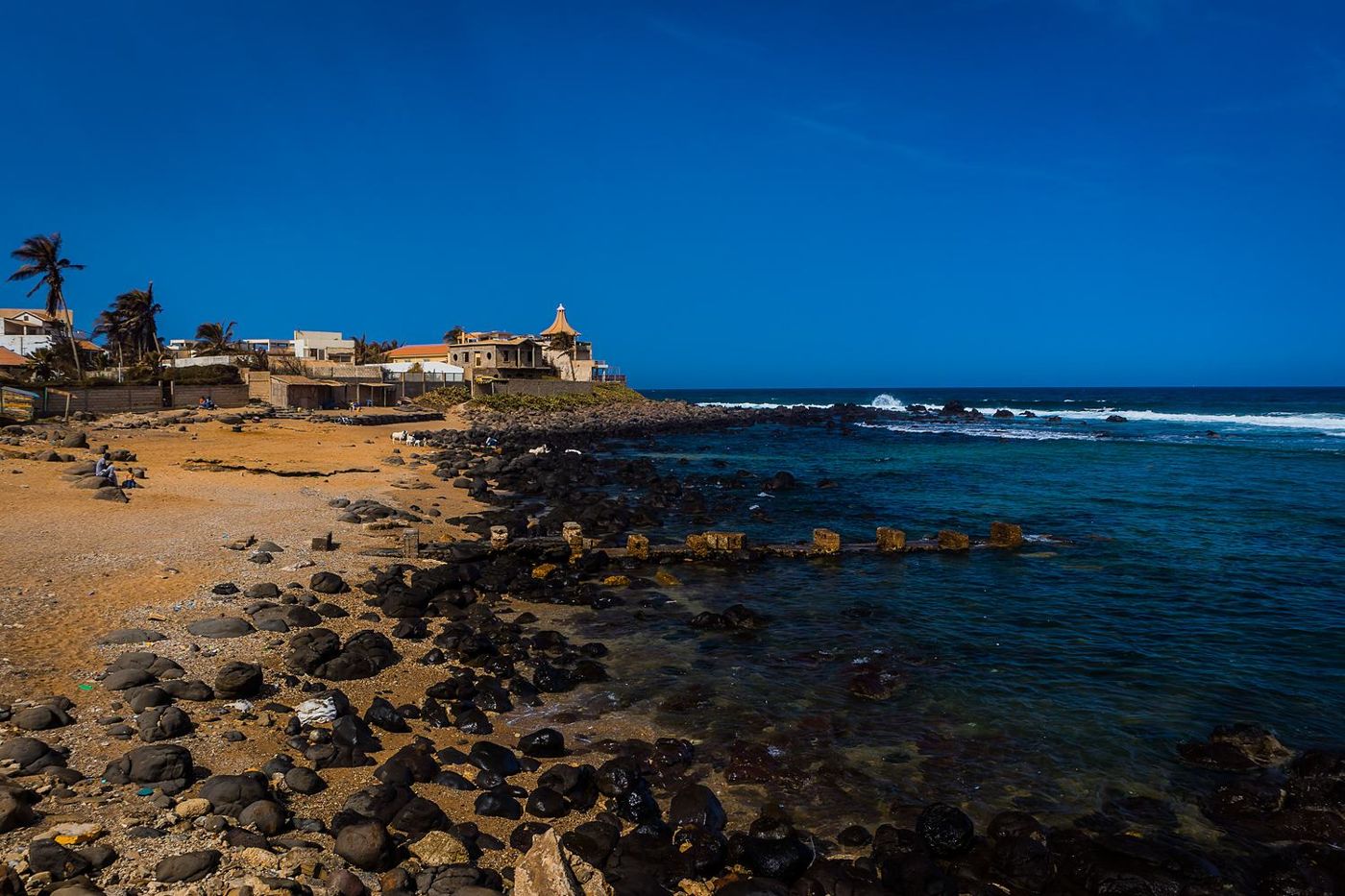
Cross to the other side, towards the north and the tip of the island, and the scenery changes in an instant. Here there are no coves, but black rocks, the wind off the sea and the Atlantic swell breaking on the reef. This is surfers’ territory, and it is not made for swimming: you look at the sea here, you do not jump into it.
It is on this side that the Ngor Right rises, a reef wave that peels along the tip of the island and that surfers come looking for with every winter swell. It has a sister, the Ngor Left, less sought after but just as real. These are waves for independent surfers, intermediate level and above: the bottom is rock, sea urchins carpet the reef, and the peak can be crowded on good days. If you are a beginner, do not start here: a supervised lesson takes you to a gentler sandy spot on the peninsula, chosen according to the day’s swell. Our surf lessons & camps page explains where to learn.
The Endless Summer, or how an island became a legend
In the early 1960s, the Californian film-maker Bruce Brown set off round the world with two young surfers, Robert August and Mike Hynson, in pursuit of a summer that would never end. The film that came out of it, The Endless Summer, first shown on the surf circuit, was released in cinemas in 1966 and, along the way, invented the very idea of the surf trip. Among the first stops was Senegal, and among the first waves the two surfers met was the right that curls at the foot of Ngor Island.
One point that often comes up, and that is worth knowing: the “perfect” wave that made the film famous, the one shown on every poster, was filmed in South Africa, at Cape St Francis. So Ngor is not “the” wave of the film, but it is very much part of it, and Senegalese surfing owes its first image in the world to it. Six decades later, the reef is the same, but it is often the young people of the village, born a few hundred metres away, who catch the first wave.
A Lebou island that became a refuge
Ngor is one of the historic Lebou villages of the Cap-Vert peninsula, like Yoff and Ouakam. The Lebou are a people of the sea: fishermen for generations, they have kept their pirogues, their families and their customary institutions at the heart of a city that has grown up around them. For a long time, the island was an extension of the village, a place for grazing and small crops. As Dakar grew, city dwellers began coming over for picnics, then building huts; the houses, artists’ studios and tables facing the sea followed. Today, the island lives off this double heritage: a fishing community, artists who exhibit right into the alleys, and Dakar residents who come here to breathe. For the village itself and its fishermen’s beach, see our Ngor beach page.