Niokolo-Koba National Park: wildlife, season, access | QFS
Accueil » iconic locations » Niokolo-Koba National Park: Senegal's great wild bush, which owes you nothing

Home › Locations › Kédougou › Niokolo-Koba National Park: Senegal’s great wild bush, which owes you nothing

KÉDOUGOU

Niokolo-Koba National Park: Senegal’s great wild bush, which owes you nothing

Niokolo-Koba is not an open-air zoo: it is the largest park in Senegal, an immense stretch of bush where the wildlife lives without fences and has to be earned. Its recent history, what you really see there, and how to plan the trip.

At Niokolo-Koba National Park, nobody will promise you a lion, and that is exactly why you should go. Nothing here has been reintroduced to please you, and no fence holds the animals in: you are entering the largest protected wilderness in Senegal, where the wildlife lives at its own pace across a vast territory. Come for a laterite track in the early morning, hippos snorting in the Gambia River, fresh tracks in the mud by a waterhole. If a lioness crosses your path, it will be a gift, not a service.

At a glance

RegionStraddling Tambacounda Region and Kédougou Region, in eastern Senegal
TypeNational park: savannah, gallery forest, hills and the course of the Gambia River
DesignationUNESCO World Heritage Site since 1981; removed from the List of World Heritage in Danger on 24 July 2024
Getting there from DakarA long day on the road via Kaolack and Tambacounda; an overnight stop in Tambacounda is strongly recommended
Getting there from TambacoundaThe N7 leads to the Dar Salam entrance: allow about one and a half to two hours by road
Recommended timeTwo days and one night at the very least; three days to venture deeper into the park
Official feesPark entry per person and a vehicle charge, payable on site and not included in the price; visits accompanied by a park guide
Best time to goDry season, November–February for comfort; March–May for wildlife around the waterholes, in fierce heat. The park is largely inaccessible during the rainy season (hivernage)
Related QFS activitiesSafari in Niokolo-Koba, as a day trip or over two days, hikes and villages around Kédougou

Resident or visitor: the same park, two mistakes to avoid

Do you live in Senegal? The mistake is to treat it like a bigger Bandia. Niokolo-Koba is not something you do on a Saturday: between the road and the park, it needs four days at the very least, and it comes into its own as part of a wider trip to Kédougou, Bassari Country (Pays Bassari) and Dindéfélo. Aim for the end-of-year holidays or a long weekend between November and February, leave Dakar at dawn and break the journey in Tambacounda. It is a chance to show your children that Senegal still has lions, chimpanzees and hippos, at home, with no wire fencing. On activities booked through QFS, you get the resident rate: up to 30% off; park entry, however, remains an official fee, with no discount.

Just passing through? The mistake is to arrive with a list of animals to tick off. Niokolo-Koba is not an East African park: the wildlife here is scarce, scattered and often shy, and the vegetation hides a great deal. If your stay only lasts a week, a reserve in the west such as Bandia Reserve will show you more animals in a single morning. If you have ten days or more and you love wide open spaces, then Niokolo-Koba will give you what the reserves cannot: the rare feeling of being a guest in a world that does not revolve around you.

A park back from the red list

The story of Niokolo-Koba begins with hunting. In the mid-1920s, the colonial administration designated part of the region as a hunting reserve. On 1 January 1954, the area became a national park, and it was then enlarged in stages until 1969. The result is a protected area of about 913,000 hectares, the largest park in Senegal, crossed by the Gambia River and its tributaries, including the Koulountou and the Niokolo-Koba river that gave the park its name. In 1981, UNESCO made it a World Heritage Site for the richness of its savannahs and gallery forests, one of the last great wildlife refuges in West Africa.

Then came the decline. Poaching, herds grazing illegally inside the park, waterholes drying up or silting over, pressure from gold panning and quarries: the large mammals retreated, and some came close to local extinction. In 2007, UNESCO placed the park on the List of World Heritage in Danger. It would remain there for seventeen years.

The recovery has been slow, and it has a human face. National park rangers stepped up patrols against poaching and illegal gold panning, the seasonal movement of livestock was brought under tighter control, water and soil testing equipment now monitors mining discharges, and waterholes overrun by a thorny shrub, Mimosa pigra, have been cleared. Scientific teams have set camera traps across the whole park to follow its flagship species. Little by little, the tracks are coming back, and the small lion population is growing again.

On 24 July 2024, in New Delhi, the World Heritage Committee removed Niokolo-Koba from the List in Danger. It is not the end of the story: UNESCO is keeping a close eye on dam projects upstream on the Gambia River, and on mining and gold panning around the edges. The park has not been saved once and for all; it is held, every day, by those who watch over it. Knowing that changes the way you look at every footprint on the track.

  • Guided cultural tours

    Weekend stay at Oussouye and Saint-Georges Point

    Casamance · Full day, 2 days, 3 days


    From39 600 CFA
    Resident price37 620 CFA−5 %
  • Nature & culture discoveries

    Pirogue trip to Carabane Island: fishing village and dolphins

    Carabane · Half-day


    From22 000 CFA
    Resident price19 800 CFA−10 %
  • Traditional sites & villages

    Three-day Diola villages tour in Casamance

    Cap Skirring · 3 days


    From239 800 CFA
    Resident price227 810 CFA−5 %

The Derby eland, from the bush to the reserves of the west

If Niokolo-Koba needed an emblem, it would be the Derby eland, the largest antelope in the world, with spiralled horns and a dewlap hanging from its neck. Its West African subspecies is critically endangered: according to the latest scientific estimates, no more than two hundred animals remain in the wild, and this is where they live. Discreet and confined to a few sectors of the park, they very rarely show themselves to visitors.

That is why eland captured in Niokolo-Koba were taken, in the early 2000s, to the fenced reserves in the west of the country. They breed there under a programme overseen by scientists, at Fathala Reserve and Bandia Reserve, with the idea of one day sending some back to their park of origin. If you have seen an eland at Bandia, you have seen a little of Niokolo-Koba; here, above all, you will see the world that has to be kept for them.

Key facts & figures

FactFigure
Hunting reserveMid-1920s
National parkSince 1 January 1954, enlarged until 1969
AreaAbout 913,000 hectares, the largest park in Senegal
UNESCO World Heritage SiteSince 1981
List of World Heritage in DangerFrom 2007 to 24 July 2024 (removal decided in New Delhi)
Highest pointMount Assirik, 311 metres
RiversThe Gambia River, with the Koulountou and the Niokolo-Koba
WildlifeMore than 70 mammal species and about 330 bird species recorded
Derby elandNo more than 200 animals in the wild according to the latest estimates
Large carnivoresLions, leopards and African wild dogs, in small numbers

Getting there & official fees

Everything goes by road. From Dakar, you head to Kaolack and then Tambacounda: it is a long day in the car, and a night in Tambacounda means you reach the park rested, early in the morning, when the bush is at its liveliest. From Tambacounda, the N7 runs south-east, crosses the park and carries on to Kédougou. The main entrance is at Dar Salam, beside this road: allow about one and a half to two hours from Tambacounda depending on the state of the tarmac. If you are coming from Kédougou, the same road brings you there heading north-west, so you can fit the park in on the way to or from a trip to the south-east. Drive in daylight: the road crosses the park, and both wild animals and herds of livestock cross it.

Inside, forget the saloon car. The laterite tracks call for a high-clearance vehicle, ideally a 4×4, and you do not venture onto them alone: the visit is made with a park guide, who knows which waterholes are busy that day. To reach eastern Senegal from Dakar, intercity transfers and vehicle hire with driver spare you from driving that long road yourself.

As for fees, budget for park entry, paid per person, and a vehicle charge. These are official fees set by the national parks administration. They are paid on site, in cash, are not included in the price of your outing, and no discount applies to them. Withdraw cash in Tambacounda or Kédougou: there is no cashpoint in the park.

What to see

Simenti and its waterhole. The heart of the visit, beyond the Dar Salam entrance. The site lies between the Gambia River and the Simenti waterhole, which holds its water when the bush dries out: in the dry season, this is where the wildlife comes to drink. Settle quietly at the water’s edge in the late afternoon: kob, warthogs, baboons and waterbirds take turns there.

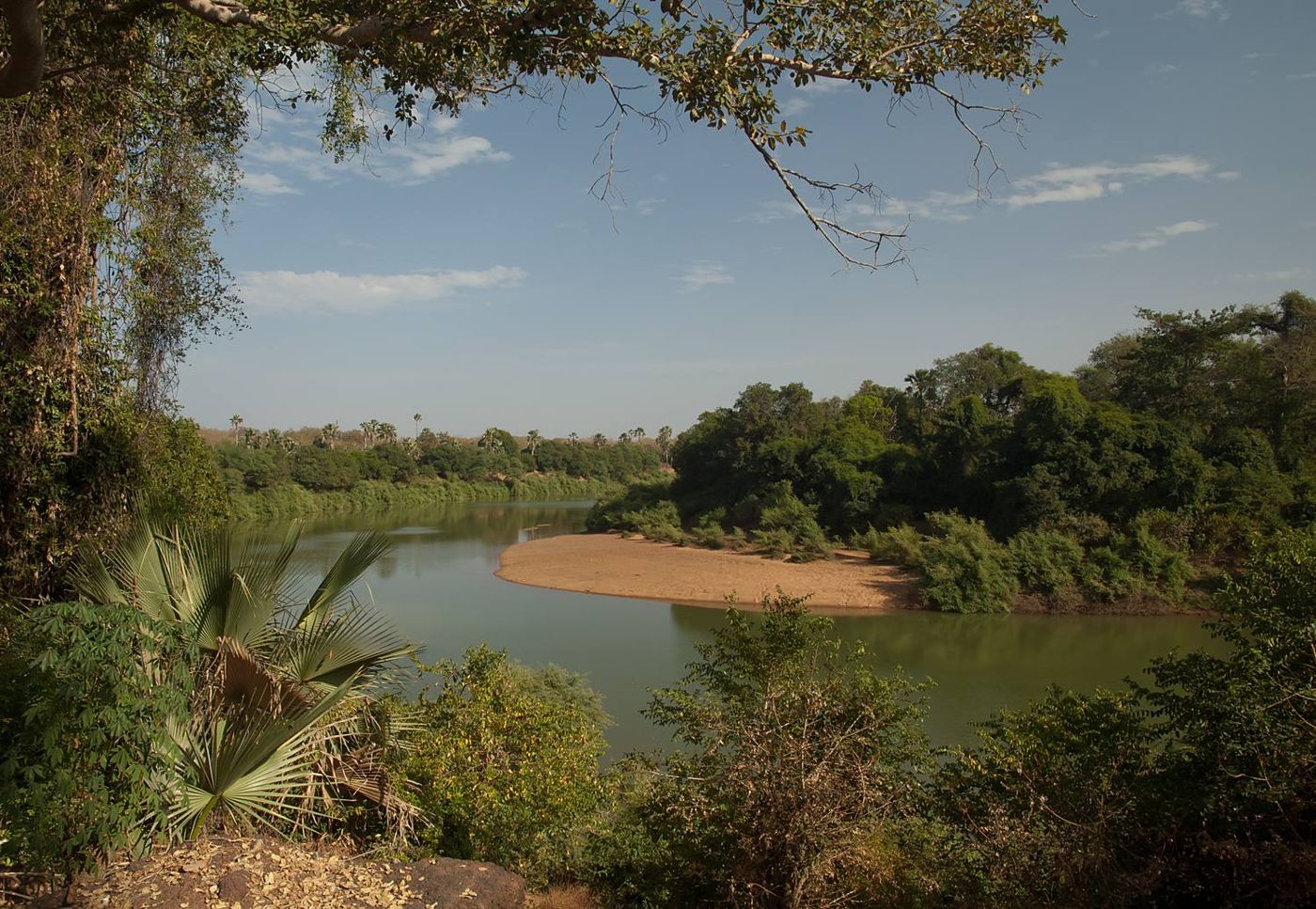
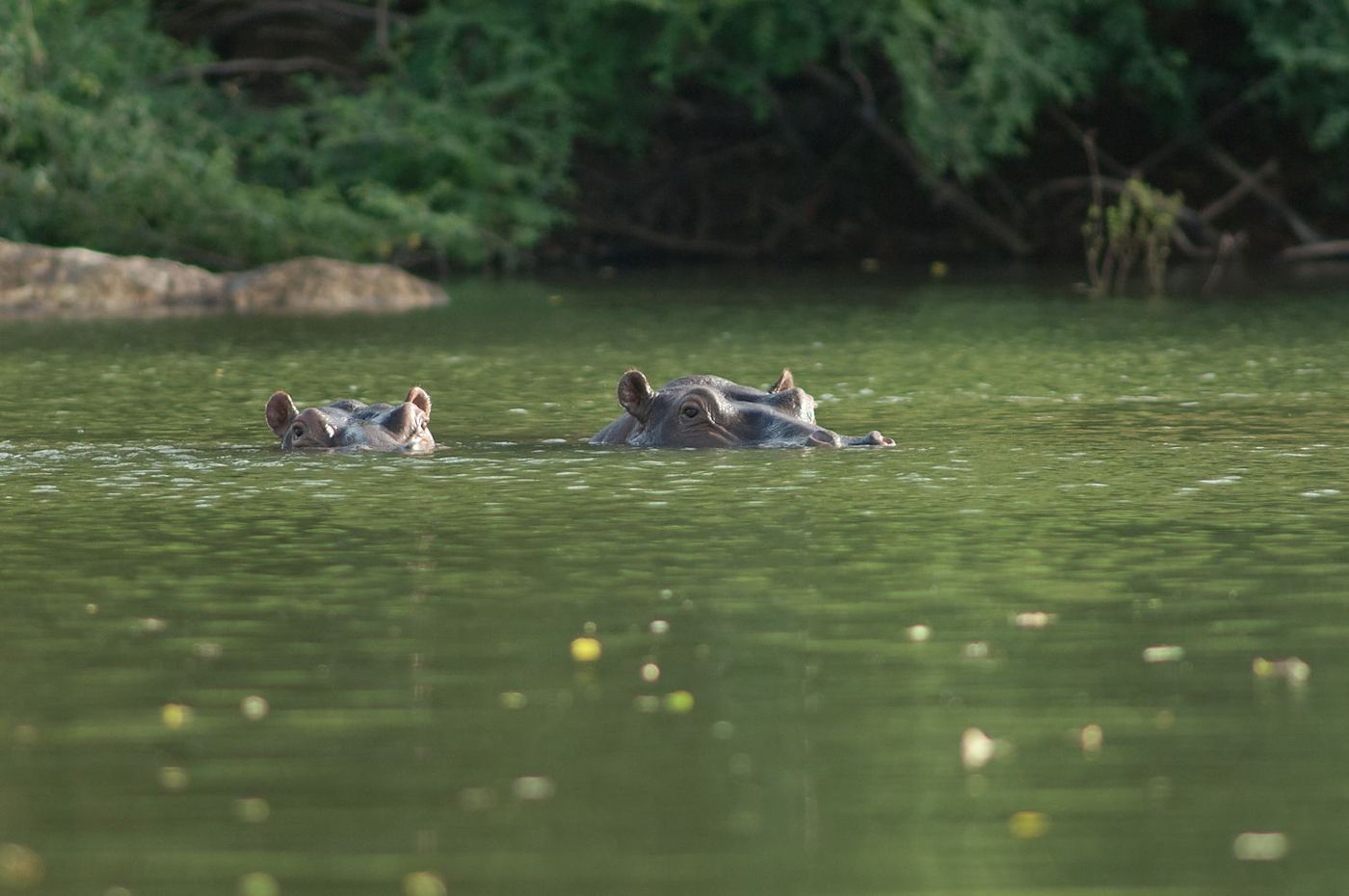
The Gambia River and its hippos. The river, wide and calm in the dry season and lined with gallery forest, is home to hippos and crocodiles. A pirogue trip, when one is possible, offers another way of seeing the park: right at water level, surrounded by birdsong.

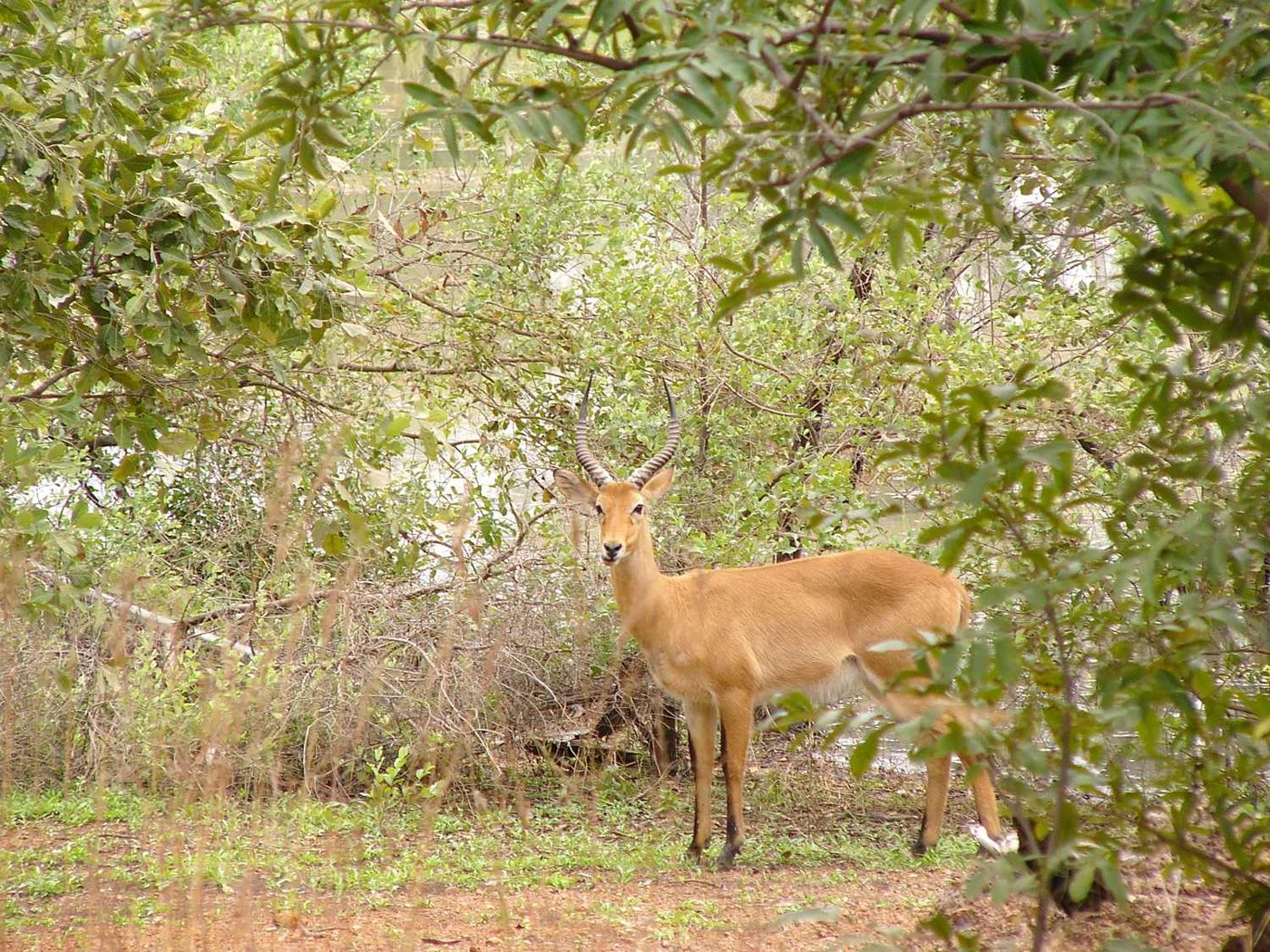
The savannah tracks. The safari itself, by 4×4, at daybreak. You are far more likely to come across antelopes (Buffon’s kob, roan antelope, bushbuck), buffalo, warthogs and monkeys than big cats. Watch the ground for tracks: your guide can read a fresh lion or leopard print, and that is often the most thrilling moment of the day.

The large carnivores. Niokolo-Koba is the refuge of Senegal’s last wild lions, which belong to a critically endangered West African population, and one of the last strongholds of the African wild dog in the region. Their numbers remain small and the territory is immense: sightings are never guaranteed, and that is just as it should be.

Mount Assirik. The highest point in the park, at 311 metres, in the south-east, far from the busiest tracks. Its slopes are home to chimpanzees, among the most northerly in Africa, which scientists have studied for decades. It can be reached as part of a stay of several days, in the dry season, and the chimpanzees there remain hard to spot.

The birds. About 330 species recorded: hornbills, bee-eaters, kingfishers, birds of prey above the river. Even on days without any large mammals, your binoculars will be kept busy.

  • Adventure & outdoors

    Bike hire in Cap Skirring

    Cap Skirring · Half-day


    From5 500 CFA
    Resident price5 225 CFA−5 %
  • Excursions & adventures

    Mountain bike and pirogue trip in Casamance

    Casamance · 6h


    From28 160 CFA
    Resident price22 528 CFA−20 %
  • Quad & buggy

    Quad biking in Cap Skirring

    Cap Skirring · 2h, Full day


    From49 500 CFA
    Resident price47 025 CFA−5 %

Nearby

Niokolo-Koba is best experienced as one stage of a trip through the south-east. To the south, Kédougou serves as a base camp, on the banks of the Gambia River. From there, Dindéfélo Falls and the Dindéfélo Community Nature Reserve, which is also home to wild chimpanzees, make a day trip. Further west, Bassari Country and the Bedik villages, a UNESCO World Heritage Site, extend the trip on the cultural side. For the bigger picture: Kédougou Region. And if you head back towards the coast wanting to see eland again, Fathala Reserve, in the Saloum, completes the loop.

The right time

PeriodWhat changes
November–FebruaryThe “cool” dry season: pleasant mornings, passable tracks. The best window for combining the park with the rest of the south-east
March–MayThe vegetation dries out and the waterholes shrink: the wildlife gathers around the water, but the heat becomes overwhelming. Safaris at dawn and late in the day only
Rainy season, July to OctoberTall grass, scattered animals, waterlogged tracks: the park is largely inaccessible
Time of dayOn the track from opening time, a break during the hottest hours, back to the water’s edge in the late afternoon

Our advice: sleep as close to the park as you can so that you are on the track at sunrise. The first two hours of the day and the last hour before nightfall account for half of your sightings. For sunset, stay by the Gambia River: the low light over the river and the gallery forest is the image you will take home.

Practical tips

  • What to bring. Binoculars (essential, one pair per person if possible), a hat, sun cream, plenty of water, insect repellent, a head torch and a snack for the day.
  • What to wear. Neutral-coloured clothing, long sleeves against the sun and insects, closed shoes. A light jumper for December and January mornings.
  • Health. The south-east is a malaria zone: talk to your doctor about prevention before you leave.
  • In the park. Stay in the vehicle unless the guide says otherwise, speak softly, never leave the tracks, never feed any animal. No drones without permission.
  • Respect the place. No litter, no picking plants: you are in a World Heritage Site, defended by rangers who sometimes put their own safety at risk there.
  • Photos. Photograph the animals freely, but without asking the driver to chase them. The people of the riverside villages, always with their consent.
  • Money. Cash in small notes for the official fees.
  • Patience. A day without any big cats is not a wasted day: it is Niokolo-Koba as it really is.

Book an activity here with QFS

On QFS, Niokolo-Koba is booked in the safari section: as a day trip or over two days, from Kédougou Region, for the savannah, the gallery forest and the wildlife. To build the trip around it, browse the guided hikes to the Bedik villages and Dindéfélo, traditional sites & villages and the wildlife reserves & parks in the rest of the country.

Every outing is run by an independent local professional. You pay 20% to secure your booking (the booking fee), and the balance is paid on site, on the day. Park entry and the vehicle charge are official fees, payable on site and not included in the price. If you live in Senegal, you get the resident rate: up to 30% off (the exact rate is shown on each listing).

Frequently asked questions

Can you see lions in Niokolo-Koba?
It is possible, but never guaranteed. The park is home to Senegal’s last wild lions, in small numbers across an immense territory. Antelopes, hippos, monkeys and birds are much easier to spot.
When should you visit Niokolo-Koba National Park?
In the dry season. From November to February for pleasant mornings; from March to May, the wildlife gathers around the waterholes, in fierce heat. During the rainy season, the park is largely inaccessible.
How do you get to Niokolo-Koba from Dakar?
By road, via Kaolack and Tambacounda: a long day’s journey, ideally broken by a night in Tambacounda. From there, the N7 leads to the Dar Salam entrance in about one and a half to two hours.
Is park entry included in the price of the outing?
No. Entry is paid per person, plus a vehicle charge. These are official fees, payable on site in cash, not included in the price and with no discount.
Is Niokolo-Koba still “in danger”?
No. Placed on the List of World Heritage in Danger in 2007, it was removed on 24 July 2024. UNESCO continues to monitor the threats posed by dams, mining and gold panning.
How much time should you allow?
Two days and one night in the park at the very least, three to go further. Counting the drive from Dakar, set aside at least four days, or make the park part of a trip to Kédougou.

Read also