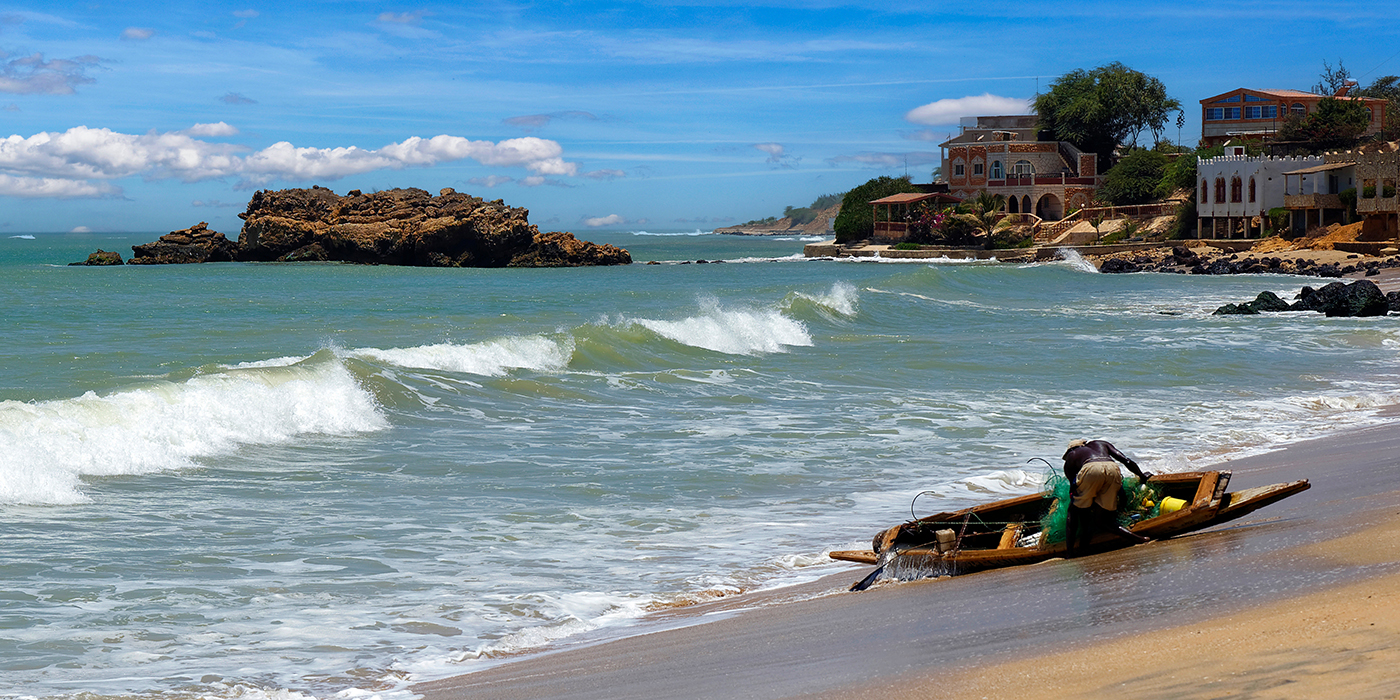
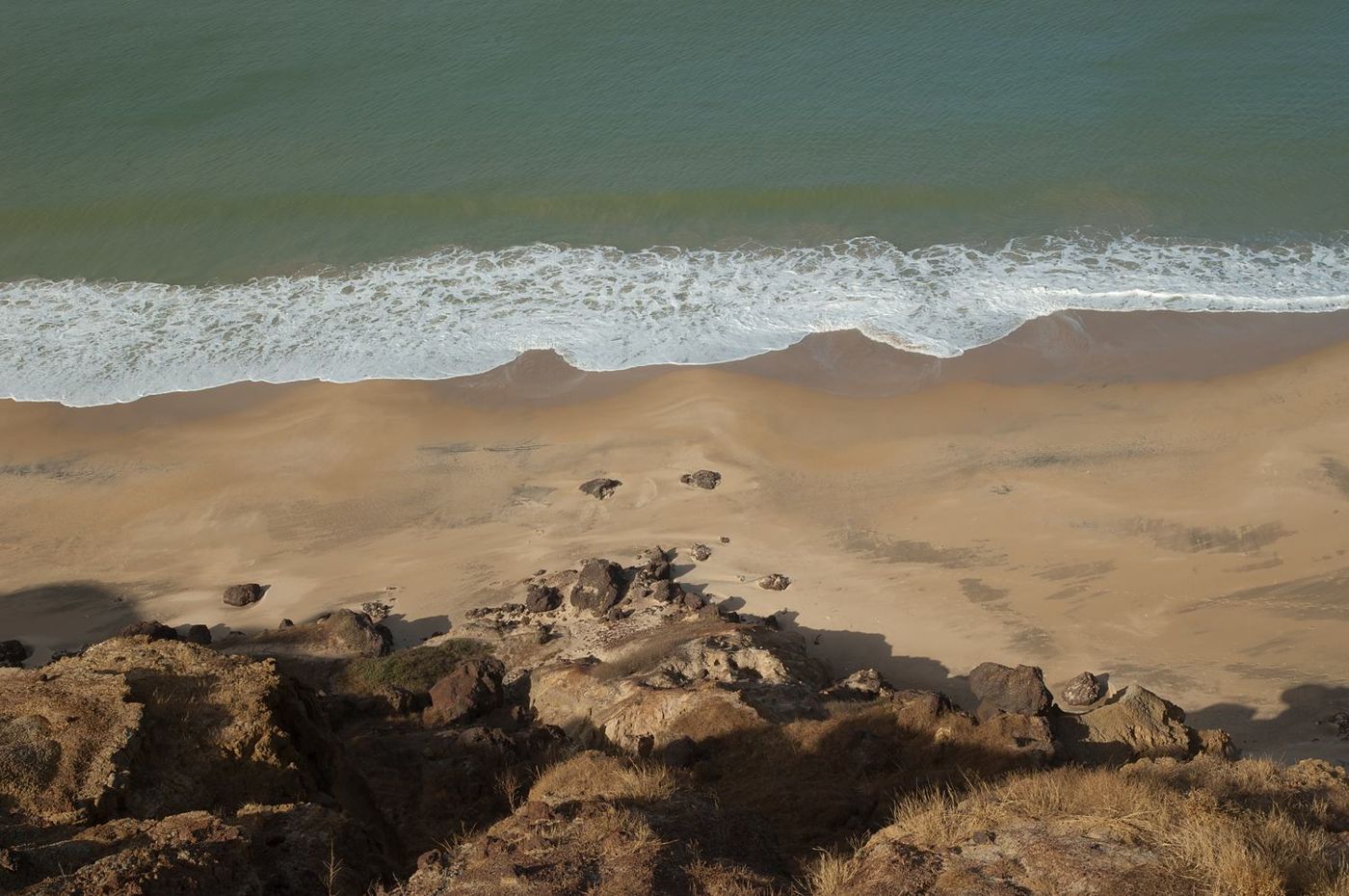
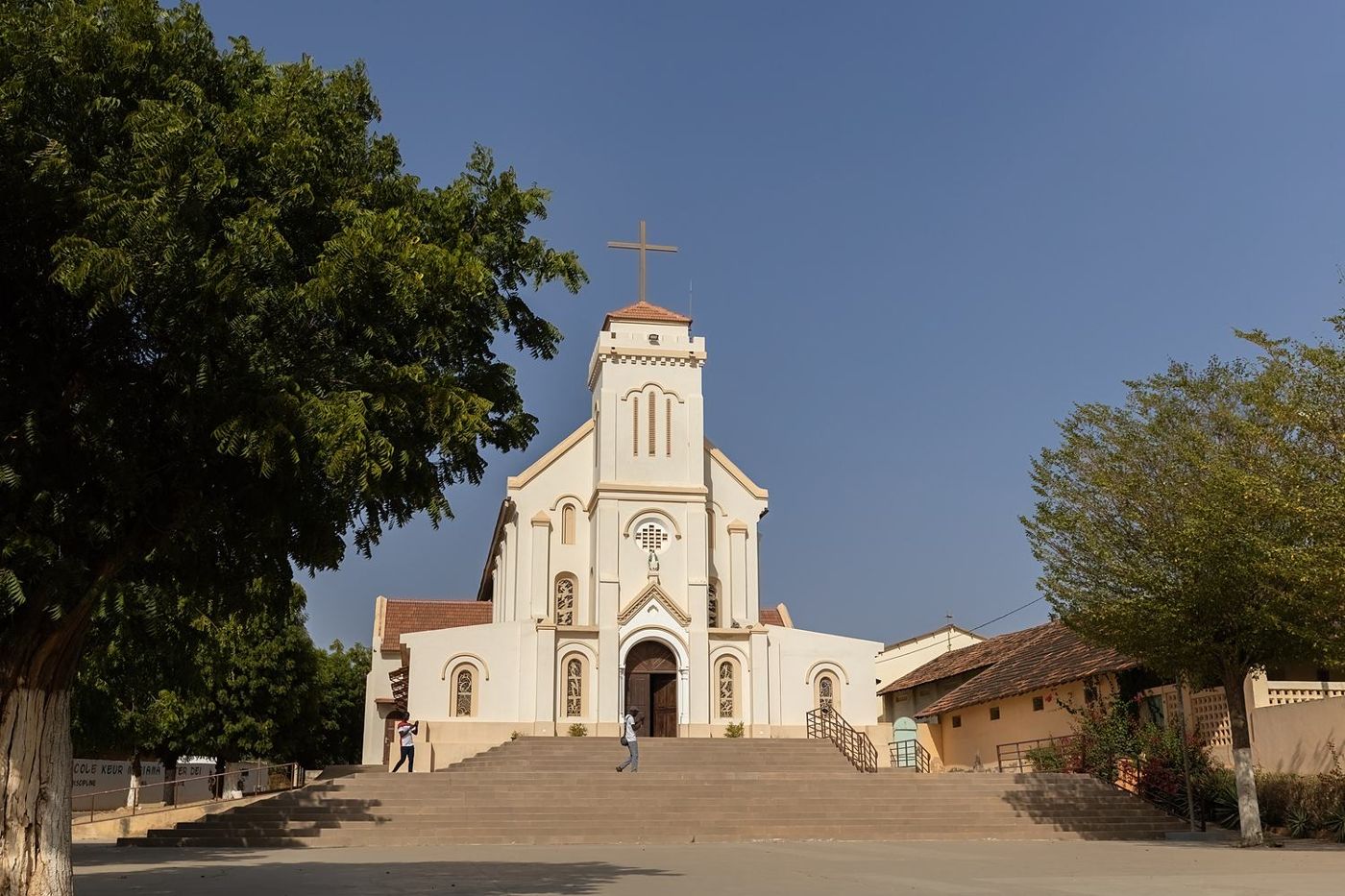
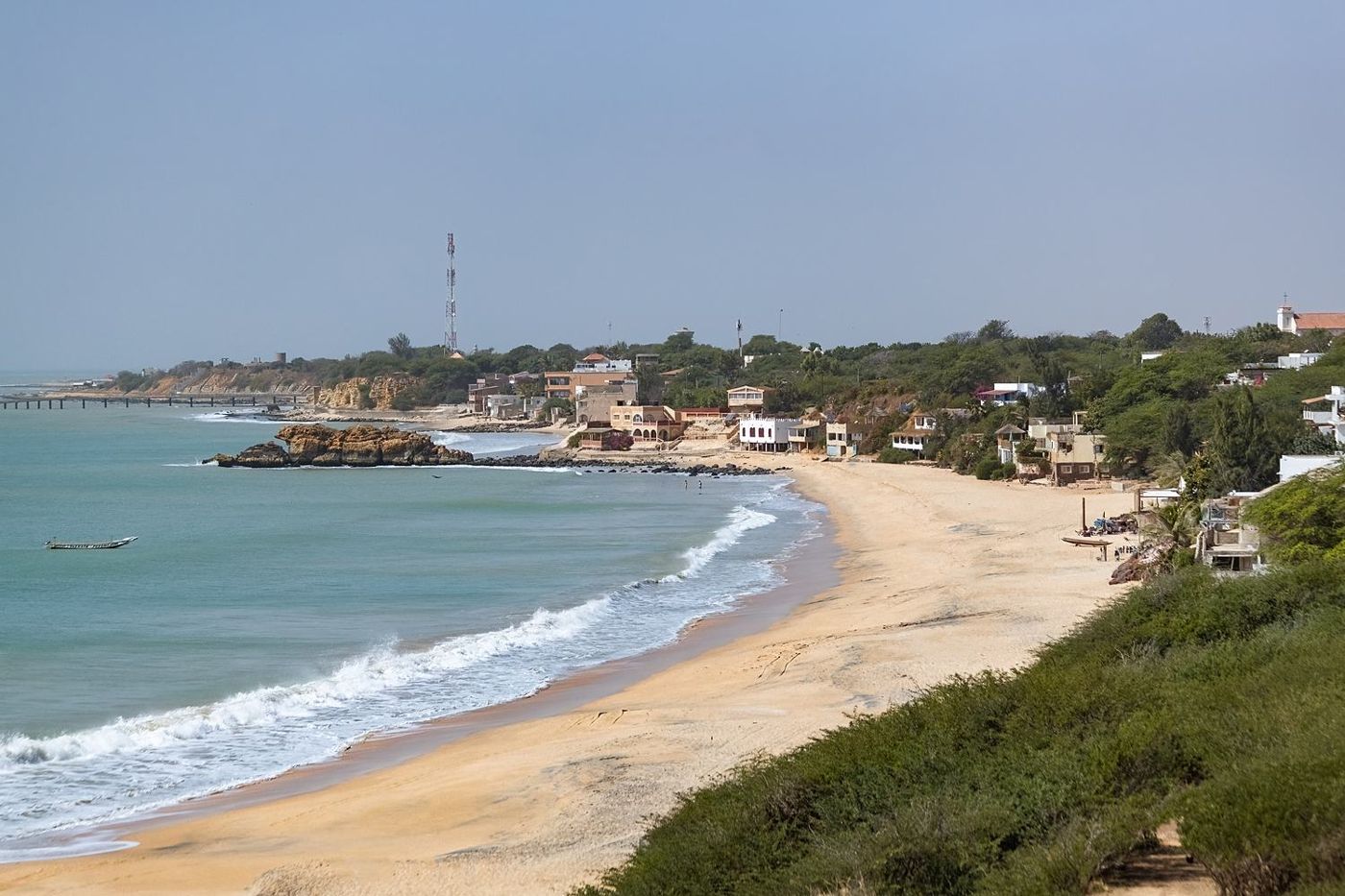
Popenguine Nature Reserve is not a park you visit to see animals: it is a place you visit to see what a village can do when it decides it will no longer let its forest die. Forty years ago, these hills above the ocean had been stripped bare by drought, woodcutting and grazing herds. Today, you walk through a savannah that has grown back, with jackals in the thickets, raptors above the cliffs of Cap de Naze and the sea below. Come early, come on foot, and let the guide tell you who replanted each tree.
At a glance
| Region | Thiès Region, Mbour department, Popenguine-Ndayane commune, in the north of the Petite Côte |
| Type | Nature reserve created in 1986: shrub savannah, ravines and coastal cliffs, co-managed with a collective of women from the surrounding villages |
| Getting there from Dakar | About 70 km, 1¼ to 2 hours by road depending on traffic; a short drive from the Somone or Saly |
| Recommended time | Two to three hours for the walking loop; half a day with the village, the shrine and the beach |
| Official fees | Reserve entry charge payable on site and not included in the price, according to your status (resident, non-resident, child) |
| Best time to go | November–April, early in the morning or late in the afternoon |
| Related QFS activities | Guided hikes, birdwatching, cultural tour of the village and the shrine, beach days |
Resident or visitor: two ways to walk here
Live in Senegal? The reserve is the easiest nature outing to organise from Dakar when you want high ground, shade and silence without going away for the weekend. Leave the city at dawn, walk for two hours before the sun starts beating down, and head down for a swim in Popenguine Bay by late morning. It is also an outing that changes with the seasons: grey and golden in March, an almost tropical green after the rains. The entry charge has a resident rate, and on activities booked with QFS, you get the resident rate: up to 30% off depending on the activity.
Just passing through? If you are staying on the Petite Côte, the reserve shows you the other face of this coast: no sun loungers or jet skis, but ochre cliffs, baobabs and the story of women who took charge of their environment long before ecotourism became a selling point. Do not rush through it: without the guide’s story, you see a pretty savannah; with it, you understand a model cited far beyond Senegal.
A forest given back by women
A hill on its last legs
In the mid-1980s, the forest overlooking Popenguine was exhausted. The droughts of the previous decades, the cutting of firewood and overgrazing had stripped the land bare, and the wildlife had almost disappeared. In 1986, the state created Popenguine Nature Reserve by decree, covering just over a thousand hectares taken from part of the village’s forêt classée (protected forest). The decree protected the site; it did not make it grow back.
A hundred or so women and one man
This is where the village steps in. In 1988, a Popenguine resident gathered just over a hundred women around her, and a single man, within the Regroupement des femmes de Popenguine pour la protection de la nature (Popenguine Women’s Group for the Protection of Nature). Their programme came down to a few actions, repeated for years: setting up tree nurseries, replanting local species, cutting firebreaks, clearing, keeping watch, and explaining to their neighbours why the cutting had to stop. The trees came back, and then the animals.
Eight villages, more than 1,500 women
The movement quickly spread beyond Popenguine. Women from the neighbouring villages joined the effort, and in 1996 COPRONAT, the Collective of Women’s Groups for the Protection of Nature, was born, bringing together eight villages around the reserve and more than 1,500 women. It is involved in managing the reserve alongside the national parks service, and runs reforestation and environmental education projects. The initiative is regularly held up as an example of community conservation in West Africa.
When you pay your entry charge or walk with a reserve guide, it is this organisation that you keep alive: each visit funds a little of the surveillance and planting.