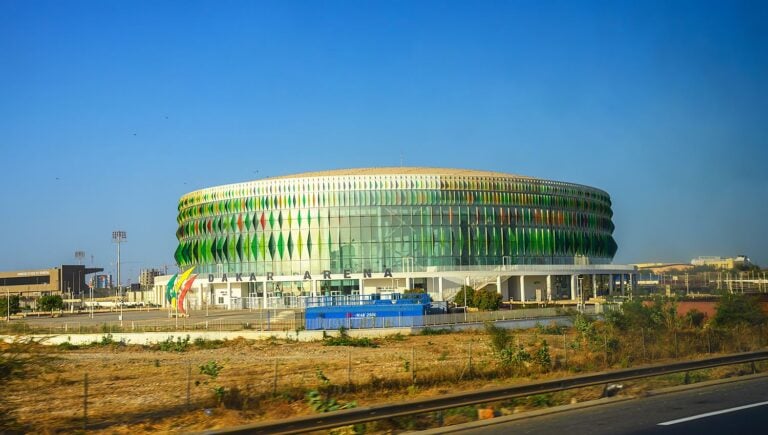
Dakar 2026 Youth Olympic Games: your guide to Africa’s first Olympic Games, from the stands
From 31 October to 13 November 2026, Dakar, Diamniadio and Saly will host the Youth Olympic Games, the first Olympic event in…
Read the article ›
Home › Locations › Thiès Region › Somone › The Somone lagoon: the mangrove that local people replanted
SOMONE
On the Petite Côte, the Somone lagoon is a reserve born of an initiative by local women, which went on to become a Ramsar Site and then a marine protected area. Pirogue, kayak, birds and nature trail: how to discover it without disturbing it.
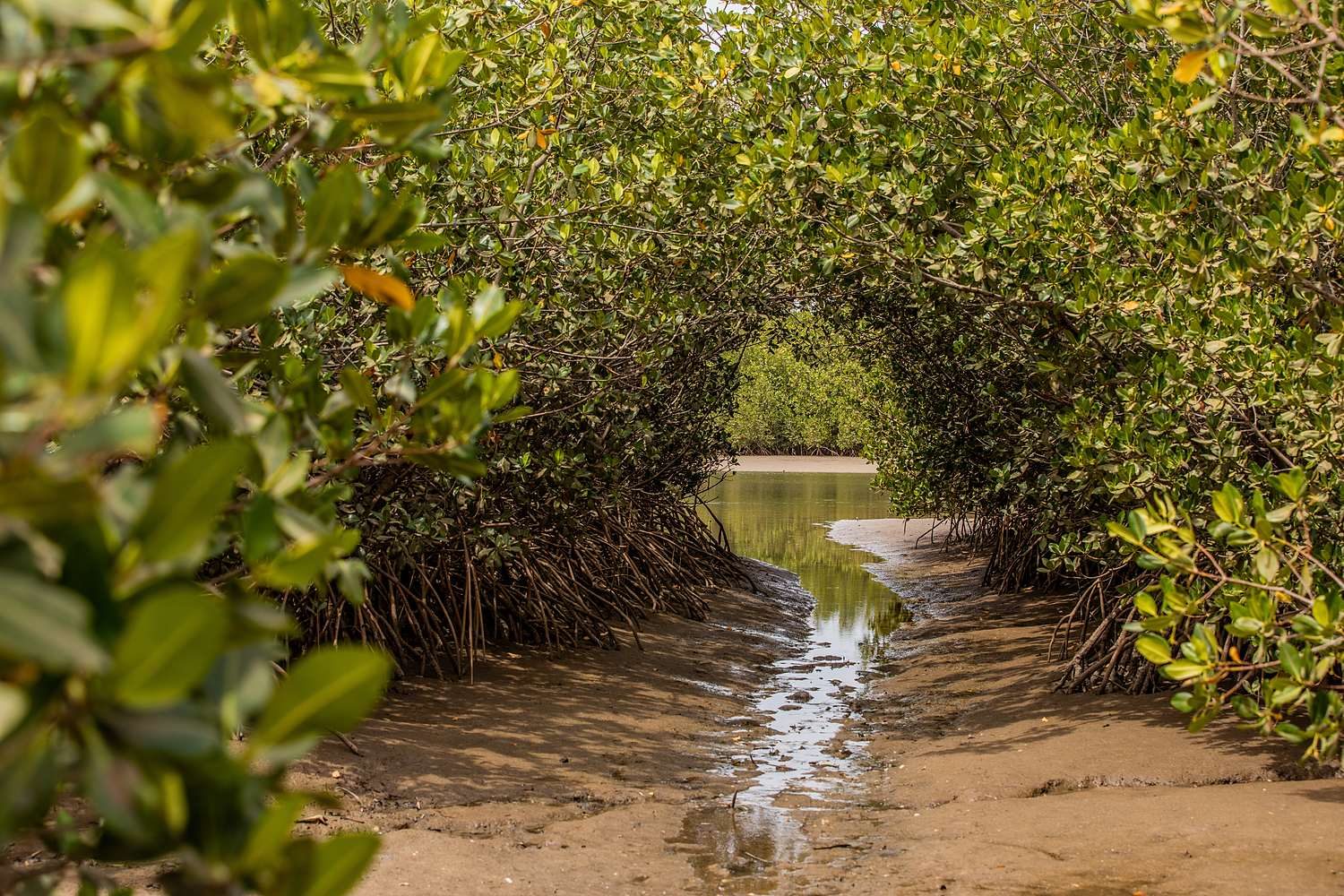
The Somone lagoon is not a natural backdrop you simply pass through: it is a mangrove forest that local people decided to rebuild, by hand, at the end of the 1990s. Keep that in mind as you step into the pirogue, and the trip takes on a different meaning. You are no longer just gliding between roots and pelicans: you are travelling through a reserve run by the villages along its shores, where every channel has been watched over, replanted and defended. The smart move here is to slow down: come at the right tide, at the right time of day, and let the lagoon set the programme.
| Region | Thiès Region, Mbour department; the reserve extends over the communes of Somone and Sindia (villages of Guéréo, Thiafoura and Sorokhassap) |
| Type | Mangrove lagoon at the mouth of the Somone: community nature reserve, Ramsar Site and marine protected area |
| Getting there from Dakar | About 75 to 80 km on the toll motorway, 1¼ to 2 hours depending on traffic; roughly 30 to 45 minutes from Blaise Diagne International Airport (AIBD) |
| Recommended time | One to two hours on the water, an hour for the trail; half a day for the whole visit, a full day with the beach |
| Official fees | Depending on the activity, a reserve charge is payable on site and not included in the price; each activity listing states whether it applies or is included |
| Best time to go | November–March for migratory birds; the whole dry season, October–June, for comfort |
| Related QFS activities | Pirogue trips, kayak, paddle and canoe, birdwatching, motorboat trips through the mangroves, beach days |


Live in Senegal? The lagoon is the easiest nature outing to fit in from Dakar: you leave early on a Saturday, you are on the water before the heat builds, and you are home the same evening. Its real appeal, for you, is that it is never the same twice. In January, the mudflats are covered with waders from Europe; in May, the lagoon is quieter and the light harsher; after the rainy season (hivernage), the mangrove is an almost aggressive green. One outing per season, and you will know the lagoon better than many a passing guide. On QFS, you get the resident rate: up to 30% off depending on the activity.
Just passing through? The lagoon is probably the first real landscape you will see when you arrive at AIBD, which is very close by. The trap is to treat it as a box to tick between two transfers: an hour in a pirogue at midday, under a crushing sun, with the birds tucked away in the shade. Do the opposite. Choose dawn or late afternoon, ask about the tide, and if you have two days, do two different outings: one by pirogue with a guide who names the birds, one by kayak for the silence.
At the end of the 1990s, the Somone mangrove is in trouble. The mangrove trees are retreating and the ecosystem is deteriorating. It is women from the shoreline villages, those who make a living gathering oysters from the roots, who raise the alarm: no mangrove means no oysters, no fish, no birds. On their initiative, and at the request of local people, the local authority classifies the lagoon as a community nature reserve in 1999. Around 700 hectares of water, channels, mudflats, tann (salt flats) and mangrove come under protection.
The difference from a national park comes down to one word: community. The reserve is not guarded first and foremost by officials from elsewhere, but by a management committee that brings together the villages, the state’s technical services and partners. Internal rules, drawn up with the residents, set out what is allowed: fishing, oyster farming and ecotourism carry on, within limits; cutting the mangrove, hunting, capturing waterbirds and destructive fishing gear are banned.
The mangrove you see today owes a great deal to repeated reforestation campaigns. A mangrove nursery is kept near the lagoon, and the young plants go into the ground during the rainy season, when fresh water and mud give them the best welcome. Several species of mangrove tree grow side by side. That is the reason for the golden rule: pick nothing, break nothing, and do not walk on the young plants at low tide.
On 1 September 2017, the reserve was added to the Ramsar List of Wetlands of International Importance. The story could have ended there. But a few years later, a plan to declassify part of the lagoon for a large hotel development sparked a strong mobilisation by local people. The plan went nowhere. Instead, the decree of 27 May 2020 created the Somone Marine Protected Area, which finally gave the 1999 reserve a solid legal status and extended protection to around 4,098 hectares, at sea and on land. The debate over land pressure around the lagoon remains lively, and local management continues to defend its boundaries.
Why does this concern you? Because the lagoon provides a living for the people along its shores. Your pirogue trip pays a boatman from the village, and the reserve charge, when it applies, funds surveillance and reforestation.
Réservez votre sortie avec nos prestataires locaux. Le prix du service est distinct des éventuels coûts officiels réglés sur place.
Taxi-boat trip on the Somone lagoon
Somone · 3h
Guided canoe trip on the Somone lagoon
Somone · 1 h 30
Canoe hire on the Somone lagoon
Somone · 30 min – Full day
| Fact | Figure |
|---|---|
| Original status | Community nature reserve, created in 1999 |
| Reserve area | About 700 ha |
| Ramsar designation | 1 September 2017 (site no. 2327) |
| Marine protected area | Decree no. 2020-1132 of 27 May 2020, about 4,098 ha |
| Communes concerned | Somone and Sindia (villages of Guéréo, Thiafoura and Sorokhassap) |
| Birds recorded | More than 170 species |
| Nature trail | About 1.2 km, waymarked |
| Distance from Dakar | About 75 to 80 km |
From Dakar, take the toll motorway towards the Petite Côte, then leave it before Mbour and head back down to the sea via Nguékhokh. Allow 1¼ to 2 hours depending on the time of day; Friday-evening departures and Sunday returns are the slowest. From AIBD, the journey takes 30 to 45 minutes. The road ends at the village of Somone: that is where, along with the neighbouring shores, the pirogues set off. You can also reach the lagoon via Ngaparou, Popenguine or Guéréo. Locally, taxis shuttle to and from Ngaparou and Saly; to combine Bandia, the lagoon and Popenguine without negotiating at every stop, a vehicle with a driver remains the most comfortable option.
The reserve charge. Access to the shore is free. Activities on the water and the nature trail fall under the reserve, which levies a charge. Depending on the activity, this charge is payable on site and not included in the price, or already included: each QFS listing says which. It is set by the reserve and funds its management. Bring cash in small notes.
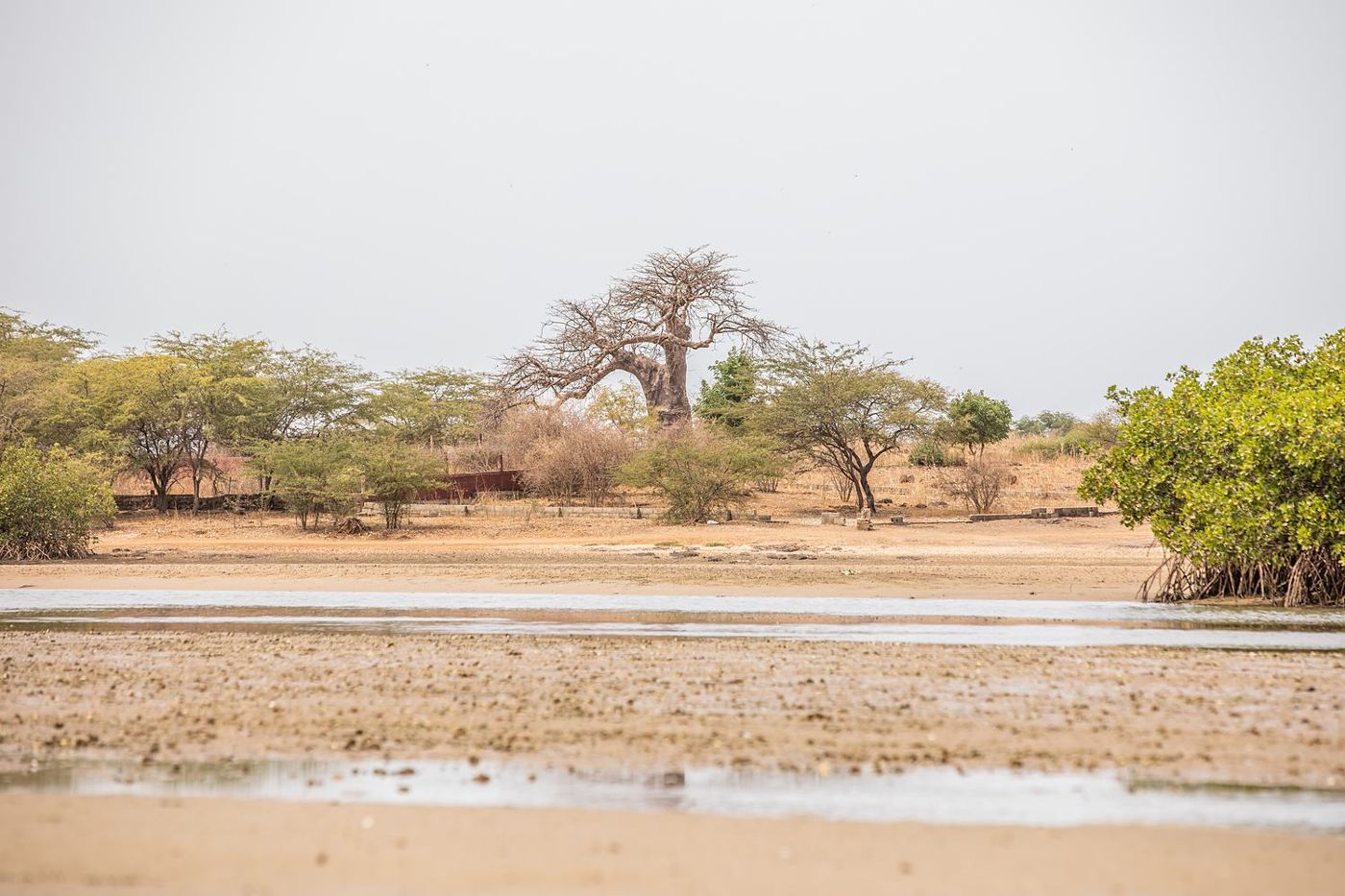
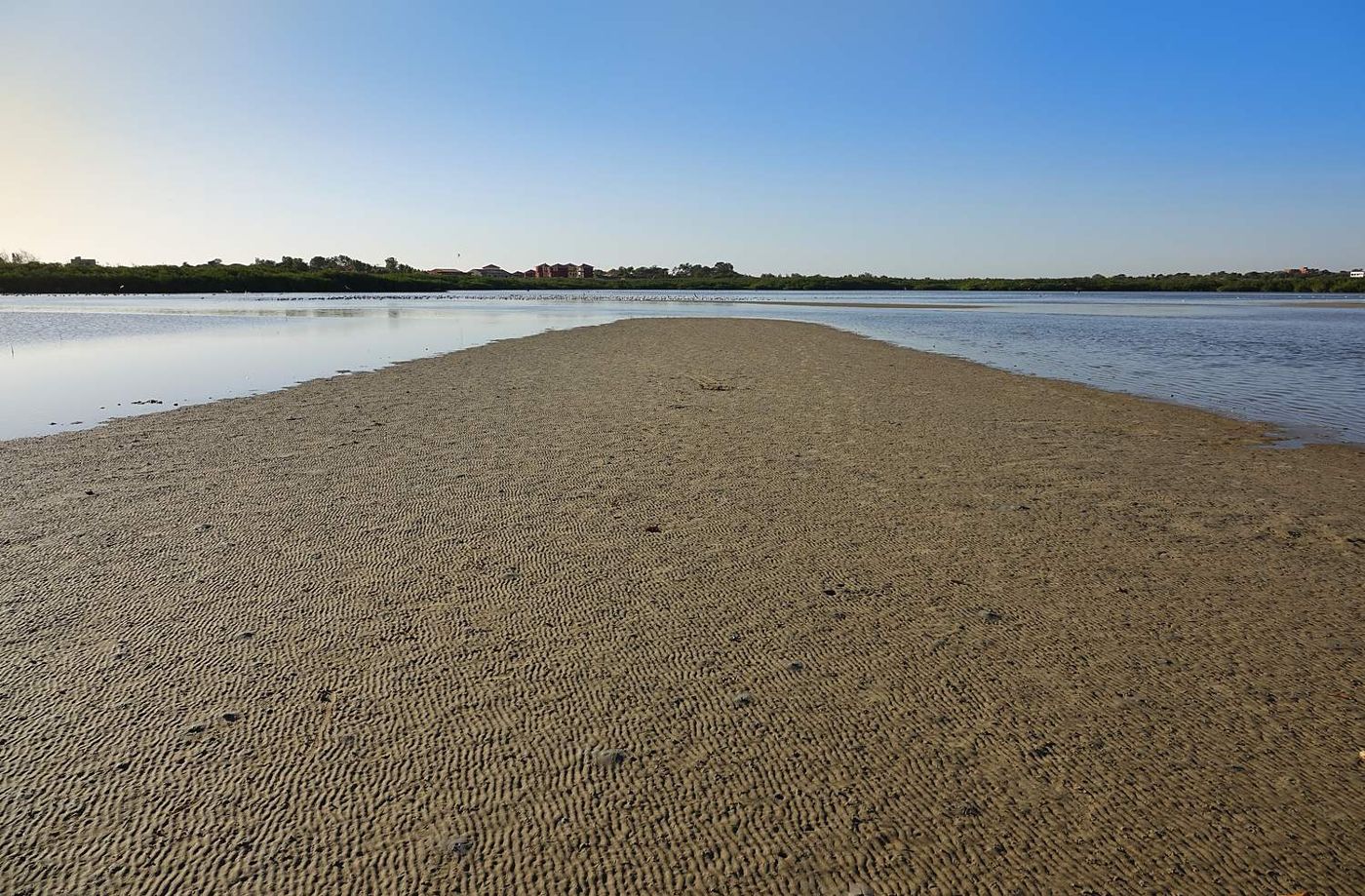
The tide is in charge. It is the only real constraint. At high tide, the pirogues slip into the narrow channels, as close as possible to the mangrove trees; at low tide, the sandbanks and mudflats are uncovered, and the birds gather there to feed. The current is strongest in between, and near the inlet that links the lagoon to the ocean. Let the boatman or the instructor set the departure time: they know the lagoon better than any tide table.
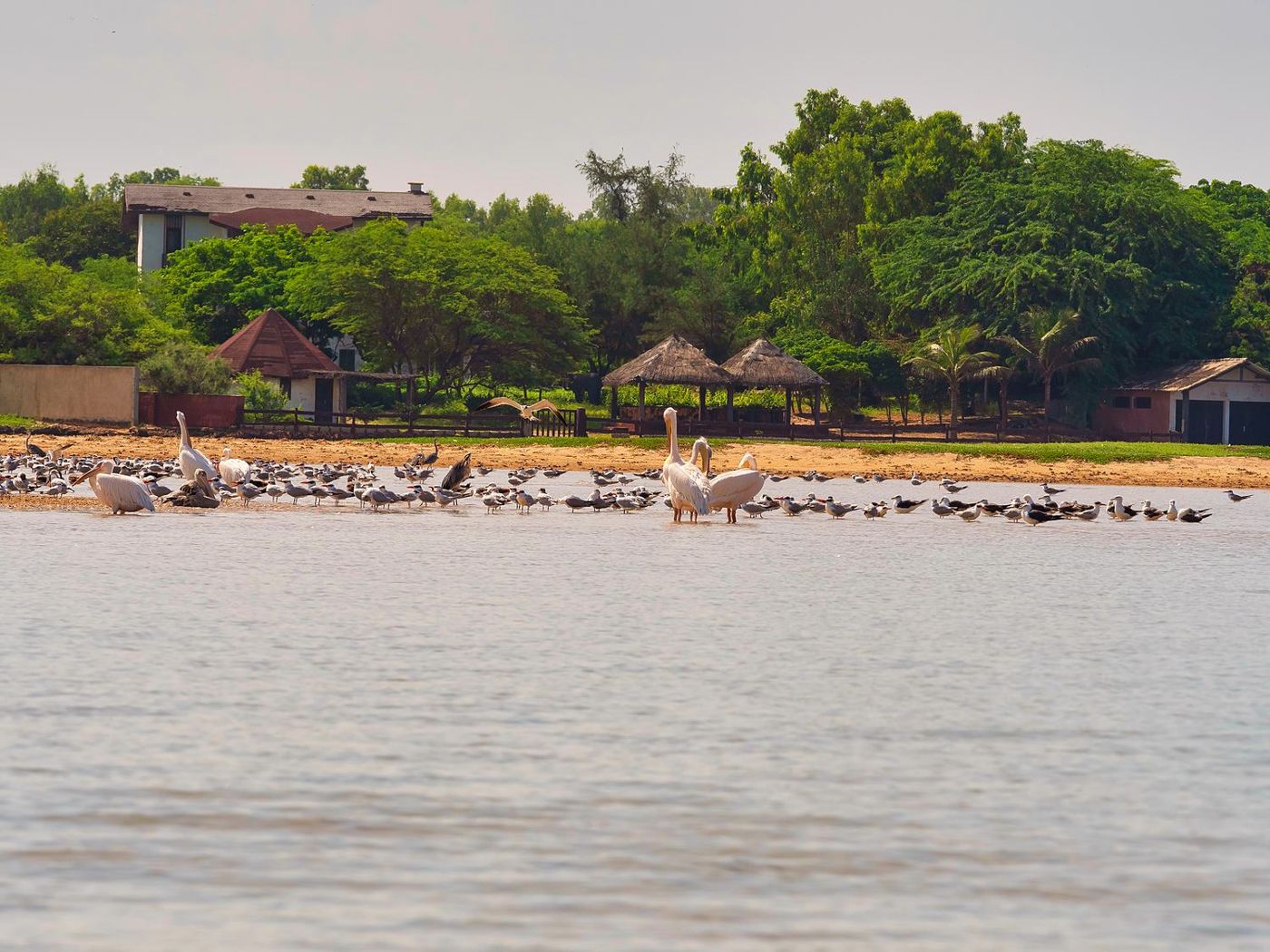
One clarification, to avoid a common mix-up: the Île aux Oiseaux (Bird Island), famous for its large nesting colony of royal terns, is not at the Somone. It is a sand island in the Saloum Delta, on its south-western fringe, towards the Gambia, reached from Toubacouta. At the Somone, it is the lagoon’s sandbanks that serve as resting places for the birds.
The village of Somone, at the end of the road, lives around the lagoon: village beach, workshops, wellness, and everything there is to do away from the water. Just to the south, Ngaparou continues the beach, then Saly, about a quarter of an hour away, offers the exact counterpoint: jet ski, sea trips, quad and nights out. See also our Saly page. Inland, Bandia Reserve is about half an hour away for a morning safari (see our Bandia page). To the north, the cliffs of Popenguine shelter another reserve run by local people, Popenguine Nature Reserve: two parallel stories, to combine on the same weekend. Further south, Mbour and its fishing quay, then Joal-Fadiouth and its shell island, open the road to the Sine-Saloum Delta. The whole coast is on our Petite Côte page, in Thiès Region.
Excursions, visites guidées et combinés : nos prestataires locaux organisent tout.
Treetop adventure and Somone lagoon day from Dakar
Dakar · Full day
Bandia and Somone lagoon day trip from Dakar
Bandia Reserve · Full day
Quad ride to the baobabs near Ngaparou
Ngaparou · 1h – 3h
By time of day. Early in the morning, the water is smooth, the light low and the birds active. In late afternoon, they return to their roosts and the sky blazes behind the mangrove: it is the most photogenic moment. Dusk, on the other hand, belongs to the mosquitoes. Avoid the middle of the day, when the glare flattens everything and the birds hide.
By season. From November to March, the cool dry season, migrants from Europe join the species present all year round: it is the best period for birdwatching. From April to June, the heat rises, but the lagoon is quieter. From July to October, the rainy season brings rain, humid heat and mosquitoes, but also the mangrove planting season and vegetation at its greenest.
By day of the week. At weekends, Dakar residents arrive mid-morning: set off earlier than they do. On weekdays, you will often have the channels to yourself.
Sunset. A kayak or pirogue outing that ends near the river mouth, facing west, just as the pelicans come home: that is the lagoon’s finest hour.
On QFS, there are several ways to experience the lagoon. Pirogue trips are the founding experience: about an hour in the mangrove, on calm, shallow water, perfect for families. For silence, paddle, kayak & canoe let you follow the meanders at your own pace; at the Somone, hire is charged per craft, not per person. Enthusiasts will choose birdwatching with a naturalist guide. For a group, the motorboat trip through the mangroves, about two hours long, goes as far as the river mouth: see boat cruises & boat hire. And to round off the day, beach & relaxation days or, on the ocean side at Saly, jet ski and towed sports.
Each activity is run by an independent local professional. You pay 20% to secure your booking (the booking fee), and the balance is paid on site, on the day. Depending on the activity, the reserve charge is payable on site and not included in the price: the listing shows whether it applies. If you live in Senegal, you get the resident rate: up to 30% off depending on the activity (the exact rate is shown on each listing).

From 31 October to 13 November 2026, Dakar, Diamniadio and Saly will host the Youth Olympic Games, the first Olympic event in…
Read the article ›October closes the rainy season and opens the finest season of the year. Workshops for children, sport, wellness, classes and getaways: everything…
Read the article ›In Senegal, the day runs to the rhythm of five prayers whose times follow the sun, and so shift a little every…
Read the article ›Good deals, news and highlights from Senegal, straight to your WhatsApp.