


Lieux emblématiques
Great Mosque of Touba: entering the holy city as a guest
In Touba, you do not arrive as a tourist but as a guest of the Mouride brotherhood. The history of the mosque,…
Read the article ›
Home › Locations › Dakar Region › Dakar › Hann Bel-Air: the bay Dakar damaged and is trying to repair
DAKAR
Long celebrated as one of the most beautiful bays in the world, Hann Bay has become a symbol of pollution in Dakar. A fishing village, factories, a clean-up project and the forest park next door: what there is to see, and why nobody swims here.
Do not come to Hann Bay for the beach: come to understand Dakar. This long crescent of sand, on the eastern side of the peninsula, was long reputed to be one of the most beautiful bays in the world. In the space of a few decades, it became the outflow of the capital’s industrial zone. Today, a major clean-up project is nearing completion, the pirogues still come home to Hann village, and the forest park next door remains the city’s green lung. An honest visit, to be made with your eyes wide open.
| Region | Dakar Region, Dakar department, Hann Bel-Air district municipality (commune d’arrondissement), Grand Dakar arrondissement |
| Type | Coastal neighbourhood, Lebou fishing village, industrial and port zone |
| Getting there from the Plateau | A few kilometres; from 15 minutes to nearly an hour by car depending on traffic; Hann station on the TER (Regional Express Train), two stops after Dakar |
| Recommended time | One to two hours for the shore and the village; half a day with the forest park |
| Official fees | No entry charge for the neighbourhood or the shore; entry to Hann Forest and Zoological Park (Hann Park) is payable on site and not included in the price |
| Swimming | Prohibited: Hann is on the official list of beaches in Dakar where swimming is banned |
| Best time to go | Dry season, November to May; the morning for the pirogues coming in |
| Related QFS activities | Guided tours, jet ski, boat trips, family days at Hann Park |
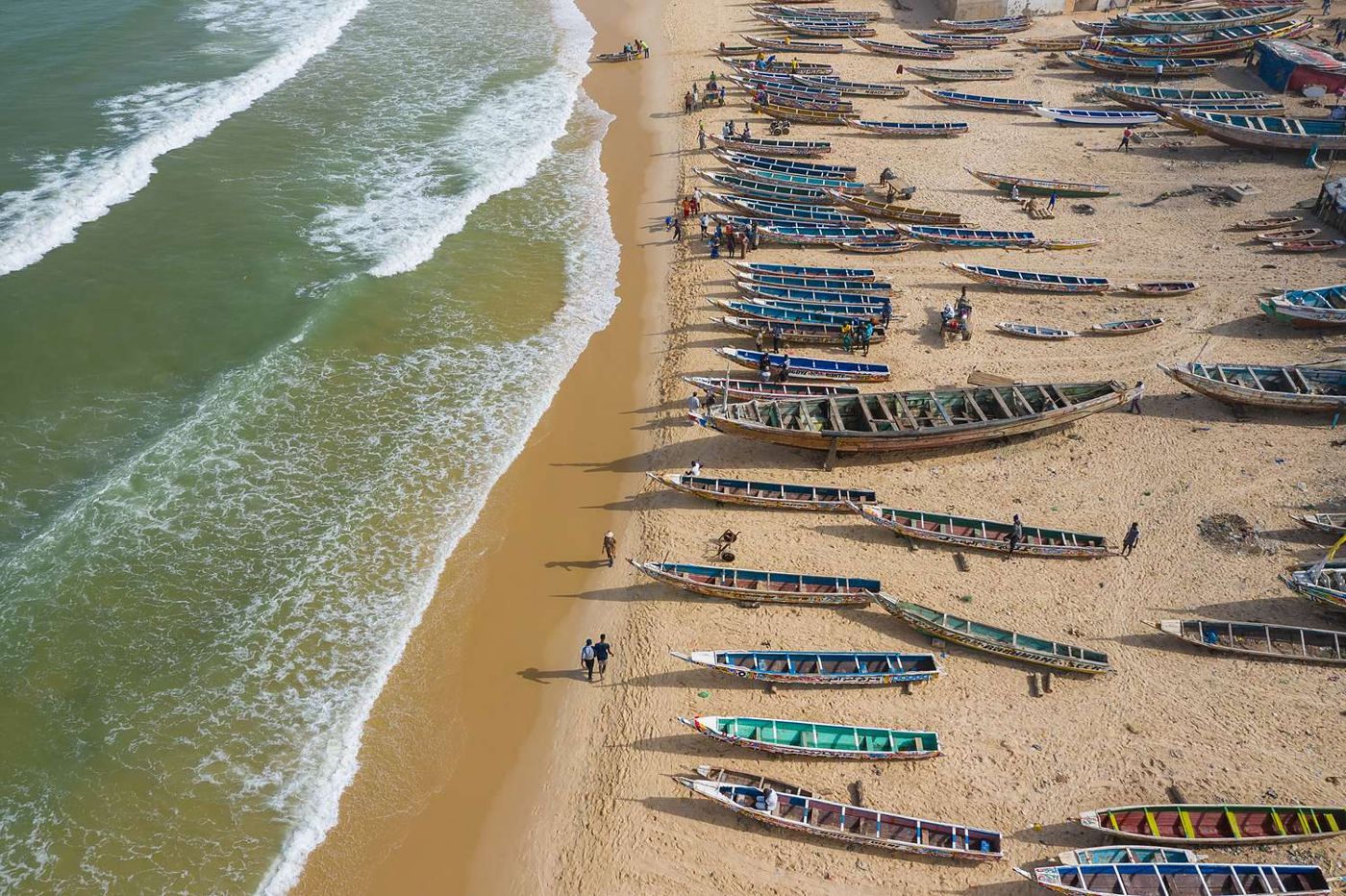
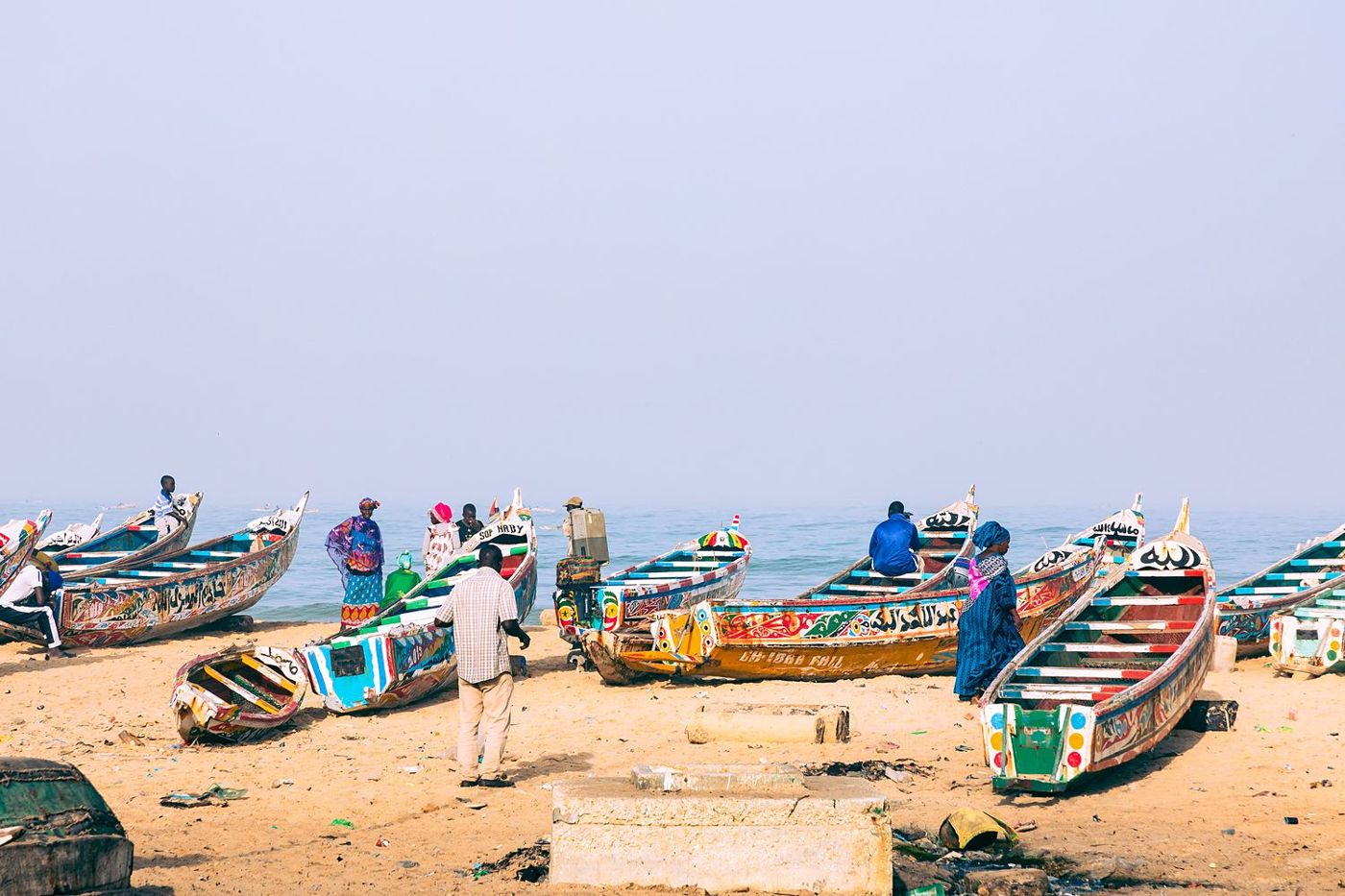
If you live in Dakar, Hann is first and foremost a name on your daily route: the exit for the motorway, the TER, the traffic jams on the port road. Take a morning to actually stop there. The forest park makes for a family outing without leaving the city, and the shore shows you, better than any report, what the city discharges into the sea. It is also a project worth following: if the clean-up delivers on its promises, the bay will be the biggest change of landscape Dakar sees in the coming years. On activities booked through QFS, you get the resident rate: up to 30% off.
If you are just passing through, Hann is not a postcard stop, and we will not sell it to you as one. It is worth the detour if you are interested in the real life of the capital: artisanal fishing, industry, Lebou communities, environmental issues. Combine it with the forest park, keep your swims for Ngor, and go with someone: a guide who knows the neighbourhood makes the difference between a tourist’s gaze and a real encounter.
Before it was the name of a neighbourhood, Hann was a Lebou village. The Lebou, a fishing people, were the first inhabitants of the Cap-Vert peninsula, and Hann is one of their historic villages, along with Yoff, Ngor and Ouakam. For a long time, the bay was the most precious thing these villages had: water sheltered from the Atlantic swell, a beach of pale sand backed by the greenery of the Niayes, rich seabeds where people fished a few paddle strokes from the shore. Local residents, the press and elected officials still recall it: Hann Bay was long spoken of as one of the most beautiful in the world.
Then Dakar grew, and it grew in this direction. The autonomous port stretches out below the rocky plateau of Bel-Air, and over the decades most of the country’s factories set up along the bay: chemical, food-processing and oil industries, and an abattoir. Figures vary from source to source, but they all agree on the order of magnitude: most of Senegal’s industry is concentrated on this shoreline. With no treatment plant, their effluent, mixed with wastewater from ever denser neighbourhoods, was discharged straight into the bay, often through channels designed for rainwater alone.
The shape of the bay made things worse. Semi-enclosed, it renews its water poorly and holds on to whatever is poured into it. Tests have found high levels of bacterial contamination; residents and health workers in the area describe skin diseases and digestive and respiratory problems. Fishermen, for their part, say they have to go ever further out to find fish. On the beach, plastic waste and algae fed by the pollution have piled up. The Senegalese press ended up summing up the trajectory in a single phrase: from one of the most beautiful bays in the world to one of the most polluted.
Yet it would be unfair to stop there. For years, neighbourhood associations, fishermen, schools and artists have been mobilising: beach clean-up days, awareness campaigns, pressure on elected officials. The issue has also been taken all the way to the National Assembly, where the government has been questioned on the timetable for restoring the bay to an acceptable ecological standard.
Réservez votre sortie avec nos prestataires locaux. Le prix du service est distinct des éventuels coûts officiels réglés sur place.
Transparent kayak and drone outing in Dakar
Dakar · 45min to 1h30
Kayaking around Gorée and the Madeleine Islands
Dakar · 30 min, 45 min, 1h
Group sea fishing trip from Ngor beach
Dakar · Half-day
The long-awaited answer comes down to one project: the clean-up of Hann Bay, led by Senegal’s National Sanitation Office (ONAS), with backing from France (the French Development Agency), the European Union and the Netherlands. The principle is simple: intercept industrial and domestic effluent before it reaches the sea, treat it, then release the treated water offshore.
In practical terms, the project combines a large collector sewer running along the bay, the connection of factories and nearby households, a treatment plant at Mbao and a sea outfall. It comes with a reform that matters as much as the pipes: applying the polluter-pays principle, with a charge for connected industries and an obligation to pre-treat their discharges. More than 500,000 local residents, from Hann to Thiaroye-sur-Mer and Mbao, are set to benefit.
The project’s history calls for patience: it was studied for many years before work began. In the first quarter of 2026, official site visits describe a treatment plant that is almost finished, but more modest overall progress, held back in particular by delays to the sea outfall and by the compliance of some industrial facilities. The authorities are aiming for a phased start-up between late 2026 and 2027. Once the system is running, the bay will still need time to recover: do not expect a swimming beach overnight.
| Fact | Figure |
|---|---|
| Status | District municipality of the city of Dakar (Grand Dakar arrondissement) |
| Components | Hann, a former Lebou fishing village; Bel-Air, a rocky plateau above the port |
| Residents affected by the clean-up | More than 500,000 people, from Hann to Mbao |
| Project works | Collector sewer, connections, treatment plant at Mbao, sea outfall |
| Project owner | National Sanitation Office of Senegal (ONAS) |
| Announced start-up | Phased, between late 2026 and 2027 |
| Swimming | Prohibited (official list of beaches in Dakar Region) |
| Transport | Hann station on the TER line, between Colobane and Dalifort |
Hann lies on the eastern side of the peninsula, beyond the port, on the road out to the suburbs and the motorway. From the Plateau, the distance is short but traffic decides everything: a quarter of an hour early in the morning, a great deal longer at rush hour. The simplest option is the TER, whose Hann station is the third on the line, after Dakar and Colobane; it drops you in the heart of the commune without sitting through the jams on the port road. A taxi, with the fare agreed before you get in, and ride-hailing apps also work.
The neighbourhood and the shore are open to all: no official fees to walk around. Only entry to Hann Forest and Zoological Park is paid on site and not included in the price of any activity.
Excursions, visites guidées et combinés : nos prestataires locaux organisent tout.
Pottery workshop and classes in Ouakam (Dakar)
Dakar · 1h – 8h
Monthly packs for content creators and businesses in Dakar
Dakar
Event photo and video packages in Dakar
Dakar
Hann combines naturally with central Dakar. To the west, the Médina and the Great Mosque, then the Plateau, the Museum of Black Civilisations and Dakar’s iconic markets. For the sea and swimming, head to Anse Bernard right in the centre, or cross to Gorée Island, a short ferry ride from the nearby port. To the east, the road and the TER run towards Rufisque and Lac Rose (Pink Lake). For the full picture of the capital, our Dakar page brings together its neighbourhoods and activities.
Come in the dry season, from November to May: the heat stays bearable and the beach is cleaner than after the rains. During the rainy season (hivernage), July to October, the channels carry more wastewater into the bay, and the smells can be strong.
During the day, the morning is the best slot: it is when the pirogues come in and the beach comes alive, before the heat and before the traffic jams. The forest park is also best visited early or late in the afternoon, when the shade of the trees is enough to cool the paths. For sunset, the bay faces east: save the Corniche Ouest or the Almadies for that moment.
Do not swim. Hann beach is on the official list of beaches in Dakar Region where swimming is banned, and bacterial contamination of the water is documented. Also avoid walking barefoot near the outflows, and wash your hands after the beach. To swim, go to Ngor or Anse Bernard, two beaches where swimming is permitted.
Respect the village. Hann is still a working fishing community. Always ask before photographing someone, do not get in the way of the pirogues being unloaded and do not climb into a boat unless invited. Respectful clothing is expected in the village; cover your shoulders and knees near places of prayer.
Bring the essentials. Cash in small notes, water, a hat and sun cream. With children, make the forest park the highlight rather than the shore. And allow plenty of time on the road: the port and motorway area is one of the most congested in Dakar.
The best way to discover Hann is with someone who knows it: Dakar’s guided cultural tours let you approach the fishing village and the history of the bay with someone who knows the neighbourhood. For families, family days & children’s outings offer bike, electric car or children’s quad rides in Hann Park; park entry is payable on site and not included in the price.
On the water, the bay, sheltered from the swell, is also a starting point for jet ski outings: you ride, you do not swim. For a real day at sea, see boat trips (sunset, islands & sport fishing), sport fishing and island excursions from Dakar.
On Que Faire Sénégal, the price shown is the price of the service. You pay 20% to secure your booking (the booking fee), and the balance is paid on site, on the day. Official charges such as entry to the forest park are payable on site and not included in the price. If you live in Senegal, you get the resident rate: up to 30% off depending on the activity (the exact rate is shown on each listing).
In Touba, you do not arrive as a tourist but as a guest of the Mouride brotherhood. The history of the mosque,…
Read the article ›A good share of the water that runs from Dakar's taps comes from a lake in the Sahel, some 250 km to…
Read the article ›A Diola island with no road or bridge, deep in the *bolongs* (tidal creeks) of Oussouye, where the impluvium houses are homes,…
Read the article › Every Thursday · AYTHIA ÑU DEM
Good deals, news and highlights from Senegal, straight to your WhatsApp.
 On a computer? Scan this code to join the channel.


