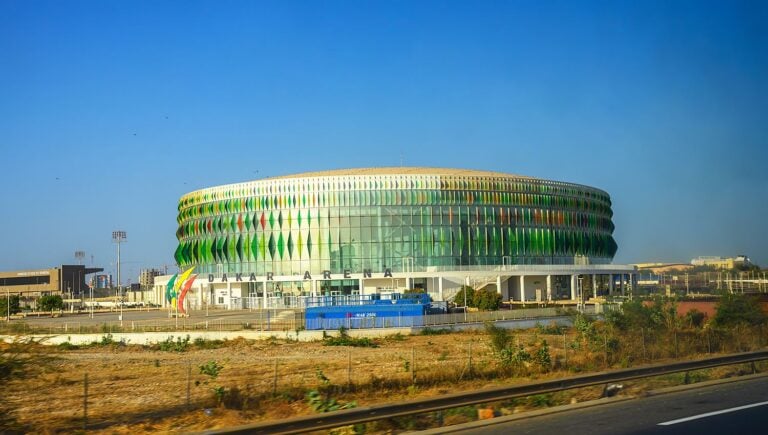
Dakar 2026 Youth Olympic Games: your guide to Africa’s first Olympic Games, from the stands
From 31 October to 13 November 2026, Dakar, Diamniadio and Saly will host the Youth Olympic Games, the first Olympic event in…
Read the article ›
Home › Locations › Dakar Region › Dakar › Ngor Island: one island, two faces, and it is up to you to choose yours
DAKAR
A few minutes by pirogue from Ngor beach, a car-free island shows two faces: calm coves turned towards the village, and a swell-battered reef where the legend of Senegalese surfing was born. Choose your side before you climb aboard.
Ngor Island has two faces, and most visitors only ever see one. On the village side, sheltered coves where you swim looking back at Dakar; on the ocean side, a swell-battered reef, the one that put Senegal into surfing history. Our advice, before you even step into the pirogue: decide which side you are coming to spend the day on. The rest, the crossing, the sandy alleys and the sunset, falls into place very simply after that.
| Region | Dakar Region, Dakar department; the island belongs to Ngor commune, on the north coast of the Pointe des Almadies |
| Type | Small inhabited, car-free island about 400 metres offshore, with beaches, a reef and surf spots |
| Getting there from Dakar | To Ngor beach: from 30 minutes to over an hour from the centre depending on traffic; then a few minutes by pirogue |
| Recommended time | Half a day; a full day for swimming, the walk round the island and the sunset |
| Official fees | No entry charge for the island; the pirogue crossing is payable on site and not included in the price |
| Best time to go | November–May for dry weather; November–March for the waves; weekdays for peace and quiet |
| Related QFS activities | Surf (lessons and camps), island excursions, diving and snorkelling, boat trips, pirogue trips |


Live in Senegal? Ngor Island is the shortest escape from the capital, and that is precisely why people underestimate it. On a Saturday, half of Dakar has had the same idea as you: there is a wait for the crossing, the coves fill up, the music gets louder. Come on a weekday morning instead, or early on a Sunday, and you will find a silent island where all you hear is the surf. If you surf, watch for the winter swells rather than putting up with them; if you are a beginner, book a supervised lesson on QFS, where you get the resident rate: up to 30% off depending on the activity.
Just passing through? Ngor Island is the best way to get to the ocean without leaving Dakar: no need to hire a car or head off for the day to the Petite Côte. It goes very well with a morning of sightseeing on the Corniche. Bring cash in small notes for the crossing, sandals that do not mind getting wet, and check the time of the last boat back as soon as you arrive. And remember that families live here: the island is not a stage set.
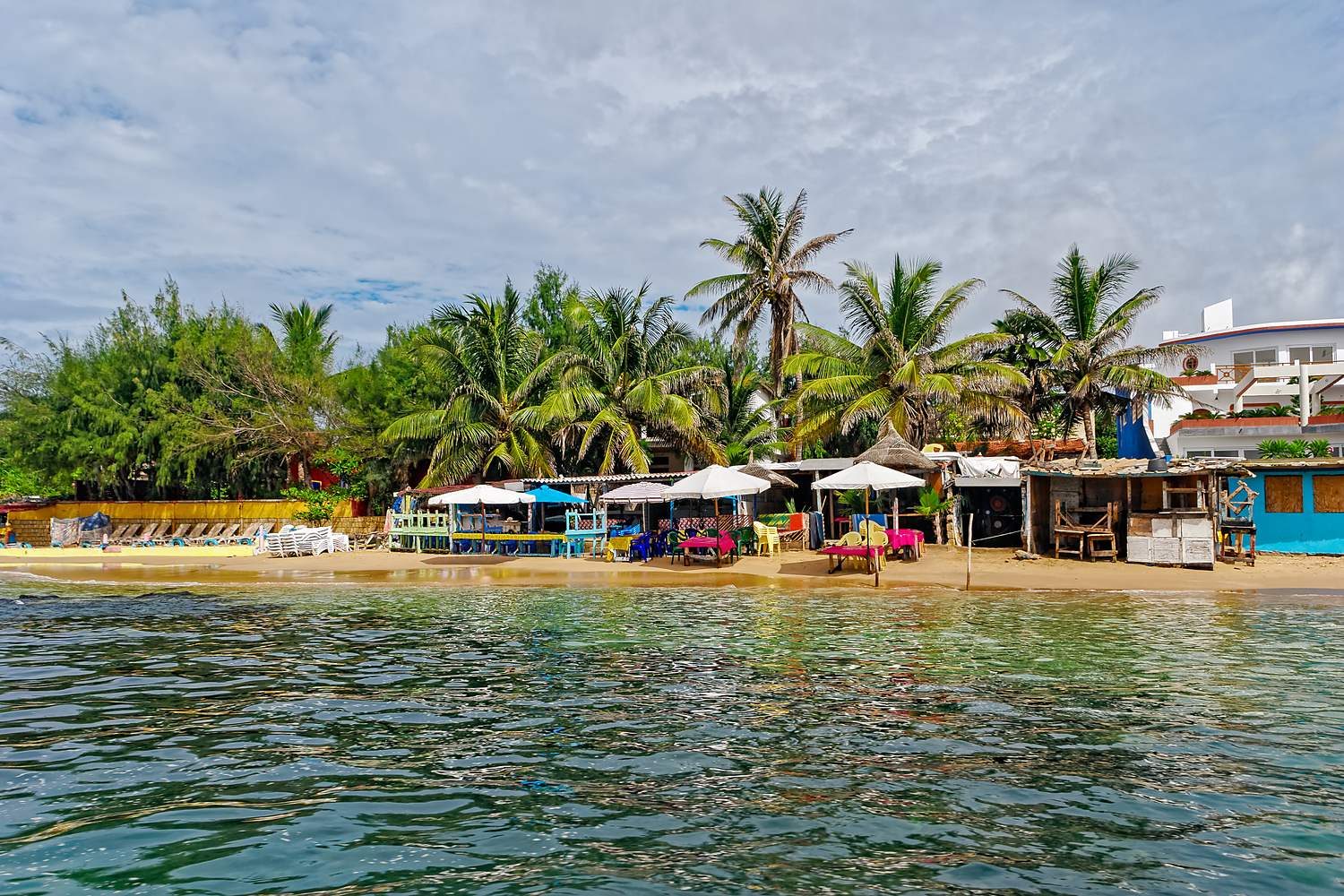
The island is about 500 metres long and 200 metres wide, and it turns its back on the open sea to face the mainland. Between the island and the village beach lies a small bay: this is where the pirogue drops you, and it is on this side, to the south, facing Dakar, that you will find the most sheltered beaches. The water is often clear, the waves softened by the island itself, and during the school holidays you will see whole families swimming here. This is Ngor’s “postcard” face, all towels in the sun and grilled-fish lunches looking across at the city.
This face has its limits, and it is worth knowing them. The island’s beaches are narrow: at high tide the sand shrinks a lot, and things quickly get crowded. On very busy days, the water in the bay can also lose some of its clarity. If you are coming to lay down your towel, check the tide times and aim for a falling tide.
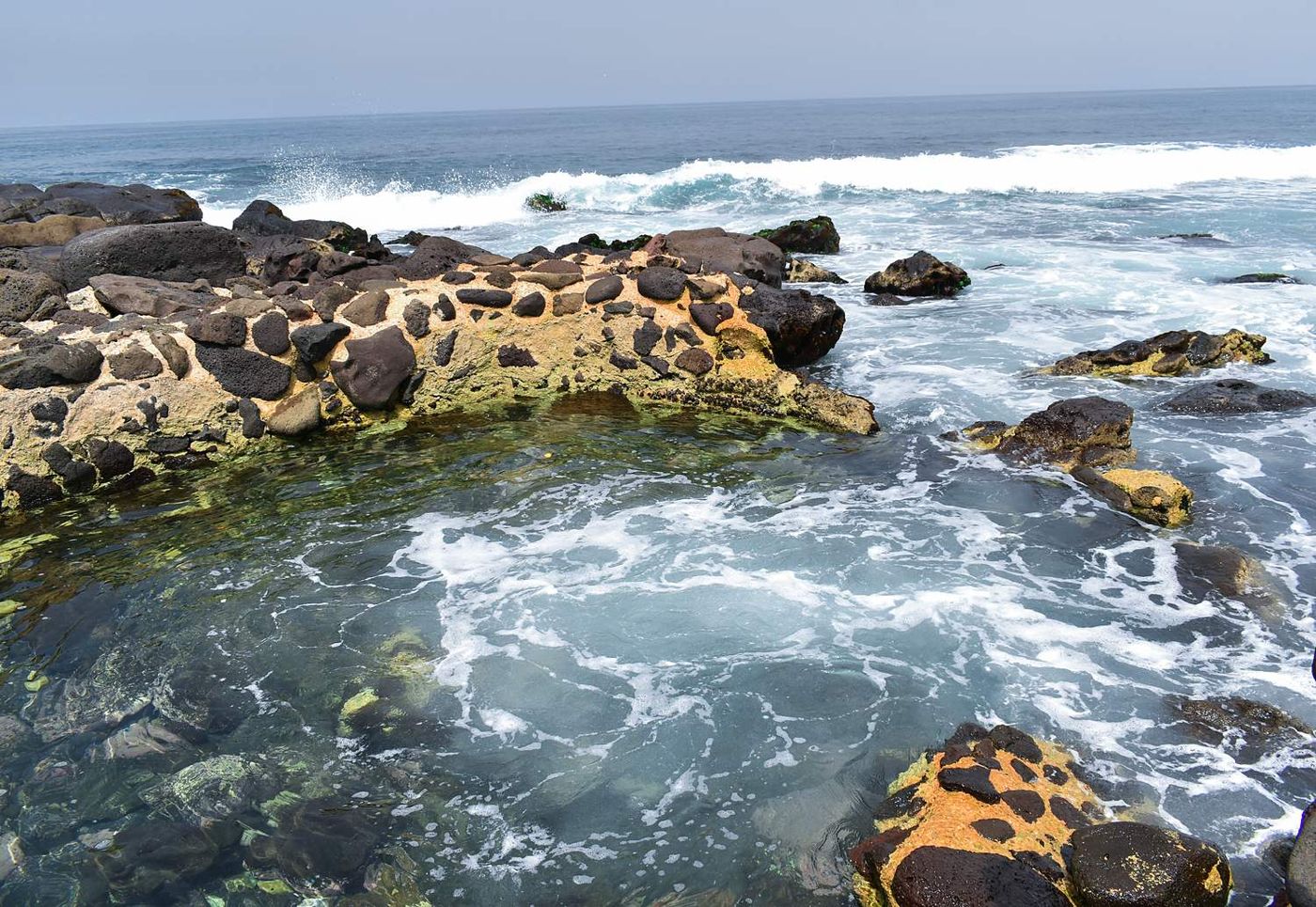
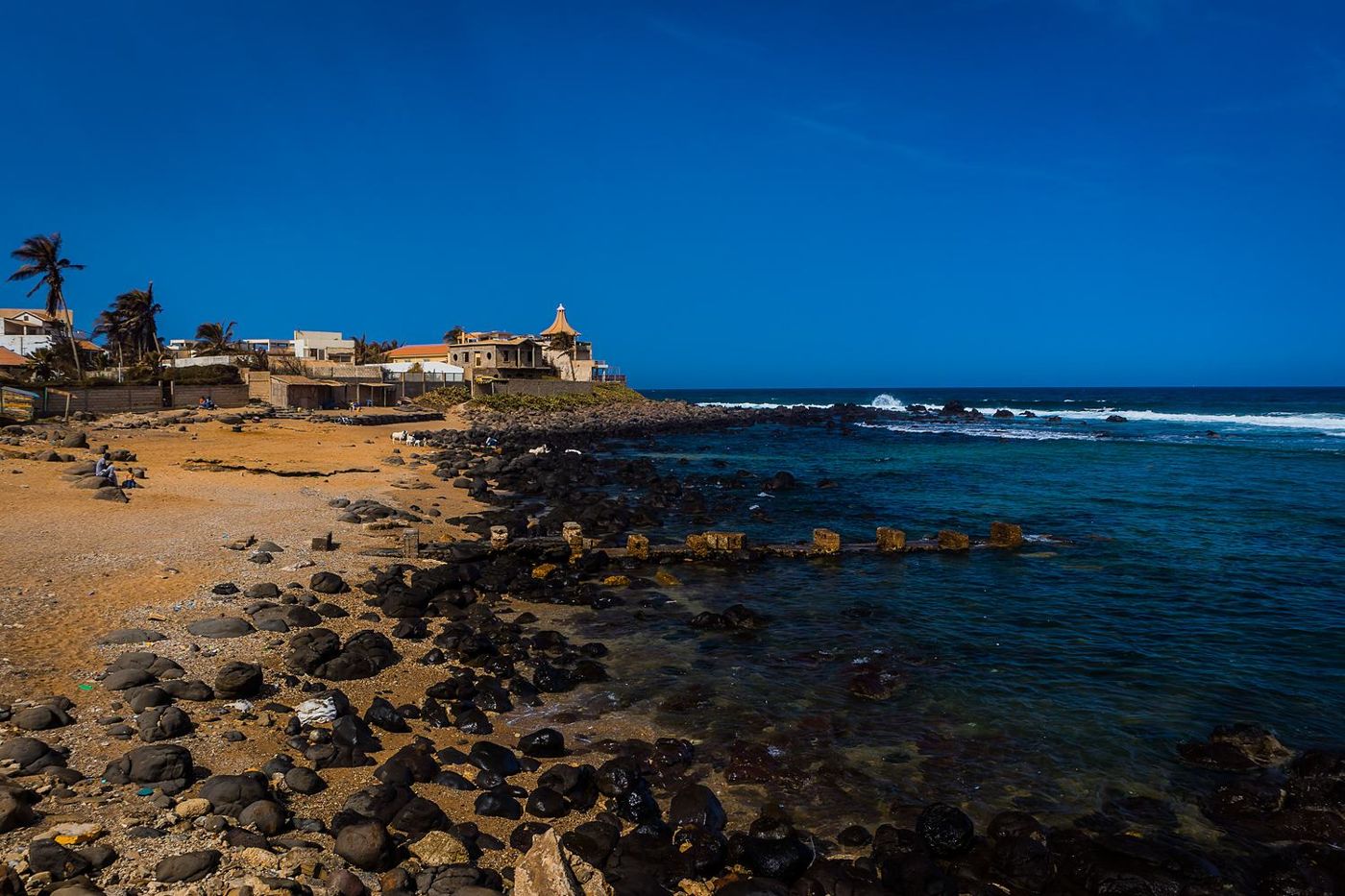
Cross to the other side, towards the north and the tip of the island, and the scenery changes in an instant. Here there are no coves, but black rocks, the wind off the sea and the Atlantic swell breaking on the reef. This is surfers’ territory, and it is not made for swimming: you look at the sea here, you do not jump into it.
It is on this side that the Ngor Right rises, a reef wave that peels along the tip of the island and that surfers come looking for with every winter swell. It has a sister, the Ngor Left, less sought after but just as real. These are waves for independent surfers, intermediate level and above: the bottom is rock, sea urchins carpet the reef, and the peak can be crowded on good days. If you are a beginner, do not start here: a supervised lesson takes you to a gentler sandy spot on the peninsula, chosen according to the day’s swell. Our surf lessons & camps page explains where to learn.
In the early 1960s, the Californian film-maker Bruce Brown set off round the world with two young surfers, Robert August and Mike Hynson, in pursuit of a summer that would never end. The film that came out of it, The Endless Summer, first shown on the surf circuit, was released in cinemas in 1966 and, along the way, invented the very idea of the surf trip. Among the first stops was Senegal, and among the first waves the two surfers met was the right that curls at the foot of Ngor Island.
One point that often comes up, and that is worth knowing: the “perfect” wave that made the film famous, the one shown on every poster, was filmed in South Africa, at Cape St Francis. So Ngor is not “the” wave of the film, but it is very much part of it, and Senegalese surfing owes its first image in the world to it. Six decades later, the reef is the same, but it is often the young people of the village, born a few hundred metres away, who catch the first wave.
Ngor is one of the historic Lebou villages of the Cap-Vert peninsula, like Yoff and Ouakam. The Lebou are a people of the sea: fishermen for generations, they have kept their pirogues, their families and their customary institutions at the heart of a city that has grown up around them. For a long time, the island was an extension of the village, a place for grazing and small crops. As Dakar grew, city dwellers began coming over for picnics, then building huts; the houses, artists’ studios and tables facing the sea followed. Today, the island lives off this double heritage: a fishing community, artists who exhibit right into the alleys, and Dakar residents who come here to breathe. For the village itself and its fishermen’s beach, see our Ngor beach page.

Réservez votre sortie avec nos prestataires locaux. Le prix du service est distinct des éventuels coûts officiels réglés sur place.
Table d’hôtes dinner: West Indian specialities in Ngor-Almadies
Ngor · Welcome from 8 pm, single sitting at 9:30 pm
Underwater scooter at Ngor Island
Dakar · 30 min
| Fact | Figure |
|---|---|
| Size | About 500 m long and 200 m wide |
| Distance from the shore | About 400 m |
| Crossing | A few minutes by pirogue from Ngor beach |
| Getting around | No cars; everything is on foot, along sandy alleys |
| Waves | The Ngor Right and the Ngor Left, reef waves |
| Best surf season | November–March (north-westerly swells) |
| The Endless Summer | Film by Bruce Brown, released in cinemas in 1966 |
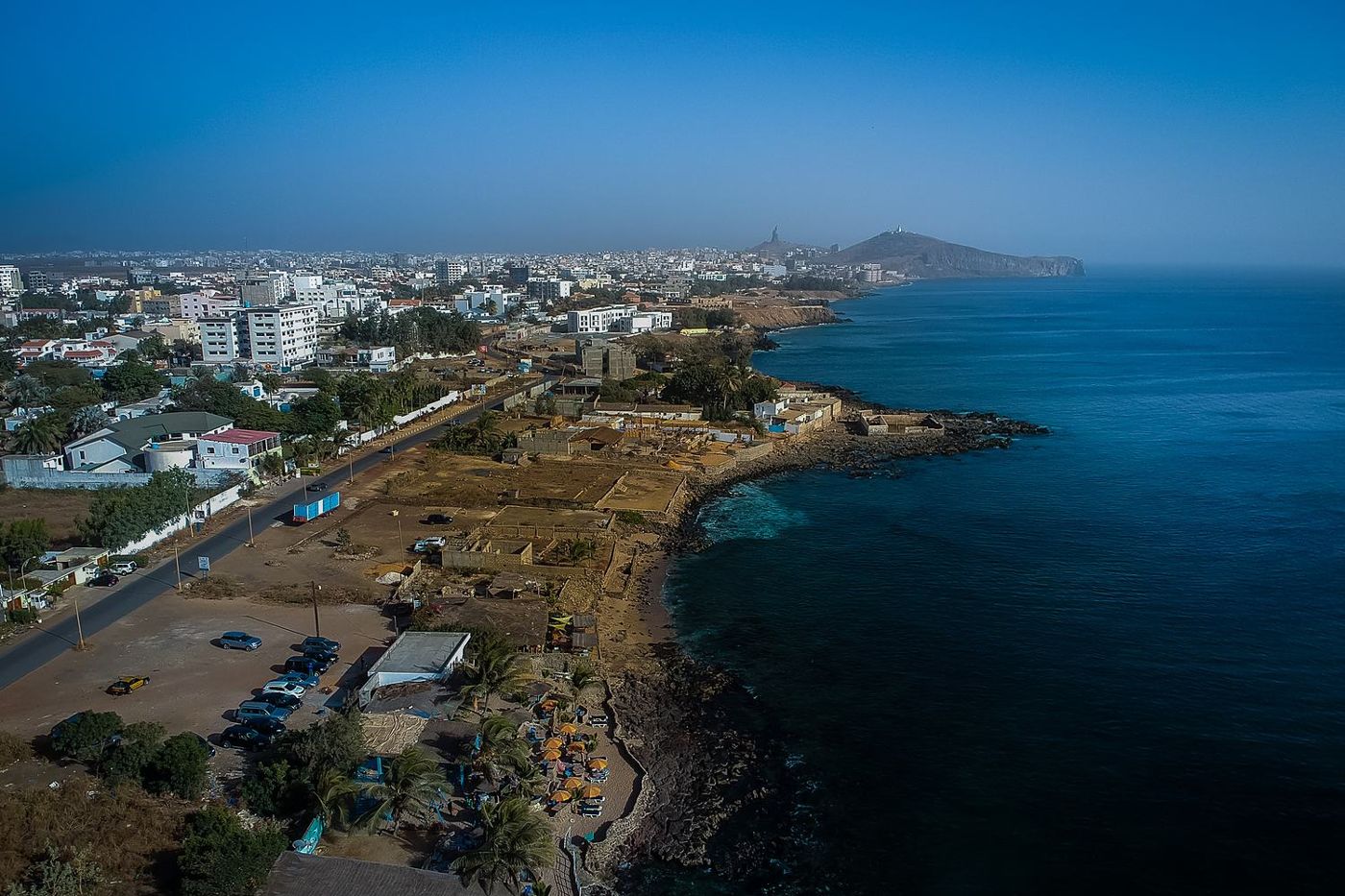
It all starts on the beach of Ngor village, at the western tip of Dakar, on the north coast of the Pointe des Almadies. From the centre, allow from 30 minutes to over an hour depending on traffic, via the Corniche Ouest or the VDN. Take a taxi, agreeing the fare before you get in, or a ride-hailing app.
On the beach, passenger pirogues shuttle to the island during the day, until early evening. The crossing takes a few minutes. You get on and off with your feet in the water: wear sandals or shoes that can take it, and bring a dry bag for your phone. Life jackets are offered: wear one, especially with children.
What you pay on site, not included in the price: the pirogue crossing, in cash, from the beach. The fare varies with the boat and the season; ask before you board and check that it covers both the outward and return trips. No entry charge is made on the island itself. This crossing is not booked on QFS: it is an everyday service you take on the spot, as explained on our taxi-boat / sea transfers page.
The walk round the island. Less than an hour is enough to go all the way round, but take two. Start from the beaches in the bay, follow the rocky coast to the tip and come back through the middle: in a few hundred metres you will go from the lapping of the bay to the roar of the open sea.
The maze of alleys. Sandy paths wind between whitewashed walls, painted doors, mosaics and bougainvillea. No cars, no motorbikes: getting lost is a pleasure, and it is the best part of the visit.
The artists’ island. Painters and sculptors exhibit in open studios or straight on the walls. Look, ask, buy if you feel like it: it is one of the island’s most endearing sides.
The surfers’ point. Even without a board, settle on the rocks facing the Ngor Right on a morning with swell: watching the local surfers ride wave after wave on the reef beats any film.
The bay’s underwater world. The clear waters round the island can be explored with a mask and snorkel, or on a supervised dive. Do not head off alone towards the open sea.
Excursions, visites guidées et combinés : nos prestataires locaux organisent tout.
Group sea fishing trip from Ngor beach
Dakar · Half-day
Underwater scooter at Ngor Island
Dakar · 30 min
On the mainland, Ngor village and beach can be visited on the way back, when the fishermen haul up the pirogues; see also our Ngor page. Right next door, the Almadies mark the westernmost point of mainland Africa. Heading down the Corniche, Ouakam, the Mosque of the Divinity, the Mamelles Lighthouse and the African Renaissance Monument fill a morning. To the north-east, Yoff continues the coastline of Lebou villages. For another, very different island, see Gorée Island, off the port, or the Madeleine Islands National Park. To plan the whole thing, our ideal three-day itinerary in Dakar.
| Period | What you will find |
|---|---|
| November–February | Dry, mild season; regular north-westerly swells, the best time for the Ngor Right; cooler water |
| March–May | Still dry, wind often strong in the afternoon; a good time for the bay, surf best early in the morning |
| June–October | Heat, showers during the rainy season (hivernage) from July; warm water; big crowds from Dakar during the school holidays |
During the day, the morning belongs to the surfers and the first quiet crossings, the middle of the day to swimmers, the late afternoon to walkers. At weekends the island draws a lot of people: on weekdays, it finds its calm again.
Sunset. Settle on the rocks at the tip, on the ocean side: the sun sinks into the ocean, and the surfers stand out in silhouette on the last wave. But keep an eye on the time: the pirogues stop in the early evening, and the last boat back will not wait for you.
Swimming: bay side only. The island’s beaches are among the stretches of the Dakar coast where swimming is permitted and calmest, but the Atlantic is still the Atlantic. Swim in the bay, during the day, where there are other people, never on the ocean side or near the rocks at the tip, where currents and swell are dangerous. Keep a close eye on children.
Protect your feet. Sea urchins love the island’s rocks: reef shoes or water sandals prevent the injury that spoils the day, whether you are surfing or exploring the rocks.
Respect the residents. You are entering a place where people live: dress respectfully in the alleys (swimwear stays on the beach), ask before photographing anyone, and no loud music in the alleys. On Fridays in the early afternoon, it is time for prayer.
The island stays clean if you leave it clean. Your rubbish goes back to the mainland with you: the island does not have the means to deal with the rubbish of thousands of visitors.
Money. Cash in small notes for the crossing, drinks and tips; do not count on paying by card.
The ocean side of the island has to be earned: to surf the Ngor Right or learn on a gentler spot, start with surf lessons & camps. To discover the seabed round the island, see diving & snorkelling. To see the island from the sea, try boat trips (sunset, islands & sport fishing), sport fishing, paddle, kayak & canoe or pirogue trips. To take in several islands in a row, island excursions.
You pay 20% to secure your booking (the booking fee), and the balance is paid on site, on the day of the activity. The pirogue crossing to the island is payable on site and not included in the price. If you live in Senegal, you get the resident rate: up to 30% off depending on the activity (the exact rate is shown on each listing).

From 31 October to 13 November 2026, Dakar, Diamniadio and Saly will host the Youth Olympic Games, the first Olympic event in…
Read the article ›October closes the rainy season and opens the finest season of the year. Workshops for children, sport, wellness, classes and getaways: everything…
Read the article ›In Senegal, the day runs to the rhythm of five prayers whose times follow the sun, and so shift a little every…
Read the article ›Good deals, news and highlights from Senegal, straight to your WhatsApp.