Dakar 2026 Youth Olympic Games: your guide to Africa’s first Olympic Games, from the stands
From 31 October to 13 November 2026, Dakar, Diamniadio and Saly will host the Youth Olympic Games, the first Olympic event in…
Read the article ›
Home › Locations › The Petite Côte › Popenguine › Popenguine Nature Reserve: the bush that women brought back to life
POPENGUINE
A thousand hectares of savannah and cliffs above the ocean, reforested by hand by the women of Popenguine from the late 1980s onwards. People come to walk early in the morning, watch raptors gliding along Cap de Naze and understand how a village saved its bush.
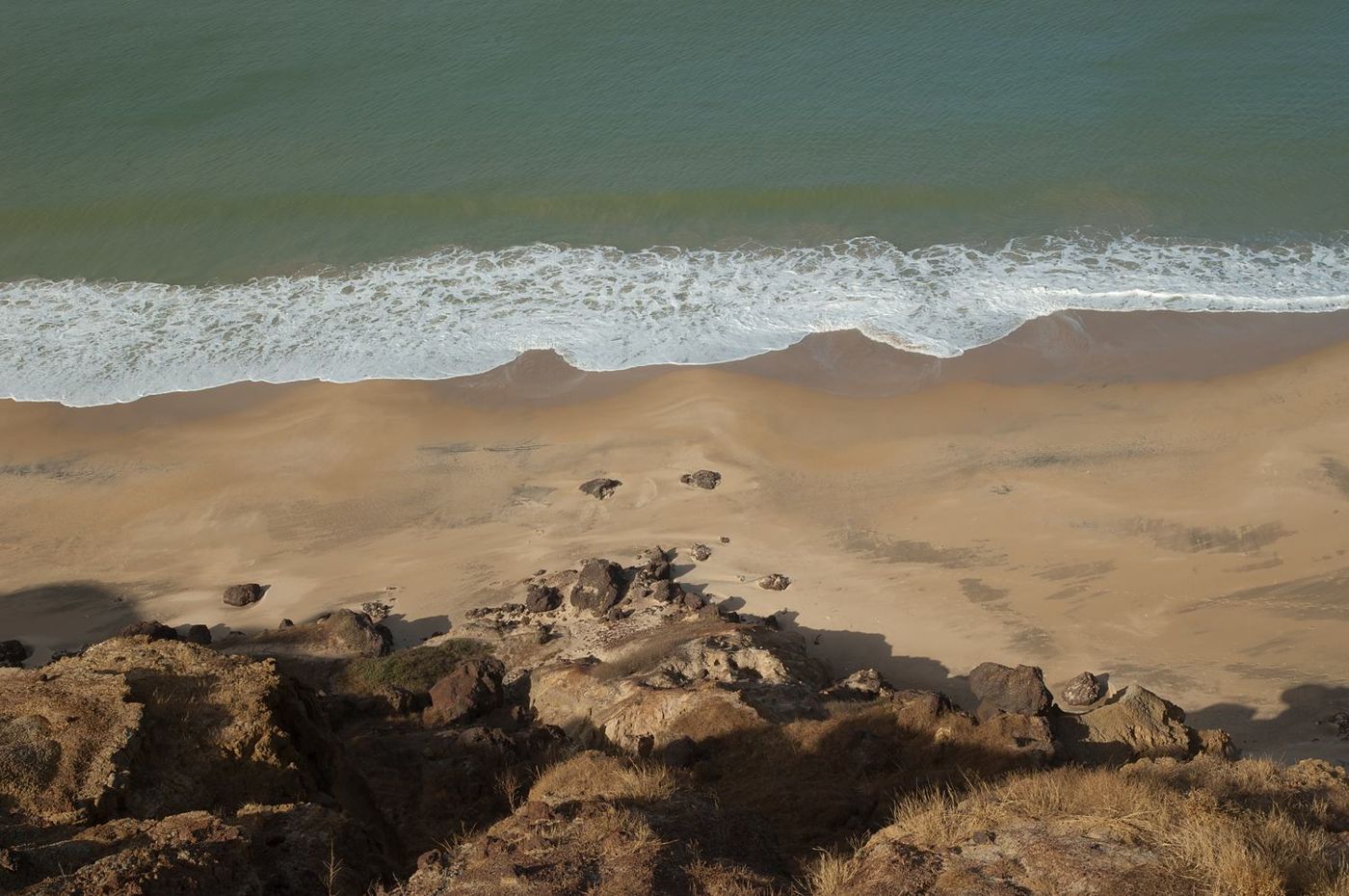
Popenguine Nature Reserve is not a park you visit to see animals: it is a place you visit to see what a village can do when it decides it will no longer let its forest die. Forty years ago, these hills above the ocean had been stripped bare by drought, woodcutting and grazing herds. Today, you walk through a savannah that has grown back, with jackals in the thickets, raptors above the cliffs of Cap de Naze and the sea below. Come early, come on foot, and let the guide tell you who replanted each tree.
| Region | Thiès Region, Mbour department, Popenguine-Ndayane commune, in the north of the Petite Côte |
| Type | Nature reserve created in 1986: shrub savannah, ravines and coastal cliffs, co-managed with a collective of women from the surrounding villages |
| Getting there from Dakar | About 70 km, 1¼ to 2 hours by road depending on traffic; a short drive from the Somone or Saly |
| Recommended time | Two to three hours for the walking loop; half a day with the village, the shrine and the beach |
| Official fees | Reserve entry charge payable on site and not included in the price, according to your status (resident, non-resident, child) |
| Best time to go | November–April, early in the morning or late in the afternoon |
| Related QFS activities | Guided hikes, birdwatching, cultural tour of the village and the shrine, beach days |


Live in Senegal? The reserve is the easiest nature outing to organise from Dakar when you want high ground, shade and silence without going away for the weekend. Leave the city at dawn, walk for two hours before the sun starts beating down, and head down for a swim in Popenguine Bay by late morning. It is also an outing that changes with the seasons: grey and golden in March, an almost tropical green after the rains. The entry charge has a resident rate, and on activities booked with QFS, you get the resident rate: up to 30% off depending on the activity.
Just passing through? If you are staying on the Petite Côte, the reserve shows you the other face of this coast: no sun loungers or jet skis, but ochre cliffs, baobabs and the story of women who took charge of their environment long before ecotourism became a selling point. Do not rush through it: without the guide’s story, you see a pretty savannah; with it, you understand a model cited far beyond Senegal.
In the mid-1980s, the forest overlooking Popenguine was exhausted. The droughts of the previous decades, the cutting of firewood and overgrazing had stripped the land bare, and the wildlife had almost disappeared. In 1986, the state created Popenguine Nature Reserve by decree, covering just over a thousand hectares taken from part of the village’s forêt classée (protected forest). The decree protected the site; it did not make it grow back.
This is where the village steps in. In 1988, a Popenguine resident gathered just over a hundred women around her, and a single man, within the Regroupement des femmes de Popenguine pour la protection de la nature (Popenguine Women’s Group for the Protection of Nature). Their programme came down to a few actions, repeated for years: setting up tree nurseries, replanting local species, cutting firebreaks, clearing, keeping watch, and explaining to their neighbours why the cutting had to stop. The trees came back, and then the animals.
The movement quickly spread beyond Popenguine. Women from the neighbouring villages joined the effort, and in 1996 COPRONAT, the Collective of Women’s Groups for the Protection of Nature, was born, bringing together eight villages around the reserve and more than 1,500 women. It is involved in managing the reserve alongside the national parks service, and runs reforestation and environmental education projects. The initiative is regularly held up as an example of community conservation in West Africa.
When you pay your entry charge or walk with a reserve guide, it is this organisation that you keep alive: each visit funds a little of the surveillance and planting.

Réservez votre sortie avec nos prestataires locaux. Le prix du service est distinct des éventuels coûts officiels réglés sur place.
| Fact | Figure |
|---|---|
| Status | Nature reserve, created by decree in 1986 |
| Area | Just over 1,000 hectares |
| Location | Popenguine-Ndayane commune, Mbour department, Thiès Region |
| Distance from Dakar | About 70 km |
| Popenguine Women’s Group (Regroupement des femmes de Popenguine) | Founded in 1988 by just over a hundred women and one man |
| COPRONAT (collective of women’s groups) | Created in 1996, eight villages, more than 1,500 women |
| Landscapes | Sudano-Sahelian shrub savannah, ravines, coastal cliffs of Cap de Naze, seasonal pond |
| Emblematic wildlife | Jackals, porcupines, civets, monkeys including the patas, guinea fowl, raptors and migratory birds |
From Dakar, take the motorway towards Diamniadio and Blaise Diagne International Airport (AIBD), then leave the main road and head down towards the coast and Popenguine: allow about 70 km and 1¼ to 2 hours depending on when you leave, with the exit from the city the only real bottleneck. From the Somone or Saly, the drive is short. There is no direct, practical public transport to the reserve entrance: a car, a taxi negotiated for the return trip or an activity with a transfer are the simplest options.
The reserve’s regulations make access subject to the payment of an entry charge and provide for visits on foot accompanied by a guide. This charge is paid on site, at the reserve office, with separate rates for residents, non-residents and children. Bring cash in small notes. Set by the reserve, it is not included in the price of an activity.
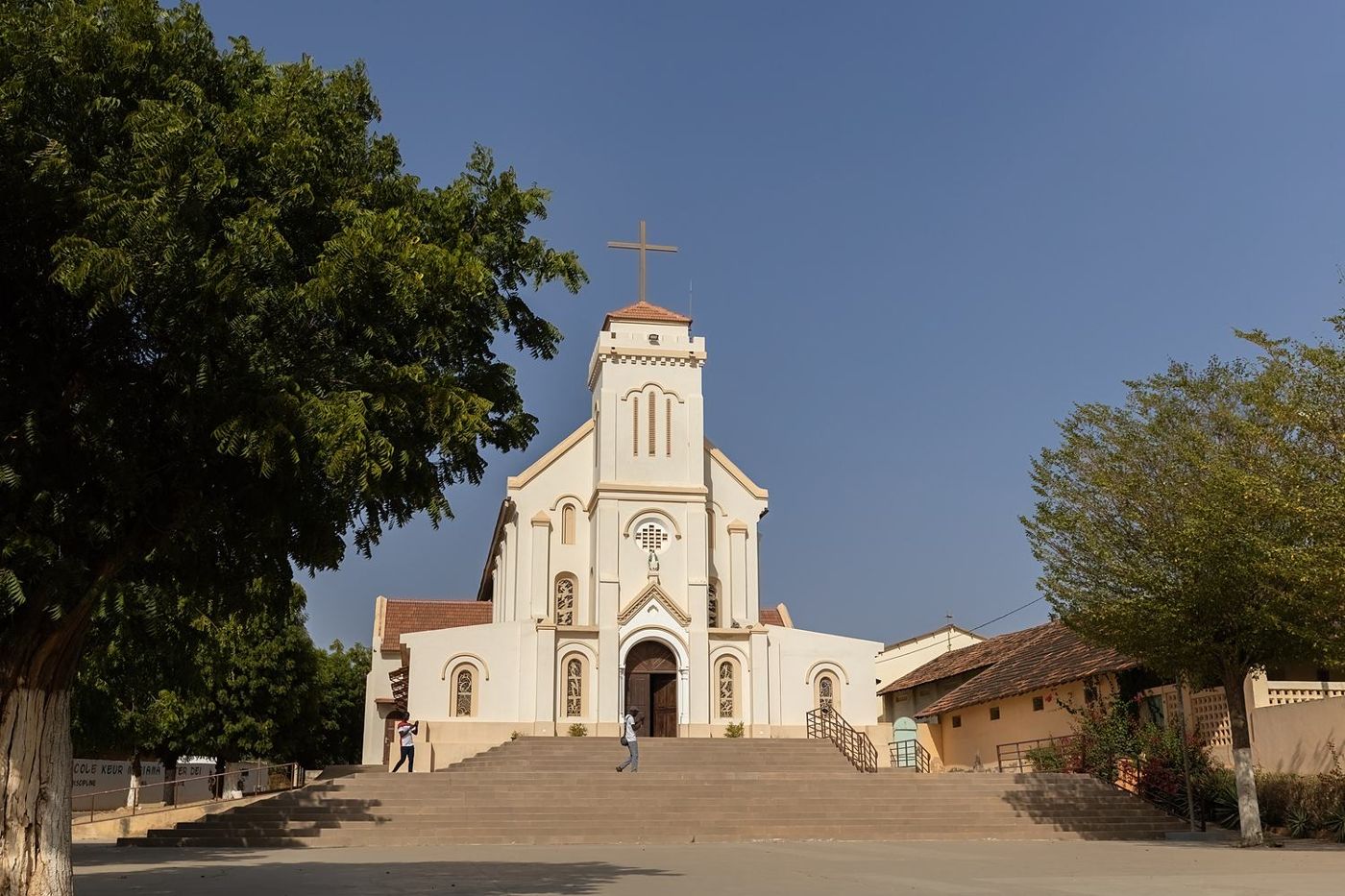
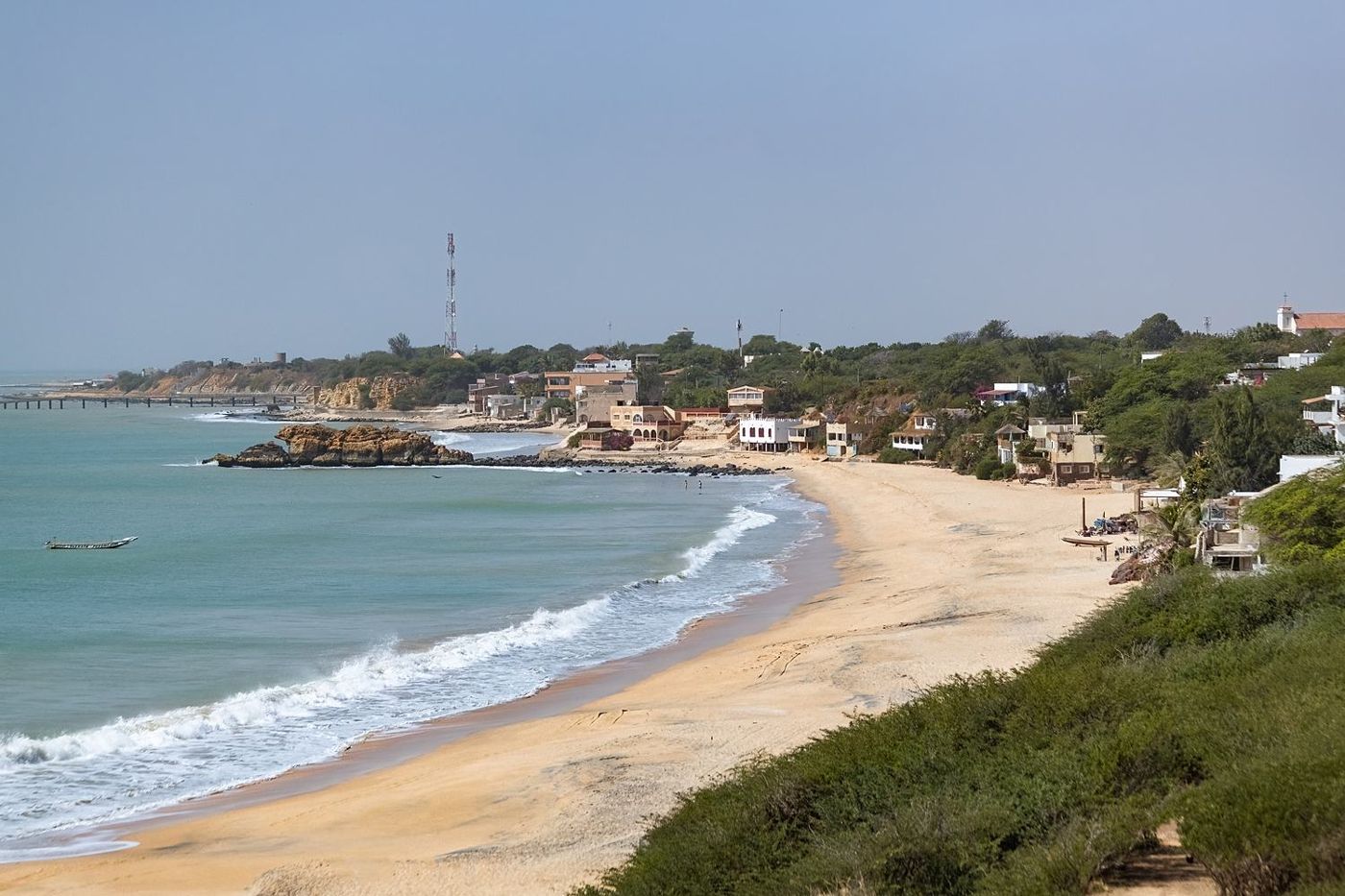
The reserve overlooks the village of Popenguine, its Marian shrine of Notre-Dame de la Délivrande on the hill and its sheltered bay: a morning is enough to combine all three. To the north lie Ndayane, the other half of the commune, and then Toubab Dialaw, an artists’ village, the starting point for the coastal walk that reaches Popenguine along the clifftops. To the south, the Somone lagoon and its mangroves, to explore by pirogue, then Saly and Bandia Reserve for a first safari. To see how it all fits together, see the Petite Côte and Thiès Region.
Excursions, visites guidées et combinés : nos prestataires locaux organisent tout.
Bush quad ride to Nianing and Popenguine
Nianing · Half-day
By season. From November to February, the mornings are cool, the skies clear and the migrants present: this is the best time to walk and watch wildlife. From March to June, the heat rises and the savannah turns yellow, but the sea breeze still makes morning walks pleasant. During the rainy season (hivernage), July to October, the reserve turns very green and the pond fills up, at the cost of humid heat, denser vegetation and trails that are sometimes slippery.
By time of day. Early in the morning for the birds and animals, and to walk in the cool. Late in the afternoon for the low light on the cliffs, which turn red before sunset. Avoid the middle of the day: there is little shade on the ridges.
By calendar. On Pentecost weekend, the Marian pilgrimage to Popenguine draws thousands of worshippers from all over Senegal and neighbouring countries: the village and the road along the north of the coast are packed. Worth experiencing if you are coming for the pilgrimage, best avoided if you are coming for the reserve.
The most rewarding way to discover the reserve is one of our guided hikes: along the reserve’s ridges, or, for strong walkers, on the coastal walk from Toubab Dialaw and Ndayane to Cap de Naze, at low tide. If birds interest you, see birdwatching; for the story of the pilgrimage and village life, guided cultural tours and traditional sites & villages. To end the day with your feet in the water, beach & relaxation days. And to get here from Dakar or your hotel on the coast, intercity transfers and vehicle hire with driver.
Each activity is run by an independent local professional. You pay 20% to secure your booking (the booking fee), and the balance is paid on site, on the day. The reserve entry charge is an official fee: it is payable on site and not included in the price, and each relevant listing says so. If you live in Senegal, you get the resident rate: up to 30% off depending on the activity (the exact rate is shown on each listing).

From 31 October to 13 November 2026, Dakar, Diamniadio and Saly will host the Youth Olympic Games, the first Olympic event in…
Read the article ›October closes the rainy season and opens the finest season of the year. Workshops for children, sport, wellness, classes and getaways: everything…
Read the article ›In Senegal, the day runs to the rhythm of five prayers whose times follow the sun, and so shift a little every…
Read the article ›Good deals, news and highlights from Senegal, straight to your WhatsApp.