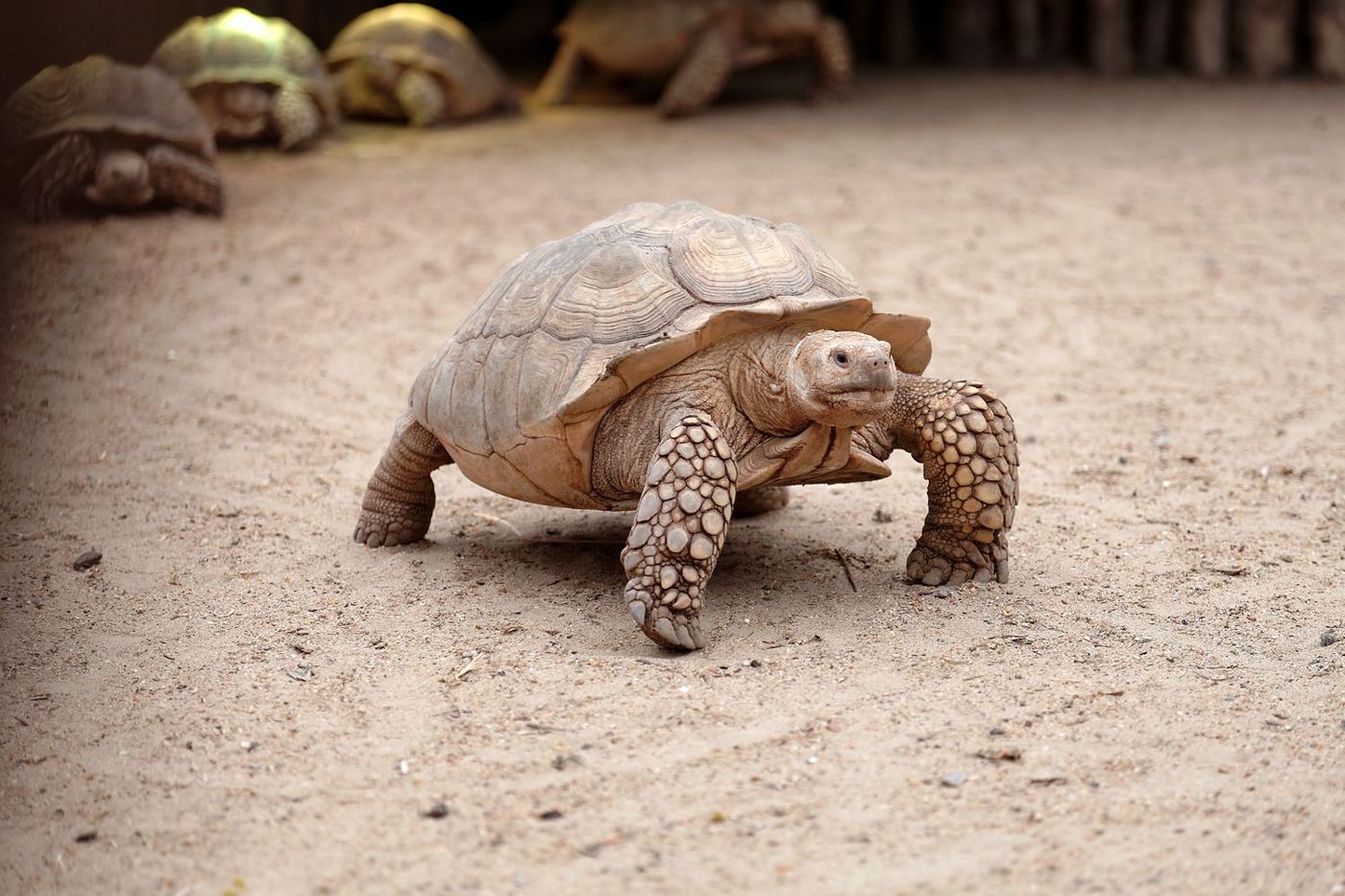
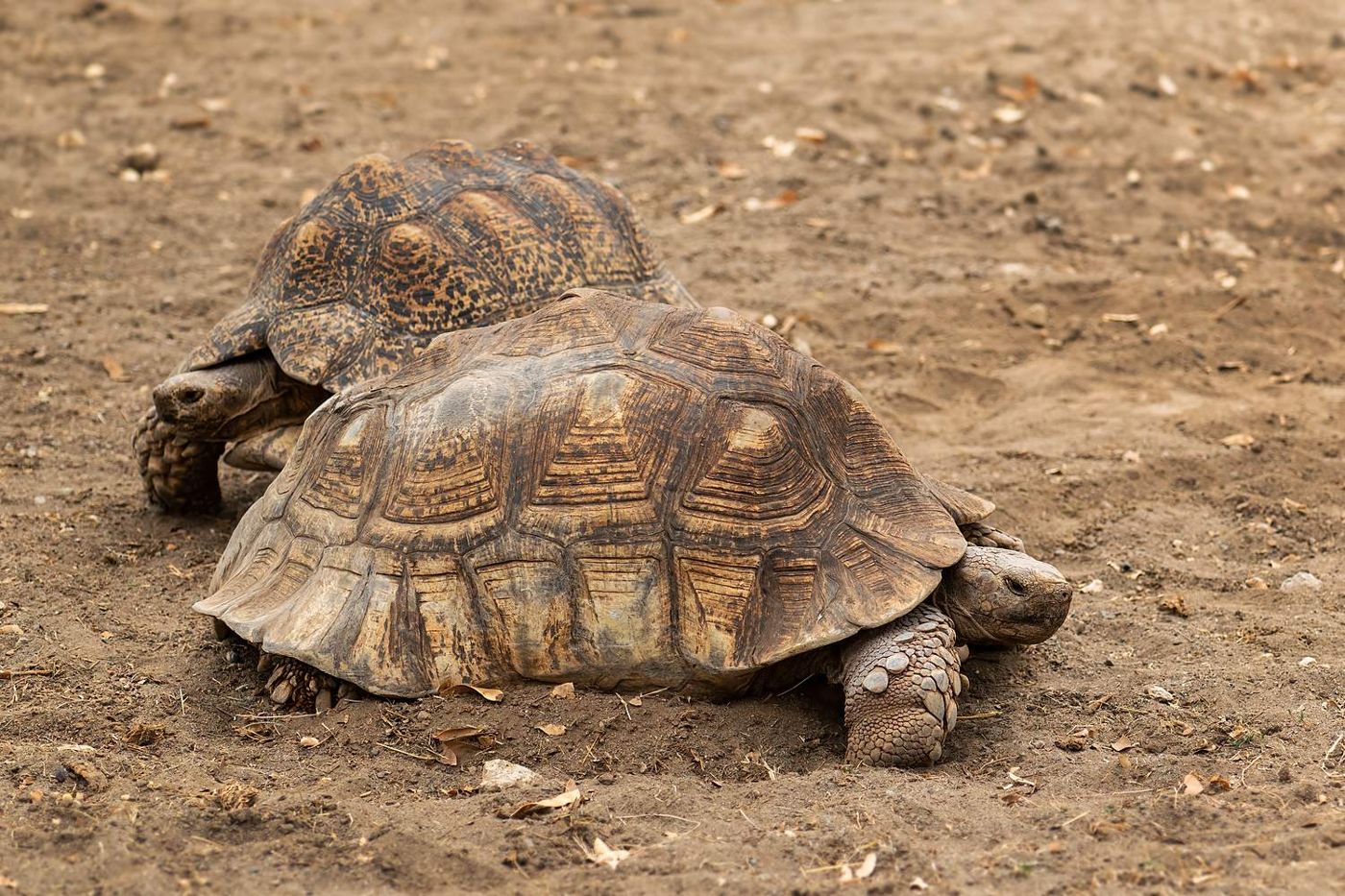
At the Tortoise Village (Village des Tortues), do not come looking for a zoo: come to see a waiting room. Many of the African spurred tortoises that watch you go by, under the trees of the Noflaye botanical reserve, are here in transit. Some were seized, others were born in the nursery, a few even crossed the Mediterranean by plane, and all of them are part of the same gamble: returning to the Sahel a giant tortoise that is becoming rare there. Understand that before you go in, and the visit takes on a different meaning: you are no longer looking at big, slow animals, you are watching a conservation programme at work.
At a glance
| Region | Dakar Region, Rufisque department, Sangalkam commune, village of Noflaye |
| Type | Tortoise protection and breeding centre, inside the Noflaye special botanical reserve |
| Getting there from Dakar | About 30 to 35 km to the east; 45 minutes to 1½ hours by road depending on traffic |
| Recommended time | An hour’s guided tour; half a day including the journey, a full day with Lac Rose |
| Official fees | Centre entry charge payable on site and not included in the price, with separate rates for visitors, residents, children and school groups |
| Best time to go | All year round, preferably in the dry season (November–June) and in the morning |
| Related QFS activities | Guided tour of the Tortoise Village, family days, combined trips with Lac Rose |
Resident or visitor: two good ways to come
Live in Senegal? The Tortoise Village is the Saturday-morning outing that needs no preparation. You leave after breakfast, arrive at opening time, when the tortoises are active and the heat is bearable, and you are home for lunch, or on the shore of Lac Rose for the afternoon. It is also an outing worth repeating: children who come at four do not ask the same questions at ten. And the centre has specific entry rates for residents and school groups. On activities booked with QFS, you get the resident rate: up to 30% off depending on the activity.
Just passing through? The centre has one rare advantage: its location. It lies between Dakar, Lac Rose and Diamniadio, without much of a detour from the road to Blaise Diagne International Airport (AIBD). A morning with the tortoises therefore fits easily into your arrival or departure day. Do not reduce it to a photo: the real value lies in the guide’s account, and an hour is enough to leave knowing what “endangered species” means in today’s Sahel.
Slowness as a conservation programme
The continent’s largest tortoise
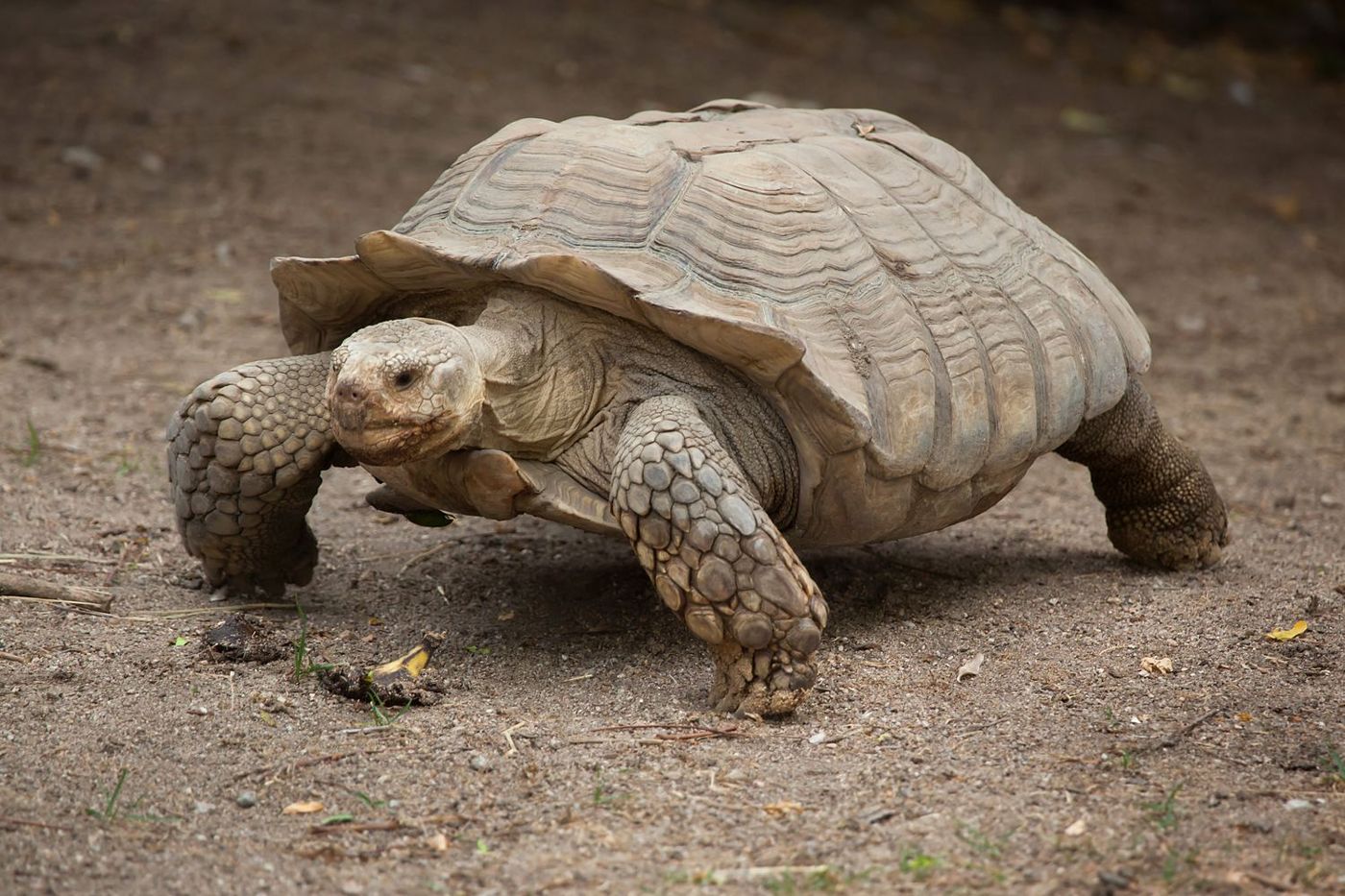
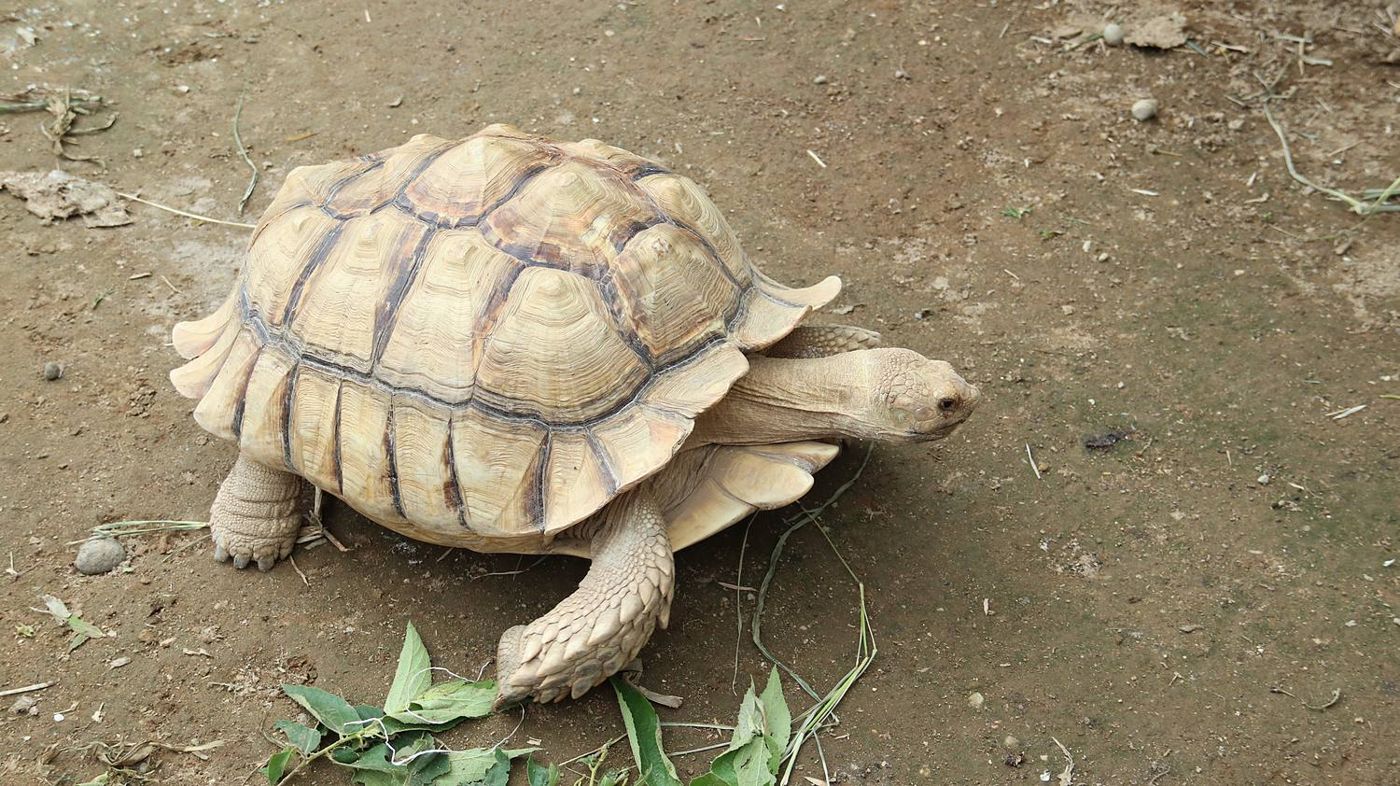
The star of the place is the African spurred tortoise, Centrochelys sulcata to naturalists. It is the largest land tortoise in mainland Africa: an adult can approach or exceed 100 kilos, has a beige shell whose scutes are marked with grooves (hence its French name, tortue sillonnée, the “grooved tortoise”), and horny spurs on its thighs. It lives in the Sahel belt, from Senegal to Ethiopia, and spends the hottest hours buried in burrows it digs itself. Its lifespan is considerable: several decades for certain, and probably a great deal more.
This giant is now listed as an endangered species on the IUCN Red List. In Senegal, it has become rare in the wild. The causes are well known: herds that compete with it for the dry grass, bush fires, the destruction of its habitat and the collection of young tortoises for the pet trade. A tortoise that takes many years to reach adulthood does not easily make up for such losses.
A centre created to reverse the trend
That is why the Tortoise Village was born. The project came into being in the 1990s, modelled on a similar centre created in France, and the centre has been open to the public since the middle of that decade. It moved to Noflaye in 2001, into a special botanical reserve of around fifteen hectares, described as one of the last intact wooded areas in the region. A conservation association runs it, working with the Water and Forestry Service (Eaux et Forêts) and with the support, over the years, of Senegalese and international scientific partners.
The principle is simple to explain, much less so to apply. Adult tortoises are taken in, often after being seized or handed over by private individuals. Their breeding is organised in protected enclosures. The young are raised away from predators, in a nursery, until they are big enough to defend themselves. Then they are released into protected, monitored areas in northern Senegal, where tracking shows whether the operation is succeeding. Several releases have already taken place. It is this chain, from seizure to return to the bush, that the visit takes you through.
Forty-six tortoises from Monaco
The most telling story is a recent one. In December 2022, forty-six young African spurred tortoises born in Monaco flew to Dakar, packed into transport crates, as part of a programme to reinforce the species. Their first address in Senegal was the Tortoise Village in Noflaye: six months in observation enclosures to get used to the climate and the food, under veterinary supervision, before moving to the Koyli Alpha reserve, in the north-west of the country, for a monitored release. The little tortoises in the nursery are preparing for the same journey.
A centre that lives off its visitors
One last point, often forgotten: the centre depends heavily on its entry charges, and it has already had to appeal for public support during periods without visitors. Your ticket is therefore not just a right of entry: it feeds the tortoises and pays the keepers.