


Lieux emblématiques
Great Mosque of Touba: entering the holy city as a guest
In Touba, you do not arrive as a tourist but as a guest of the Mouride brotherhood. The history of the mosque,…
Read the article ›
Home › Locations › The Petite Côte › Bandia Reserve › Bandia Reserve: a rebuilt savannah, from giraffes to the griots’ baobab
BANDIA RESERVE
In a *forêt classée* (protected forest) that was replanted and then fenced, Bandia Reserve has brought giraffes, rhinos and Derby elands back between Dakar and Saly. A morning safari, and a real lesson in Serer history beneath the baobabs.
Bandia Reserve does not sell you an untouched Africa, and that is its best quality. Everything you see there has been remade: the forest replanted, the fence put up, the giraffes and rhinos brought from far away, the Derby elands taken from Niokolo-Koba to breed here. See it as a rebuilt savannah and the visit becomes fascinating: you are not just driving through a safari set, you are seeing what this corner of the Petite Côte looked like before hunting and logging, with, as a bonus, a baobab that once served as a tomb for griots.
| Region | Thiès Region, Mbour department, between Sindia and Nguékhokh, beside the N1 national road |
| Type | Private, fenced wildlife reserve set in the Bandia forêt classée (protected forest) |
| Getting there from Dakar | About 60 kilometres: roughly 1 to 1¾ hours by road depending on traffic |
| From the Petite Côte | About half an hour from Saly, the Somone or Ngaparou |
| Recommended time | A morning for the safari and the griots’ baobab; a full day if you add the Somone or the beach |
| Official fees | Private reserve: no public entry charge. Entry to the reserve, the guide and the vehicle are either included or payable on site and not included in the price, depending on the listing |
| Best time to go | All year round if you set off early; November–February for comfort, March–June for easy wildlife viewing |
| Related QFS activities | Vehicle safari, Bandia + the Somone or Lac Rose (Pink Lake) combos, stays on the Petite Côte, transfers from Dakar |
Live in Senegal? Bandia is the safari that fits into a Saturday. Leave Dakar at dawn on the motorway, enter the reserve while the animals are still moving, then head back to the coast for the afternoon: the Somone lagoon, or the beach at Ngaparou or Saly. For children who have never seen a giraffe anywhere but on a screen, it is the outing that sticks. Come on a weekday or outside the school holidays if you can: the track is quieter and the animals less disturbed. And come back in another season: the brown savannah of May and the green savannah of September tell different stories. On QFS, you get the resident rate: up to 30% off depending on the activity.
Just passing through? Take Bandia for what it is: an introduction, not Kenya. Its great asset is its location, close to Blaise Diagne International Airport (AIBD) and to the accommodation in Saly, which makes it an excellent first or last day of a trip. The classic mistake is to arrive at midday after a morning by the pool: the heat flattens everything, the animals lie down in the shade and all you see is bush. Book the morning slot and keep the afternoon for the sea. If it is big wildlife without fences you dream of, Niokolo-Koba is there, but it is several days’ travel away.
It all starts with a protected forest in poor condition. The Bandia forest, protected on paper, had been heavily eaten into by logging, charcoal burning and farming. In the 1980s, a reforestation project took it on. The reserve was born as an extension of that work: most sources date its creation to 1990, while one scientific study puts it back to 1986. Part of the forest was fenced off and left to regenerate, then stocked with animals the region had long since lost to hunting pressure. Bandia is often presented as Senegal’s first private reserve.
The gamble is openly acknowledged: only some of the species you will come across are native to Senegal. Giraffes and white rhinos, in particular, were brought from southern Africa. Researchers have pointed this out bluntly, asking whether a fenced reserve stocked with species from elsewhere is about conservation or tourism. The honest answer is a bit of both. Bandia is a place to visit, designed so that people see animals. But it also plays a real role for one threatened species.
That species is the Derby eland, the largest antelope in the world. Its West African subspecies survives in the wild only in small numbers, mainly in Niokolo-Koba. A few individuals were captured there to be settled at Bandia, which caused debate: many felt that a species should be protected in its own home, not behind a fence. The animals nevertheless bred, and the programme was extended to Fathala Reserve, in the Saloum, under scientific monitoring. When an eland with spiralled horns crosses the track in front of you, a little piece of Niokolo-Koba is passing by.
One last feature of the place: there are no large predators roaming free. No lions or elephants in the reserve; the hyenas are kept in a separate enclosure. That explains the strange feeling of the first half-hour: the grazing animals do not hide, they watch you go by.
Réservez votre sortie avec nos prestataires locaux. Le prix du service est distinct des éventuels coûts officiels réglés sur place.
3-day stay at Bandia Reserve from your accommodation
Bandia Reserve · 3 days
Bandia and Somone lagoon day trip from Dakar
Bandia Reserve · Full day
Bandia safari and lion encounter
Bandia Reserve · Half-day
| Fact | Figure |
|---|---|
| Status | Private, fenced reserve, within the Bandia forêt classée |
| Created | 1990 according to most sources (1986 according to a 2010 scientific study), following a reforestation project in the 1980s |
| Area | About 3,500 hectares, the most widely quoted figure; the 2010 scientific study gives a smaller fenced area |
| Distance from Dakar | About 60 kilometres via the motorway and then the N1 |
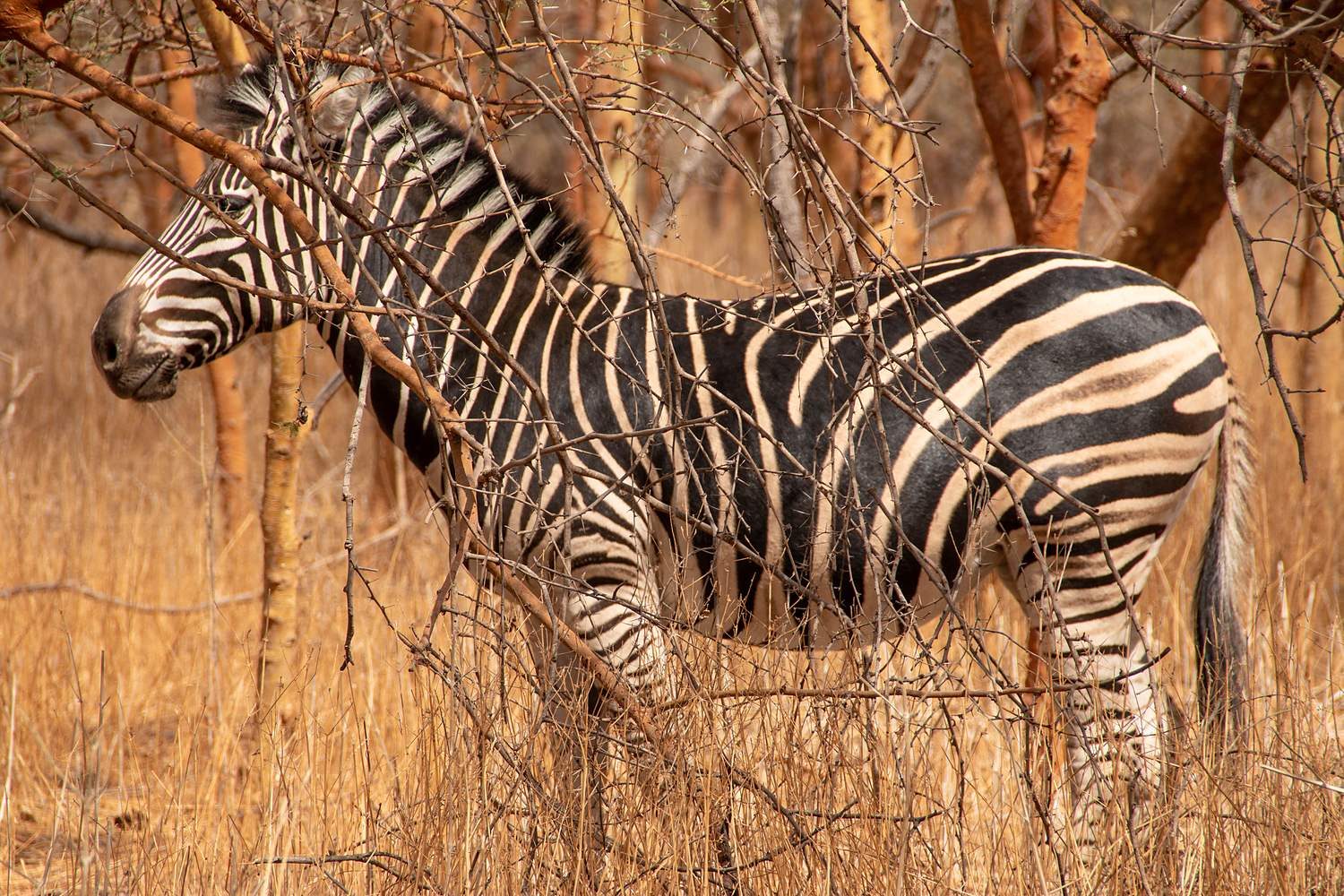
| Large animals | Giraffes, a few white rhinos, zebras, buffalo, Derby elands and several other antelopes |
| Large predators | None roaming free; hyenas in a separate enclosure; no lions or elephants |
| Heritage | The griots’ baobab tomb, Serer burial mounds |
| Visits | By vehicle only, with a reserve guide |
The reserve lies inland, beside the N1 national road, between Sindia and Nguékhokh, on the route down to Mbour. From Dakar, the toll motorway takes you towards the Petite Côte: allow about 1 to 1¾ hours depending on traffic, longer on a Friday evening. From Saly, the Somone or Ngaparou, about half an hour is enough. Without a car, the simplest option is an outing that includes transport, or vehicle hire with driver and intercity transfers to link Bandia and the coast.
The visit is by vehicle only, accompanied by a reserve guide, on a network of laterite tracks. You do not walk among the animals, except at the stops the guide suggests.
As for fees, one clarification avoids misunderstandings: Bandia is a private reserve. So there is no public entry charge set by the state, as there is in a national park. The entry charge is the reserve’s own, as are the guide and the safari vehicle. Depending on the listing you book, they are either included in the price, or payable on site and not included in the price: each QFS listing says which, and the listing is what counts.
The giraffes. This is the moment children remember. They browse the tops of the acacias almost level with the vehicle and let you watch them at length, often in small groups.
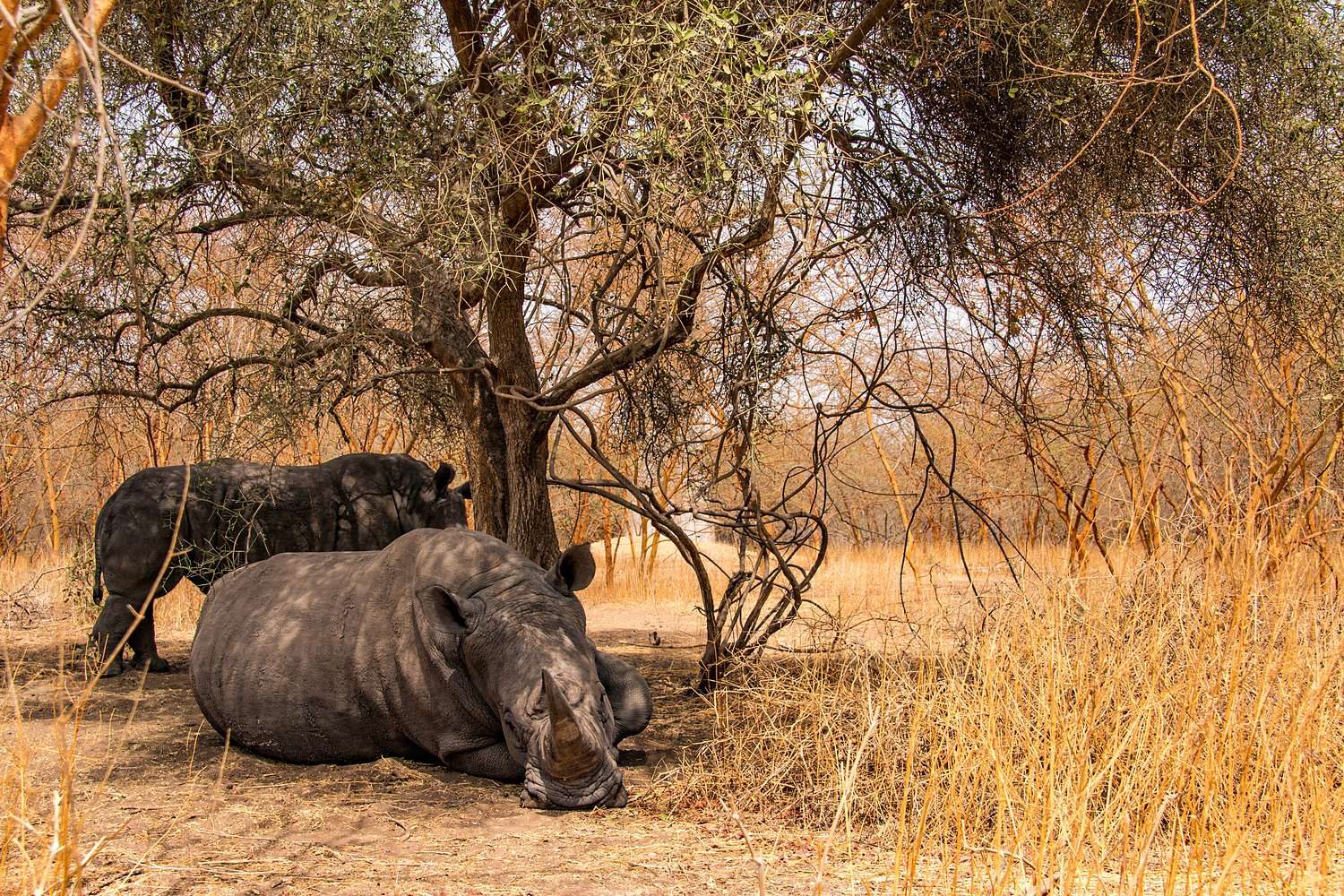
The white rhinos. There are only a few, and they call for more patience. Your guide knows their habits; let them choose the route rather than asking to go to a particular spot.
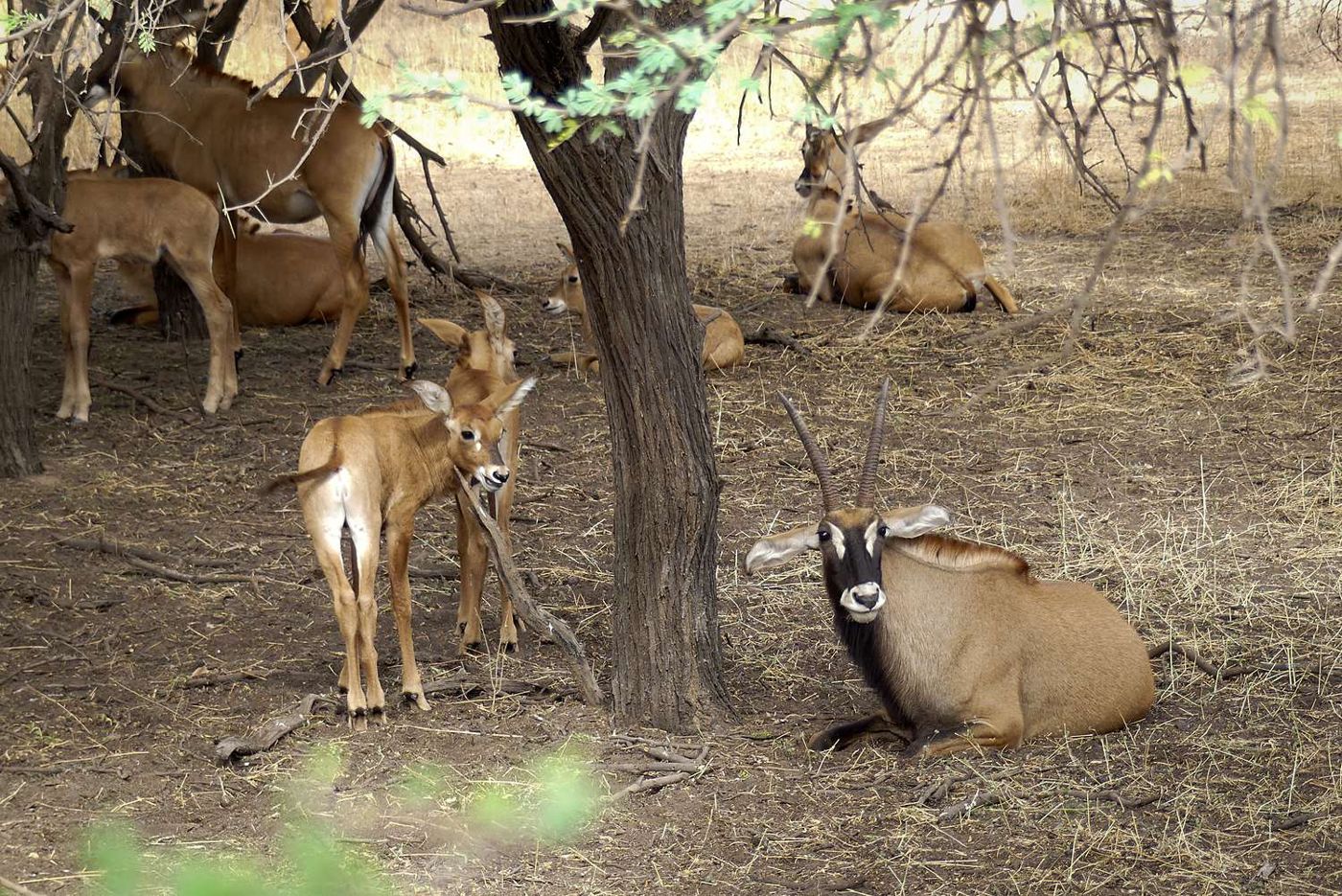
The antelopes. Derby elands, but also roan antelopes, oryx, impalas and gazelles. This is where binoculars change the visit: you quickly learn to recognise the silhouettes.
The waterhole. Animals come here to drink, crocodiles doze on the bank, and patas monkeys and green monkeys prowl around. This is where you grasp the rhythm of a day in the reserve.
The griots’ baobab. Among the Serer, griots, the keepers of the spoken word and of memory, were not buried like other people: their bodies were placed in the hollow trunk of a baobab. The practice was banned in the early 1960s, under the presidency of Léopold Sédar Senghor, and the baobab tombs still shown to visitors have become rare. Bandia’s is one of them; some people still come here to pray or make a wish. Approach it as what it is: a grave.
The Serer burial mounds. These earth mounds covering ancient graves are a reminder that this forest was inhabited long before the fence. The route also passes a reconstruction of a Fula (Peul) dwelling. Ask the guide to stop there: that is what gives the landscape its meaning.
Excursions, visites guidées et combinés : nos prestataires locaux organisent tout.
3-day stay at Bandia Reserve from your accommodation
Bandia Reserve · 3 days
Bandia and Somone lagoon day trip from Dakar
Bandia Reserve · Full day
Bandia safari and lion encounter
Bandia Reserve · Half-day
Bandia combines naturally with the coast. The most successful pairing: a safari in the morning, then the Somone lagoon by pirogue or kayak in the afternoon, when the birds return to the mangroves. You can also head back down to Saly for the beach and water sports, or to Mbour and its fishing quay when the pirogues come in. To the north, Popenguine Nature Reserve offers another kind of nature, with cliffs and sea; further south, Joal-Fadiouth and its shell island. Some outings also combine Bandia and Lac Rose on the same day from Dakar. For a more forested safari, Fathala Reserve is the next step, in the Saloum. For the bigger picture: our Bandia Reserve and Petite Côte pages.
| Period | What changes |
|---|---|
| November–February | Cool mornings, clear skies: the most pleasant period, and the busiest |
| March–June | Rising heat, short grass, animals gathered near the water: easy viewing, as long as you set off early |
| July–October (the rainy season, hivernage) | Green savannah and lovely light, but tall vegetation that hides some animals, and tracks that can be muddy after a storm |
| Time of day | At opening time or in the late afternoon; avoid the middle of the day |
Our advice: the first morning slot, all year round. The animals move about while it is cool, the light is soft for photos, and you are back on the coast before the worst of the heat. In the rainy season, the reserve remains passable: just allow extra time for the journey.
On QFS, Bandia can be booked in several ways. In the safari section: the half-day or full-day vehicle safari, combos from Dakar or the Petite Côte (Bandia and the Somone lagoon, Bandia and Lac Rose by 4×4, or all three), and a three-day stay on the Petite Côte. In wildlife reserves & parks, the same outings from the nature angle; for a lighter family version, see animal parks. Some listings add a visit to a neighbouring private site where lions used to humans live, watched from a vehicle: this site is separate from the reserve, which has no lions.
Each activity is run by an independent local professional. You pay 20% to secure your booking (the booking fee), and the balance is paid on site, on the day. Entry to the private reserve is either included or payable on site and not included in the price, as the listing states. If you live in Senegal, you get the resident rate: up to 30% off (the exact rate is shown on each listing).
In Touba, you do not arrive as a tourist but as a guest of the Mouride brotherhood. The history of the mosque,…
Read the article ›A good share of the water that runs from Dakar's taps comes from a lake in the Sahel, some 250 km to…
Read the article ›A Diola island with no road or bridge, deep in the *bolongs* (tidal creeks) of Oussouye, where the impluvium houses are homes,…
Read the article › Every Thursday · AYTHIA ÑU DEM
Good deals, news and highlights from Senegal, straight to your WhatsApp.
 On a computer? Scan this code to join the channel.



