Ngor Beach: swimming, pirogues and evenings | QFS
Accueil » Points d’intérêt région Dakar » Ngor Beach: the village beach, between pirogues, the landing point and evening football

Home › Locations › Dakar › Almadies › Ngor Beach: the village beach, between pirogues, the landing point and evening football

ALMADIES

Ngor Beach: the village beach, between pirogues, the landing point and evening football

Ngor Beach is not a postcard: it is the shoreline of a Lebou fishing village, the boarding point for the island and the sports ground of an entire neighbourhood. What you need to know to enjoy it, from lifeguarded swimming to water quality.

Ngor Beach is not waiting for you: it is at work. In the morning, it belongs to the fishermen hauling up their pirogues; during the day, it serves as a quay for those heading to the island opposite; in the evening, it becomes the football pitch and open-air gym of the whole neighbourhood. If you come looking for a brochure beach, you will be disappointed. If you come to see how a Lebou village lives with the ocean in the middle of Dakar, it is one of the most authentic scenes in the capital. On one condition: knowing when to get in the water, and when simply to watch.

At a glance

RegionDakar Region, Dakar department, Almadies arrondissement; Ngor district municipality (commune d’arrondissement)
TypeBeach of a Lebou fishing village, in the bay sheltered by Ngor Island; departure point for the pirogues to the island
Getting there from central DakarAlong the Corniche Ouest or the VDN, 30 minutes to over an hour depending on traffic
Recommended time1 to 2 hours for the beach alone; half a day if you add the crossing to the island
Official feesNo additional official fees for the beach; the pirogue crossing to the island is payable on site and not included in the price
SwimmingBeach approved for swimming under the 2022 order of the Ministry of the Interior; swimming prohibited from 19:00 to 09:00; lifeguards on duty during the day
Best time to goAll year round; November–May for dry weather, late afternoon for the atmosphere and the light
Related QFS activitiesSurfing, island excursions, pirogue trips, sea fishing, diving and snorkelling, swimming

Resident or visitor: two ways to approach Ngor Beach

You live in Senegal. Ngor Beach is probably already “your” weekend beach, and that is exactly where the trap lies: you go out of habit, on a Sunday afternoon, at the same time as the rest of Dakar. Change your timing. On a weekday morning, the beach is handed back to the fishermen, the water is calm and you find the village again. In the evening, come and run or kick a ball about like the local youngsters rather than looking for a spot in the sun. And with your children, bear in mind what recent testing says about water quality, especially during the hivernage, the rainy season (see below). On sea activities booked with QFS, you get the resident rate: up to 30% off.

You are passing through. Do not make Ngor Beach your swimming day: make it your gateway. This is where the pirogues leave for the island, this is where you get the best view of the fishermen at work, and this is where Dakar shows itself in the evening, as the heat fades. An hour on the sand watching, the crossing, the island for the day, then back to the beach for sunset: that is the right order. For the island itself, everything is gathered on our Ngor Island page.

A village beach, not a resort beach

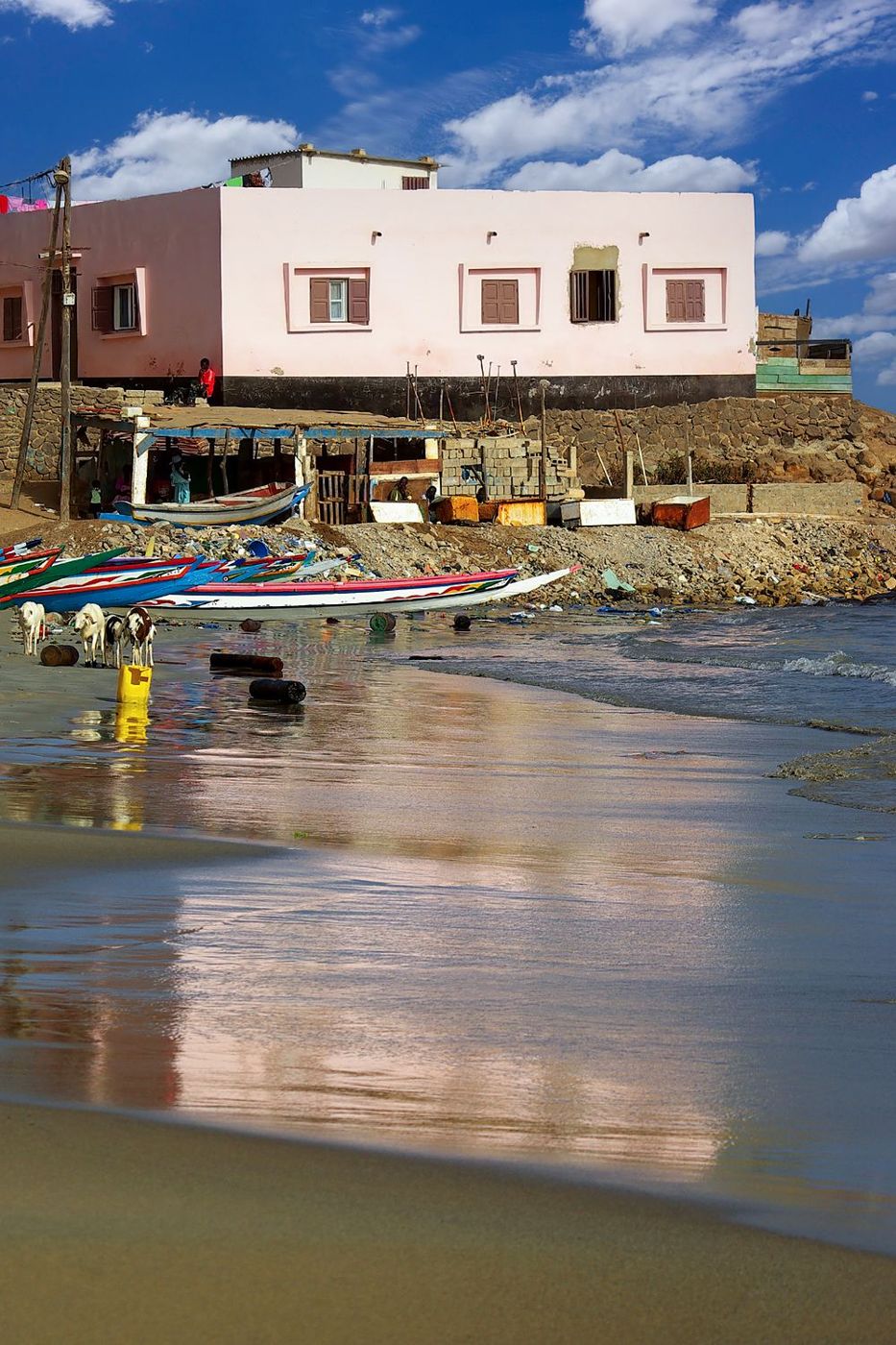
Ngor is one of the historic Lebou villages of the Cap-Vert peninsula, like Yoff and Ouakam. The Lebou are a fishing people, and the beach is first and foremost their workplace: painted pirogues are hauled up onto the sand, catches are sorted and nets are mended there. The city may have closed in on the village from every side, but this shoreline is still its own. That is what sets it apart from the developed beaches of the Petite Côte: here, you are the guest of a place that was working perfectly well before you came along.

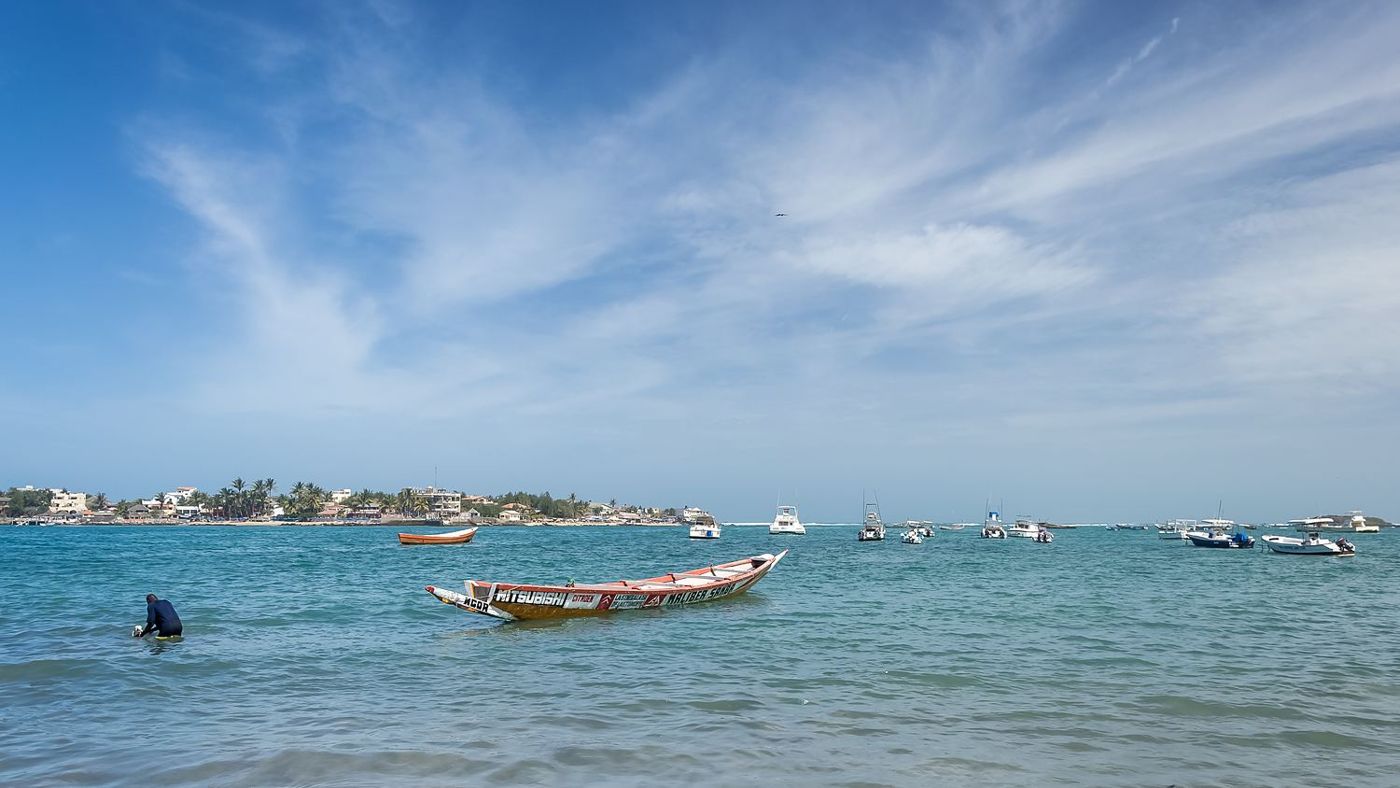
Geography explains the rest. Ngor Island, a few hundred metres offshore, breaks the Atlantic swell and forms a bay in front of the beach that is calmer than the rest of the Dakar coastline. It is this bay that allowed the village to beach its pirogues here, the boatmen to set up their landing point and families to come and swim. It has also earned international recognition: Ngor Bay has joined the Most Beautiful Bays in the World Club, an international network of bays spread across several continents.

The beach’s third use is the most visible at the end of the day. As the sun drops, the sand becomes a football pitch for the local youngsters, a training track for keen athletes and a living room for families. Reports in the Senegalese press all describe it in the same way: a popular, accessible beach, where you do not need much money to treat yourself to some time by the water. This is when Ngor Beach is at its liveliest, and at its most photogenic.

Swimming: what is permitted, what is advisable

Since 2022, an order from the Ministry of the Interior has set out the list of beaches in Senegal where swimming is approved or prohibited. Ngor Beach and Ngor Island are among the approved beaches in Dakar Region, unlike several neighbouring beaches on the peninsula, which are off-limits because of the currents. On approved beaches, swimming remains prohibited between 19:00 and 09:00: those are the hours when the lifeguards are off duty. During the day, a lifeguard team is present and marks out the area where you can swim.

Approved does not mean risk-free. Drownings also happen on lifeguarded beaches, almost always outside the hours of duty or outside the marked area. The rule is simple: you swim between 09:00 and 19:00, in front of the lifeguards, where there are other people, and never after sunset, even if the water looks calm and others are still in it.

That leaves the question people rarely ask: water quality. A recent bacteriological survey of Dakar’s bathing waters, carried out by a coastal protection association and based on testing by the Institut Pasteur de Dakar, ranks Ngor Bay among the most frequently polluted sites in the capital, along with Yoff, while other beaches on the peninsula fare much better. The contamination, of faecal origin, comes from wastewater discharges and gets worse during the rainy season. In practice: avoid swimming in the days after heavy rain during the hivernage, try not to swallow any water, rinse off with fresh water and keep an eye on children who play in the water for a long time. For a proper day’s swimming, the coves on the island, further from the discharges, are a better choice; and if you are only there for the atmosphere, the beach is just as enjoyable with your feet dry.

  • Paddle, kayak & canoe

    Transparent kayak and drone outing in Dakar

    Dakar · 45min to 1h30


    From38 500 CFA
    Resident price36 575 CFA−5 %
  • Paddle, kayak & canoe

    Kayaking around Gorée and the Madeleine Islands

    Dakar · 30 min, 45 min, 1h


    From5 500 CFA
    Resident price4 950 CFA−10 %
  • Paddle, kayak & canoe

    Transparent kayak on the Pink Lake

    Dakar Region · 15 min, 30 min


    From5 500 CFA
    Resident price5 225 CFA−5 %

Key facts & figures

FactFigure
Swimming statusApproved beach (order of the Ministry of the Interior, 2022); Ngor Island also approved
Swimming hours09:00 to 19:00, lifeguarded; prohibited from 19:00 to 09:00
Distance to the islandA few hundred metres
Pirogue crossingA few minutes, during the day, from the landing point on the beach
Water qualityBay ranked among the most frequently polluted sites in Dakar by the most recent bacteriological survey; higher risk during the rainy season
RecognitionBay is a member of the Most Beautiful Bays in the World Club
Beach communityLebou fishing village, Ngor district municipality

Getting there & official fees

The beach lies at the end of Ngor village, on the north coast of the Pointe des Almadies, at the western tip of Dakar. From the centre, allow 30 minutes to over an hour depending on traffic, along the Corniche Ouest or the VDN. A taxi, with the fare agreed before you get in, or a ride-hailing app is the simplest option; once in the village, everything is on foot, as the beach and the landing point are right next to each other.

There are no additional official fees for access to the beach. The pirogue crossing to the island is paid at the landing point, on site, in cash: it is not included in the price of activities booked with QFS. The pirogues run during the day and stop in the early evening; if you cross over, ask on the way out what time the last boat back leaves. Boarding can take a while on busy days: be patient and keep your phone in a waterproof bag.

What to see

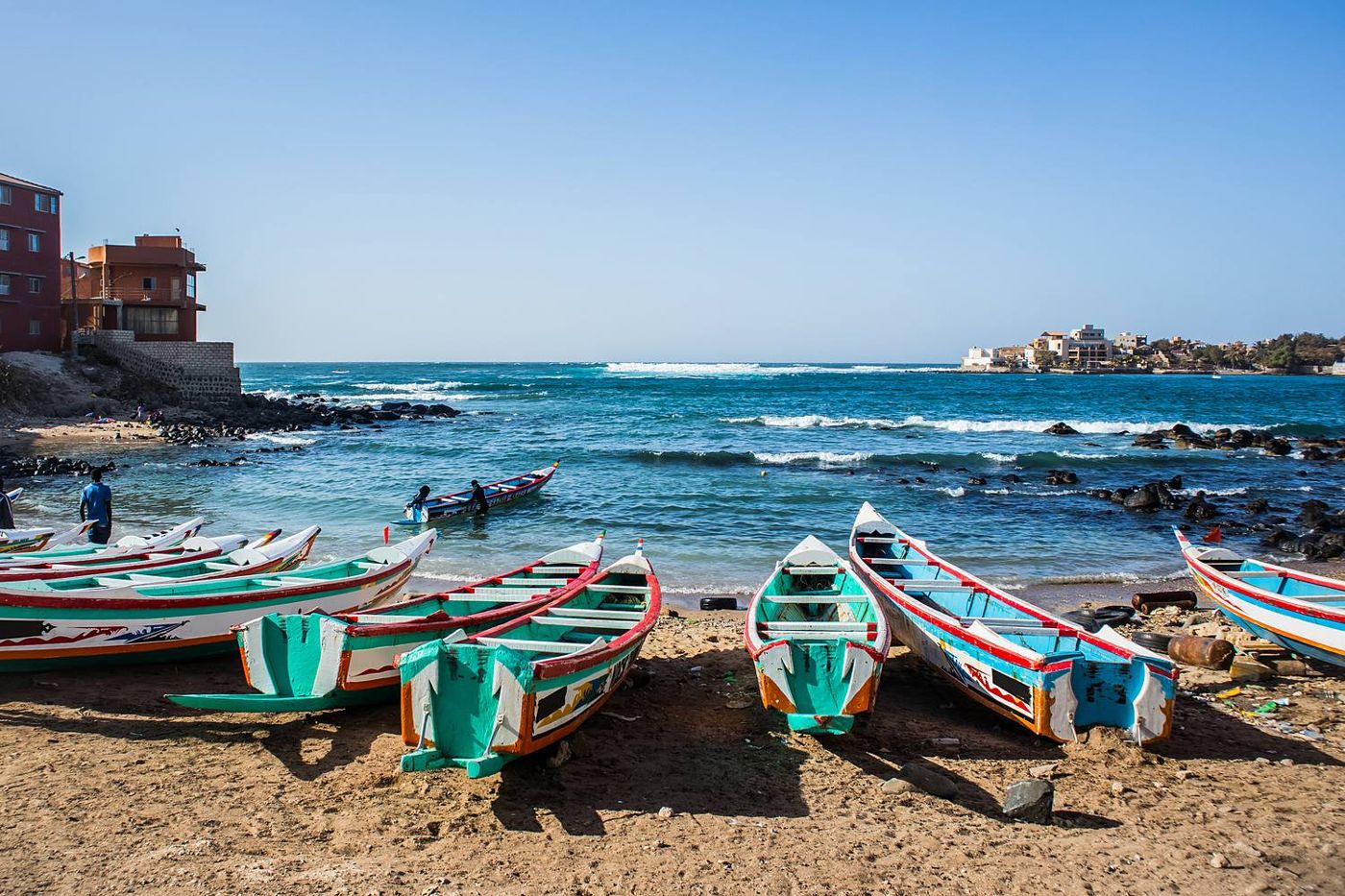
The fishing pirogues. They are the beach’s visual signature: slender hulls, bright paintwork, names and mottoes written on the bow. The best time to watch them manoeuvre is in the morning and late afternoon, when the crews set off or come back and everyone lends a hand to haul them up the sand.

The landing point. It is not a jetty but a stretch of beach where you climb into the pirogue with your feet in the water. The arrangements look improvised; they work. Wear clothes that can get wet up to the knees.

Face to face with the island. From the sand, Ngor Island closes off the horizon with its low houses and its rocks. It is this setting, the bay closed off by the island, that gives the beach its identity, and that earned it its place among the most beautiful bays in the world.

Evening football. Around 17:00, matches get going on the wet sand, between two rows of pirogues. Watch, or ask whether you can join in: the answer is rarely no.

Sunset. The beach glows at the end of the day, with the silhouettes of pirogues and swimmers against the light. This is the moment to sit back, and to get out of the water on time.

Nearby

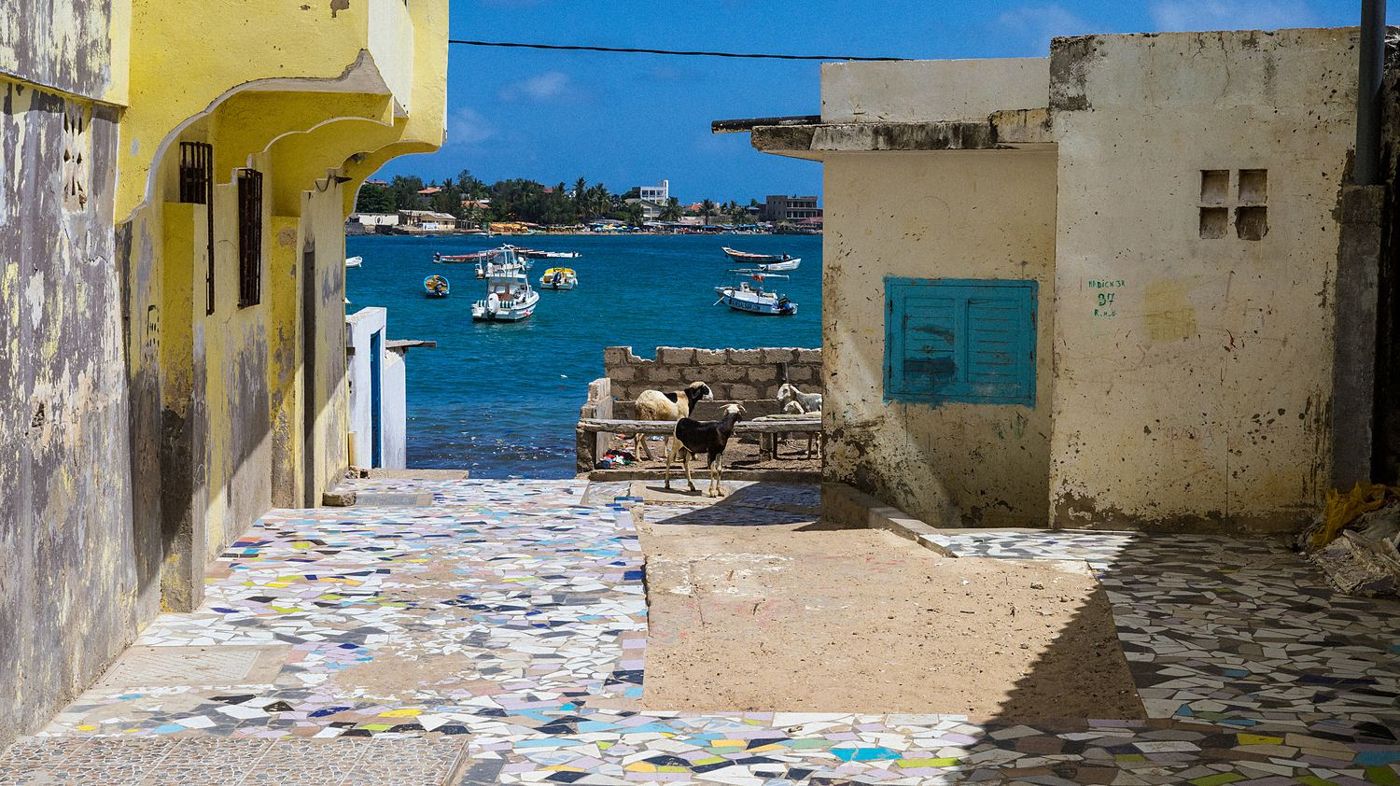
Ngor village begins behind the beach: its lanes and family compounds can be explored on foot, discreetly. Ngor Island, just opposite, is the natural next step. A few minutes away, the Almadies mark the westernmost tip of mainland Africa; swimming there, however, is not advised. Heading south along the Corniche, Ouakam and its Mosque of the Divinity, the Mamelles Lighthouse and the African Renaissance Monument fill a morning. To the north-east, Yoff continues the coast of the Lebou fishermen. Offshore, Madeleine Islands National Park can be visited on an organised outing. For the bigger picture, see our Dakar and Dakar Region pages, and our ideal three-day itinerary in Dakar.

  • Local classes & workshops

    Boxing classes in Dakar

    Dakar · 1h to 1h30


    From22 000 CFA
    Resident price20 900 CFA−5 %
  • Crafts & traditional skills

    Introduction to traditional African games in Dakar

    Dakar · 1h


    From12 100 CFA
    Resident price11 495 CFA−5 %
  • Crafts & traditional skills

    African creative workshop in Dakar

    Dakar · 1h


    From12 100 CFA
    Resident price11 495 CFA−5 %

The right time

TimeWhat happens
Early morningThe beach belongs to the fishermen; calm, soft light, the best time for photos of the pirogues
09:00–13:00Lifeguarded swimming, first crossings to the island, still few people on weekdays
13:00–17:00Crowds building, especially at weekends and during the school holidays; peak heat
17:00–19:00Football, sport, families; the beach at its liveliest; last window for swimming
After 19:00Swimming prohibited; stay on the sand for sunset, then head home

As for the seasons, the dry season, from November to May, brings clearer skies and more bearable heat; the water is cooler in the depths of winter. The rainy season, from July to October, brings warm water, crowds of Dakar holidaymakers and, after the rains, the poorest water quality of the year. If you can, come on a weekday: at weekends, Ngor Beach welcomes a good part of the city.

Practical tips

Respect the fishermen’s work. Do not walk on the nets, do not settle down in front of a pirogue that is about to be hauled up, and step aside when a crew is manoeuvring. The beach is their workplace before it is your place to relax.

Ask before taking photos. The pirogues can be photographed freely; people cannot. A nod, a question, and most of the time a smile in return.

What to wear. Swimwear is the norm on the beach itself; as soon as you head back up into the village, cover up. On Friday in the early afternoon, the village turns to prayer: it is a good time to be out at sea or on the island.

Safety in the water. Swim between 09:00 and 19:00, in the marked area, in front of the lifeguards. Sea urchins have been reported on the rocky stretches: water shoes will spare you any nasty surprises. When there is a dangerous swell warning, stay out of the water, even if others go in.

Hygiene. Avoid swimming in the days after heavy rain, rinse off with fresh water and do not let children swallow the water.

Money and belongings. Bring small notes for the crossing, drinks and the food sold on the sand. Keep an eye on your belongings at the busiest times, and have a waterproof bag for the pirogue.

Book an activity here with QFS

Ngor Beach is a starting point, and that is how our activities use it. For the sea, start with surf lessons & camps: the island’s waves are for experienced surfers, and beginners are taken to a spot suited to the day’s swell. To get out of the bay, see the island excursions, pirogue trips, boat trips (sunset, islands & sport fishing) and sport fishing. To explore the seabed around the island, there is diving & snorkelling; to paddle, paddle, kayak & canoe; to feel more at ease in the water, swimming & water activities. To understand the village around it, the guided cultural tours.

You pay 20% to secure your booking (the booking fee), and the balance is paid on site, on the day. The pirogue crossing to the island, when it is not included in the activity, is payable on site and not included in the price. If you live in Senegal, you get the resident rate: up to 30% off depending on the activity (the exact rate is shown on each listing).

Frequently asked questions

Can you swim at Ngor Beach?
Yes. Ngor Beach is among the beaches approved for swimming under the 2022 order of the Ministry of the Interior, with lifeguards on duty during the day. Swimming is prohibited there from 19:00 to 09:00.
Is the water at Ngor Beach clean?
Not always. The most recent bacteriological survey of Dakar’s bathing waters ranks Ngor Bay among the most frequently polluted sites, especially during the rainy season. Avoid swimming after heavy rain and choose the island’s coves for a swim.
How do you get to Ngor Island from the beach?
By pirogue, from the landing point on the beach, in a few minutes. The crossing is paid on site, in cash, and is not included in the price of activities; ask on the way out what time the last boat back leaves.
Do you have to pay to get onto Ngor Beach?
There are no additional official fees for access to the beach. Only the crossing to the island and whatever you eat or drink there cost money.
When is the best time to come?
Weekday mornings for peace and quiet and the fishermen, late afternoon for the atmosphere, the sport and the sunset. At weekends and during the school holidays, the beach is very busy.
What is the difference between Ngor Beach and Ngor Island?
The beach is the village shoreline, with its pirogues, its landing point and its neighbourhood life; the island, opposite, offers more sheltered coves and a quieter atmosphere. The beach is the gateway, the island the destination.

Read also