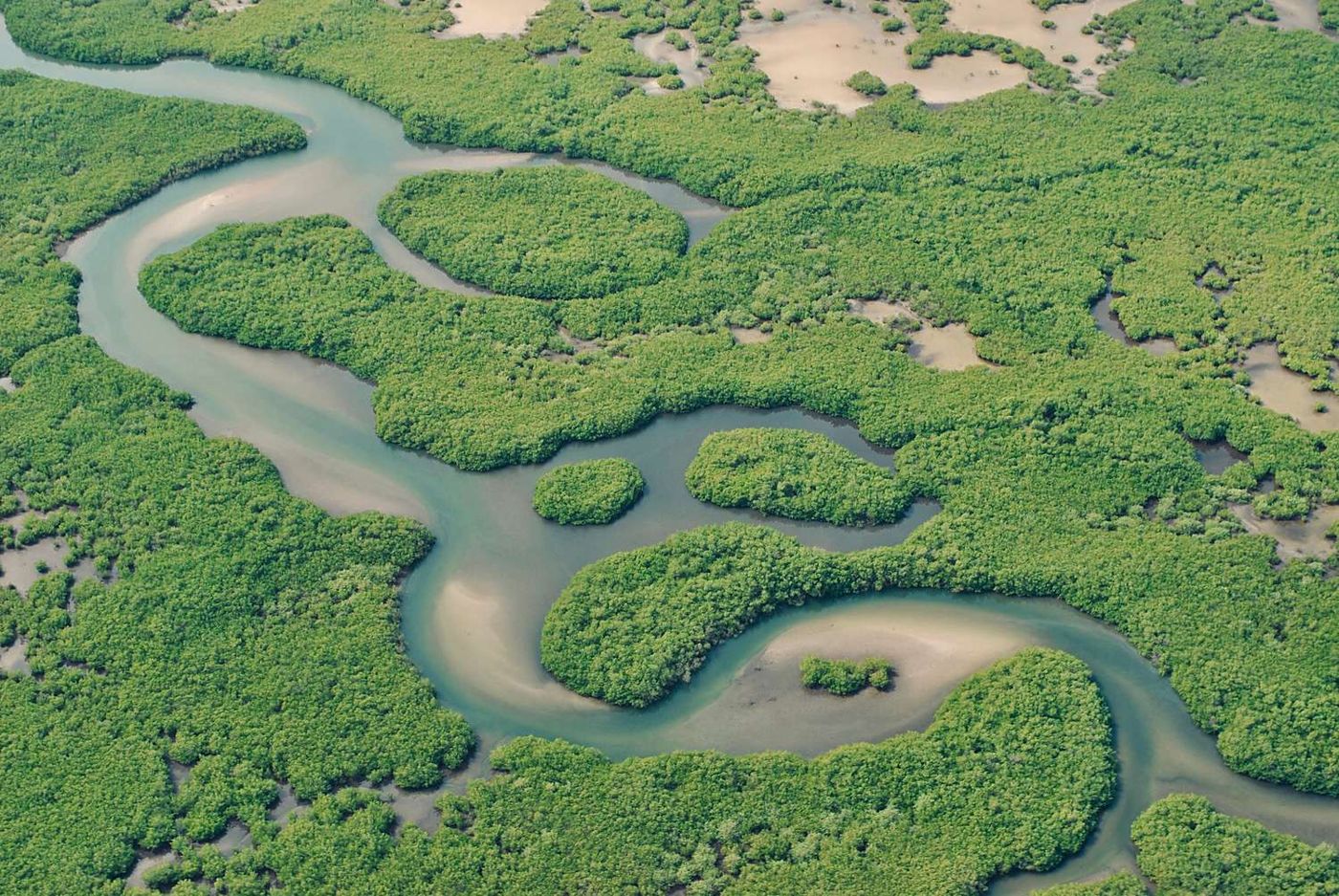
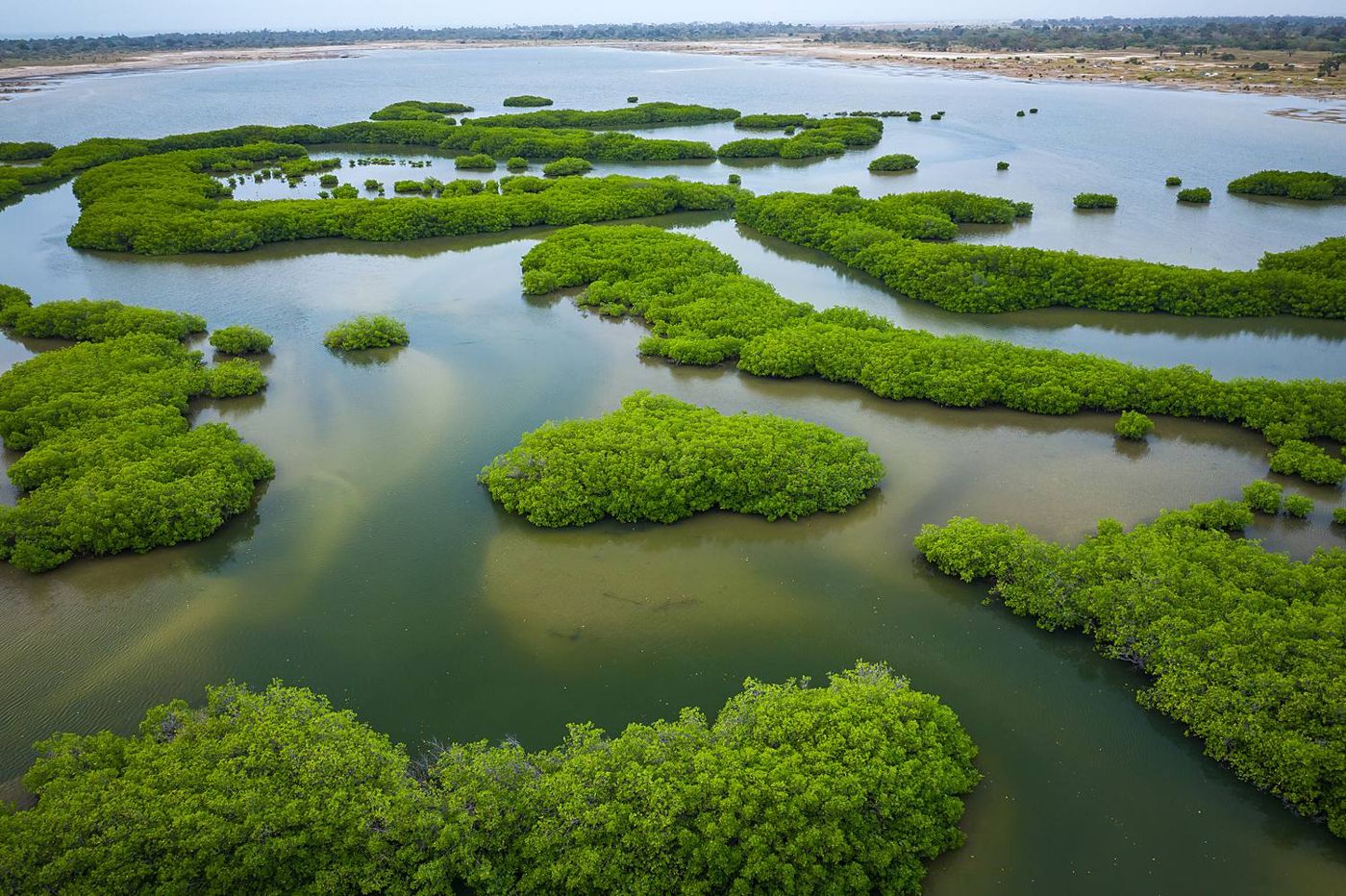
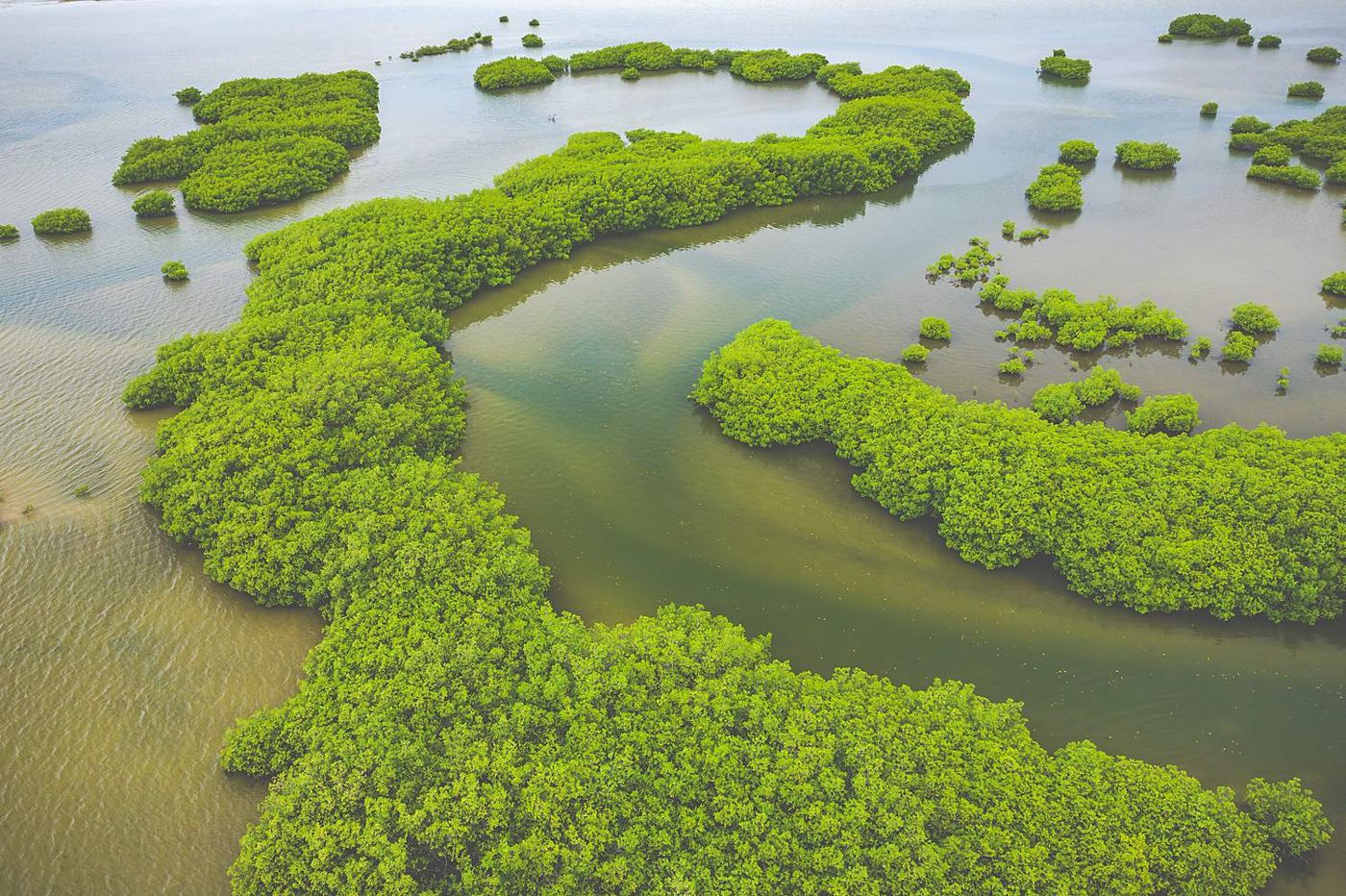
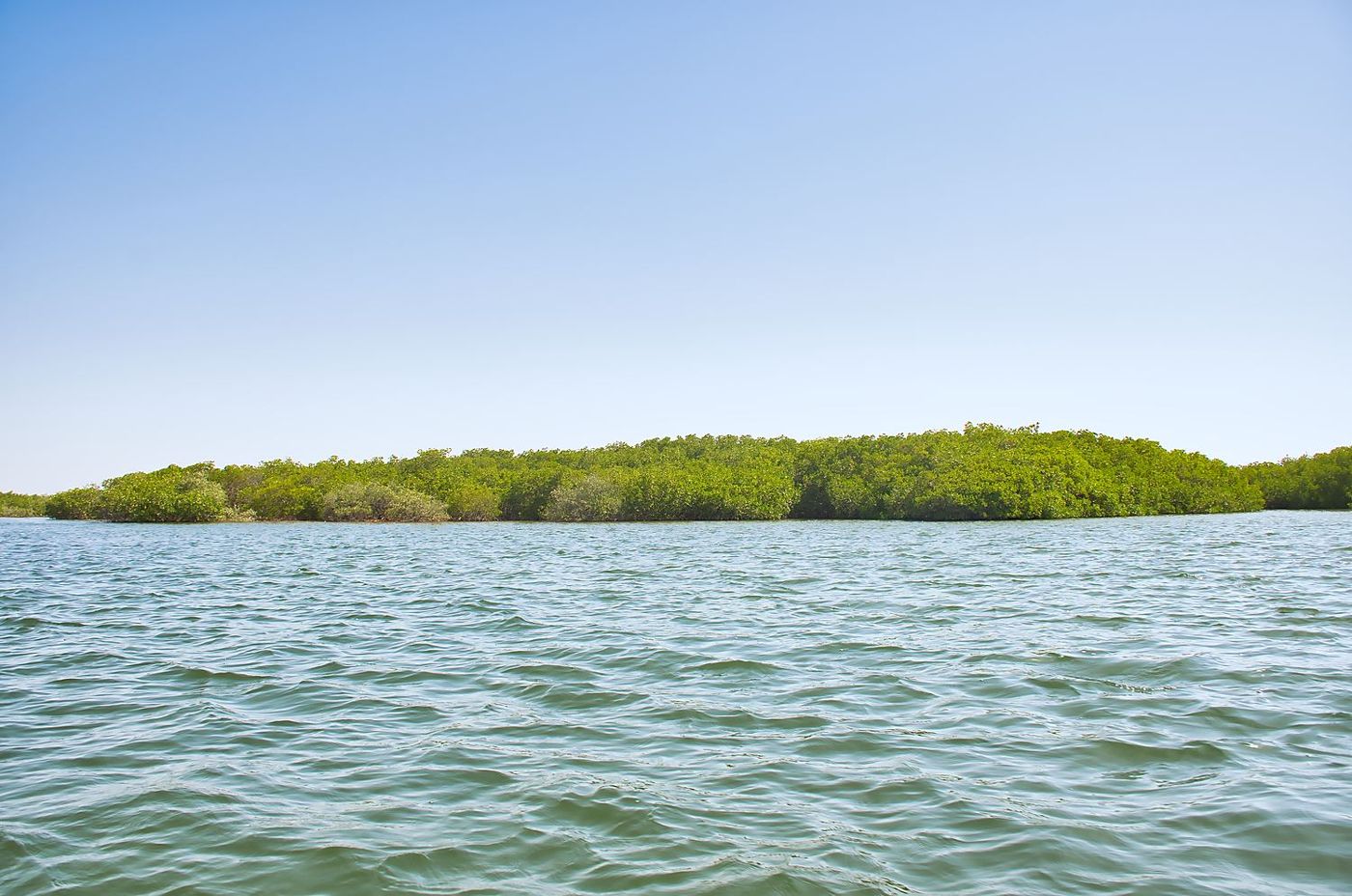
You do not simply visit the village of Simal: you earn it, along the track. You leave the tarmac in the Fimela area, cross the tann, the salt flats that turn white in the sun, and arrive at a Serer village whose first houses almost touch the water of a bolong (tidal creek). Here, there is nothing to tick off, no ticket office, no monument: a mangrove-lined bank, pelicans, pirogues and a day that follows the tide. If you are looking for the Saloum Delta without the show, this is a very good way in. On one condition: come as a guest, not as a visitor in a hurry.
At a glance
| Region | Fatick Region, Fatick department, Fimela commune; north of the Saloum Delta |
| Type | Serer village on the bank of a bolong, between tann, palm trees, kapok trees and mangroves |
| Getting there from Dakar | About three hours by road, often a little more, via Mbour then Fimela; the last few kilometres on a track |
| Recommended time | Half a day for a pirogue trip and the village; a night in the area for dawn and dusk |
| Official fees | No entry fee for the village and the bolong: no additional official fees |
| Best time to go | The dry season, November–April; wintering birds mainly at the height of the dry season |
| Related QFS activities | Pirogue trips, birdwatching, kayaking, traditional sites & villages, horse rides |
Resident or visitor: two good reasons to take the track
Live in Senegal? Simal is the Saloum for an impromptu weekend, without having to take a boat to an island. Leave on Saturday morning, have lunch in Fimela, be on the bolong by late afternoon, and on Sunday at dawn the water is smooth and the birds are out. On activities booked through QFS, you get the resident rate: up to 30% off, which makes the trip easy to repeat in another season.
Just passing through? Do not turn Simal into a twenty-minute stop on a “Saloum” tour that left Saly at dawn. Combine it with Ndangane and Mar Lodj, spend at least one night in the area, and save Simal for the moment when the light fades over the mangroves.
A Serer village that lives off the water and the land
The tann, then the bolong
The first thing you notice is the transition. Around Fimela, the groundnut-growing bush of the Sine gives way to the tann, a bare, salty land where you sense the sea before you see it. The track to Simal crosses it, then the vegetation suddenly returns: palm trees, kapok trees, baobabs and, at the water’s edge, the mangroves. The village then seems to be built on the water, so close are its first houses to the bank.
The bolong along Simal is one of the countless saltwater channels that cut through the delta. You glide by pirogue between the mangrove trees, whose roots plunge into the mud and hold the oysters. It is the tides, more than the clock, that set the times of the outings.
Fishing, fields and traditions
Simal is a village of fishermen and farmers. The bolong provides fish and shrimps, the land provides crops, and you are as likely to pass a pirogue coming back from fishing as a loaded cart. The houses and huts are built from local materials. As in much of Serer country, the old religious traditions are still alive, and they are written into the landscape: a wood, a tree or a water point can hold sacred value for the residents.
These places are not tourist curiosities. If people mention them to you on site, listen, approach only with the residents’ agreement, and never photograph a ritual.
Simal belongs to the Saloum Delta, inscribed by UNESCO as a World Heritage Site in 2011 as a cultural property: a lived-in landscape, which this village illustrates better than any long speech. The details are on our Sine-Saloum Delta page.