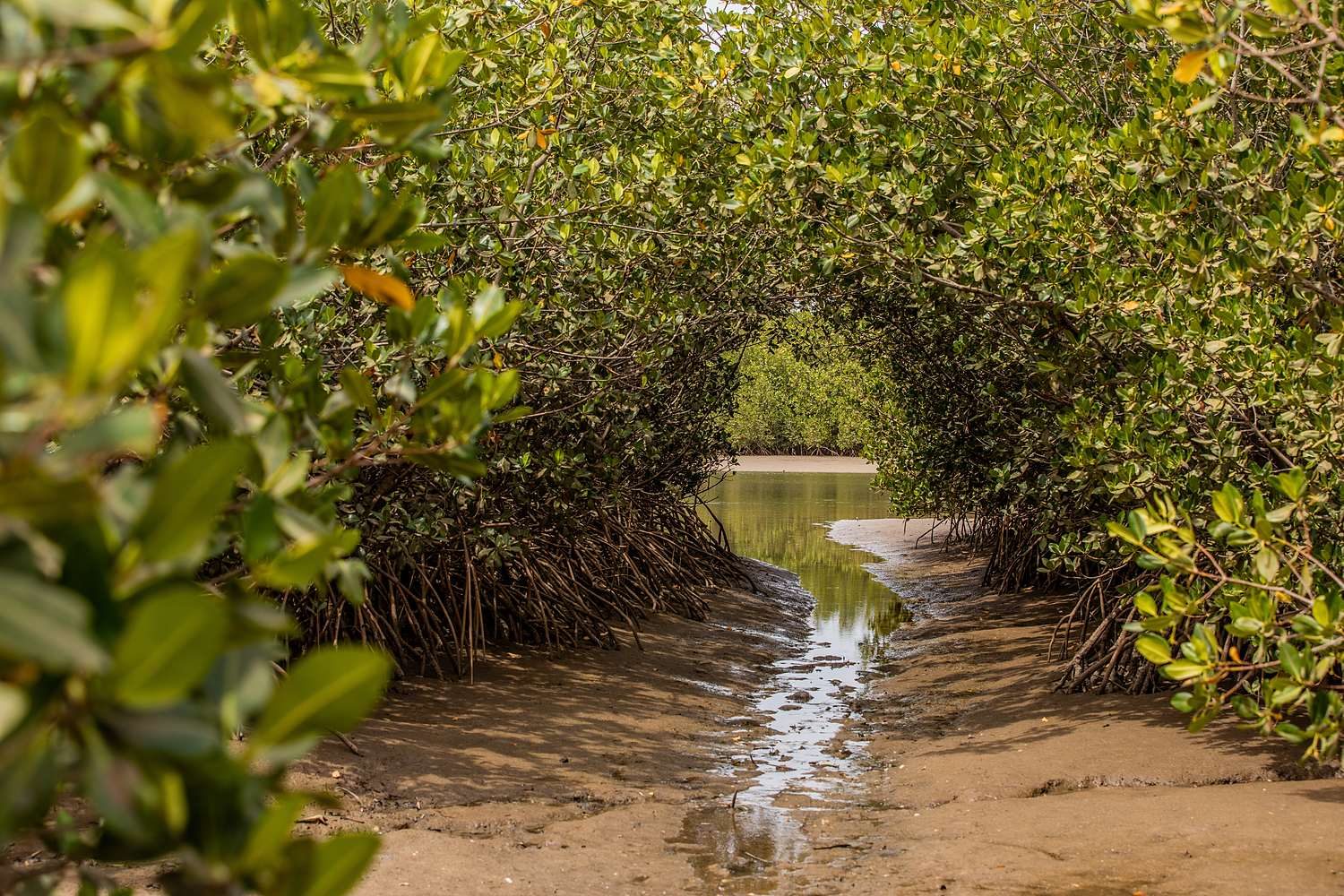
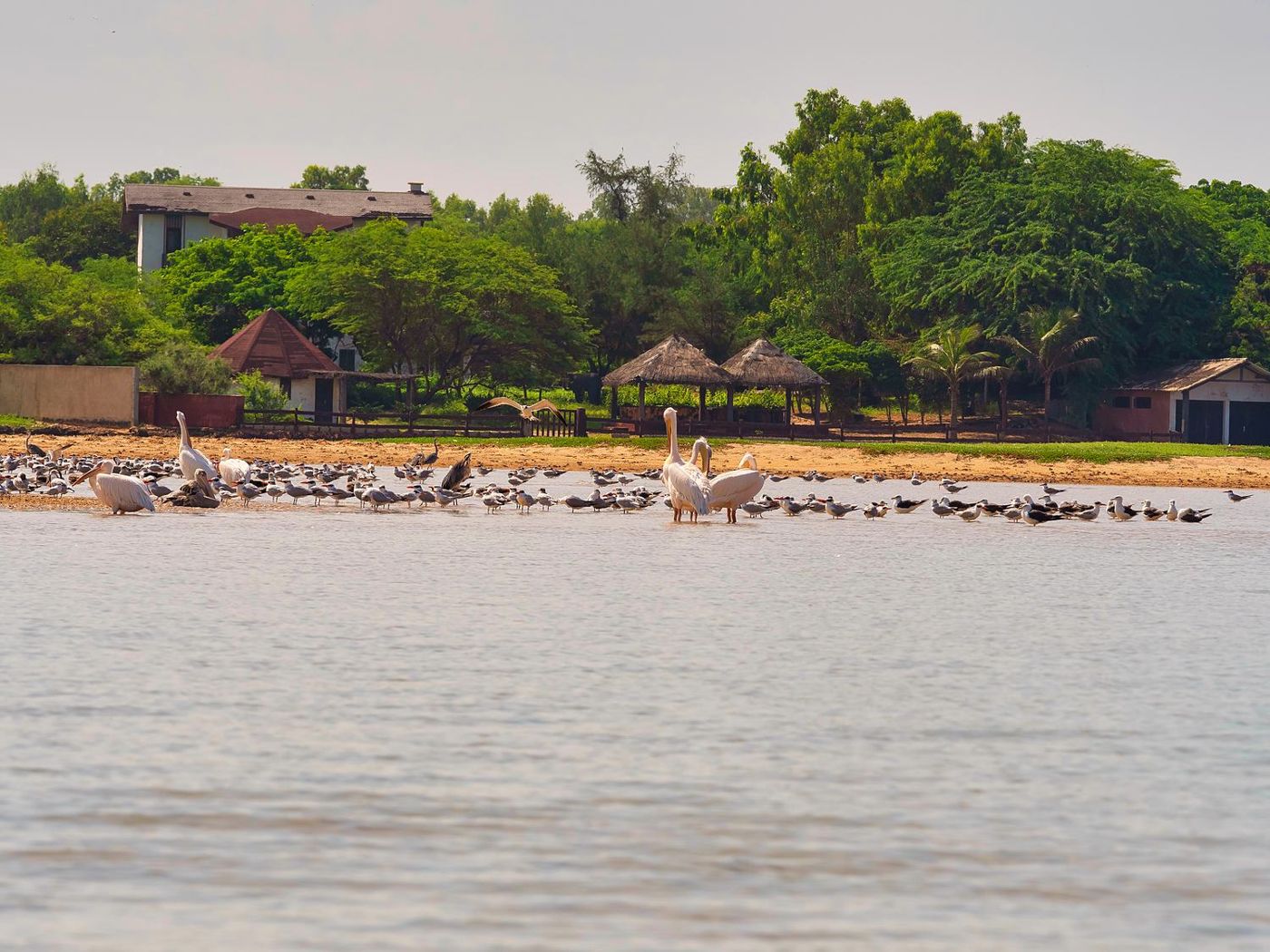
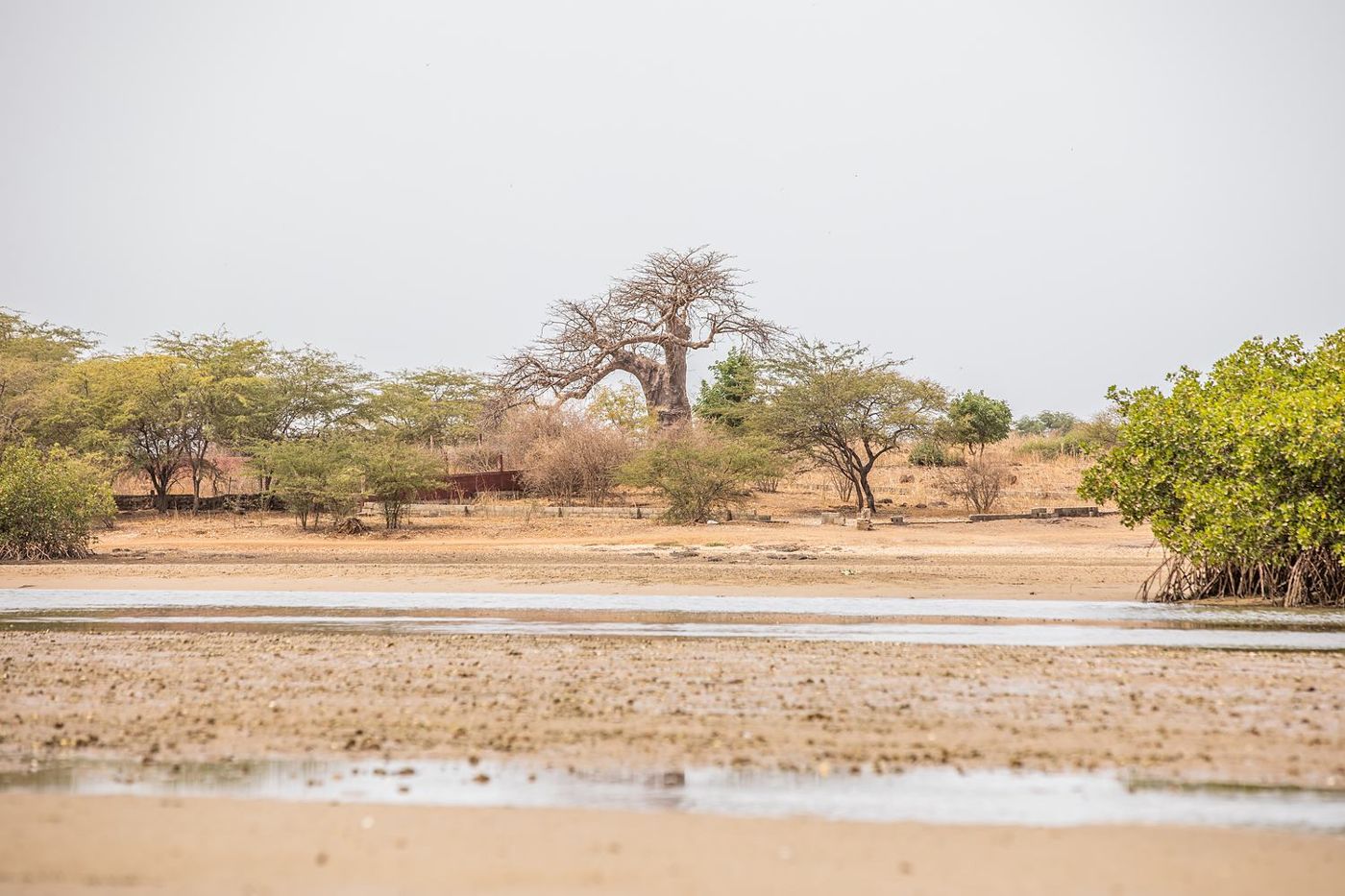
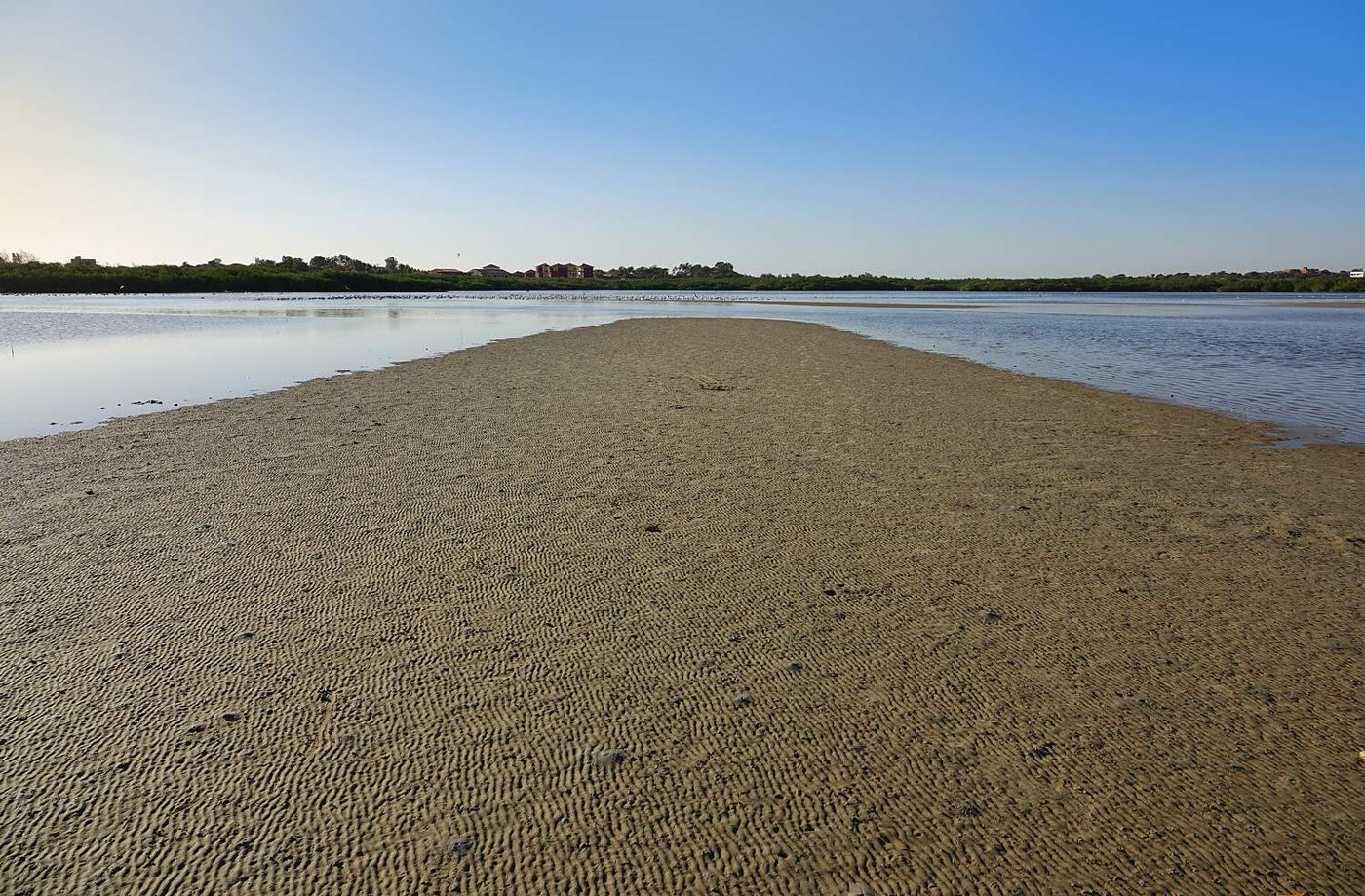
The Somone lagoon is not a natural backdrop you simply pass through: it is a mangrove forest that local people decided to rebuild, by hand, at the end of the 1990s. Keep that in mind as you step into the pirogue, and the trip takes on a different meaning. You are no longer just gliding between roots and pelicans: you are travelling through a reserve run by the villages along its shores, where every channel has been watched over, replanted and defended. The smart move here is to slow down: come at the right tide, at the right time of day, and let the lagoon set the programme.
At a glance
| Region | Thiès Region, Mbour department; the reserve extends over the communes of Somone and Sindia (villages of Guéréo, Thiafoura and Sorokhassap) |
| Type | Mangrove lagoon at the mouth of the Somone: community nature reserve, Ramsar Site and marine protected area |
| Getting there from Dakar | About 75 to 80 km on the toll motorway, 1¼ to 2 hours depending on traffic; roughly 30 to 45 minutes from Blaise Diagne International Airport (AIBD) |
| Recommended time | One to two hours on the water, an hour for the trail; half a day for the whole visit, a full day with the beach |
| Official fees | Depending on the activity, a reserve charge is payable on site and not included in the price; each activity listing states whether it applies or is included |
| Best time to go | November–March for migratory birds; the whole dry season, October–June, for comfort |
| Related QFS activities | Pirogue trips, kayak, paddle and canoe, birdwatching, motorboat trips through the mangroves, beach days |
Resident or visitor: two ways to catch the tide
Live in Senegal? The lagoon is the easiest nature outing to fit in from Dakar: you leave early on a Saturday, you are on the water before the heat builds, and you are home the same evening. Its real appeal, for you, is that it is never the same twice. In January, the mudflats are covered with waders from Europe; in May, the lagoon is quieter and the light harsher; after the rainy season (hivernage), the mangrove is an almost aggressive green. One outing per season, and you will know the lagoon better than many a passing guide. On QFS, you get the resident rate: up to 30% off depending on the activity.
Just passing through? The lagoon is probably the first real landscape you will see when you arrive at AIBD, which is very close by. The trap is to treat it as a box to tick between two transfers: an hour in a pirogue at midday, under a crushing sun, with the birds tucked away in the shade. Do the opposite. Choose dawn or late afternoon, ask about the tide, and if you have two days, do two different outings: one by pirogue with a guide who names the birds, one by kayak for the silence.
A reserve born of what women noticed
Before 1999: a mangrove on the way out
At the end of the 1990s, the Somone mangrove is in trouble. The mangrove trees are retreating and the ecosystem is deteriorating. It is women from the shoreline villages, those who make a living gathering oysters from the roots, who raise the alarm: no mangrove means no oysters, no fish, no birds. On their initiative, and at the request of local people, the local authority classifies the lagoon as a community nature reserve in 1999. Around 700 hectares of water, channels, mudflats, tann (salt flats) and mangrove come under protection.
The difference from a national park comes down to one word: community. The reserve is not guarded first and foremost by officials from elsewhere, but by a management committee that brings together the villages, the state’s technical services and partners. Internal rules, drawn up with the residents, set out what is allowed: fishing, oyster farming and ecotourism carry on, within limits; cutting the mangrove, hunting, capturing waterbirds and destructive fishing gear are banned.
Replanting, again and again
The mangrove you see today owes a great deal to repeated reforestation campaigns. A mangrove nursery is kept near the lagoon, and the young plants go into the ground during the rainy season, when fresh water and mud give them the best welcome. Several species of mangrove tree grow side by side. That is the reason for the golden rule: pick nothing, break nothing, and do not walk on the young plants at low tide.
2017, 2020: recognition, then reinforcement
On 1 September 2017, the reserve was added to the Ramsar List of Wetlands of International Importance. The story could have ended there. But a few years later, a plan to declassify part of the lagoon for a large hotel development sparked a strong mobilisation by local people. The plan went nowhere. Instead, the decree of 27 May 2020 created the Somone Marine Protected Area, which finally gave the 1999 reserve a solid legal status and extended protection to around 4,098 hectares, at sea and on land. The debate over land pressure around the lagoon remains lively, and local management continues to defend its boundaries.
Why does this concern you? Because the lagoon provides a living for the people along its shores. Your pirogue trip pays a boatman from the village, and the reserve charge, when it applies, funds surveillance and reforestation.