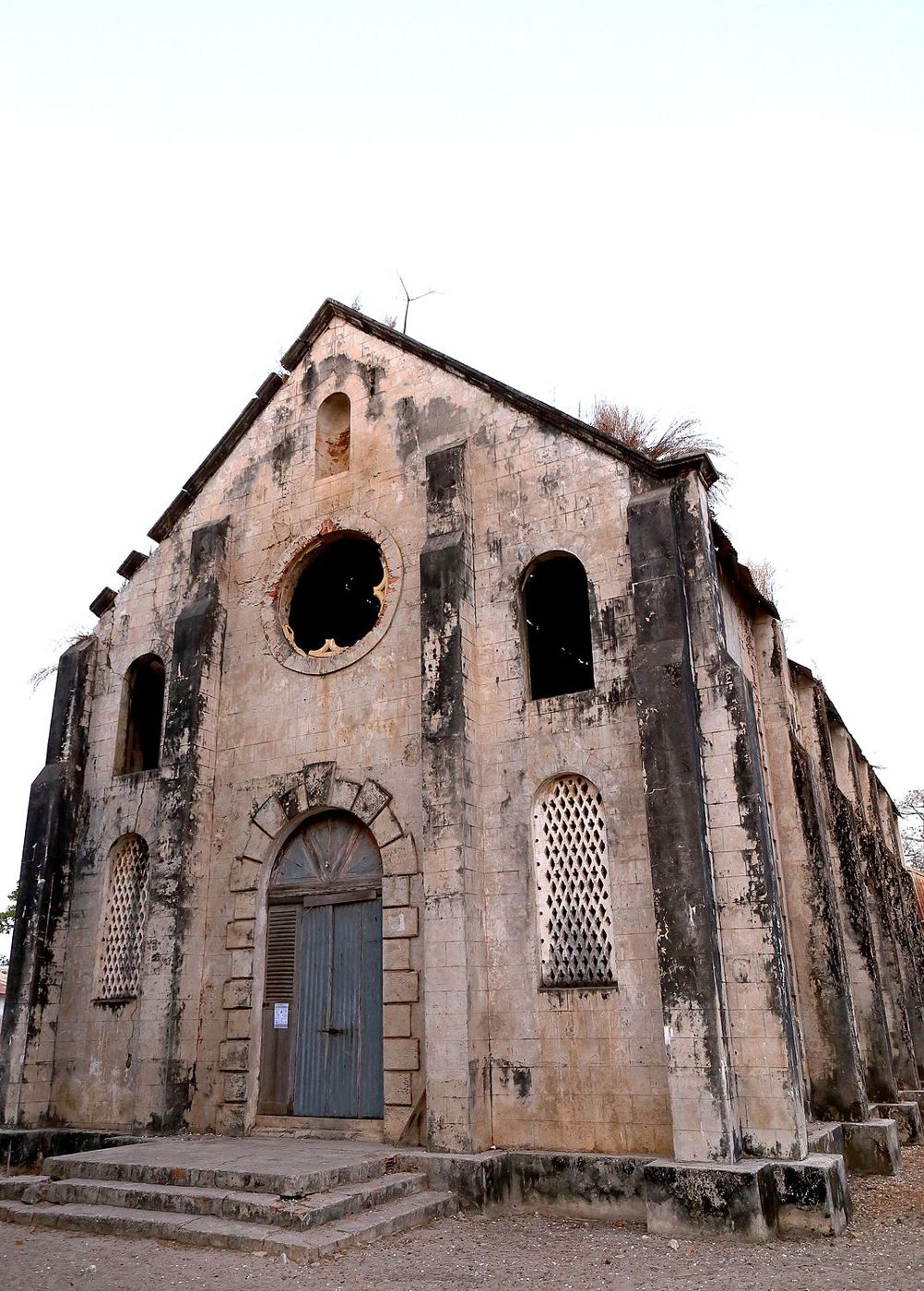
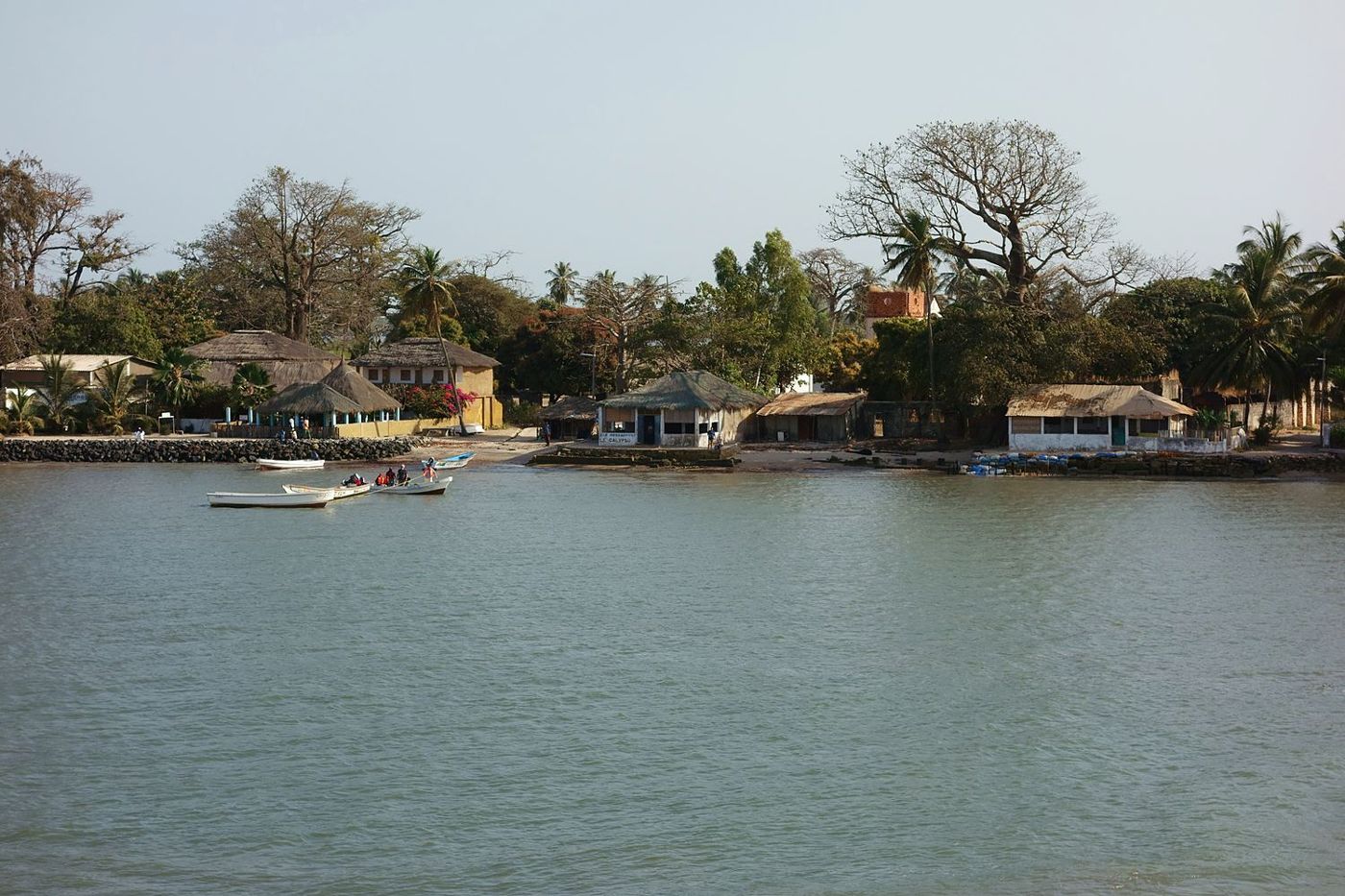
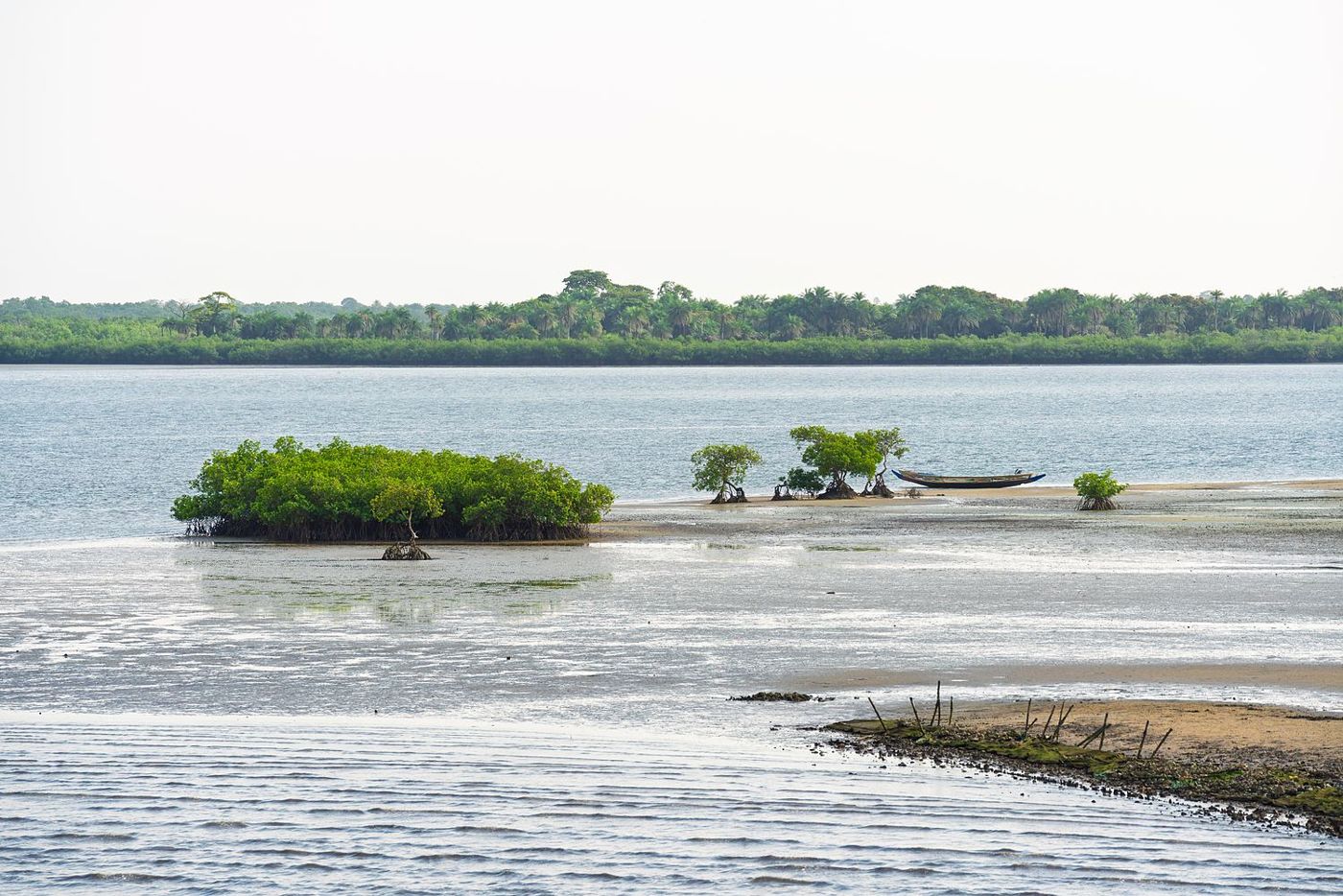
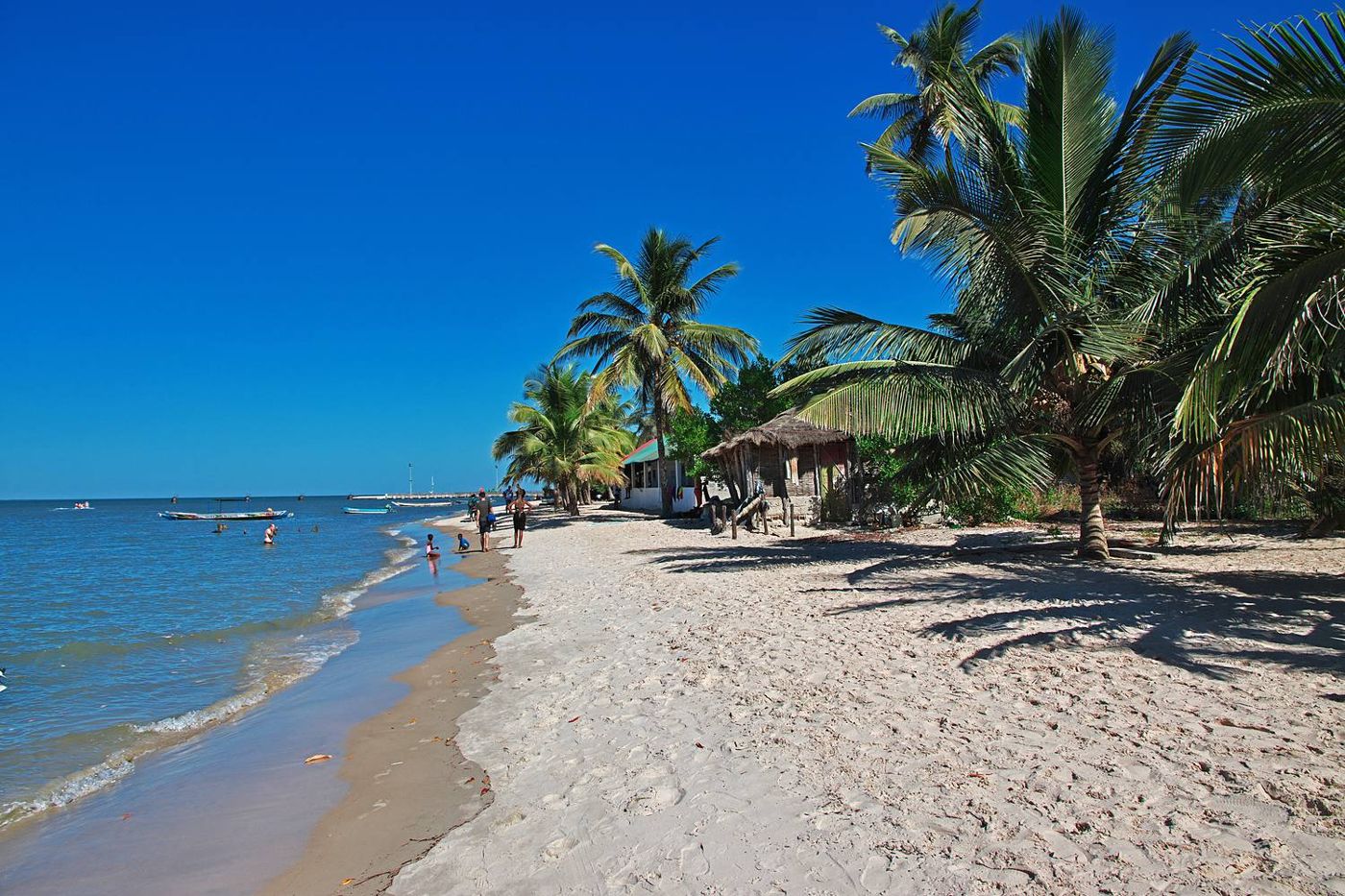
The mistake, on Carabane Island, is to take it for a beach island with a bit of history thrown in. It is the other way round: a former capital, the capital of all Casamance, that the sand, the coconut palms and the mangrove have reclaimed piece by piece. If you step ashore without knowing what to look for, you will see a pretty village. If you follow the thread, from the landing stage to the church, then to the cemetery and the walls of the old trading houses, you will read nearly seventy years of colonial history in a morning’s walk. This page gives you that thread.
At a glance
| Region | Casamance — Ziguinchor Region, Oussouye department, Diembéring commune |
| Type | Car-free inhabited island at the mouth of the Casamance River; former trading post and the region’s first colonial administrative capital |
| Getting there from Dakar | Flight to Ziguinchor or Cap Skirring, then the road to Elinkine and a pirogue; or the Dakar–Ziguinchor night boat, which calls at Carabane |
| Crossing from Elinkine | By motorised pirogue, about 15 to 30 minutes depending on the tide |
| Recommended time | A morning for the heritage; one or two nights for the island |
| Official fees | No additional official fees for the island; the Dakar–Ziguinchor boat ticket is paid separately |
| Best time to go | Dry season, November–May; ideally November–February |
| Status | On the UNESCO World Heritage Tentative List (2005), not on the World Heritage List |
| Related QFS activities | Pirogue trips, island excursions, guided cultural tours, birdwatching |
Resident or visitor: two ways to miss Carabane
Live in Senegal? The risk is never going because “it is far”. Do the maths differently: the night boat from Dakar calls at Carabane before heading up to Ziguinchor, which drops you straight on the island instead of putting you through a day on the road. For a long weekend or a bank holiday, it is one of the most transporting getaways in the country. On activities booked through QFS, you get the resident rate: up to 30% off.
Just passing through? The opposite risk: a lightning round trip from Cap Skirring, an hour on the island, a photo of the church and back again. You will have seen the façade, not the island. Allow a full morning at the very least, ideally a night, to walk without hurrying and watch the light fall over the estuary. And remember that Carabane is a lived-in village, not a museum: say hello before you take photos.
A capital given back to the sand
It all begins in 1836. That year, the chief of the village of Kagnout, on the neighbouring bank, cedes the island to France. Carabane becomes the first French trading post in Casamance: a foothold at the river mouth, where the river meets the ocean, from which the passage of pirogues and the trade of the hinterland could be controlled. Trading houses set up here, with their warehouses and quays. Several sources also mention a role as a slave-trading point, in the final years when the trade was still being carried on; on the island, some buildings will be presented to you as linked to that past, though their function is not always established.
The island then becomes the first administrative capital of Casamance. A Catholic mission settles here at the end of the 19th century, with missionaries from France who build the church and launch the evangelisation of the whole region from Carabane. The trading post is at its height.
Then the centre of gravity shifts. Ziguinchor, further upstream, takes over, and the administration moves there at the very start of the 20th century. Carabane loses its title, its merchants and a large share of its inhabitants. The warehouses empty, the walls remain. That is what you come to see: not a town frozen in time, but a capital that withdrew, leaving its traces in a fishing village.
The captain buried standing up. The island’s most famous story is told at the cemetery. A French officer, Captain Protet, is said to have died here from a poisoned arrow during a clash with fighters from the region, and to have asked to be buried standing up, facing the sea. It is an oral tradition, passed on through many accounts and repeated on every tour, but there is no way of verifying it. Even his identity is debated: some sources, including the UNESCO entry, confuse him with the naval officer associated with the founding of Dakar; others identify him as a marine infantry captain of the same name, called Aristide. Listen to the story for what it is: a legend that has become the island’s emblem.