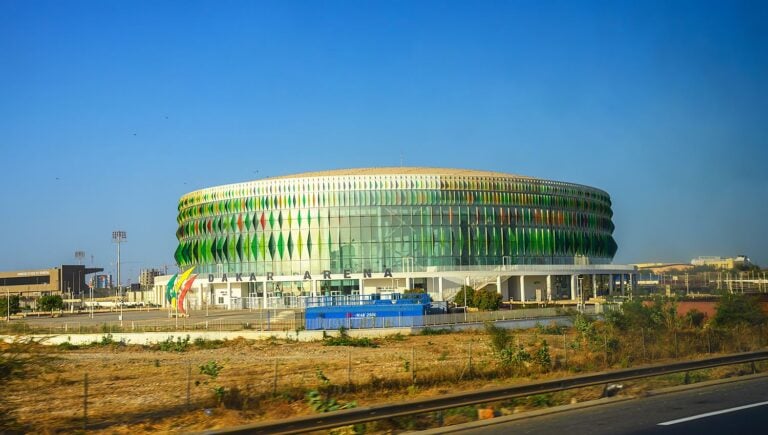
Dakar 2026 Youth Olympic Games: your guide to Africa’s first Olympic Games, from the stands
From 31 October to 13 November 2026, Dakar, Diamniadio and Saly will host the Youth Olympic Games, the first Olympic event in…
Read the article ›
Home › Locations › Fatick Region › Fathala › Sine-Saloum Delta: a delta listed for its shells as much as for its mangroves
FATHALA
Listed as a World Heritage Site for its shell middens far more than for its nature, the Sine-Saloum Delta is a lived-in landscape. Here is what it protects, where to enter it and how to explore it by pirogue.
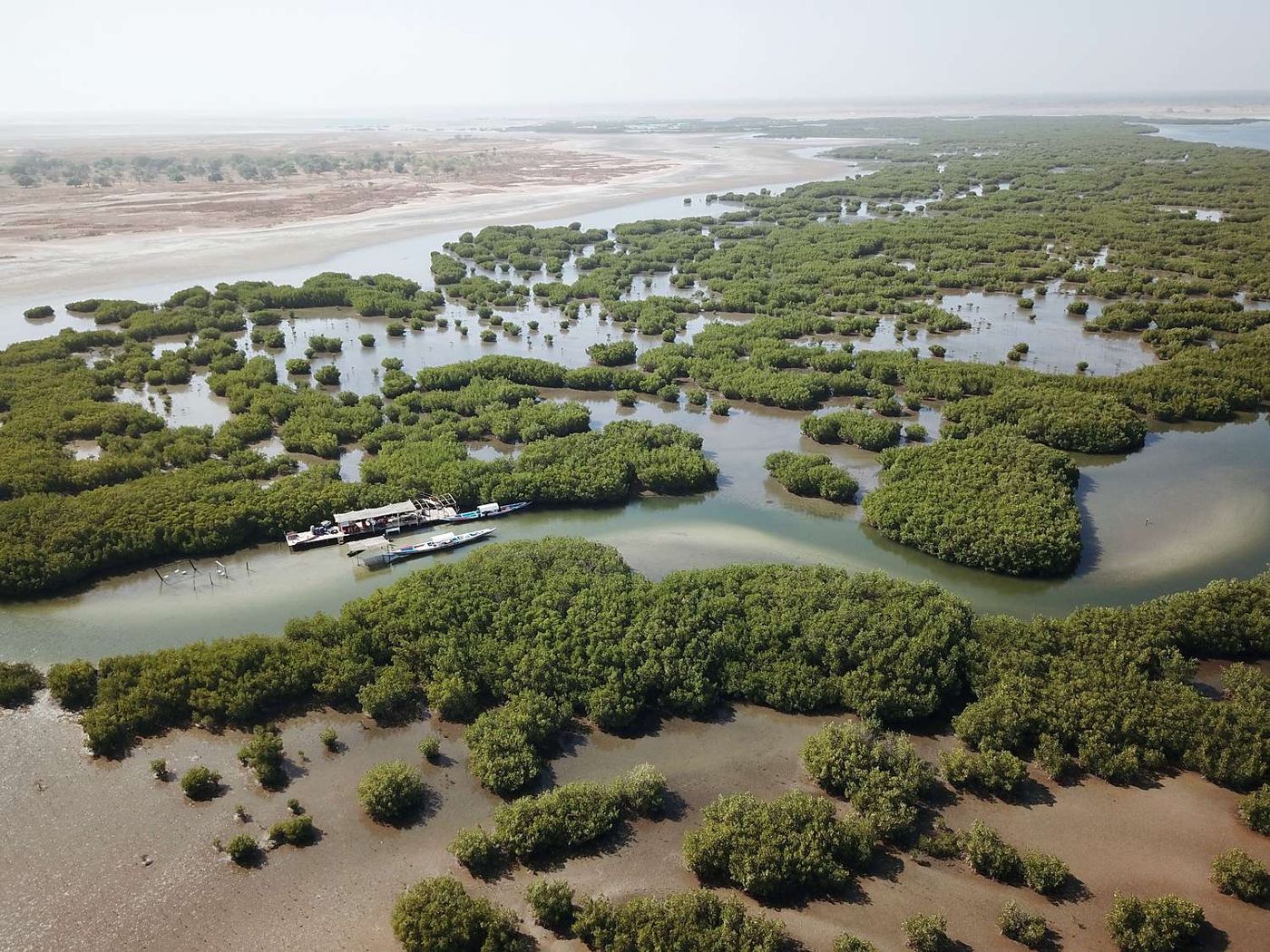
The Sine-Saloum Delta does not wait for you at a ticket office: it has no main entrance, no road running through it and no viewpoint from which to take it all in. It is a maze of saltwater channels, mangroves and islands, and the surest way to miss it is to treat it as a park you “do” in a day. What makes it unique is not what you might think, either: if UNESCO added it to the World Heritage List, it was first and foremost for the hills of shells its inhabitants have been piling up for centuries. You are visiting a lived-in delta, not untouched wilderness. This page gives you the key to reading it; the pages on the islands and villages then give you the ways in.
| Region | Fatick Region, mainly Fatick department (north of the delta) and Foundiougne department (centre, islands and south) |
| Type | Maritime delta of bolongs (tidal creeks), mangroves and more than 200 islands and islets; national park, Ramsar Site, biosphere reserve and World Heritage Site |
| Getting there from Dakar | About three hours to Ndangane or Palmarin, a little more to Foundiougne; four hours, and often longer, to Toubacouta |
| Recommended time | Two nights minimum per gateway; four to five days to combine the north and the south |
| Official fees | Depending on the route, the Saloum Delta National Park entry fee, payable on site and not included in the price; each listing says whether it applies |
| Best time to go | Dry season, November to May; migratory birds mainly December to April |
| Related QFS activities | Pirogue trips, island excursions, birdwatching, fishing, traditional villages, safari at Fathala |


Live in Senegal? The delta is your great breath of fresh air within driving distance, and one visit never exhausts it. Take it in weekend-sized slices: the north via the Petite Côte, with Ndangane and a night on Mar Lodj; the ocean side, with Palmarin and Djifère; the south via Kaolack, with Toubacouta, the mangroves at dawn and Fathala the next day. Leave early on Saturday to beat the traffic out of Dakar, and check the tide times before you plan your outing. On activities booked through QFS, you get the resident rate: up to 30% off, which makes these round trips easy to repeat every season, including in spring for the nesting birds.
Just passing through? Avoid the classic trap of the one-day “Saloum islands” excursion from Saly: you will spend more time on tarmac than on the water. The delta is best experienced early in the morning and late in the evening, when the light is low and the birds are active, so you need to sleep there. One gateway, two nights, one long pirogue trip, a village, a shell midden: that is the right formula for a first stay. And accept that the luxury here is silence.
People often think the Sine-Saloum is protected for its mangroves. That is true, but it is only half the story. The delta holds four layers of protection, and they do not all say the same thing.
The first is national: the Saloum Delta National Park, created in 1976, covers several tens of thousands of hectares, mostly water, mangroves, sandy islets and, in the south, the Fathala forest. In 1981, UNESCO recognised the delta as a biosphere reserve, an area much larger than the park, where the aim is to reconcile conservation with the life of local communities. In 1984, it was designated a Ramsar Site, a wetland of international importance, for its breeding waterbirds and the migrants that arrive from Europe.
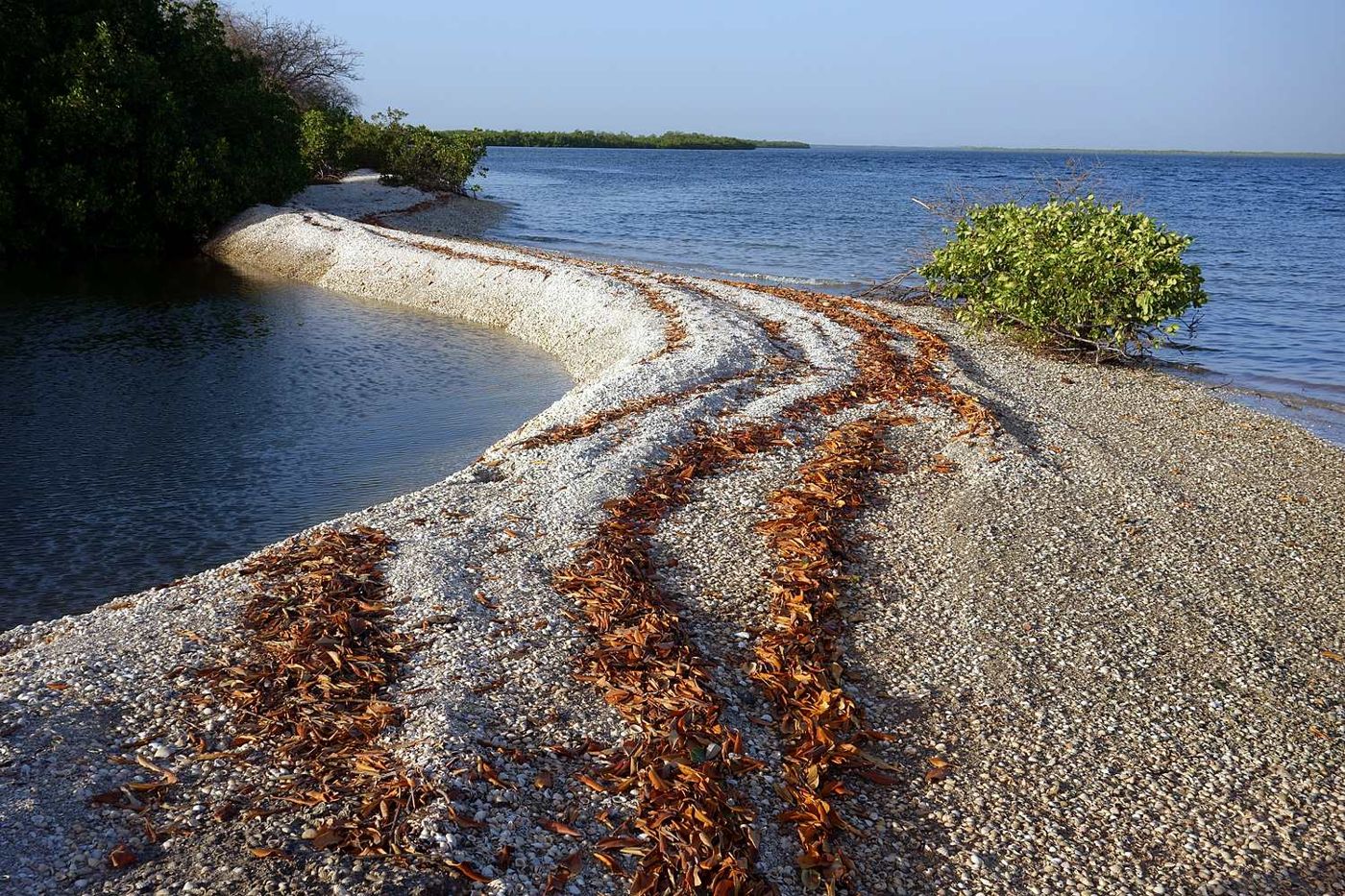
Then came 2011, and the surprise: when the delta was added to the World Heritage List, it was as a cultural property, not a natural one. UNESCO recognised the way the inhabitants have lived for centuries from fishing and gathering shellfish in brackish waters, without exhausting their environment. The most spectacular trace of this way of life is the shell middens: over the generations, the shells of ark clams, oysters and cockles discarded after each harvest have built up into real hills. The delta has more than two hundred of them, some several hundred metres long, and several dozen burial mounds, where the dead were laid to rest with their belongings. Some middens eventually became islands, on which baobabs have grown.
Keep this in mind from the pirogue: the tree-covered white mound you are gliding past is not a dune, it is an archive. And the fisherman hauling in his nets, or the woman prising oysters off the mangrove roots, is carrying on exactly what UNESCO set out to protect.
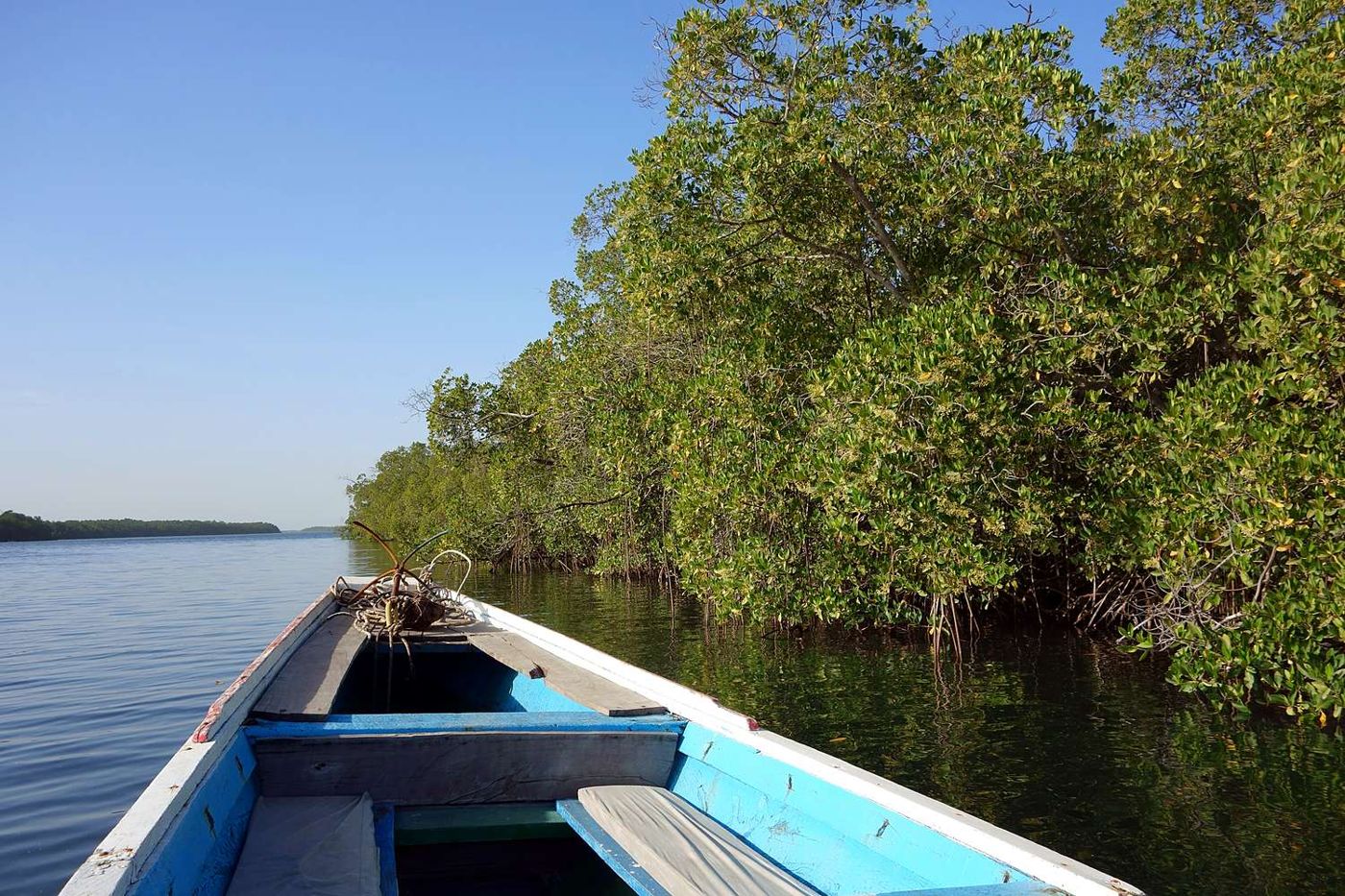
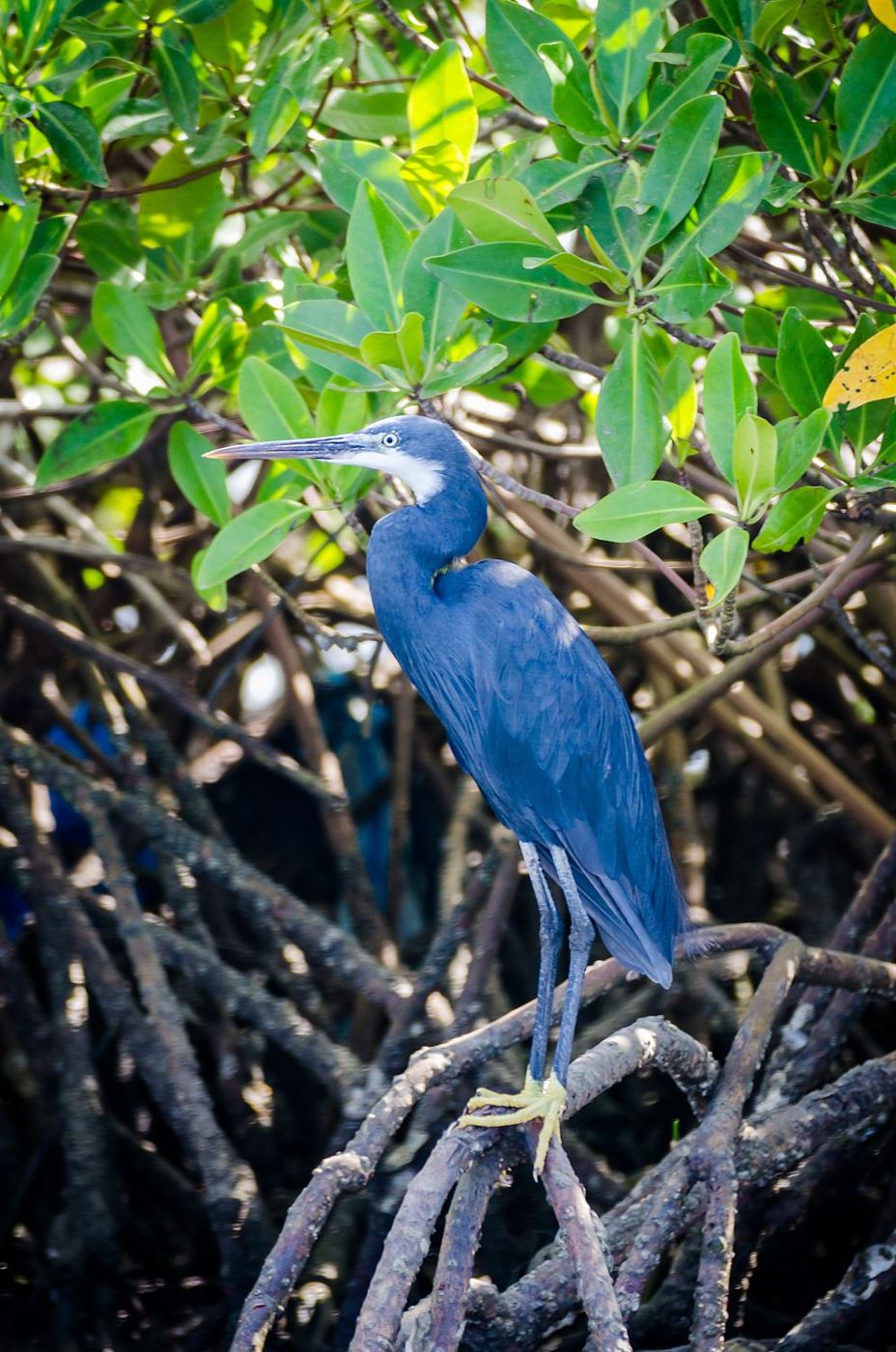
The delta is born where three great arms, the Saloum in the north and the Diombos and Bandiala in the south, meet the Atlantic. Between them, the water has carved out hundreds of channels, the bolongs, their banks held in place by mangrove trees. At high tide, the pirogue slips far into them; at low tide, some close up, but the exposed mudflats fill with birds and the oysters appear, clinging to the roots.
These mangroves are a larder as much as a backdrop: they hold the mud in place, shelter young fish and feed the villages. They also have their weak points. On the ocean side, the Sangomar sand spit was breached by the sea in 1987, and ever since the shoreline has been shifting visibly around Djifère and the exposed islands. This is a living delta, one that changes from one season to the next.
Réservez votre sortie avec nos prestataires locaux. Le prix du service est distinct des éventuels coûts officiels réglés sur place.
3-day bivouac in the Sine-Saloum Delta with lion walk
Fathala · 3 days
Couples getaway in the Sine-Saloum Delta
Dakar · 2 days
| Fact | Figure | Note |
|---|---|---|
| Saloum Delta National Park | Created in 1976 | Several tens of thousands of hectares: water, mangroves, islets and the Fathala forest |
| Biosphere reserve (UNESCO) | 1981 | An area much larger than the park |
| Ramsar Site | 1984 | Wetland of international importance |
| UNESCO World Heritage Site | 2011, cultural property | Shell middens, burial mounds, a way of life based on fishing and shellfish gathering |
| Islands and islets | More than 200 | Including many inhabited islands, with no cars |
| Shell middens | More than two hundred | Some several hundred metres long |
| Main arms | Saloum, Diombos, Bandiala | Linked by a maze of bolongs |
| Foundiougne bridge | In service since 2022 | Toll bridge that replaced the ferry across the Saloum |
Two routes from Dakar. Via the Petite Côte, you head down towards Mbour and Joal, then turn off towards Fimela, Ndangane and Palmarin: this is the northern and western gateway, about three hours away depending on traffic. Via the interior, you head for Fatick and then Foundiougne, or for Kaolack, Sokone and Toubacouta in the south: allow four hours, and often more, to Toubacouta. Since 2022, the Foundiougne toll bridge has replaced the ferry and lets you reach Sokone and Toubacouta without going back through Kaolack. Getting from the north of the delta to the south by land still takes a good half-day.
The gateway villages. Once there, the car takes you to a landing stage; the rest is done by pirogue.
Official fees. There is no single ticket office for the delta. Depending on the route, the Saloum Delta National Park entry fee applies: it is payable on site, not included in the price of the activity and not eligible for the resident discount, and each listing tells you whether it concerns you. Some inhabited islands, such as Mar Lodj, charge no official fees at all. Bring cash: everything on site is paid in cash.
Excursions, visites guidées et combinés : nos prestataires locaux organisent tout.
Sine-Saloum Region Discovery Day with Meal
Sine-Saloum · 8h
Tour of the Saloum Islands from Palmarin
Sine-Saloum · 4h
3-day bivouac in the Sine-Saloum Delta with lion walk
Fathala · 3 days
To plan your stay in practical terms, our Sine-Saloum page helps you choose your gateway, and our Saloum page tells the story of the river, Foundiougne and the former kingdom. In the north, see Ndangane, Mar Lodj, Fimela and the village of Simal; on the ocean side, Palmarin. In the south, Toubacouta, the village of Missirah and its giant kapok tree, then Fathala Reserve for a safari (our Fathala page). Just north of the delta, in Thiès Region, the shell island of Joal-Fadiouth carries the story of the shell middens on perfectly. For the bigger picture, our Fatick Region page.
| Period | What happens | Our view |
|---|---|---|
| November–February | Cool dry season, plenty of European migrants on the mudflats | The best time for the whole delta |
| March–May | Hotter and dry, birds still around, the terns nest | Very good, as long as you head out early |
| June–October | Humid heat, then the rains of the hivernage (the rainy season), mosquitoes, very green mangroves | For lovers of peace and quiet, with a good repellent |
During the day, let the tide and the light decide. In the morning, the water is smooth and the birds are feeding; the middle of the day is spent in the shade; in the evening, the pirogue with its engine cut at sunset, as the mangroves turn black and the flights of pelicans and egrets head home to roost, remains the delta’s most powerful moment. The spot to remember: a west-facing bolong, or a bird roost near Toubacouta an hour before nightfall.
Activities in the delta are run by independent local professionals. The basic outing is in pirogue trips; island-hopping days, to Mar Lodj, Sipo or the Gandoul, are in island excursions. Bird lovers should look at birdwatching, anglers at sport fishing, and those curious about village life at traditional sites & villages. For Fathala, see safari. To reach an island or your accommodation, look at taxi-boat / sea transfers; from Dakar or the Petite Côte, intercity transfers and vehicle hire with driver.
The price shown is the price of the service. You pay 20% to secure your booking (the booking fee), and the balance is paid on site, on the day, to the professional. Official charges, such as entry to the Saloum Delta National Park where it applies, are payable on site and not included in the price. If you live in Senegal, you get the resident rate: up to 30% off (the exact rate is shown on each listing).

From 31 October to 13 November 2026, Dakar, Diamniadio and Saly will host the Youth Olympic Games, the first Olympic event in…
Read the article ›October closes the rainy season and opens the finest season of the year. Workshops for children, sport, wellness, classes and getaways: everything…
Read the article ›In Senegal, the day runs to the rhythm of five prayers whose times follow the sun, and so shift a little every…
Read the article ›Good deals, news and highlights from Senegal, straight to your WhatsApp.