Fathala
Home›Locations›Fatick Region›Fathala
What to do in Fathala?
If Bandia is the safari you squeeze in between two beaches, Fathala is the one you make the journey for.
Category
Duration
Where it happens
Who for
Guide language
6 activities
- Pirogue trips
Two-day Sine-Saloum stay with a Fathala safari
Dakar · 2 days
From90 200 CFAResident price85 690 CFA−5 % - Intercity transfers
Transfer from Toubacouta to the Fathala Reserve
Toubacouta · 1 h 30
From3 300 CFAResident price3 135 CFA−5 % - Adventure & outdoors
3-day bivouac in the Sine-Saloum Delta with lion walk
Fathala · 3 days
From715 000 CFAResident price679 250 CFA−5 %
At a glance
| Region | Fatick Region, Foundiougne department (Sine-Saloum) |
| Type of place | Wildlife reserve in forest, within the Saloum Delta National Park, with the villages of Missirah and Karang nearby |
| Getting there from Dakar | Half a day on the road, around 4 to 5 hours depending on traffic, via Kaolack, Sokone and Toubacouta |
| Getting there from the Gambia | Very close to the Karang border post: the reserve is a classic outing from the Gambian coast |
| Recommended time | One night minimum; two nights to add a pirogue trip in the bolongs and Missirah |
| Official fees | Reserve entrance fee: where it applies, it is stated on the activity listing, and is payable on site and not included in the price |
| Best time to go | Dry season, from November to May; safari at dawn or in the late afternoon |
| Top activities on QFS | Vehicle safari, walking with lions, combined trips with the delta |
Resident or visitor: two ways to come to Fathala
If you live in Senegal, Fathala is the answer to “we have already done Bandia, so what next?”. The drive is long, so make it a Friday departure: a night in Toubacouta or near the reserve, a safari on Saturday at dawn while the animals are still on the move, a pirogue trip in the afternoon, and home on Sunday. Children discover a forest where you have to search and wait. And the resident rate, up to 30% off on the activities that offer it, makes the getaway a good deal easier on the wallet.
If you are visiting, do not squeeze Fathala into an already full day out of Saly: you would spend more time on the road than in the bush. Make it part of your Saloum stop, or come from the Gambia if you are staying there, since the border is a stone’s throw away. Be clear, too, about what you are coming to see: the giraffes, rhinos and zebras have been reintroduced and live in a fenced, managed area. The forest, however, is the real thing.
A forest, some giants and a rare antelope
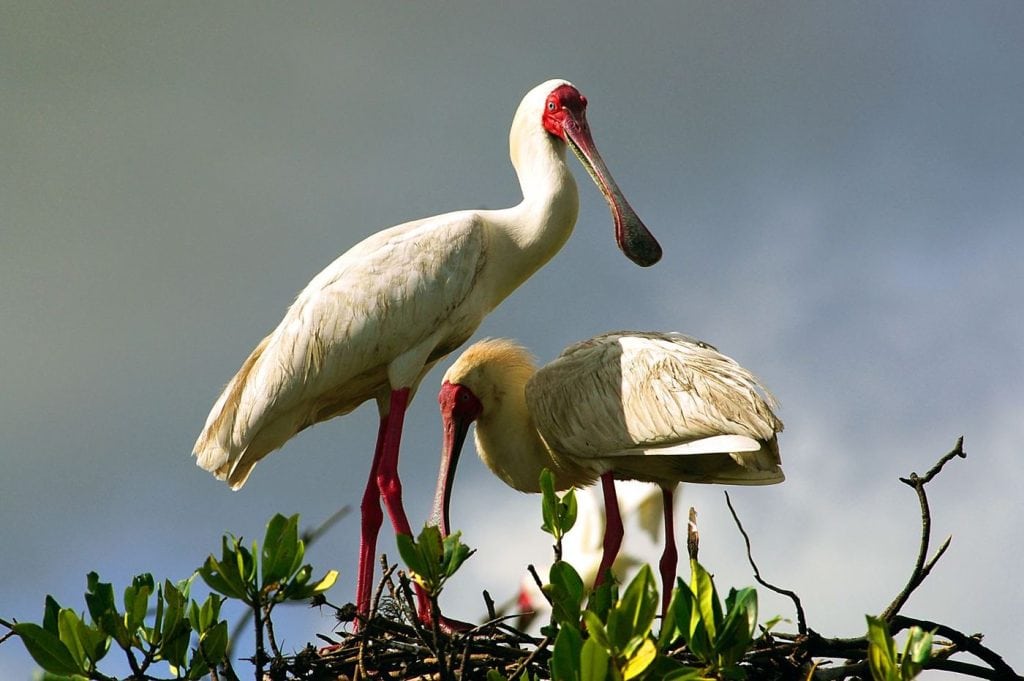
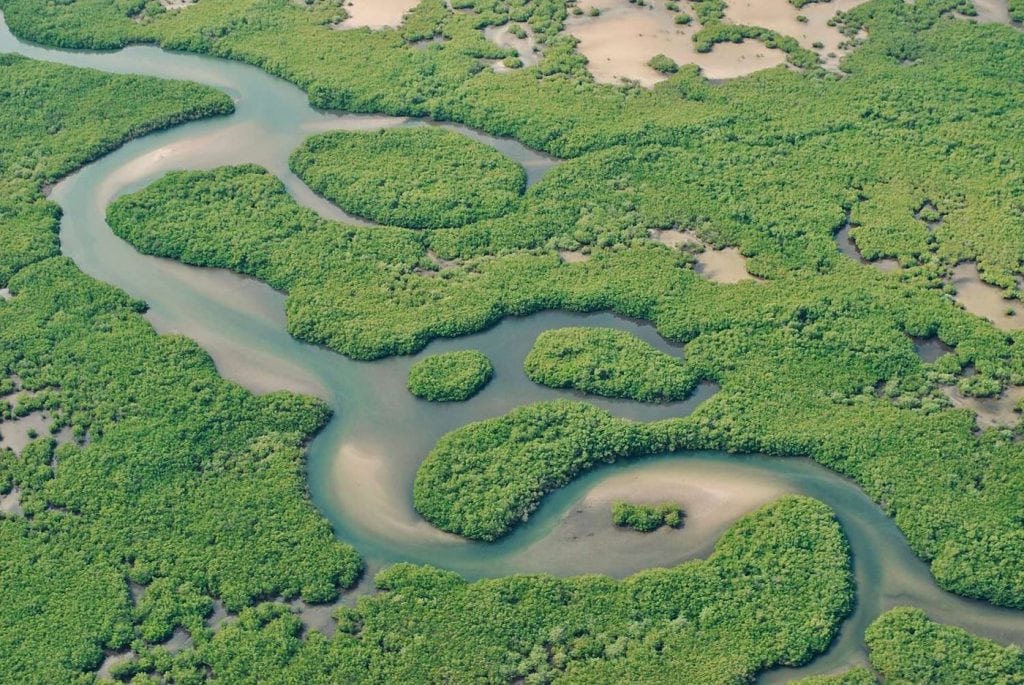
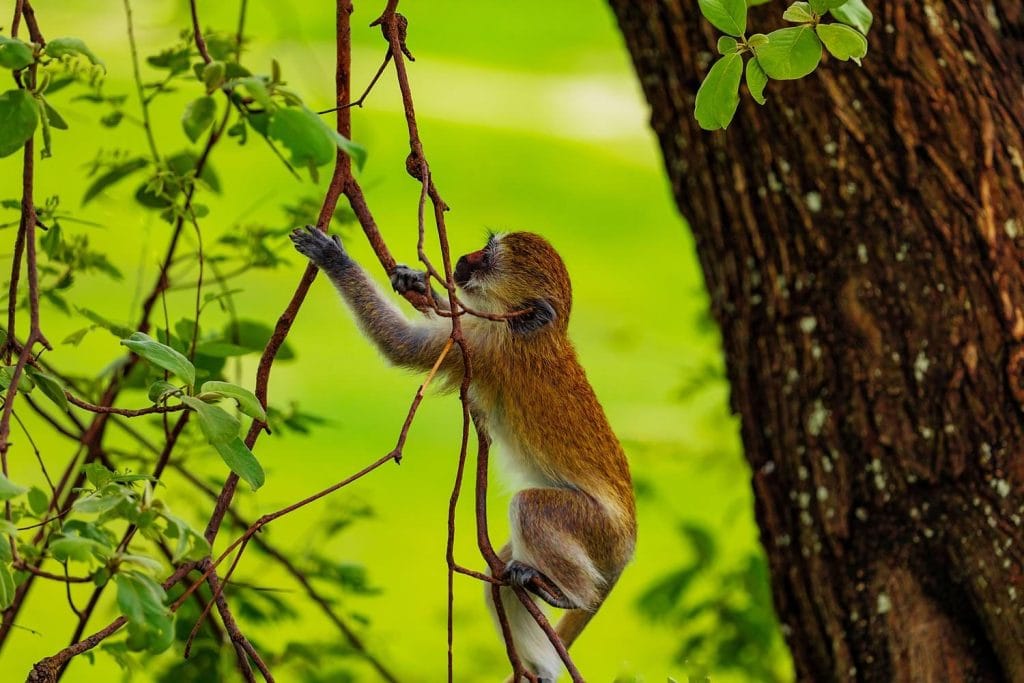
The name Fathala first and foremost refers to a forest: the Fathala forêt classée (protected forest), wooded savannah and dry forest on sandy soil, which forms the land-based part of the Saloum Delta National Park, just north of the Gambia. Here you come across species typical of the transition zone between the Sahel and the Sudanian belt, including the western red colobus, a russet monkey with long limbs, as well as patas monkeys, green monkeys, warthogs and a host of forest birds: Abyssinian rollers, hornbills and kingfishers.
The reserve covers around 6,000 hectares of this forest. Animals not native to the region have been introduced here: giraffes, white rhinos, zebras, buffalo, roan antelope, kob, and later lions. But the centrepiece lies elsewhere: the Derby eland, a giant antelope with spiral horns, whose West African subspecies now survives in the wild only in small numbers, notably in Niokolo-Koba. A breeding programme monitored by scientists produces calves every season at Fathala and Bandia, with the aim of one day returning some to Niokolo-Koba. For details of the wildlife and the reserve itself, read our Fathala Reserve page.
Read more
What to do in Fathala
The vehicle safari is the core of it. You drive along the tracks with a guide and stop at the waterholes. Giraffes and zebras are easy to spot; the Derby eland calls for a little more patience and discretion. Head out at dawn or in the late afternoon: at midday, the forest falls silent and the animals take shelter.
Walking with lions is the experience that made Fathala’s name. It is not an encounter in the wild: you walk in a small group, alongside lions used to people, supervised by keepers, stick in hand, following to the letter the instructions given at the start. Age requirements and the format are set by the supervising team: read them on the listing before booking, especially if you are coming as a family.
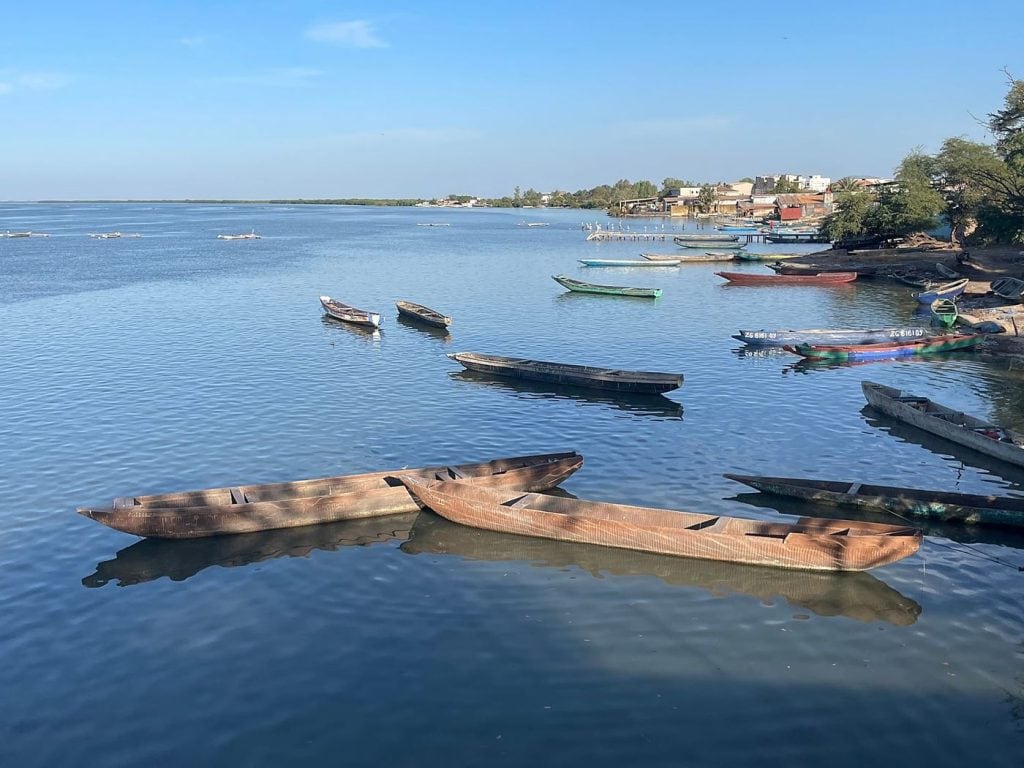
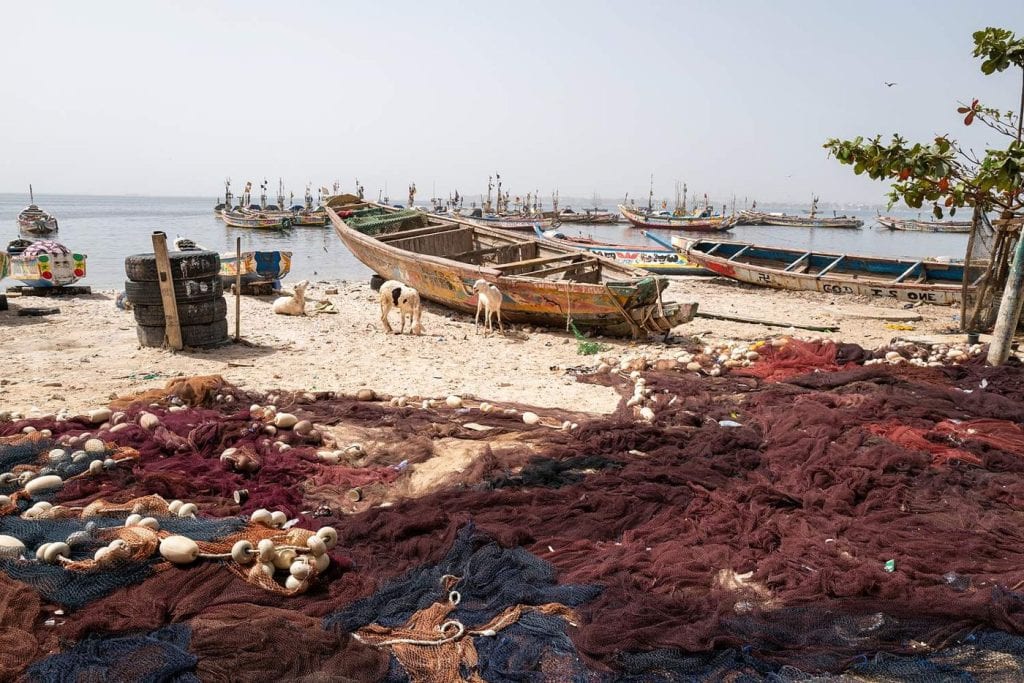
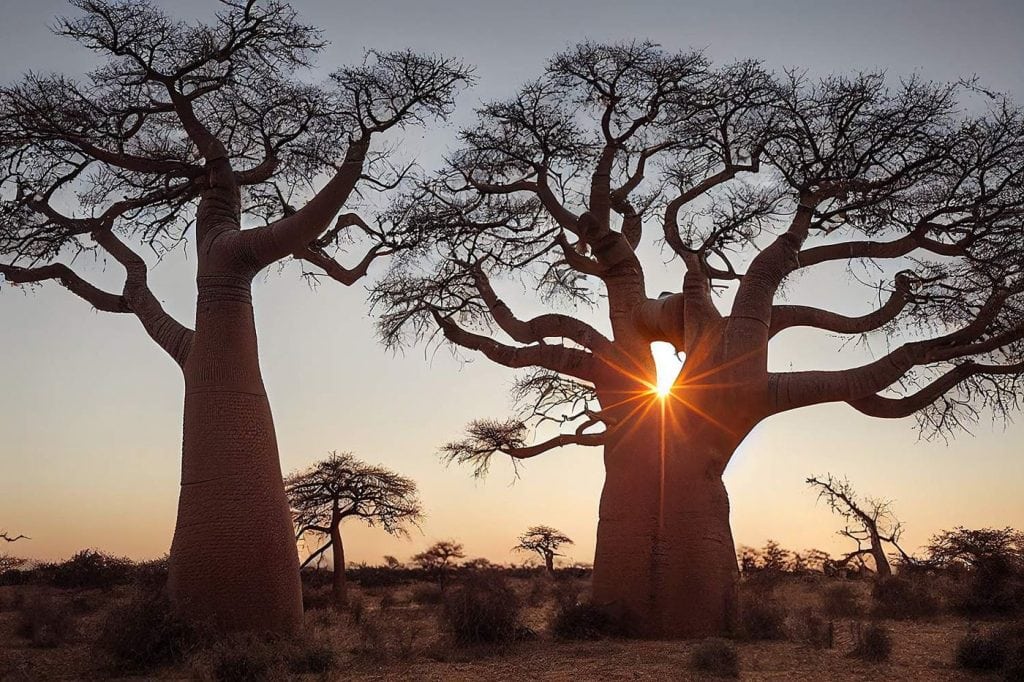
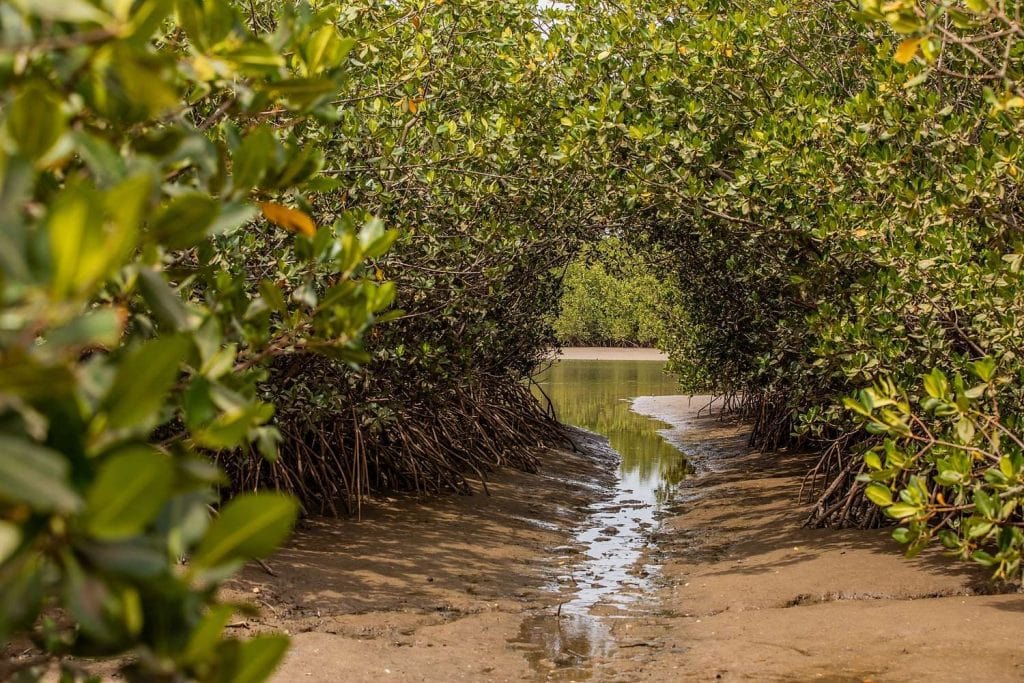
The trips around the reserve round off the stay. In Missirah, the neighbouring village, people come to see the giant kapok tree, a tree surrounded by beliefs and respect, and the small fishing port opening onto the bolong; our Missira page tells you more. Toubacouta, just to the north, is the starting point for pirogue trips in the Bandiala mangrove, out to bird roosts, shell middens and Sipo Island.
When to go
| November to February | Cool mornings, thinning vegetation, animals easier to spot: the best time for a first safari |
| March to May | Rising heat, dry and open bush, animals gathered at the waterholes: head out very early |
| June to October | Rainy season (hivernage): very green and beautiful forest, but harder tracks, dense vegetation and mosquitoes |
Getting there
From Dakar, you head down to Kaolack, Sokone and then Toubacouta; the reserve lies beyond, towards Karang. Allow around 4 to 5 hours, which in itself justifies staying the night nearby, in Toubacouta, in Missirah or close to the reserve. From the Gambia, the Karang border post is very close, hence the many visitors who come from the Gambian coast.
Practical tips
Bring cash in small notes: card machines are rare in the area. Wear neutral colours, with a hat, water and sun cream, and take binoculars: elands and colobus monkeys are easier to spot from a distance. For the walk with lions, closed shoes and total attention to the keepers. In the evening, mosquito repellent and long sleeves. If you are travelling via the Gambia, keep your passport and vehicle documents to hand at the border post.
Nearby
Fathala combines naturally with Toubacouta, the base for a stay in the southern delta, and with the whole of the Sine-Saloum; for the national park as a whole, read the Sine-Saloum Delta page. Further north, Palmarin and Ndangane show another side of the delta, more open and saltier. For safaris, the Bandia Reserve on the Petite Côte and Niokolo-Koba National Park in the east complete the picture.
Book an activity in Fathala with QFS
Fathala’s activities are listed under safari and wildlife reserves & parks; to extend your stay in the delta, see pirogue trips and birdwatching, or the whole Fatick Region. The price shown is for the service, run by a local provider. You pay 20% to secure your booking (the booking fee), and the balance is paid on site, on the day. Any entrance fees, stated on each listing, are payable on site and not included in the price. If you live in Senegal, you get the resident rate: up to 30% off depending on the activity.
Frequently asked questions
Where is Fathala?
What animals can you see at Fathala?
Is the walk with lions safe?
Fathala or Bandia: which should you choose?
Sénégal travel news
Latest news
Discover the latest trends and tips for traveling in Senegal. From cultural tourism to outdoor activities, stay informed about events and news that will enrich your stay.
Dakar 2026 Youth Olympic Games: your guide to Africa’s first Olympic Games, from the stands
Prayer times in Senegal: understanding the five daily prayers, from Dakar to Touba
TER Dakar–AIBD: the train finally serves the airport, and how to make the most of it
Great Mosque of Touba: entering the holy city as a guest
Podor: the gum arabic trading post at the end of the river
Mamelles Lighthouse: Dakar’s oldest watchman, at the top of the city
Lac de Guiers: the great lake that keeps Dakar supplied with water
Éloubaline Island: at the end of the creek, the houses that drink the rain
Mar Lodj: the Saloum island with no roads, no ticket office and no borders between faiths
Djifère: the end of the road, facing Sangomar
Niodior: the Saloum island many people read about before they see it
Dionewar: the Gandoul island that faces the ocean
Missirah: the fishing village with the giant kapok tree, at the far end of the Saloum
Sipo Island: the island that had a queen, across the water from Toubacouta
Wendaye Island: crossing a Diola island on foot, from the pirogue to the rice paddies
Pointe Saint-Georges: the end of the track where you watch for manatees
Boucotte: where the beach at Cap Skirring turns wild again
Édioungou: the village where *bolong* clay becomes a jar
Diakène: the gateway to the mangroves, between the Cap Skirring road and Egueye Island
Egueye Island: an island with no village, where the mangrove has the last word
Ourong Island: the end of the chain, where the Casamance islands run out
Katakalousse: the bridge on the Cap Skirring road, and the pirogue to the islands
Cachouane: the peninsula where the Casamance stops running
Kadioute: not an island, but a Diola museum among the roots of a kapok tree
Djilapao: a sculpted house at the end of a *bolong*
Mlomp: two-storey houses of raw earth, in the shade of kapok trees
Niokolo-Koba National Park: Senegal’s great wild bush, which owes you nothing
Dindéfélo Falls: the waterfall the villages chose to keep
Énampore: the house that drinks the rain, at the end of the Bandial road
Guembeul Reserve: on foot among the gazelles the Sahel had lost
Simal: the village on the bolong, at the end of the tann track
Hann Bel-Air: the bay Dakar damaged and is trying to repair
Ngor Beach: the village beach, between pirogues, the landing point and evening football
Anse Bernard: the Plateau’s only beach, and the one Dakar nearly lost
Ndianda: the Serer village you drive through without seeing, ten minutes from Joal
Carabane Island: reading Casamance’s former capital on foot
Lompoul desert: a little Sahara best experienced at sunset
Langue de Barbarie National Park: the park the sea redraws every year
Djoudj National Bird Sanctuary: the pelican haven that almost drowned under a fern
Nguéniène market: on Wednesdays, the Serer bush does its shopping (and you are invited)
Tortoise Village (Village des Tortues) in Noflaye: the African spurred tortoise’s waiting room
Popenguine Nature Reserve: the bush that women brought back to life
Joal-Fadiouth: the island where people are buried together, and the town where Senghor was born
The Somone lagoon: the mangrove that local people replanted
Hann Park: come for the forest, the zoo is not the point of the outing
Ngor Island: one island, two faces, and it is up to you to choose yours
Write to us: a real team, here in Senegal, will reply
Live in Senegal? The resident rate is made for you
Register your activity: we will take care of making it bookable
AFCON 2025: winners in Rabat, a title under appeal, and a country that lives for football
Dak’Art 2026: a month to see Dakar through its artists, from 19 November to 19 December
Saint-Louis Jazz Festival: five May nights when the whole island starts to swing
African Renaissance Monument: contested before it even stood, now Dakar’s landmark
Gorée Island: it is not one house that is listed, but the whole island
Lac Rose (Pink Lake): at Lake Retba, everything comes down to salt
Sine-Saloum Delta: a delta listed for its shells as much as for its mangroves
Madeleine Islands: the park you visit to take nothing away
Fathala Reserve: the Saloum forest where you come looking for the Derby eland
Bandia Reserve: a rebuilt savannah, from giraffes to the griots’ baobab
Mosque of the Divinity: the mosque born of a dream, set on the ocean’s edge at Ouakam
The Mamelles Lighthouse: Panorama and History of Dakar
Dakar’s markets: six markets, six ways to read the city (and to haggle)
House of Slaves, Gorée: what the door helps you understand
Great Mosque of Dakar: one minaret, three stories, and respect above all
Museum of Black Civilisations: a 1966 dream that opened in 2018
Théodore Monod Museum: West African art up close, in the calm of the Plateau
How to book your activity in Senegal
3 days in Dakar: a day of memory, a day of ocean, a day in working-class Dakar
What to do in Dakar Region? Pick what you feel like, we will show you where to go
Bringing Senegal to life? We bring you the people who want to experience it
About us: Senegal to do, not just to see
Saly and the Petite Côte: pick what you feel like, then get out of the resort
Frequently asked questions: booking an activity in Senegal
What to do and see in Senegal: our iconic places, region by region
Our partners: the people who bring Senegal to life, one activity at a time
General Terms and Conditions of Sale
Book a private activity in Senegal for your group