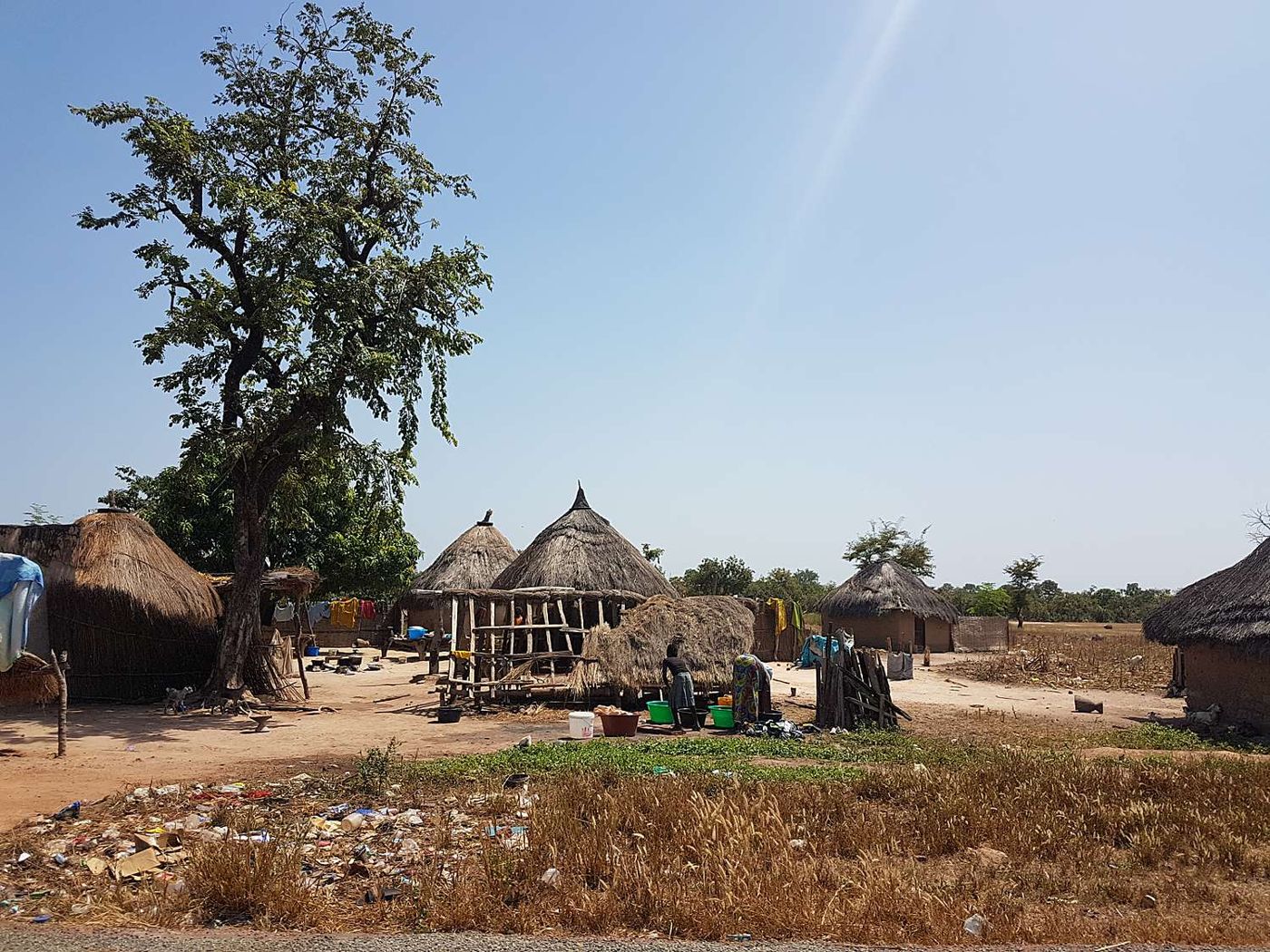
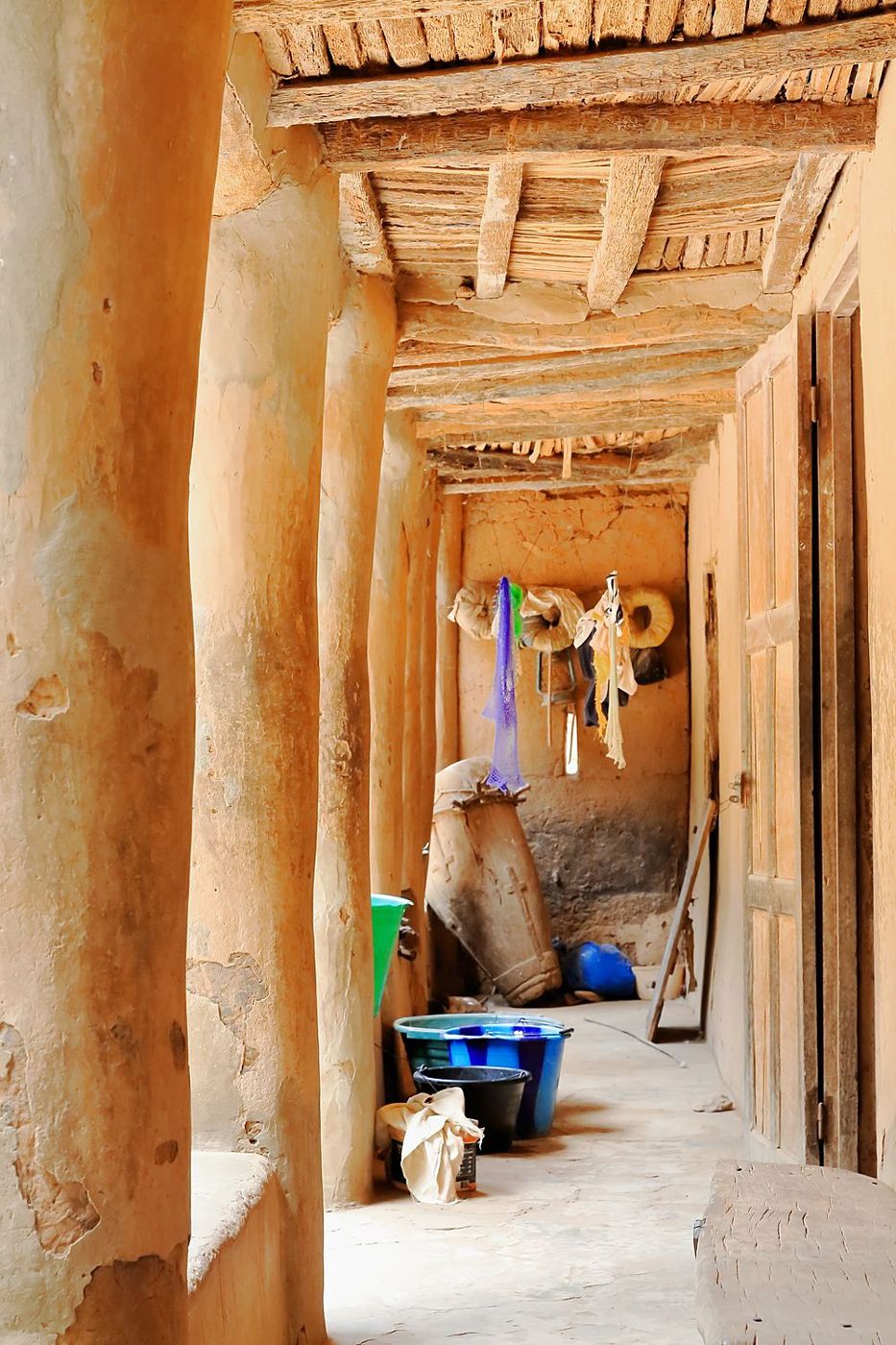
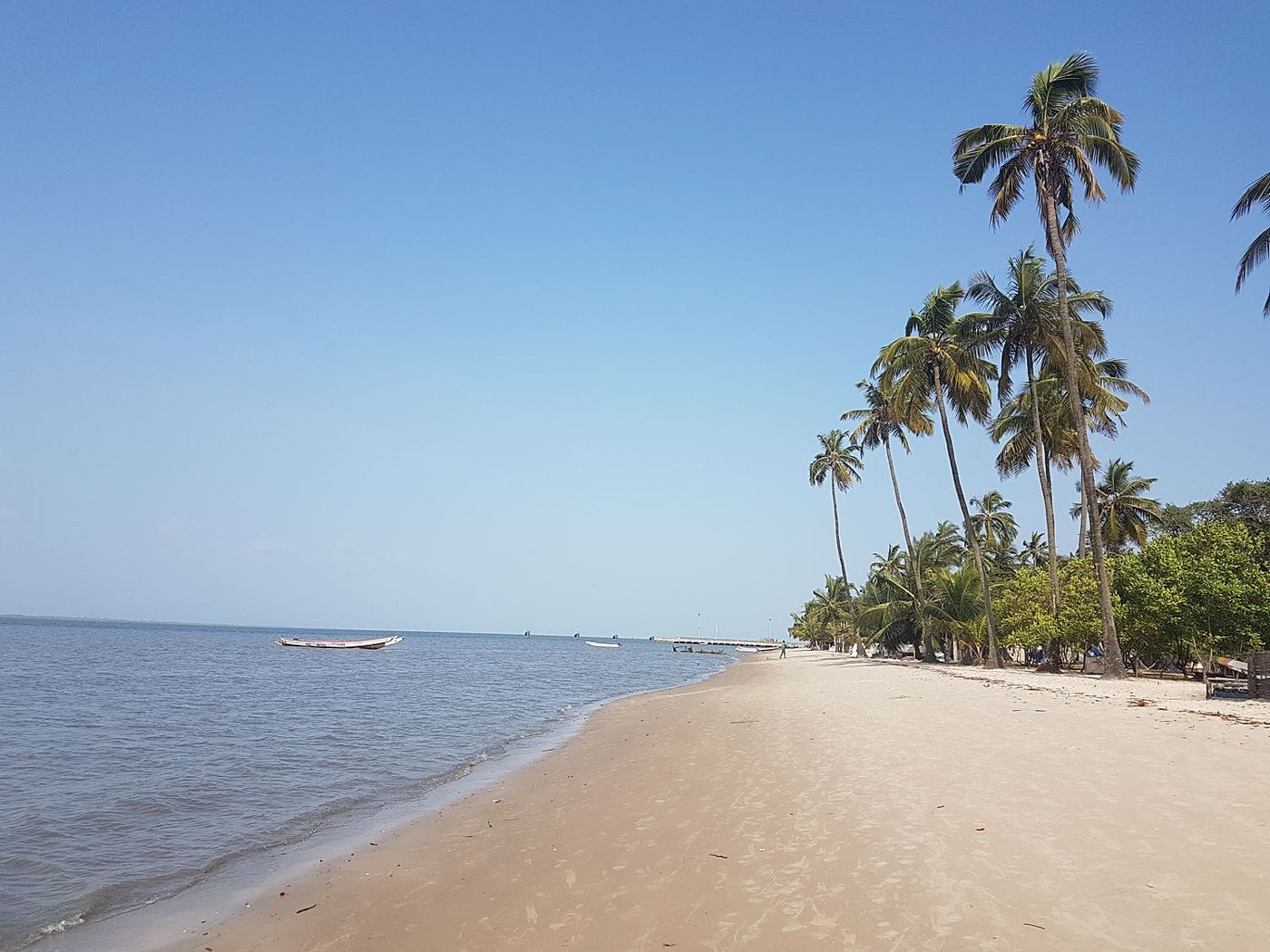
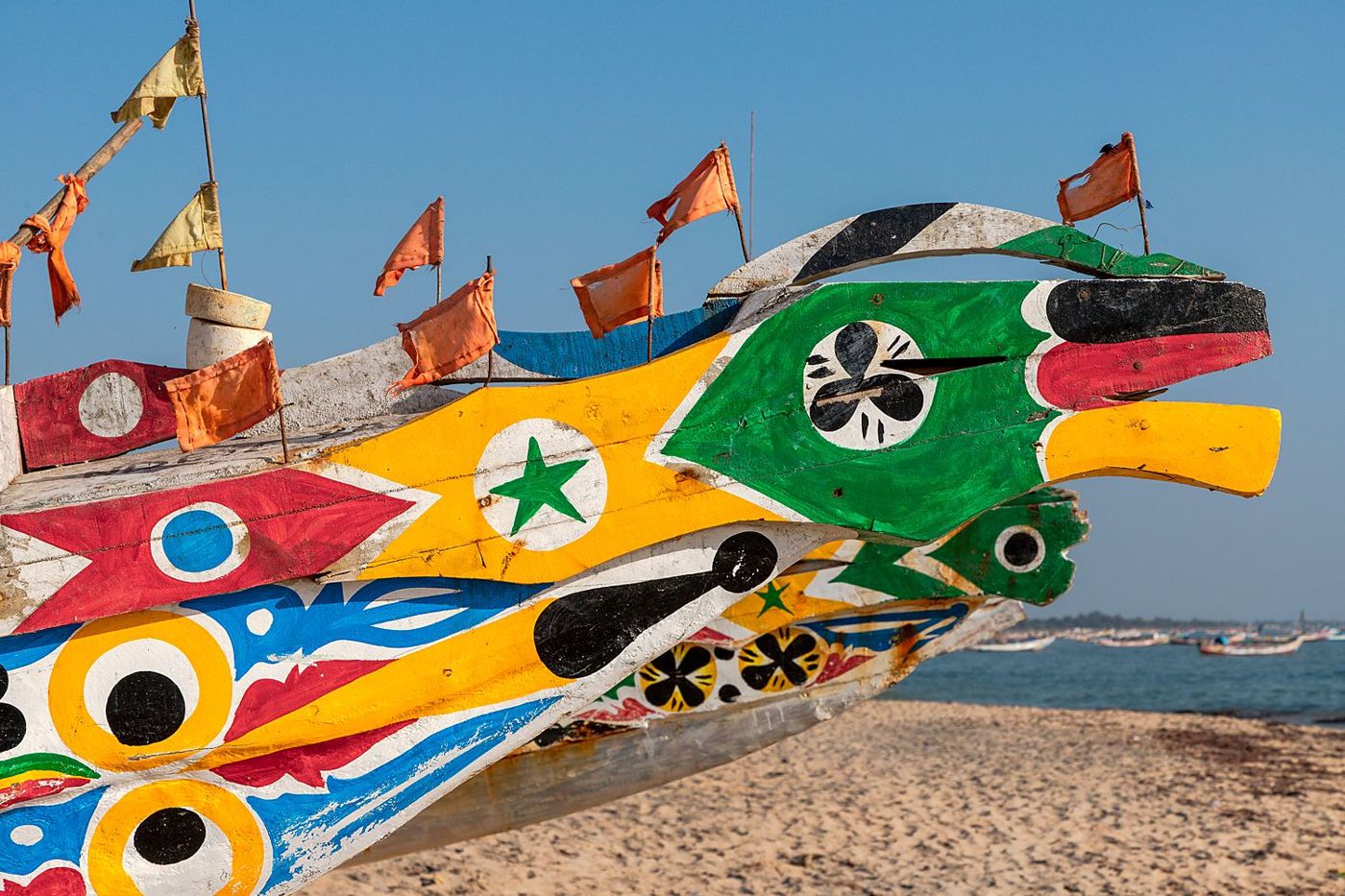
In Cachouane, there is nothing to “do”, and that is exactly why you should go. No monument, no circuit, no ticket office: a beach lined with coconut palms at the end of a bolong (tidal creek), a Diola village that lives off fishing and rice, and a pirogue that leaves when the tide decides. An hour between two islands will leave you with a photo; a night, with the rarest thing Lower Casamance has to offer: time that really slows down.
At a glance
| Region | Casamance — Ziguinchor Region, Oussouye department, Diembéring commune |
| Type | Diola village on a peninsula at the mouth of the Casamance River, ringed by bolongs; palm-fringed beach |
| Getting there from Dakar | Flight to Cap Skirring or Ziguinchor, night boat to Ziguinchor, or a long day on the road via the Gambia; then by road to Elinkine |
| Getting there locally | By pirogue from Elinkine, about 30 to 45 minutes depending on the tide; or by a rough track from Diembéring, in an off-road vehicle |
| Recommended time | One or two nights; half a day as a stop on a pirogue trip |
| Official fees | No additional official fees |
| Best time to go | Dry season, November to May |
| Related QFS activities | Pirogue trips, island excursions, guided hikes, kayaking, traditional villages, birdwatching |
Resident or visitor: the same beach, two ways to earn it
Live in Senegal? Cachouane is the getaway missing from your weekends in Cap Skirring. The beach is just as beautiful, without the crowds. Cross over from Elinkine on Saturday morning and come back on Sunday via Carabane: three faces of the river mouth in one weekend. On outings booked through QFS, you get the resident rate: up to 30% off.
Just passing through? Resist the temptation to “do” it between two stops. Cachouane is not somewhere you visit; you live in it for a few hours, then a night. You are in a village, not a resort: always greet people first, ask before photographing a person, a house or a ceremony, and accept that the pirogue’s departure time belongs to the tide.
An island that is not one
On the map, Cachouane is attached to the mainland, on the Diembéring side. From the pirogue, you would swear otherwise. The bolongs, the saltwater channels that carve up the estuary, surround it so completely that most visitors arrive by water, as if on an island. Diembéring commune thus has five inhabited islands (Carabane, Sifoca, Wendaye, Ehidj and Ourong) and two peninsulas, Nikine and Cachouane. The distinction has a practical consequence: you can also reach the village overland, on foot along the beach and the paths, or in an off-road vehicle on a track that defeats most vehicles.
This half-chosen isolation has shaped the village. Cachouane lives off what the water and the land give it: fishing and seafood, rice, medicinal plants, and still modest tourism, made up of a few village guesthouses and passing hikers. Rice growing, the heart of Diola culture, is fighting a silent battle here. As everywhere in the commune, salt water is creeping inland and taking over the lowland rice paddies; plots once farmed have been abandoned, and erosion is eating away at the shoreline. The village chief summed it up in one sentence to the daily newspaper Le Soleil: “the salt has taken our rice paddies”.
The beach where you will laze about is also a shore that is retreating. Several beliefs coexist in the village, each with its own places and customs: some forests and some trees are sacred, and you do not go in unless you are invited.