Kachoune

0 activities

Sorry, no activities match your search.

You Might Be Interested In

On vient rarement à Kachouane par hasard, et c’est tout l’intérêt : au bout d’un bolong, à cinq kilomètres d’Élinkine mais à une pirogue de tout le reste, ce village-île diola est l’un des rares endroits de Basse-Casamance où l’on débarque encore par l’eau, sac sur les genoux, sans réseau et sans horaire. Ne cherchez pas ici une plage de carte postale ni un « spot » à cocher : Kachouane est une destination où l’on vient séjourner quelques jours pour ralentir, dormir dans un campement tenu par le village, manger les huîtres que la marée dépose sur les racines des palétuviers et regarder le fleuve changer de couleur. C’est un bout du monde qui se mérite — et une leçon, discrète, sur ce que le tourisme peut être quand ce sont les habitants qui en tiennent les clés. Cette page est celle du village où l’on pose ses affaires ; pour le détail du site lui-même, voir la page POI Cachouane (l’île).

Un mot sur le nom. Vous verrez ce village écrit Kachouane, Cachouane, plus rarement Kachoune, Cachiouane ou Kachiouane : ce sont bien le même lieu, les variantes venant de la transcription du diola. À ne pas confondre avec Kagnout, autre village diola de Casamance, situé plus à l’est, qui n’a rien à voir.

En bref

Région (QFS)Casamance / Ziguinchor
Département / communeOussouye — communauté rurale de Diembéring
TypeVillage-île diola au fond des bolongs — destination de séjour (campement villageois)
AccèsPirogue depuis Élinkine (~5 km) ou Carabane ; piste depuis Diembéring / Cap Skirring
Population~300 habitants (297 selon le PEPAM)
Durée conseillée2 à 4 nuits — on vient pour rester, pas pour passer
Meilleure périodeSaison sèche (nov.–mai) ; les pluies (juil.–sept.) compliquent les pistes et les bolongs
**Fréquence exacte de la pirogue villageoise ; état actuel du barrage anti-sel

Résident ou touriste : deux façons d’y venir

Si vous vivez au Sénégal, Kachouane est l’antidote au week-end urbain : pas de wifi qui vous rattrape, pas de programme. Le bon réflexe est d’en faire une vraie déconnexion de deux ou trois nuits, greffée sur un séjour en Casamance — on descend sur Ziguinchor, on rejoint Élinkine par la route, puis on se cale sur la pirogue (celle du village dessert Kachouane, historiquement quelques fois par semaine seulement — à voir avant de partir, sous peine d’attendre ou de négocier une pirogue privée). Prévenez au campement que vous arrivez : ici, la logistique se règle d’humain à humain, pas en ligne.

Si vous êtes de passage, retenez un mot : la lenteur. Kachouane ne se visite pas, il se vit au rythme des marées — la pirogue part quand l’eau le permet, les huîtres se ramassent à marée basse, le fleuve devient miroir au coucher du soleil. N’arrivez pas avec l’idée d’« optimiser » : une journée aller-retour n’a aucun sens ici, vous repartiriez sans avoir rien compris. Venez pour au moins une nuit, laissez le silence s’installer. Et rappelez-vous que vous êtes chez des gens : le village n’est pas un décor, on demande avant de photographier une case, une cérémonie ou un visage.

Un village au fond des bolongs

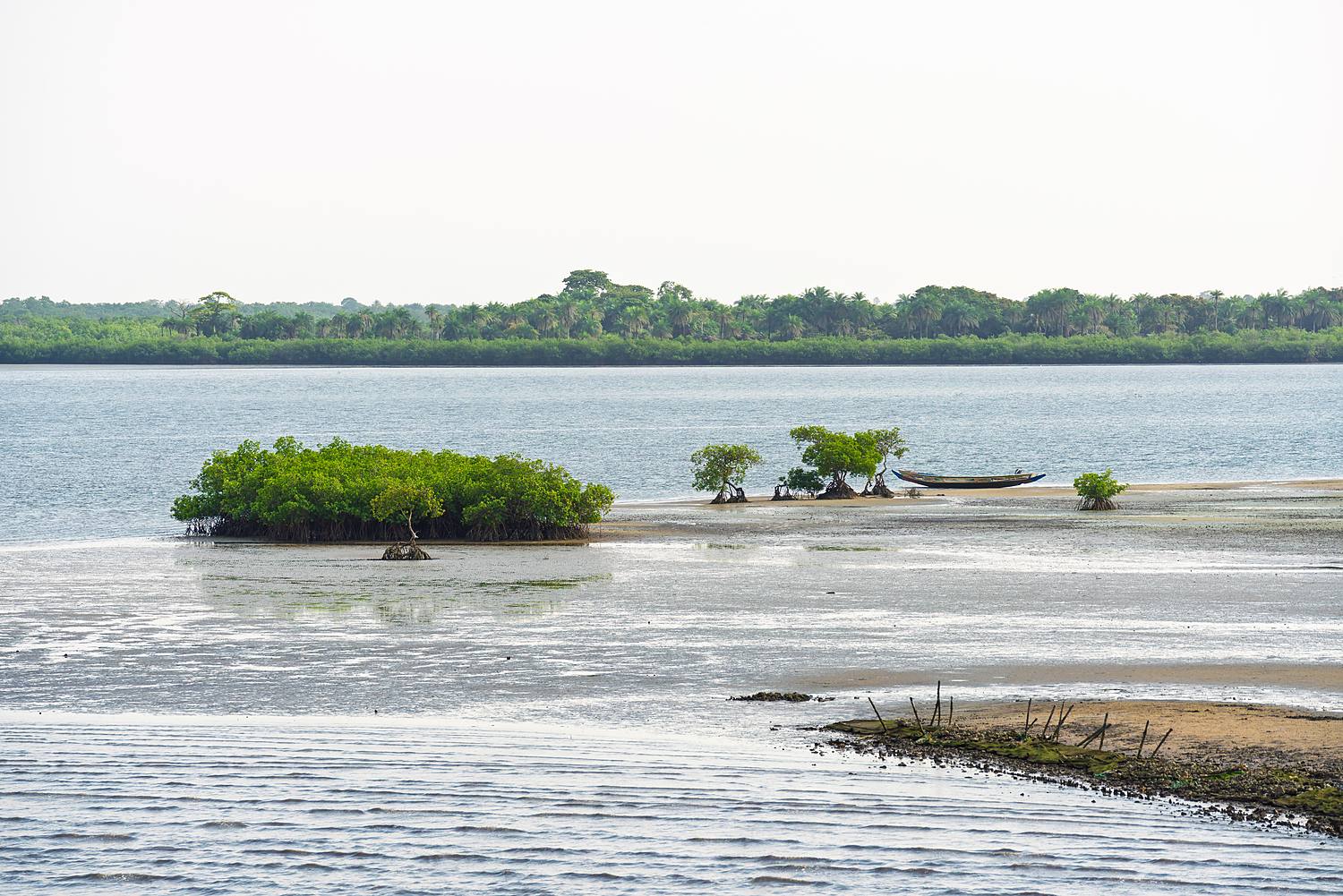
Kachouane est posé dans l’embouchure du fleuve Casamance, juste au sud de l’île de Carabane, sur une langue de terre cernée par les bolongs — ces chenaux d’eau salée qui serpentent à travers la mangrove et font de toute la Basse-Casamance un labyrinthe amphibie. Autour du village : des palétuviers dont les racines s’ouvrent à marée basse, des cocotiers, des rôniers, des rizières que la salinité menace, et une faune d’oiseaux d’eau qui fait le bonheur de qui sait rester immobile. Le village vit de la pêche et des produits de la mangrove, du riz et de quelques plantes médicinales ; le tourisme n’est qu’un revenu d’appoint, ce qui explique qu’il soit resté à échelle humaine.

L’isolement, ici, n’est pas un argument marketing : c’est une réalité géographique. On y accède par l’eau — pirogue depuis Élinkine (à peine cinq kilomètres, mais de l’autre côté des chenaux) ou depuis Carabane — ou par une piste depuis Diembéring, du côté de Cap Skirring, praticable surtout en saison sèche. Cette difficulté d’accès a préservé le village d’un tourisme de masse et lui a laissé ce qu’on vient y chercher : le sentiment, rare, de disparaître quelques jours.
KachouaneKachouane
En savoir plus

Le campement villageois : un tourisme inventé ici

Ce qui donne à Kachouane sa place particulière, c’est qu’il appartient à l’un des plus beaux paris touristiques d’Afrique de l’Ouest : le tourisme rural intégré de Casamance. L’idée, née au début des années 1970, est simple et radicale pour l’époque. Plutôt que de laisser des hôtels extérieurs capter les revenus du littoral, on propose aux villages de bâtir eux-mêmes, en architecture traditionnelle diola et en matériaux locaux, de petits campements qu’ils gèrent en commun — et dont les bénéfices financent le village : le toit de l’école, le dispensaire, la maternité.

Les dates font consensus dans la littérature : le tourisme rural intégré est initié en 1971 par Christian Saglio (futur directeur du Centre culturel français de Dakar) et Adama Goudiaby ; le premier campement rural intégré (CRI) ouvre à Enampore en 1973, suivi d’une grande case à impluvium en 1974. Le modèle se résume par une formule restée célèbre : on troque les « 4 S » du tourisme balnéaire (Sea, Sun, Sand, Sex) contre les « 3 F » — Faune, Flore, Folklore. Une quinzaine de villages ont rejoint le réseau sur les deux rives, et Kachouane en fait partie, aux côtés d’Élinkine, Oussouye, Enampore, Affiniam ou Thionk-Essyl. Le principe fondateur — un tarif unique et modique, la même transparence partout, l’argent qui reste au village — reste l’esprit du lieu ; les montants d’aujourd’hui, eux, se réservent via QFS (voir plus bas).

Repères & chiffres

DonnéeValeurRemarque
Département / régionOussouye / Ziguinchorcommunauté rurale de Diembéring
Population~297 hab. (41 ménages)source PEPAM
Distance Élinkine~5 km (par les bolongs)accès pirogue
Distance Carabane~6 km au nordautre point d’embarquement
Tourisme rural intégréinitié en 1971Christian Saglio & Adama Goudiaby
1er campement (CRI)Enampore, 1973case à impluvium en 1974
Villages du réseau~15Kachouane en fait partie

Accès & pratique

DepuisTrajetNotes
ZiguinchorRoute jusqu’à Élinkine, puis piroguel’itinéraire le plus courant
ÉlinkinePirogue (~5 km de bolongs)pirogue villageoise ou pirogue privée à négocier
CarabanePirogue (~6 km)pour qui enchaîne les îles
Cap Skirring / DiembéringPiste jusqu’au villagepraticable surtout en saison sèche

Sur place, on se déplace à pied dans le village et en pirogue sur les bolongs. Pas de distributeur, pas de commerce touristique : prévoyez des espèces en petites coupures, une lampe, de quoi vous protéger du soleil et des moustiques, et de la patience pour les horaires de marée.

Quand y aller

PériodeCe qui vous attend
Nov.–mai (saison sèche)La meilleure fenêtre : pistes praticables, bolongs faciles, ciel dégagé, huîtres et oiseaux
Déc.–fév.Le plus agréable côté chaleur ; lumière superbe au coucher du soleil
Juil.–sept. (hivernage)Pluies, pistes difficiles, moustiques ; nature luxuriante mais logistique compliquée
MaréesÀ intégrer chaque jour : la pirogue et le ramassage des huîtres en dépendent

À voir & à faire depuis Kachouane

  • Les bolongs en pirogue — l’activité reine : chenaux de mangrove, silence, oiseaux d’eau, pêcheurs. À faire tôt le matin ou en fin de journée.
  • Les huîtres de palétuvier — ramassées à marée basse sur les racines des mangroves, souvent grillées ; une signature du coin (l’îlot de Dimoytout, tout proche, en est réputé).
  • Le coucher de soleil sur le fleuve — parmi les plus cités de Casamance : le bolong vire au cuivre, puis au rose.
  • La vie du village — cases diola, greniers à riz, rôniers ; à découvrir avec un habitant, dans le respect des usages animistes locaux.

Aux alentours

Kachouane est un excellent camp de base pour rayonner d’île en île dans l’embouchure : Carabane (l’île historique et sa mission), Élinkine (le port-pivot et son propre campement), les îlots de Dimoytout, Sifoka, Wendaye. Sur la terre ferme, Oussouye et son roi, Diembéring et Cap Skirring ne sont pas loin. Autant de renvois possibles vers les pages voisines de la base, et vers la page POI Cachouane (l’île) pour le site en lui-même.

Séjourner à Kachouane avec QFS

On vient à Kachouane pour l’hébergement en campement villageois et les sorties en pirogue sur les bolongs — deux expériences réservables via QFS. Rappel de méthode : les éventuels coûts à régler sur place (transport pirogue, nuitée au campement) sont des montants encaissés localement, hors commission QFS 10 % et hors remise résident −30 % ; ils ne se confondent pas avec le prix du service. Les tarifs évoluant, et l’accès dépendant des marées, passez par QFS pour connaître les conditions à jour et caler l’arrivée. Côté rubriques : Découvertes nature & culture › Balade en pirogue et l’hébergement en campement / séjour immersif.

Questions fréquentes

Comment rejoint-on Kachouane ?
Principalement **par pirogue** depuis Élinkine (~5 km de bolongs) ou depuis Carabane. Une **piste** relie aussi le village à Diembéring / Cap Skirring, praticable surtout en saison sèche. Il n’y a pas de route directe : on arrive par l’eau ou par la piste, jamais « en passant ».
Combien de temps rester ?
Au moins **une nuit**, idéalement **deux à quatre**. L’aller-retour dans la journée n’a pas de sens : l’intérêt du lieu tient à sa lenteur et au rythme des marées.
Kachouane, Cachouane, Kachoune : c’est le même endroit ?
Oui. Ce sont des transcriptions différentes d’un même nom diola. À ne pas confondre avec **Kagnout**, autre village de Casamance.
Y a-t-il du réseau, des distributeurs, des commerces ?
Non ou très peu : c’est un village isolé. Prévoyez des **espèces en petites coupures**, et acceptez d’être déconnecté — c’est précisément ce qu’on vient y chercher.
Quelle est la meilleure période ?
La **saison sèche (novembre à mai)** : pistes et bolongs praticables, ciel dégagé. L’hivernage (juillet–septembre) complique fortement l’accès.
Peut-on visiter les îles voisines depuis Kachouane ?
Oui : Carabane, Élinkine et les îlots de la mangrove (Dimoytout, Sifoka, Wendaye) se rejoignent **en pirogue**. Kachouane fait un bon camp de base pour un circuit d’île en île.

Sénégal travel news

Latest news

TERMS AND CONDITIONS OF USE

1. Purpose These Terms and Conditions of Use (T&Cs) are intended to define the terms of collaboration between the platform Que Faire Sénégal, operated by Novazeo, and its partner providers. The platform connects clients (residents and tourists) with providers offering activities, experiences, and services in Senegal. 2. Acceptance of the Terms and Conditions Any registration or collaboration with Que Faire Sénégal implies full and unconditional acceptance of these Terms and Conditions. The provider acknowledges having read them and agrees to comply with them without reservation. 3. Nature of the Platform Que Faire Sénégal acts as a commercial intermediary platform. The…

Getting in touch

A local website that lists activities. Gain visibility and increase your revenue 100% free registrationHave a sales representative call me back
Major events

The Dakar Biennale (Dak’Art): Showcase of Contemporary African Art

The Dakar Biennale — Dak’Art — has established itself as the most important contemporary art event in Africa, bringing together artists, collectors, critics and audiences from around the world. Created in 1990, this biennale turns Dakar, every two years, into the capital of African creativity. Driven by exceptional cultural energy, it offers official exhibitions as part of the “In” program — with its main venue being the former Dakar Courthouse — as well as Off programs spread throughout the city, reflecting both the richness of African visual creation and the continent’s cultural challenges. History and origins of Dak’Art Established by…
Major events

The Saint-Louis International Jazz Festival: A Must-Attend Musical Event

Every year in May, the historic city of Saint-Louis, Senegal transforms into Africa’s jazz capital, hosting one of the continent’s most prestigious festivals. Since 1993, the Saint-Louis International Jazz Festival has attracted the biggest names in international jazz, numerous young African prodigies, and a cosmopolitan audience, all set within a UNESCO World Heritage–listed backdrop. Between concerts on the main stage, jam sessions in bars, festive atmospheres, and cruises along the Senegal River, this event embodies sharing and communion through music. History of the Festival The festival was created by local enthusiasts, supported by the Senegalese government, the French Cultural Center,…
iconic locations

The African Renaissance Monument: Pride and Symbol of Dakar

Perched on the Mamelles Hill (about 100m), the African Renaissance Monument overlooks Dakar and the Atlantic from its 52-meter height, making it the tallest statue in Africa. Inaugurated in 2010, it represents an African family looking toward the future and symbolizes the continent's regained pride after centuries of colonization. Today, it stands as an essential tourist, cultural, and political landmark. It is visible from many locations in the capital and accessible via a monumental staircase. Origin and history The monument was conceived by President Abdoulaye Wade, determined in 2002 to provide Africa with a symbol as imposing and emblematic as…
iconic locations

Gorée Island: Memory and World Heritage off the Coast of Dakar

Located just 3 km off the coast of Dakar, Gorée Island is one of the most visited heritage and memorial treasures of Senegal and West Africa. Listed as a UNESCO World Heritage Site in 1978, it is the quintessential “memory island,” attracting thousands of visitors each year from around the world, coming to walk in the footsteps of a harrowing past: that of the transatlantic slave trade. Accessible by a 20-minute ferry ride from the port of Dakar, Gorée also charms with its postcard-perfect scenery: cobblestone streets, ochre or pastel houses, bougainvillea, beaches, and art galleries offer a striking contrast…
iconic locations

Lake Rose (Lake Retba): a natural wonder at the gates of Dakar

About thirty kilometers northeast of Dakar, the Lake Rose, or Lake Retba, fascinates visitors with its shifting waters that take on pink, orange, or violet tones depending on the time of day and the season. This natural site on the border between the Sahel and the Atlantic has become one of Senegal’s most iconic landscapes, known worldwide for being the legendary finish line of the Paris–Dakar rally. This lake, barely three square kilometers in size, also charms visitors through its vibrant daily life: salt harvesting, craftsmanship, adventure sports, and unexpected encounters shape every visit. A true place of contrasts, Lake…
iconic locations

The Sine-Saloum Delta: between mangroves, islands, and Serer traditions

About 150 km south of Dakar, the Sine-Saloum Delta stands out as one of West Africa’s most fascinating ecosystems and one of Senegal’s most authentic destinations. Classified as a UNESCO Biosphere Reserve (1980) and a Ramsar site, this delta, formed by the confluence of the Sine and Saloum rivers, covers over 180,000 hectares. It is a land between river and sea, made up of bolongs (winding channels), lush mangroves, baobab forests, mysterious islands, and stilted villages. But Sine-Saloum is not limited to its exceptional landscapes: it also embodies the world of Serer, Mandinka, and Fula traditions maintained for centuries, where…
iconic locations

The Madeleine Islands: National Park Off the Coast of Dakar

Just a few nautical miles from Dakar, off the Cape Verde Peninsula, the Madeleine Islands form a unique micro-archipelago: it is the smallest national park in Senegal… and in the world, covering barely 50 hectares, yet also one of the most extraordinary due to the wildness of its landscapes and the richness of its wildlife. Classified as a national park since 1976, the “Madeleine” Islands captivate with their volcanic cliffs sculpted by the sea, hidden coves, wind-sculpted vegetation, and an atmosphere steeped in legend and history. Once feared by fishermen and associated with guardian spirits, these islands have become a…
iconic locations

Fathala Reserve: a full-scale safari in Senegal

About 250 km south of Dakar, near the Gambian border, the Fathala Reserve embodies the ultimate “wild” adventure in Senegal. Spanning 6,000 hectares of preserved savanna, this natural sanctuary of the Saloum Delta National Park, in the Fatick region, offers an immersive experience, unmatched in scale and natural richness. Less crowded than Bandia and much larger, this site — once home to a village called Mina — attracts adventurers, families, wildlife photographers, and travelers seeking a reinvented sense of authenticity. Created in 2000 with a focus on conservation and environmental education, this private reserve protects and reintroduces many iconic large…
iconic locations

Bandia Park: safari in the heart of the Petite Côte

Located in the Thiès region, just 15 kilometers from Saly and about 65 km from Dakar, Bandia Park stands out as Senegal’s most visited and most accessible wildlife reserve. Since its opening to the public in 1990, Bandia has offered an impeccable safari experience, ideal for families, nature lovers, and travelers dreaming of seeing African wildlife in semi-freedom without going all the way to Niokolo-Koba. Covering 3,500 hectares of enclosed wooded savanna, Bandia was born from an innovative vision: restoring the Bandia classified forest — degraded by logging and agriculture — and reintroducing large African mammals that had disappeared for…
iconic locations

The Mosque of Divinity: Spirituality and Architecture Facing the Ocean

At the foot of the volcanic hills of the Mamelles, in the Ouakam district, the Mosque of Divinity stands out with its light and luminous silhouette, overlooking the Atlantic with its two slender minarets and its immaculate white dome. Built following a spiritual vision received in the 1970s by Mohamed Gorgui Seyni Gueye (known as Sangabi), this monument is today a major place of worship, a symbol of religious unity, and also an unmissable site for anyone wishing to combine spirituality, art, and landscape during a visit to Dakar. The “Divinity” attracts worshippers, artists, curious visitors, and walkers, who come…
iconic locations

The Mamelles Lighthouse: Panorama and History of Dakar

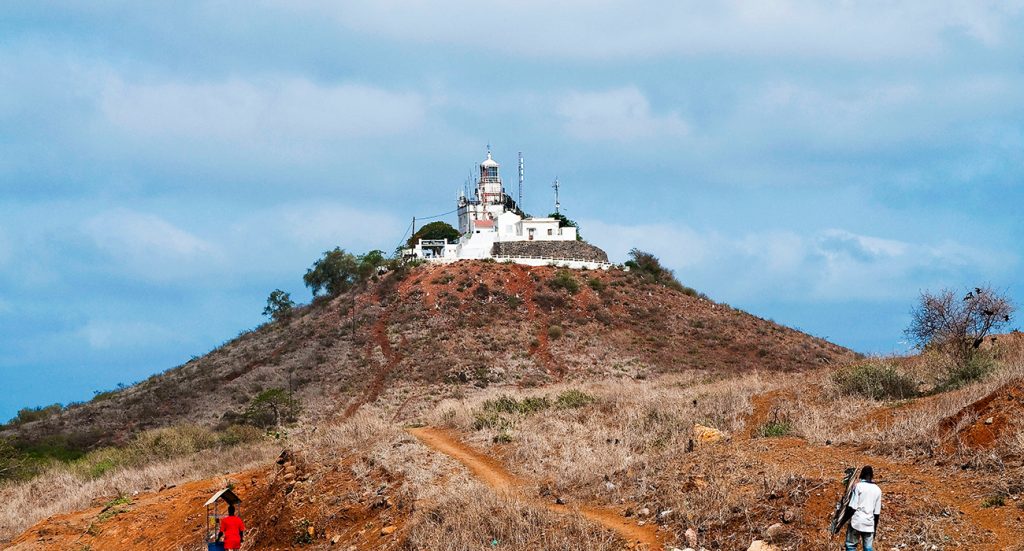
Dominating Dakar’s skyline for over 160 years, the Mamelles Lighthouse is an essential landmark for sailors approaching the port, as well as for lovers of spectacular views and history. Built in 1864 on one of the two volcanic hills called the “Mamelles,” it overlooks the Cape Verde Peninsula at over 100 m above sea level, to the west of the city. Considered one of the most powerful lighthouses in Africa, it still guides ships today with its light visible more than 50 km out at sea. A true witness to Dakar’s evolution, the lighthouse has also become a cultural hub: its…
iconic locations

Dakar’s Iconic Markets: Immersion into the Soul of the Capital

The markets of Dakar are much more than simple trading spots: they are living theaters of Senegalese diversity and energy, where the popular culture of the capital is expressed. Whether in the bustling alleys of Sandaga, among the colorful fabrics of the HLM market, or at the Soumbédioune craft stalls, each market reveals a facet of Dakar — blending traditions, encounters, and vibrant bargaining. Visiting these markets means diving into daily life in Dakar: a multisensory experience filled with sounds, colors, scents, and authentic exchanges. Sandaga market: The beating heart of Dakar Located in the city center, Sandaga is Dakar’s…
iconic locations

The House of Slaves on Gorée Island: A Universal Memory in Senegal

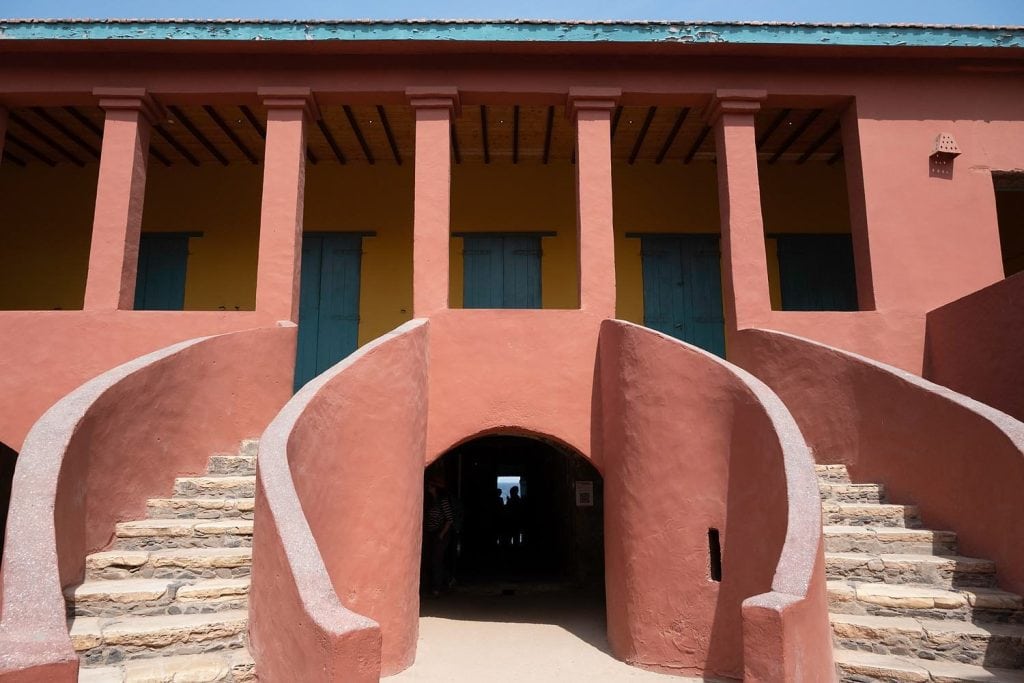
On Gorée Island, off the coast of Dakar, the House of Slaves today stands as one of the most powerful symbols of the memory of the transatlantic slave trade. Built in 1776, this house served as a transit point for thousands of Africans deported to the Americas. Now a museum and place of reflection, it attracts hundreds of thousands of visitors of all nationalities each year. Its famous staircase, cramped cells, and the raw emotion of the “Door of No Return” make it a site of world history and a poignant call for remembrance. History of the House of Slaves…
iconic locations

The Great Mosque of Dakar: Spirituality and Cultural Heritage

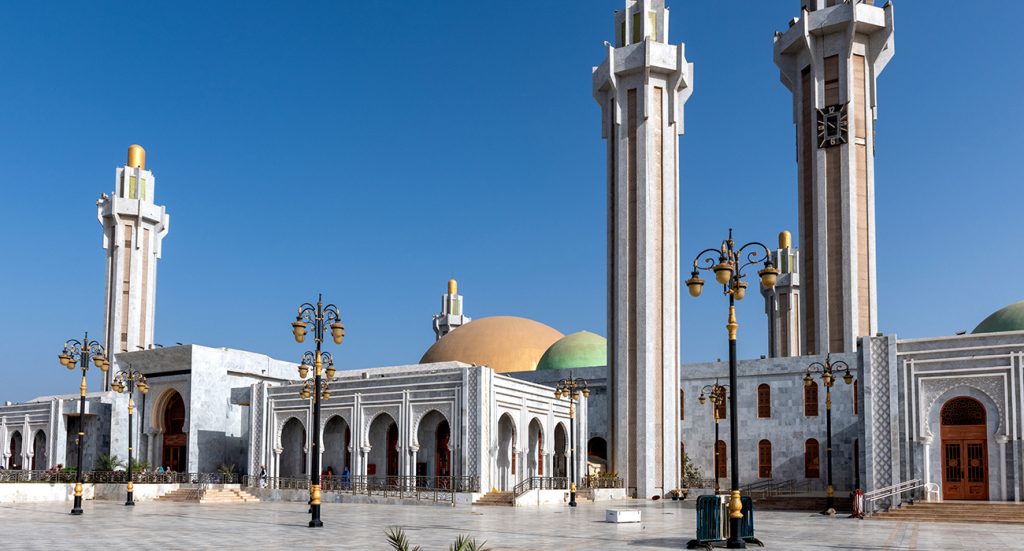
In the heart of Dakar, the Great Mosque of Dakar stands as one of Senegal’s major religious and architectural landmarks. Inaugurated in 1964 by King Hassan II of Morocco, President Léopold Sédar Senghor, and numerous religious dignitaries, it symbolizes both the modernity of post-independence Senegal, the country’s Arab-Muslim heritage, and the central role of faith in the urban life of the capital. Its colossal 67 m minaret, richly decorated façades with Moroccan mosaics, and vast prayer hall welcoming thousands of worshippers every Friday make the Great Mosque both imposing and welcoming, attracting believers, visitors, and lovers of monumental art. More than…
iconic locations

The Museum of Black Civilizations: Heritage and Modernity in Dakar

Opened in December 2018, the Museum of Black Civilizations (MCN) in Dakar has become in just a few years a major hub of the African and international cultural scene. Its circular design, inspired by traditional African huts, houses nearly 15,000 m² of exhibition space capable of displaying up to 18,000 items, with a journey spanning from prehistory to contemporary creation. Conceived as early as the 1960s by Léopold Sédar Senghor, it continues today the ambitious goal of offering, in the heart of Dakar, a space where Africans and their diasporas can tell their own story—outside the colonial lens—and affirm the…
iconic locations

The Théodore Monod Museum of African Art: Heritage Treasure of Dakar

Located at Soweto Square, in the heart of the Plateau district in Dakar, the Théodore Monod Museum of African Art (formerly the IFAN Museum) is one of the oldest museums in West Africa and one of the most prestigious on the continent. Founded in 1938, it is dedicated to the arts and traditions of West Africa and houses nearly 9,000 objects (masks, statues, jewelry, textiles, instruments, ritual objects). Its name honors the eminent French ethnologist and naturalist Théodore Monod, who served as its iconic director and shaped its scientific and museological direction. It is a must-visit for anyone wishing to…

Reservation process

Booking an activity on Que Faire Sénégal is simple and transparent. Our goal is to provide a smooth experience for the customer and clear management for our local partners. In summary You choose your activity You submit your request (no immediate payment required) The provider confirms or proposes another date You receive a link to pay a 20% deposit You pay the remaining 80% on-site on the day of the activity You rate the provider after the experience 1. Selecting the activity The customer chooses the service they want from the many activities available on the platform: excursions, walks, cultural…
Itinerary

Ideal Itinerary : 3 Days in Dakar

Envie de vivre une expérience inoubliable et enrichissante pour toute la famille, ou bien en couple ou entre amis...

The Dakar region, the beating heart of Senegal

Envie de vivre une expérience inoubliable et enrichissante pour toute la famille, ou bien en couple ou entre amis...

Are you a professional ?

List your business on que-faire-senegal.com Are you a player in leisure, well-being, culture, sports, services, or transportation in Senegal? Gain visibility and reach a new customer base by joining the first platform that makes it easy to discover and book activities for the general public, both residents and visitors. Why join que-faire-senegal.com ? Present your offer to a wide local and international audience, eager for new experiences and practical daily solutions. Enjoy increased visibility on the internet and search engines, even if you don’t have a dedicated website. Attract new customers through a search-optimized local listing and our recommendation system.…

About us

Que-faire-senegal.com is a digital platform dedicated to discovering and promoting activities to do in Senegal. Our goal is to offer the general public, whether residents or visitors, a comprehensive, practical, and inspiring overview of everything the country has to offer in terms of relaxation, entertainment, learning, or simply enjoying everyday life to the fullest. We launched our project in Dakar and the Petite Côte, two areas rich in initiatives and opportunities for outings, before gradually expanding our coverage to the entire country, including Casamance and the major tourist and cultural regions. Our mission is clear: to make all activities visible…

Our activities

Toutes les activités au Sénégal Privatisation possible pour l'ensemble de nos prestations, selon effectif - demande sur devis

Saly

Envie de vivre une expérience inoubliable et enrichissante pour toute la famille, ou bien en couple ou entre amis...

FAQ

Reservation & operation Simply select the activity of your choice on our website, enter your desired date, the number of participants, and your contact details. Once your request has been sent, you will receive an email and a WhatsApp message confirming that your request is being processed. No. When you confirm your cart, no payment is required. It simply indicates that a 20% deposit will be due only once the date has been confirmed by the service provider.  As soon as the service provider confirms the date, you will receive a secure payment link (by email and WhatsApp). This link…

News

What to do and What to see in Senegal From fishing village to seaside resort Before its tourist boom, Saly was a peaceful Sérère village, where life revolved around fishing, agriculture, and craftsmanship. The place name “Portudal” comes from an old Portuguese trading post, “Porto de Ale,” which left its mark on the town’s history as early as the 16th century. The opening of the seaside resort in 1984 transformed daily life, attracting hotels, residences, shops, sports facilities, and restaurants. Despite these profound changes, Saly remains rooted in its traditions: daily returns…

Our partners

Need information on the best restaurants in Martinique? Looking for trails to hike along waterfalls and Mount Pelée? Wondering when is the best time to visit Martinique and how much to budget? Martinique airlocal is the website you absolutely must bookmark during your vacation in Madinina!

Cancellation policy

Cancellation policy At Que Faire Sénégal, we do our best to offer a smooth and fair experience, for our customers and for our local partners. Our terms are designed to be clear, flexible and transparent. 💳 In short: when you book, you pay 20% for your booking (10% for an activity whose price is set by the State), plus VAT. This is the only amount covered by these terms: the balance is paid on site, to the provider, on the day of the activity. 1. Which category is your activity in? Every activity belongs to one of the four categories…

CGV/CGU

Que Faire Sénégal Last updated: 22 September 2026 1. Preamble These General Terms and Conditions of Sale (hereinafter "GTC") govern the relationship between: the company Novazeo, operator of the Que Faire Sénégal platform and any person making a booking through the site The platform's purpose is to offer, promote and facilitate the booking of tourist, cultural and leisure activities in Senegal. Novazeo acts as an intermediary putting the client in contact with the service provider. 2. Purpose These GTC set out: the booking terms the payment terms the cancellation conditions each party's responsibilities 3. Acceptance of these terms Any booking…

Legal Notice

Legal Notices Last updated: 21 September 2026 Publisher The website que-faire-senegal.com is published by NOVAZEO, whose registered office is at 21 Avenue Lamine Guèye, Dakar, Republic of Senegal.Registered with the trade register under number SN-DKR 2026-A-2821.Represented by Mr Mathieu Potiron.Email: reservation@que-faire-senegal.comPhone: +221 33 812 85 02 Publication director Mathieu Potiron, representative of NOVAZEO. Hosting The website is hosted by OVH SAS, 2 rue Kellermann, 59100 Roubaix, France — phone: +33 (0)9 72 10 10 07 — www.ovhcloud.com Intellectual Property Rights: The general structure, as well as texts, animated or still images, sound, drawings, photographs, logos, trademarks, graphics, and any other…

accueil

The most beautiful activities in Senegal Experience unforgettable moments The most beautiful activities in Senegal Experience unforgettable moments The most beautiful activities in Senegal Experience unforgettable moments Discover our most popular activities The best things to do on que-faire-Senegal.com Ideas for 100% outdoor activities for residents and travelers Fancy an active weekend near Dakar, a wellness break in Saly, or a safari in Bandia? If you're wondering what to do in Senegal, our selection combines sea, nature, and culture, with activities suitable for residents and tourists alike. Between the capital and the Petite Côte (Saly, La Somone, Ngaparou, Popenguine, Joal-Fadiouth,…

Your cart

You may be interested in… Your cart is currently empty! New in store

Checkout

JTVCd29vY29tbWVyY2VfY2hlY2tvdXQlNUQ=