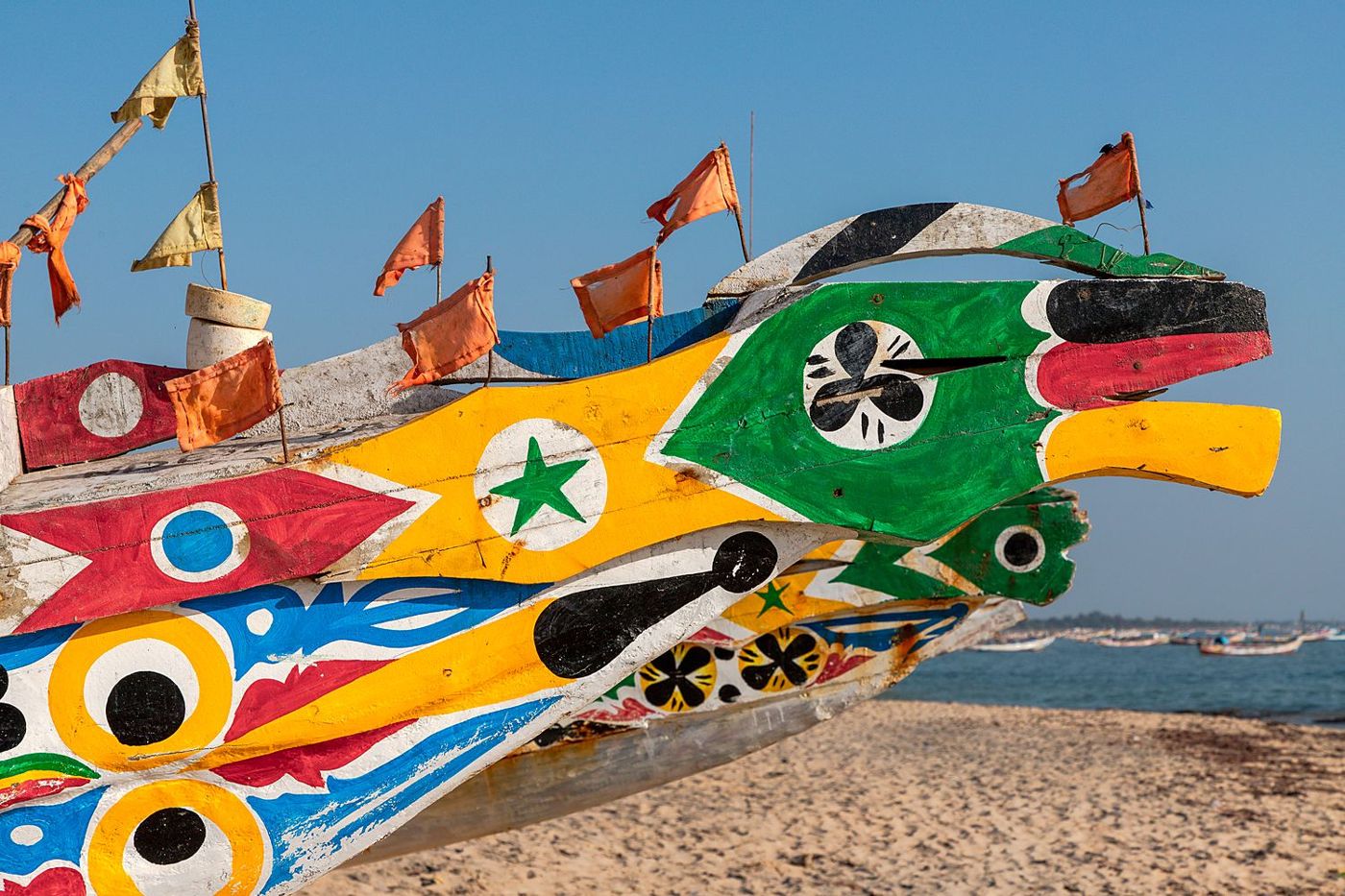
You do not go to Egueye Island to see something; you go so that nothing happens. No road, no village, no engine once the pirogue is moored: a quarter of an hour along the bolong (tidal creek) from Diakène, and you are on a small Lower Casamance island where the mangrove decides everything, from the light to the time you head back. Our advice: do not make it one more box to tick on a packed itinerary. Give it at least an afternoon, ideally a night.
At a glance
| Region | Casamance — Ziguinchor Region, Oussouye department; opposite the village of Diakène Ouolof, Oukout commune |
| Type | Small uninhabited mangrove island, on the edge of a bolong |
| Getting there from Dakar | Flight to Cap Skirring or Ziguinchor, road to Diakène Ouolof, then pirogue |
| Crossing | By motorised pirogue from Diakène Ouolof, 10 to 20 minutes |
| Recommended time | Half a day at the very least; a night for the mangrove at daybreak |
| Official fees | No additional official fees |
| Best time to go | Dry season, November to May |
| Related QFS activities | Mangrove kayaking, pirogue trips, island excursions, birdwatching |
Resident or visitor: the same silence, two ways to take it
Live in Senegal? Egueye is the antidote to the working week, provided you are already in Casamance. From Cap Skirring or Oussouye, half a day is enough: transfer to Diakène, pirogue, kayaking in the bolongs, back before nightfall. On activities booked through QFS, you get the resident rate: up to 30% off, enough to make it a fixture of every stay in Cap Skirring.
Just passing through? This is the place that gives the word bolong its meaning. There is nothing to visit here, and that is the whole point. Come with no plan and a book, and let the tide set the time for your walk.
An island left to the mangrove
What strikes you first is the absence. There is no village on Egueye: the island is uninhabited, and village life is on the other bank, in Diakène Ouolof, where the pirogues leave from. Over there, people grow rice and vegetables and fish in the bolongs, and that is where the fish and fresh produce that reach the island come from. The division is clear: the mainland for people, the island for the mangrove.
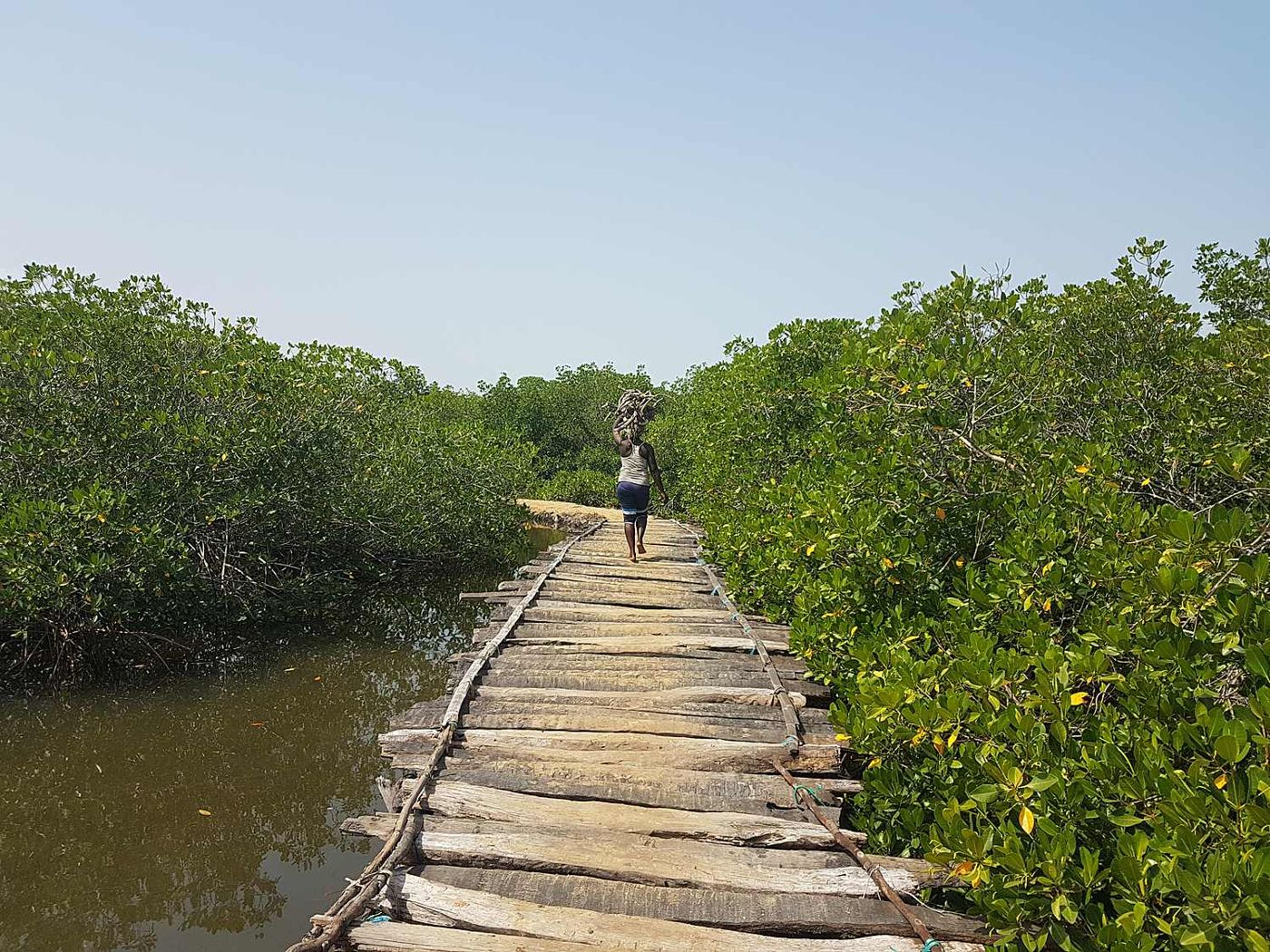
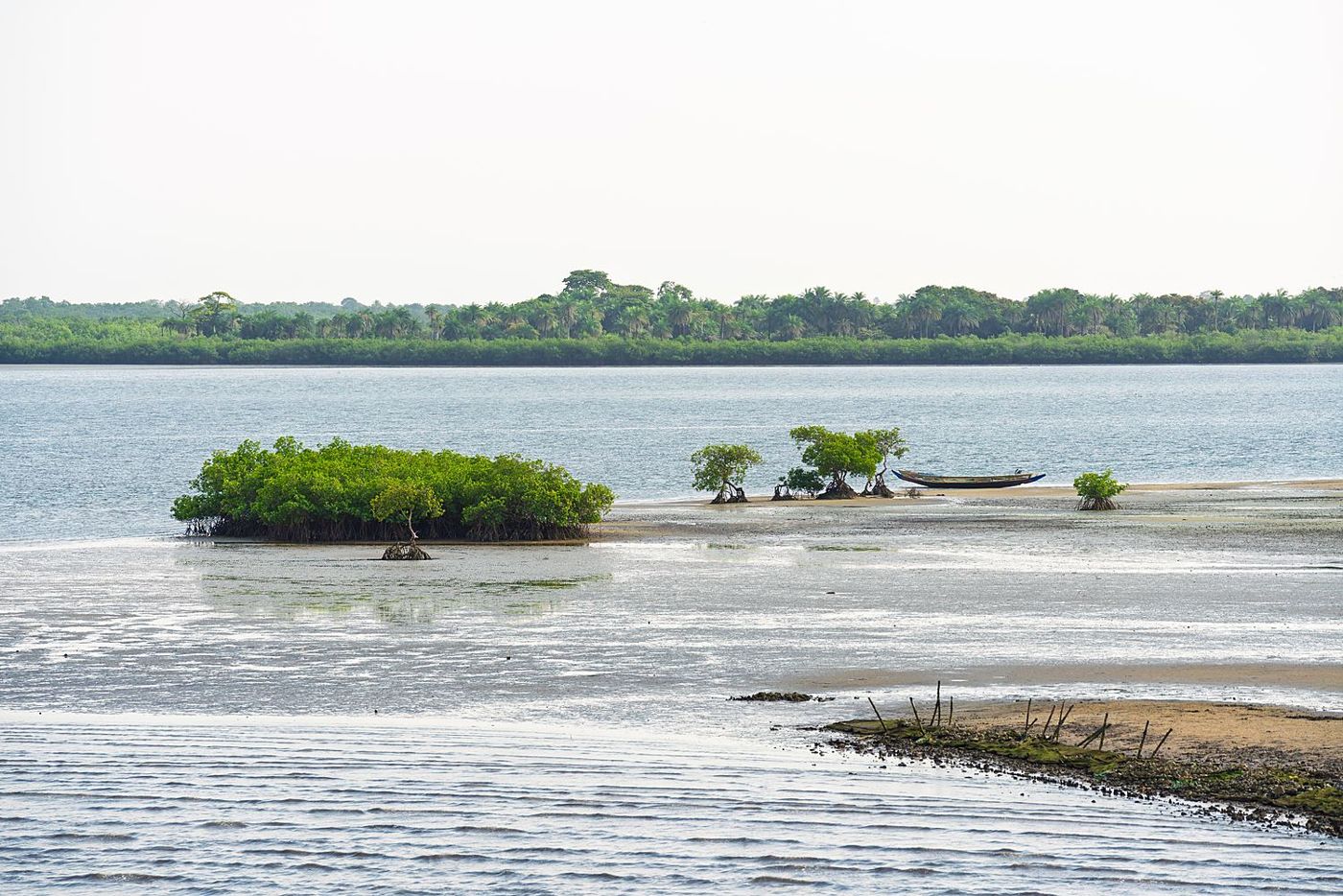
The crossing itself is part of the visit. The pirogue leaves the bank at Diakène, threads through a channel lined with mangrove trees, comes out into a wider stretch of water, then pulls in at the foot of the island. At low tide, the exposed mud reveals the stilt roots of the mangroves and, with luck, a crocodile warming itself in the sun. Egrets and herons fish along the banks.
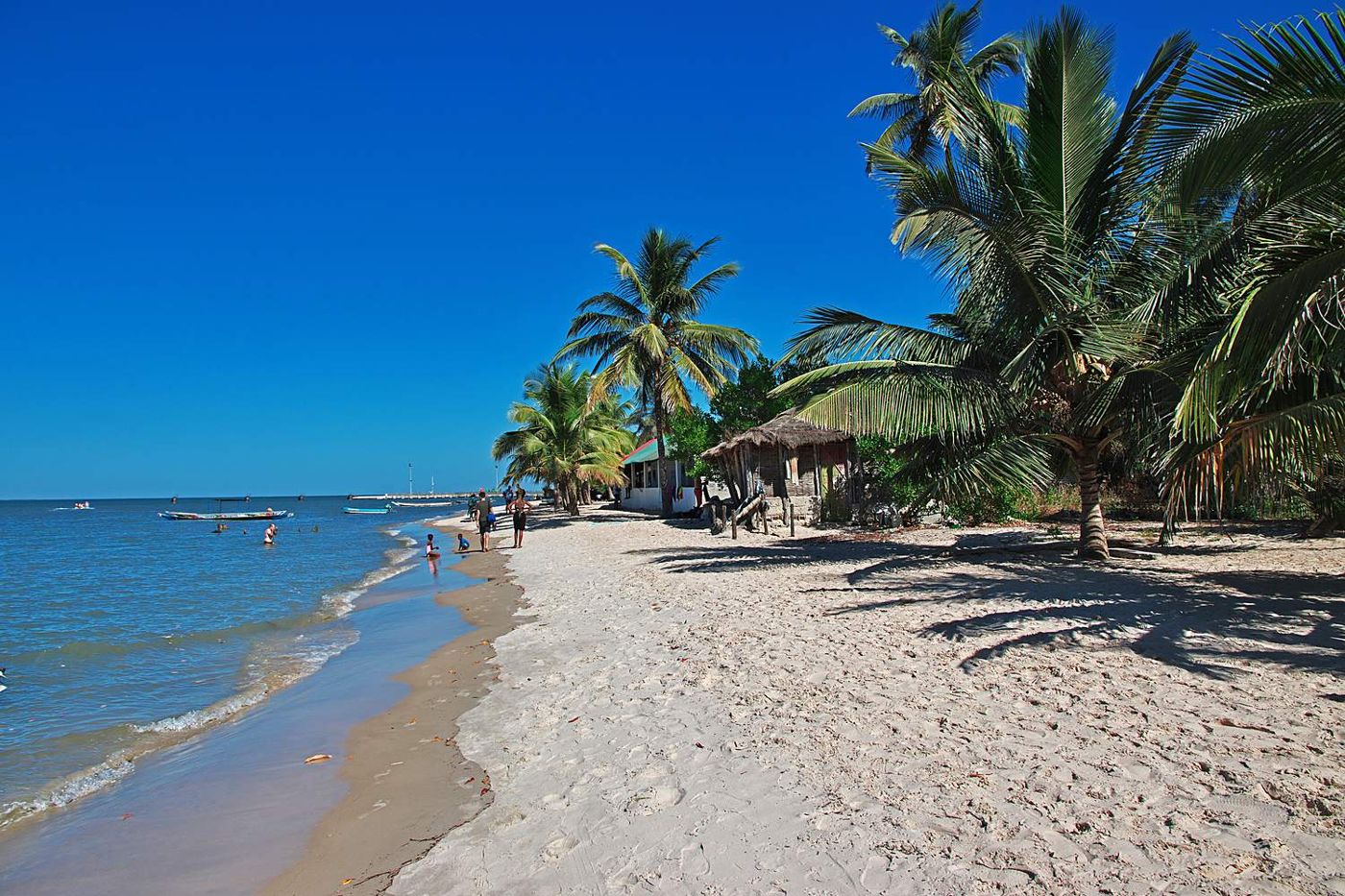
On the island, the setting comes down to a few things: trees, a waterline, small sandy cliffs and a little beach on the bolong, the arm of the sea that carries the Casamance River inland. Nothing like the Atlantic at Cap Skirring: the water is calm and flat.
A mangrove being cared for. The mangrove of Lower Casamance has suffered from droughts and rising salt levels. Around Egueye, kayak outings are often combined with mangrove replanting: you plant propagules in the mud and, in doing so, come to understand that these trees hold everything together, from the fish to the oysters to the rice paddies.
Mangrove oysters. Clinging to the roots, they are harvested by women using traditional methods, in time with the tides. Grilled over embers, they are the local speciality, depending on the season.