Senegal & the road to Saint-Louis
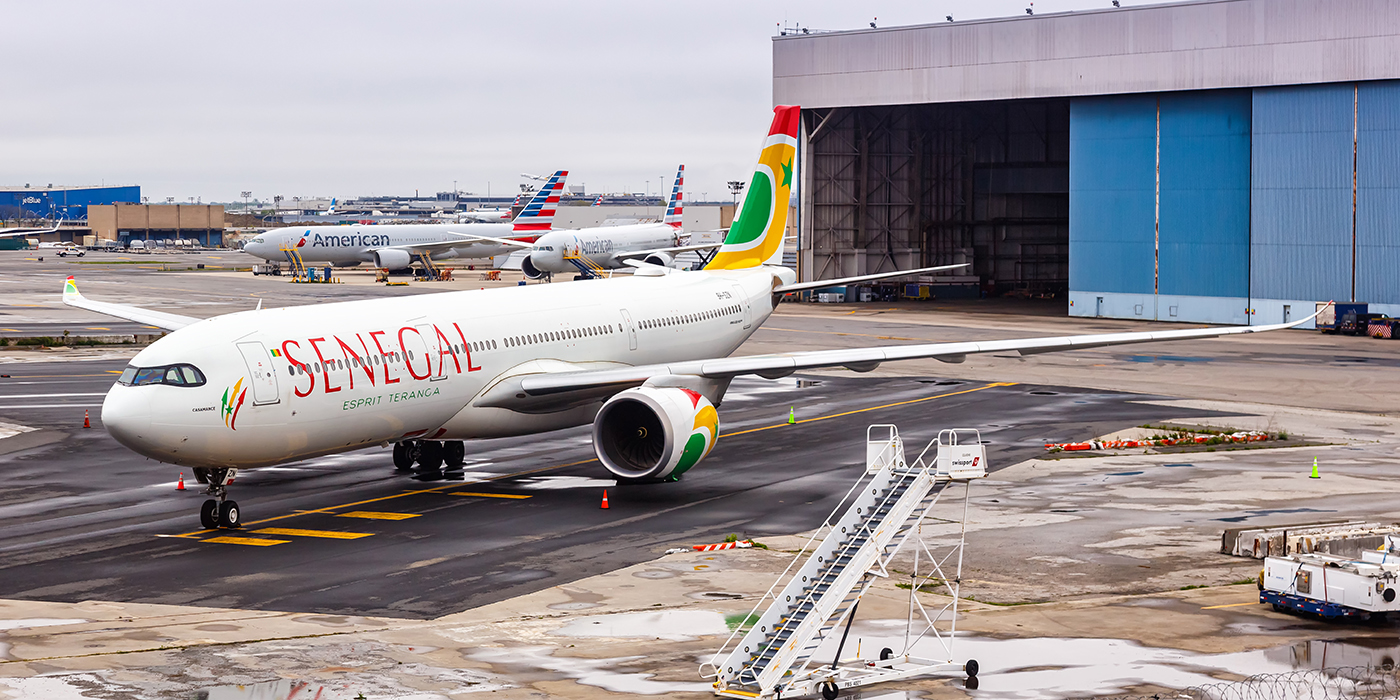
Saint-Louis was an aviation town long before it was a town far from airports. A UNESCO World Heritage Site since 2000, it was a stopover for the Aéropostale airmail service. Today, the country’s front door is Blaise Diagne International Airport, in Diass. The good news: it already sits on the road to Thiès. To head north, you do not cross Dakar; you drive to Thiès, then the N2 runs up via Louga to Faidherbe Bridge. Allow 4 to 5 hours depending on traffic and stops.
A Dakar–Tivaouane–Saint-Louis motorway is under construction. Until it opens, it makes no difference to your journey: all the times given on this page are for the current road.
And Saint-Louis airport? It does exist, in Bango, on the edge of the city. Renovated, it has been served since January 2024 by a domestic link with Dakar, with an irregular schedule: flights postponed, a relaunch in 2025, frequencies that vary with the season. No regular international flights land there. For the vast majority of travellers, then, the transfer starts from AIBD.
Formats: transfer options
- AIBD → Saint-Louis: the driver tracks your actual landing time, waits for you at the exit with a sign bearing your name, then heads straight up the northern road.
- Saint-Louis → AIBD: departure worked out backwards from your flight time, with a comfortable margin for 4 to 5 hours on the road plus check-in.
- Return trip: both journeys booked together, the simplest option for a stay with fixed dates.
- Saint-Louis airport → accommodation: for those arriving on the domestic link, a short drive to the island, Sor or the Langue de Barbarie.
- Onward to Gandiol or Djoudj: drop-off right at your campement (village guesthouse), without changing vehicles in Saint-Louis.
Where to go from the airport
- AIBD → Saint-Louis: 4 to 5 hours via Thiès and Louga. The island is reached over Faidherbe Bridge; Sor, the station district, is on the mainland, just before it.
- Saint-Louis → Langue de Barbarie: Guet Ndar and the start of the sand spit are a few minutes from the island across the bridge; the national park itself is visited by pirogue from Gandiol.
- Saint-Louis → Gandiol: 15 to 20 kilometres south, under an hour, passing Guembeul Reserve on the way.
- Saint-Louis → Djoudj: around 60 kilometres north, so one to two hours on the national road towards Ross Béthio and then a laterite track, more comfortable in a high-clearance vehicle.
From AIBD, these times come on top of the 4 to 5 hours to Saint-Louis. For the rest of your stay, see intercity transfers and vehicle hire with driver; for Dakar and the Petite Côte, the airport / Dakar transfers.
When to book your transfer
Your landing time decides everything. Many flights from Europe arrive in the evening or during the night: driving straight on for 4 to 5 hours means reaching Saint-Louis at dawn. Many people prefer to sleep near the airport and set off the next day in the cool of the morning. On the way back, leave with a real margin.
The dry season, from November onwards, is the busiest: it is bird time at Djoudj, which closes during the rainy season (hivernage), July to October. The jazz festival, in spring (in May in recent years), fills the town: book your transfer at the same time as your accommodation.
Good to know & budget
The price of each transfer is shown on its listing and is per vehicle, not per person: on a journey this long, with three or four of you, the difference is clear. It depends mainly on the final destination and the vehicle, a saloon for a couple, a people carrier for a family with luggage. You pay 20% to secure your booking (the booking fee), and the balance is paid on site, on the day, to the driver. If you live in Senegal, you get the resident rate: up to 30% off (the exact rate is shown on each listing). Only the motorway toll as you leave the airport deserves your attention: depending on the option, it is either included or payable on site and not included in the price, and the listing says which. Park entry for Djoudj and the Langue de Barbarie is also paid on site and not included in the price.
When booking, give your flight number, the exact airport, the precise drop-off address (the island, Sor and the sand spit each have a different access), the number of passengers and bags, and whether you need a child seat.
Who is it for?
Visitors starting their trip in the north get an arrival with no haggling at the airport exit, no change of vehicle in Dakar, and no ending up on the wrong bank in Saint-Louis. It is the right solution for a family, a group laden with camera gear, or someone travelling alone at night.
Residents know the road and can take a sept-places (shared taxi), but a transfer is still invaluable for collecting loved ones at the airport and driving them straight to Saint-Louis, for a weekend in Gandiol without going through the bus station, or for getting home from a trip on a night flight.
In May 1930, it was from Saint-Louis that Jean Mermoz took off, from the river, in a seaplane loaded with mail, bound for Natal in Brazil, which he reached after just over 21 hours in the air: mail was finally crossing the South Atlantic by air. Almost a century later, the journey to Saint-Louis ends by road. You might as well make it sitting in the back, watching Faidherbe Bridge appear at the end of the national road.
Frequently asked questions
How long does it take from Blaise Diagne Airport to Saint-Louis?
Allow 4 to 5 hours by road via Thiès and Louga, depending on traffic and stops. The airport is on the road to Thiès, so you don’t cross Dakar.
Can I fly directly into Saint-Louis?
Saint-Louis has an airport, in Bango, linked to Dakar by a domestic route whose schedule changes with the seasons. There are no regular international flights. If your ticket says Saint-Louis, the transfer from Bango is short; otherwise, it starts from AIBD.
Is the price per person?
No, it’s per vehicle and shown on each listing. You pay 20% to secure your booking, and the balance is paid on site, on the day, to the driver. Residents get the resident rate: up to 30% off. Depending on the option, the toll is either included or payable on site: the listing says which.
Can the transfer go as far as Djoudj or Gandiol?
Yes. Gandiol is just under an hour south of Saint-Louis, Djoudj one to two hours north along a track. From AIBD, these times come on top of the 4 to 5 hours to Saint-Louis. Park entry is paid on site and not included in the price.
Is the motorway to Saint-Louis open?
No, it’s under construction. The journey times given are for the current road, the N2.