Senegal & massage: a family gesture before it was a treatment
Here, massage started out as something done at home. In West Africa, massaging a baby is knowledge passed down between women, from grandmother to mother: after the bath, the baby is rubbed with a rich butter or oil, its arms and legs smoothed, its body handled with movements learnt by watching the elders. It is a way of looking after your own before it is a technique.
At the heart of that gesture is shea butter. It comes from the nuts of a savannah tree that grows in the south-east of the country: in the Kédougou region, women’s groups gather the nuts and turn them into butter. Melted by the warmth of the hands, it glides without sticking and nourishes skin worn by the sun, the harmattan and the salty air. Other local oils sometimes join it, such as palm kernel oil or touloucouna oil, pressed from the seeds of a West African forest tree.
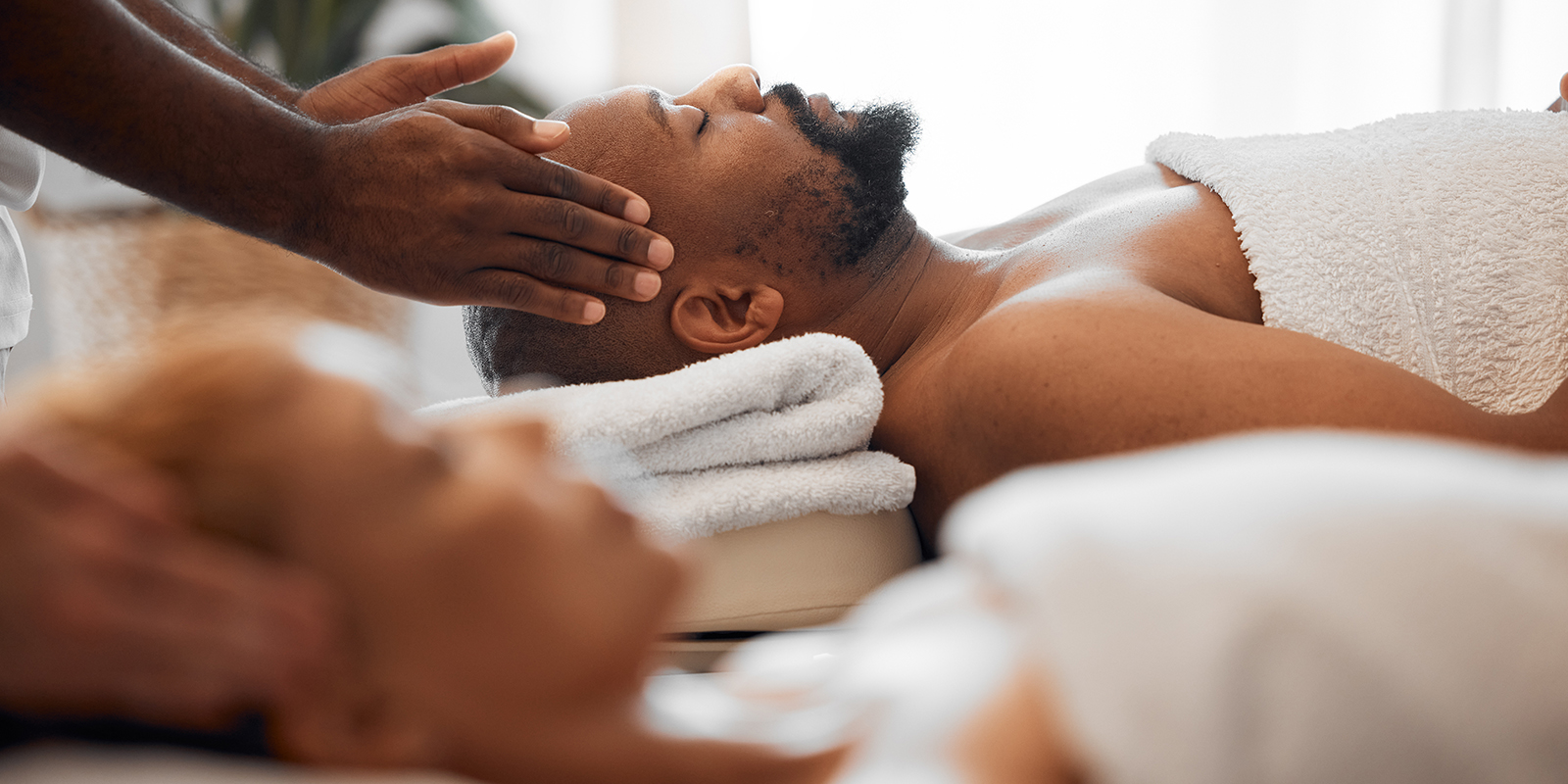
Traditional massage, as it is done in treatment rooms today, keeps that signature: slow, enveloping, firm movements, and a practitioner who adjusts the pressure to the person rather than to a fixed routine. Salons have added what the wider wellness world has brought to the country: Swedish massage, hot stones, reflexology, shiatsu, Thai massage, sports massage. Depending on the listing, you choose one or the other, or a blend of both.
Cupping completes the picture. Widely practised in the Muslim world, it is known there as hijama in the form that adds small incisions to the skin. We present it here for what it is, a traditional wellness practice, not a treatment.
Our video series Aythia Ñu Dem devoted an episode to massage: a good way to see what a session looks like before you book.
Formats: which massage to choose?
- Relaxing or traditional massage: the basic format, from 30 minutes to an hour and a half. Depending on the listing, you choose between a gentle, enveloping massage, a firmer traditional African massage, an invigorating, Swedish, hot stone, abdominal or Thai massage. Offered in Dakar, Saly, the Somone and Ngaparou.
- Sports massage: thirty minutes of deep work on the legs, back and shoulders, before a competition or after exercise. In Dakar.
- Newborn, baby and child massage: 30 minutes or an hour in a practice in Guédiawaye, with gentle organic oils and movements suited to the child’s age, from birth.
- Cupping and hijama: an hour in Dakar, at the practice or at home depending on the format you choose.
- Couples massage: for a couple or two friends, side by side, in Ngaparou and the Somone.
- Related treatments: reflexology, shiatsu, scalp treatment, gentle drainage massage, depending on the place.
Scrubs, hammam and body wraps come under body treatments; for a calm moment without contact, see yoga & meditation.
Where to get a massage in Senegal
- Dakar: the widest choice. Relaxing, traditional or Thai massage in several neighbourhoods, from Ngor to the Plateau by way of Mamelles and Yoff, plus sports massage and cupping.
- Guédiawaye: in the suburbs, the session designed for little ones, from newborns to children.
- The Petite Côte: in Saly, a choice of six one-hour massages; in the Somone, near the lagoon, and in Ngaparou, massage on your own or as a couple. Ideal for slipping an hour of relaxation into a weekend by the sea.
- Cap Skirring, in Casamance: four formats from 30 minutes to an hour, from relaxation to shiatsu by way of reflexology, to round off a day on the beach.
When to get a massage
A massage happens indoors or in the shade: you can book one all year round. The season mostly changes what your skin and body need. During the dry season, from November to May, the harmattan blows mainly from December to February and dries out the skin: that is when a shea butter massage does the most good. It is also high season on the Petite Côte and in Cap Skirring, so book early for a weekend. During the rainy season (hivernage), from July to October, the heat is heavy and humid: go for a light massage, early in the morning or late in the day.
On a practical level, avoid a massage straight after a big meal or a long time in the sun, and keep half an hour free and quiet after the session. For athletes, schedule the massage the day before a race or within the two days after it, never on a fresh injury. For a baby, choose a time when they are awake and calm, neither hungry nor in the middle of digesting.
Good to know & budget
Before the session, talk about your health. A massage is no substitute for medical advice. Ask your doctor first if you are pregnant, if you have a fever, an infection or a wound on the skin, varicose veins, circulation or heart problems, if you have recently had an operation or an injury, or if you take blood-thinning medication. For cupping, and even more so for hijama, which breaks the skin, that advice is a must: insist on single-use equipment and speak to your doctor before booking. For a baby, ask your paediatrician or midwife before a first session, especially if the baby was born prematurely or has a skin condition.
What massage is not. It relaxes, loosens up and makes you feel good. It does not cure any illness, does not make you lose weight and does not treat a baby: a child with a fever or who is crying in an unusual way should see a doctor, not a masseur.
During the session. Say what suits you: gentler pressure, areas to avoid, an oil you might be allergic to. Oils and towels are provided on most listings. For a child’s massage, stay with them.
Booking and paying. The price shown on each listing is the price of the service; it depends on the length, the technique and the place. You pay 20% to secure your booking (the booking fee). The balance is paid on site, on the day of the massage. There are no additional official fees. If you live in Senegal, you get the resident rate: up to 30% off (the exact rate is shown on each listing). For a couples massage, check the listing to see whether the price is per person or for both of you.
Who is it for?
Massage appeals to very different needs: the Dakar office worker with a stiff back, the runner training for a half-marathon, parents who want to give their baby a gentle moment, the couple at the end of their stay. The little ones have their own format; for more ideas of outings with them, browse the family days & children’s outings.
If you live in Senegal, make massage a habit rather than a birthday present: a thirty-minute session on a weekday in Dakar, a sports massage timed around your race calendar, with the resident rate easing the bill when you come back often. If you are passing through, save the massage for the end of a busy day or for your last day, before a long flight: on the Petite Côte or in Cap Skirring, an hour with shea butter after the beach is one of those souvenirs you take home without any luggage.
The butter melting in your masseuse’s hands has often come a long way. In Kédougou Region, at the other end of the country, women’s groups gather the nuts fallen beneath the shea trees of the savannah, dry them, crush them, roast them, then grind them and churn the paste until the butter comes out. Work done by hand, far from the massage tables of Dakar or Saly, and it is that work you feel on your skin when you choose shea butter.
Frequently asked questions
What is a traditional massage in Senegal?
A massage with slow, enveloping movements, often with shea butter, handed down from the care women gave to babies. In the treatment room, it is often combined with techniques from elsewhere, such as Swedish massage or hot stones.
Can I book a massage for a baby?
Yes: a listing in Guédiawaye offers newborn, baby and child massage, from birth, in 30 minutes or an hour, with gentle oils. Ask your paediatrician before a first session and stay with your child.
Can massage treat pain or an illness?
No. Massage, cupping and hijama are presented as wellness practices, not as treatments. If you are pregnant, ill, on medication or recently injured, see your doctor before booking.
Where can I get a massage outside Dakar?
On the Petite Côte, in Saly, the Somone and Ngaparou, and in Casamance, in Cap Skirring. Guédiawaye hosts massage for little ones.
How does payment work?
You pay 20% to secure your booking (the booking fee), and the balance is paid on site, on the day of the massage. There are no additional official fees.
Is there a rate for residents?
Yes. If you live in Senegal, you get the resident rate: up to 30% off (the exact rate is shown on each listing).