Dakar
Home›Locations›Dakar Region›Dakar
What to do in Dakar?
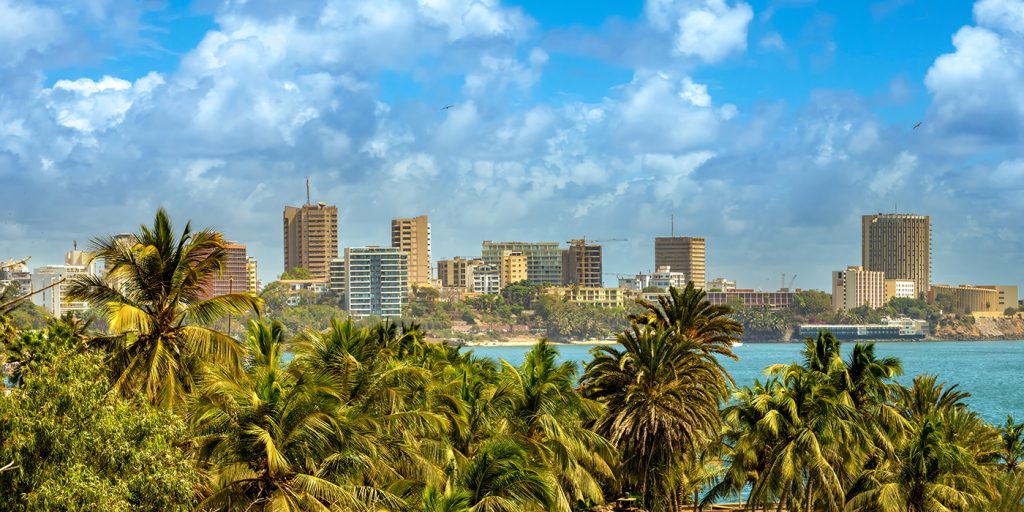
To understand Dakar, put the map away and follow the coast.
Category
Duration
Where it happens
Who for
Guide language
116 activities
- Waxing & hair removal
Waxing and hair removal in Dakar
Dakar · 15 to 45 min depending on the area
From2 750 CFAResident price2 613 CFA−5 % - Wellness & relaxation
Pedicure and manicure in Dakar
Dakar · 30 min to 1 h
From2 200 CFAResident price2 090 CFA−5 % DO YOU LIVE IN SENEGAL?
AT LEAST
−5 %
AND UP TO
−30 %
off every activity in the catalogue.
The resident price is shown before you sign up. It is activated after a simple phone call, just once.
Get my status verified- Transport & transfers
AIBD airport transfer to Saint-Louis
Dakar · 4h
From55 000 CFAResident price52 250 CFA−5 % - Transport & transfers
AIBD airport transfer to and from Dakar
Dakar · 40 min to 1 h depending on traffic
From27 500 CFAResident price26 125 CFA−5 % - Local classes & workshops
Wood carving workshop in Dakar
Dakar · 1 week
From55 000 CFAResident price52 250 CFA−5 % - Nature & culture discoveries
Guided tour of Dakar: Plateau and Medina
Dakar · half-day
From11 000 CFAResident price10 450 CFA−5 % - Excursions & adventures
Mountain bike and e-bike ride on the Dakar beaches
Dakar · Full day
From5 500 CFAResident price4 950 CFA−10 % - Water sports & sea activities
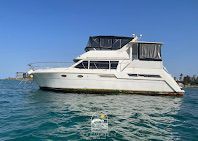
Motorboat trip in Dakar by speedboat
Dakar · 2h – 3h
From187 000 CFAResident price177 650 CFA−5 % - Water sports & sea activities
Multi-dive pack and certifications in Dakar
Dakar · 2–3 days
From55 000 CFAResident price52 250 CFA−5 %
At a glance
| Region | Dakar Region, Dakar department (the city is made up of 19 district municipalities, the communes d’arrondissement) |
| Type of place | Capital of Senegal, a city on the Cap-Vert peninsula, at the westernmost tip of the African continent |
| Key districts | Plateau, Médina, Fann, Corniche, Ouakam, Mamelles, Almadies, Ngor, Yoff; Gorée just offshore |
| Getting there from Blaise Diagne International Airport (AIBD) | About fifty kilometres; just under an hour by TER (Regional Express Train), since 28 September 2026, an hour or more on the motorway depending on traffic |
| Recommended time | Three days for the essentials; a weekend for a resident focusing on one area |
| Official fees | No additional official fees for most activities in the city; the Gorée ferry and island tax, museum and park entry are payable on site and not included in the price |
| Best time to go | November to May, the dry season; the rainy season (hivernage), July to October, is hot and humid |
| Top activities on QFS | Guided tours, trips to Gorée and the islands, surfing, boat trips, cooking, drumming, crafts, wellbeing |
Resident or visitor: two ways not to let Dakar wear you down
If you live in Senegal, you know the temptation: seeing Dakar only through a windscreen, between home, the office and the flyover. The cure is a simple habit: turn your Saturdays into coastal outings. A surf session at Ngor at sunrise, a crossing to Ngor Island for lunch, a cooking or drumming workshop in the afternoon, and the Corniche on foot as the sun goes down. None of it requires leaving the peninsula, and that is exactly what makes life in Dakar such a luxury. Remember the resident rate too: on QFS you get up to 30% off depending on the activity, which turns a “tourist” outing into a regular pastime. And save Gorée for a weekday, when the island is quiet again.
If you are visiting, the golden rule is to think in time, not kilometres: ten kilometres or so can take forty-five minutes at rush hour. So group your days by area. A “memory” day in the south-east, with the Plateau, its museums and Gorée; an “ocean” day in the west, with the Corniche, the African Renaissance Monument, the Almadies and Ngor; and half a day for an activity that puts you in touch with the people of Dakar, a workshop, a market tour or a surf session. And if you land at AIBD, 2026 brings a real change: the TER drops you in the centre without relying on the motorway.
A city best read along its coastline
Dakar was born of a port. Founded as a French military post in 1857 on the sheltered harbour of the Cap-Vert peninsula, it became the capital of French West Africa in 1902, then of independent Senegal in 1960. That history still shows in the geography: power, the ministries and the old trading houses cling to the Plateau, on the headland above the port; the Médina, just to the north, is its working-class counterpoint, tightly packed, noisy and Dakar to the core.
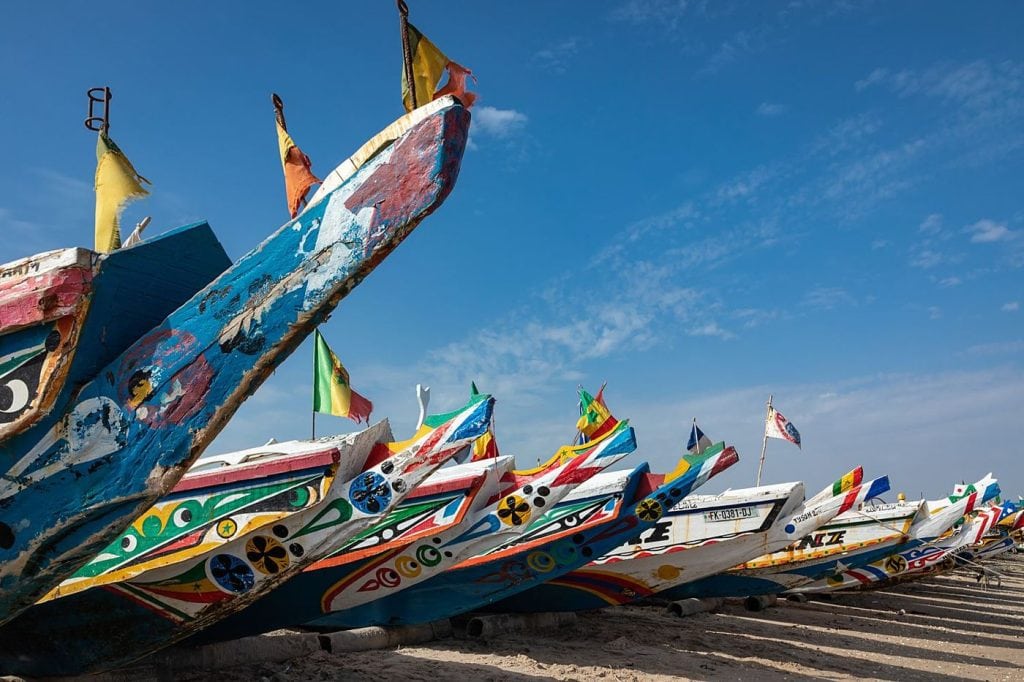
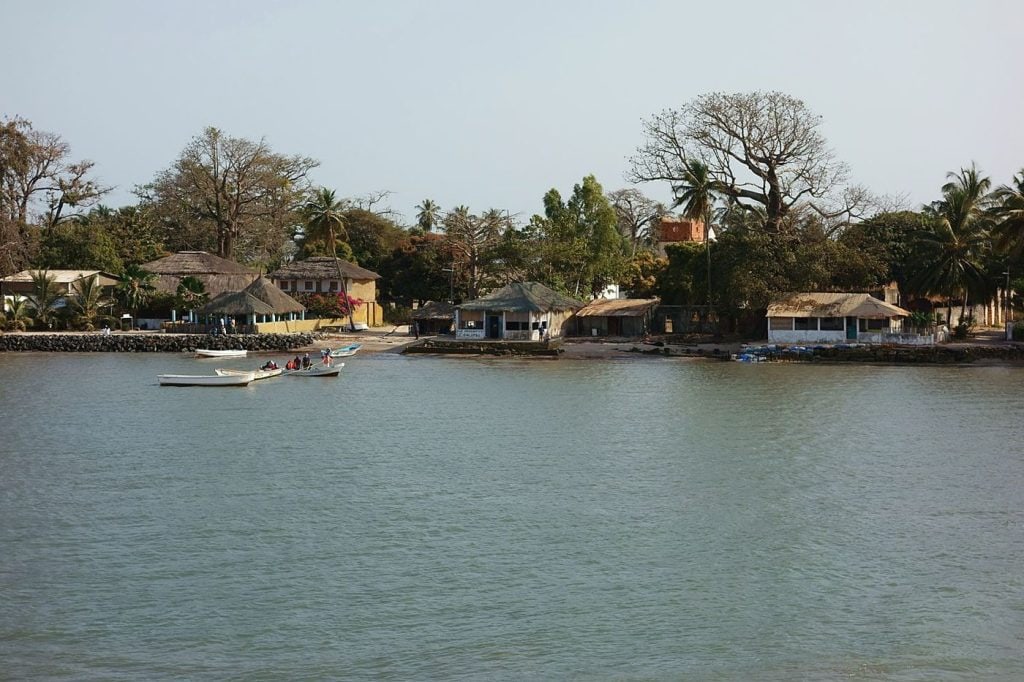
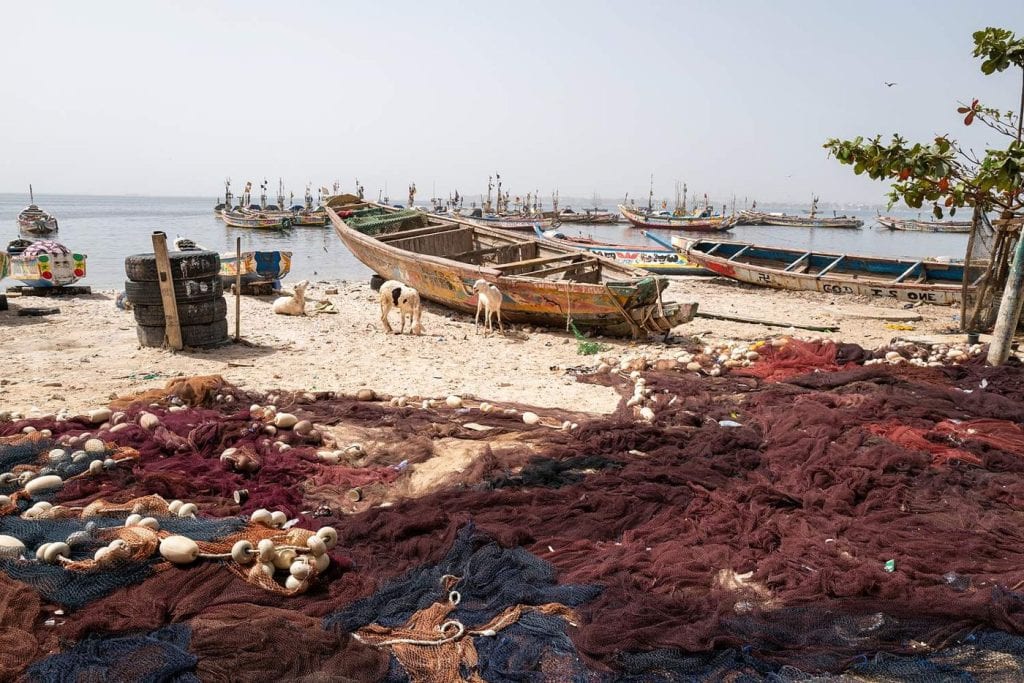
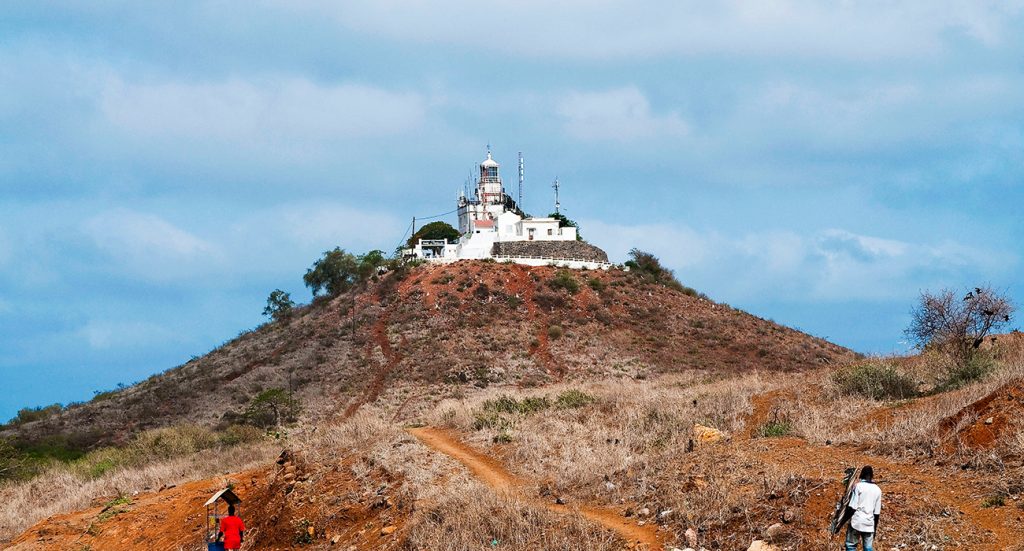
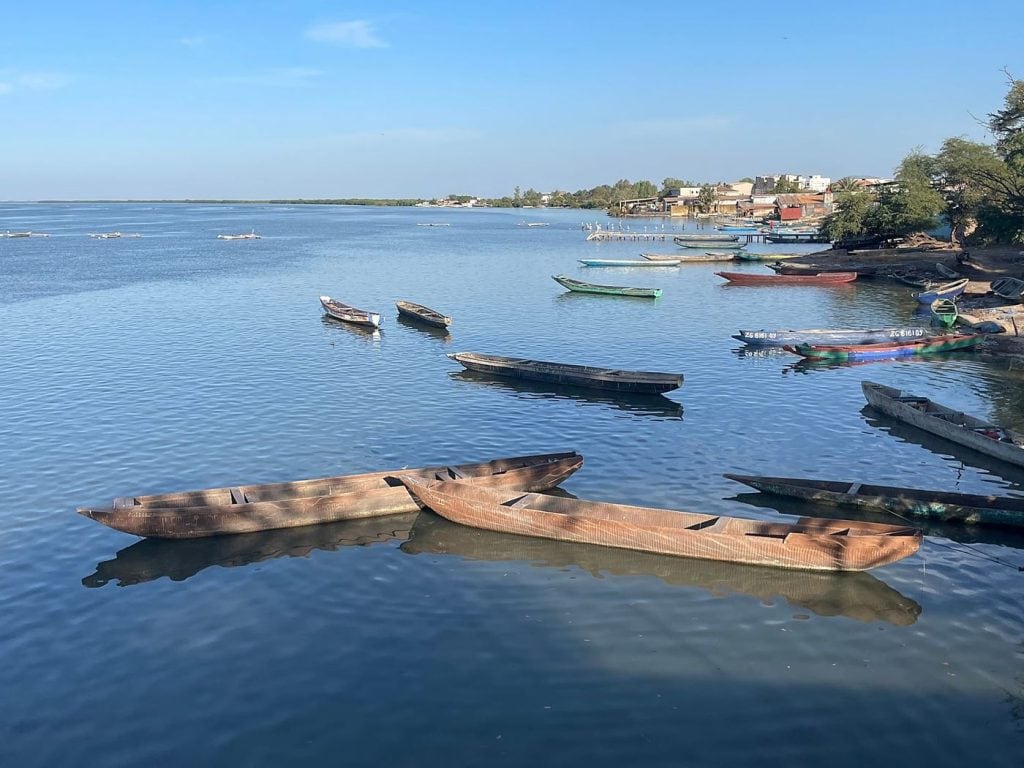
The further west you go, the more the city opens up. First Fann and its university, then the Corniche Ouest, which runs along the ocean for kilometres and becomes an open-air gym for the whole capital as soon as the heat drops. Next comes Ouakam, a former Lebou village turned neighbourhood, and the Mamelles, two hills of volcanic origin: one carries the lighthouse, the other the African Renaissance Monument, a bronze statue some fifty metres tall unveiled in 2010. At the end, the Pointe des Almadies marks the westernmost point of mainland Africa, before the coast curves back up towards Ngor and Yoff, Lebou fishing villages that have kept their pirogues on the sand even as the city has swallowed them.
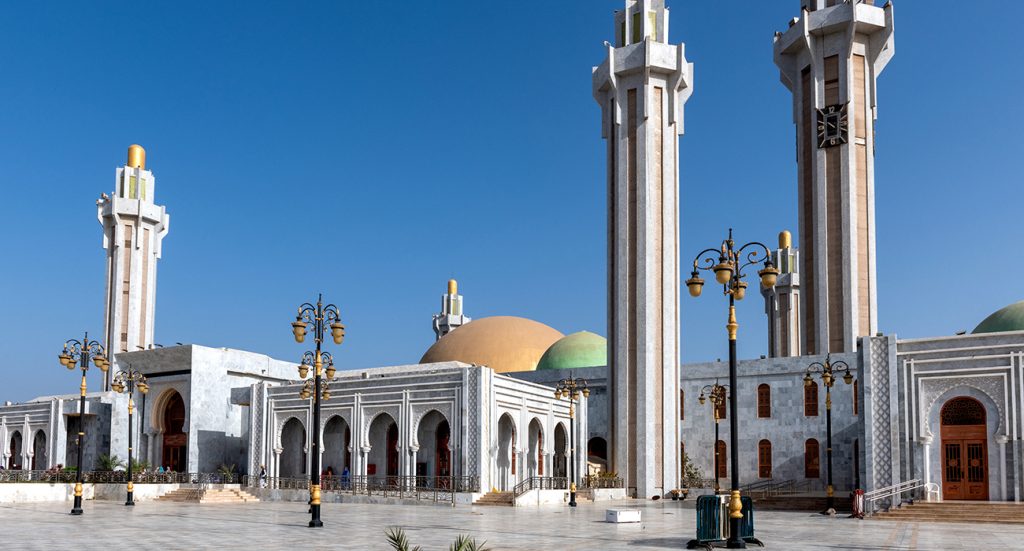
That gradient is what gives Dakar its charm: in a single morning along the coast you go from the colonial administration to the fishermen, from museums to surf spots, from Friday prayers at the Mosque of the Divinity, tucked into a cove in Ouakam, to terraces facing the open sea. And across from it all, a short ferry ride away, Gorée Island, a UNESCO World Heritage Site since 1978, recalls the reality of the Atlantic slave trade.
Read more
What to do, area by area
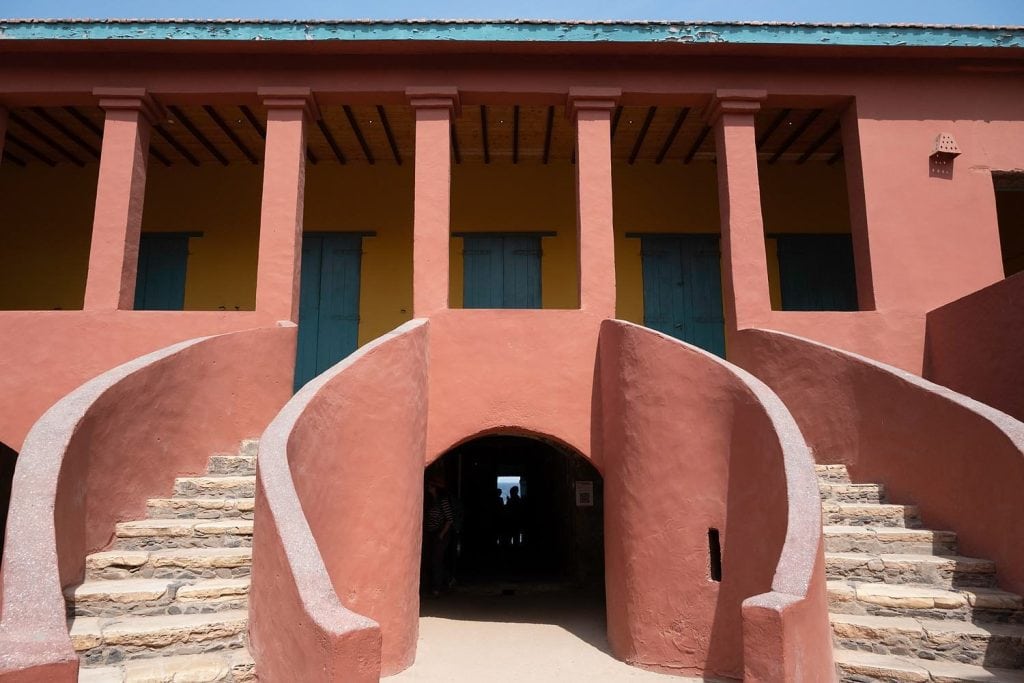
In the south-east, the city of memory. The Plateau is best explored on foot, ideally in the morning: Place de l’Indépendance, Kermel Market under its covered hall, the cathedral, then the museums. The Théodore Monod Museum of African Art and the Museum of Black Civilisations, the newer of the two, complement each other well: one for the historical collections, the other for the grand story of the continent. For the feel of the markets, see our page on Dakar’s iconic markets. From the jetty, the ferry leaves for Gorée Island and its House of Slaves (Maison des Esclaves): it is the most booked outing in the capital, and it is all the better with a guided tour.
In the centre, the living city. The Médina, with the Great Mosque, its tailors’ workshops and its street food, is best experienced with someone who grew up there. This is the territory of neighbourhood walks, Senegalese cooking workshops and dance or drumming classes. On the south coast, Soumbédioune beach sees the pirogues come in late in the afternoon, and the craft village next door brings together sculptors and jewellers; further east, Anse Bernard offers a patch of beach right in the centre. For some greenery, the Hann Forest and Zoological Park gives families room to breathe.
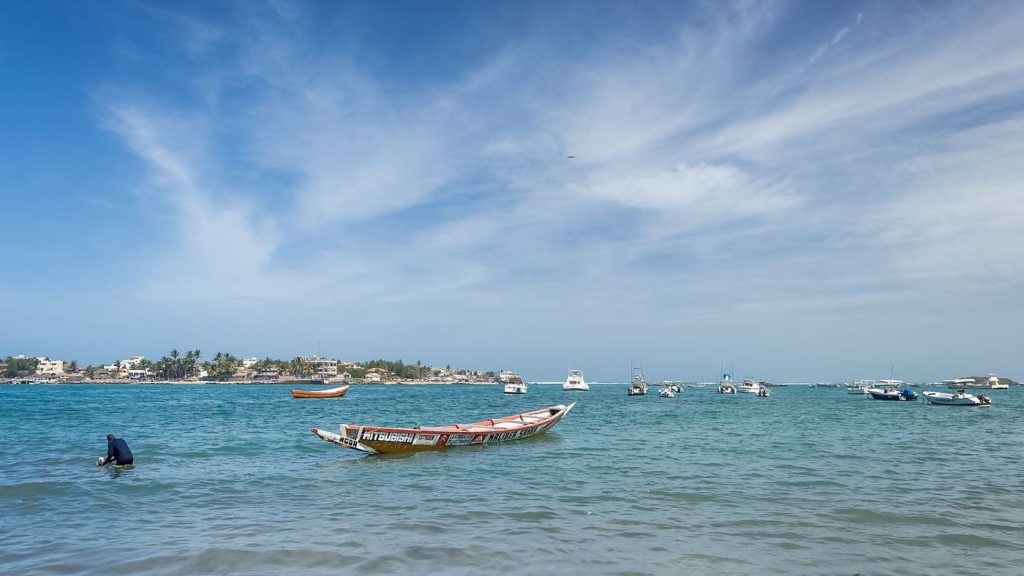
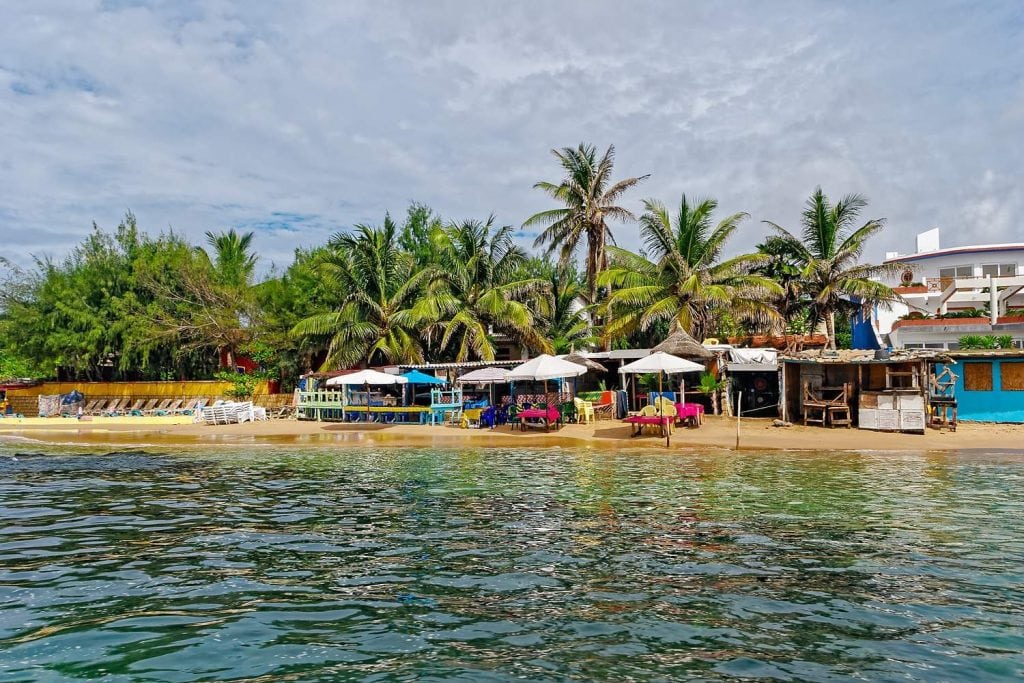
In the west, the city of the ocean. The Corniche Ouest is made for running, cycling or driving with the windows down. It leads to the Mosque of the Divinity, the African Renaissance Monument and the Mamelles Lighthouse, whose view takes in the whole peninsula. Offshore, the Madeleine Islands National Park can be visited on an organised trip. At the Almadies and Ngor, it is time for surfing (the peninsula’s waves work all year round, on one side or the other depending on the swell), sea fishing, boat trips and the crossing to Ngor Island, a few minutes by pirogue from Ngor beach.
2026, the year Dakar changes pace
The TER to the airport. Since Monday 28 September 2026, phase 2 of the Regional Express Train has extended the line from Diamniadio to Blaise Diagne International Airport, adding 19 kilometres. You can now reach Dakar station from AIBD in just under an hour, without relying on the motorway. For travellers this is a real change: arrivals and departures no longer depend on the traffic. All the practical details are in our article on the TER now serving Blaise Diagne airport.
The Youth Olympic Games. From 31 October to 13 November 2026, Dakar hosts the first Olympic event ever held in Africa, shared with Diamniadio and Saly. In the city, several events take place at the Iba Mar Diop complex, the Tour de l’Œuf and on the Corniche Ouest. During that fortnight, expect a city in festive mood, but also altered traffic and accommodation in high demand: book your activities early and favour the train and walkable areas.
The Biennale. The 16th edition of the Biennale of Contemporary African Art (Dak’Art, the Dakar Biennale) also takes place in 2026; when it is in full swing, galleries, “off” venues and studios open their doors all over the city.
When to go
| November to February | Dry season and the mildest period; the harmattan can bring dust; the main swell season for surfing |
| March to June | Still dry, pleasant wind and air on the coast, the heat building towards the end of the period |
| July to October | The rainy season (hivernage): humid heat, sometimes violent downpours, a greener city and fewer visitors |
| Late October – mid-November 2026 | Youth Olympic Games: a unique atmosphere, logistics to plan ahead |
Within the day, two time slots are worth their weight in gold: early morning, before the heat and the traffic, for walking tours and surfing; and late afternoon, when the Corniche fills up and the sun sets over the Almadies. Early on Friday afternoon, the hour of the main weekly prayer slows the city down: a good moment for an activity on the water. To plan around it, our page on prayer times in Dakar can help.
Getting there and getting around
From Blaise Diagne airport there are two options: the TER, now direct to the centre, or the toll motorway, an hour or more depending on the time of day. For a door-to-door transfer, the airport / Dakar category brings together the bookable offers. In town, agree the taxi fare before you get in, ride-hailing apps spare you the haggling, and the BRT, the rapid bus on its own dedicated lane, crosses the city from the centre to the suburbs. For the Plateau, the Médina and the Corniche, walking is still the best way to see things.
Practical tips
Keep small notes: taxis, markets, the ferry and tips are often paid in cash. Only swim at authorised, supervised beaches: the Atlantic around the peninsula is powerful, and swimming is banned along several stretches; Ngor and Yoff offer the safest options, while the Almadies are best kept for sunsets. At the Gorée jetty and around the sites, politely turn down the services offered on the spot: a tour booked in advance spares you the negotiation. Cover up to enter mosques, bring a hat and water on the Corniche, and keep an eye on your phone in crowds. For a ready-made plan, our ideal three-day Dakar itinerary sets it all out day by day.
Nearby
The city has its getaways close at hand, each with its own page: Gorée opposite the port, Lac Rose (Pink Lake) to the north-east for dunes and salt, Rufisque and Diamniadio on the airport road, Toubab Dialaw and its cliffs further south. For the bigger picture of the metropolitan area, from the suburbs to the region’s escapes, see the Dakar Region page.
Book an activity in Dakar with QFS
Dakar is the best-stocked place on the site. To discover the city, see the guided cultural tours and the island excursions (Gorée, Ngor, Madeleine). On the ocean side, there are surf lessons & camps, boat trips (sunset, islands & sport fishing), sport fishing and diving & snorkelling. To get hands-on with the culture, try Senegalese cooking classes, drumming workshops, African dance classes, crafts & traditional skills and Senegalese wrestling. And to unwind, traditional massage and the whole wellness & relaxation range. You pay 20% to secure your booking (the booking fee), and the balance is paid on site, on the day. Official fees, such as the Gorée ferry and tax or a museum ticket, are payable on site and not included in the price. If you live in Senegal, you get the resident rate: up to 30% off depending on the activity.
Frequently asked questions
How many days do you need to discover Dakar?
How do you get from the airport to central Dakar?
Are the Dakar 2026 Youth Olympic Games held in the city?
Where can you swim in Dakar?
Are there fees to pay on top of the activities?
What is the difference between this page and the Dakar Region page?
Sénégal travel news
Latest news
Discover the latest trends and tips for traveling in Senegal. From cultural tourism to outdoor activities, stay informed about events and news that will enrich your stay.
Dakar 2026 Youth Olympic Games: your guide to Africa’s first Olympic Games, from the stands
Prayer times in Senegal: understanding the five daily prayers, from Dakar to Touba
TER Dakar–AIBD: the train finally serves the airport, and how to make the most of it
Great Mosque of Touba: entering the holy city as a guest
Podor: the gum arabic trading post at the end of the river
Mamelles Lighthouse: Dakar’s oldest watchman, at the top of the city
Lac de Guiers: the great lake that keeps Dakar supplied with water
Éloubaline Island: at the end of the creek, the houses that drink the rain
Mar Lodj: the Saloum island with no roads, no ticket office and no borders between faiths
Djifère: the end of the road, facing Sangomar
Niodior: the Saloum island many people read about before they see it
Dionewar: the Gandoul island that faces the ocean
Missirah: the fishing village with the giant kapok tree, at the far end of the Saloum
Sipo Island: the island that had a queen, across the water from Toubacouta
Wendaye Island: crossing a Diola island on foot, from the pirogue to the rice paddies
Pointe Saint-Georges: the end of the track where you watch for manatees
Boucotte: where the beach at Cap Skirring turns wild again
Édioungou: the village where *bolong* clay becomes a jar
Diakène: the gateway to the mangroves, between the Cap Skirring road and Egueye Island
Egueye Island: an island with no village, where the mangrove has the last word
Ourong Island: the end of the chain, where the Casamance islands run out
Katakalousse: the bridge on the Cap Skirring road, and the pirogue to the islands
Cachouane: the peninsula where the Casamance stops running
Kadioute: not an island, but a Diola museum among the roots of a kapok tree
Djilapao: a sculpted house at the end of a *bolong*
Mlomp: two-storey houses of raw earth, in the shade of kapok trees
Niokolo-Koba National Park: Senegal’s great wild bush, which owes you nothing
Dindéfélo Falls: the waterfall the villages chose to keep
Énampore: the house that drinks the rain, at the end of the Bandial road
Guembeul Reserve: on foot among the gazelles the Sahel had lost
Simal: the village on the bolong, at the end of the tann track
Hann Bel-Air: the bay Dakar damaged and is trying to repair
Ngor Beach: the village beach, between pirogues, the landing point and evening football
Anse Bernard: the Plateau’s only beach, and the one Dakar nearly lost
Ndianda: the Serer village you drive through without seeing, ten minutes from Joal
Carabane Island: reading Casamance’s former capital on foot
Lompoul desert: a little Sahara best experienced at sunset
Langue de Barbarie National Park: the park the sea redraws every year
Djoudj National Bird Sanctuary: the pelican haven that almost drowned under a fern
Nguéniène market: on Wednesdays, the Serer bush does its shopping (and you are invited)
Tortoise Village (Village des Tortues) in Noflaye: the African spurred tortoise’s waiting room
Popenguine Nature Reserve: the bush that women brought back to life
Joal-Fadiouth: the island where people are buried together, and the town where Senghor was born
The Somone lagoon: the mangrove that local people replanted
Hann Park: come for the forest, the zoo is not the point of the outing
Ngor Island: one island, two faces, and it is up to you to choose yours
Write to us: a real team, here in Senegal, will reply
Live in Senegal? The resident rate is made for you
Register your activity: we will take care of making it bookable
AFCON 2025: winners in Rabat, a title under appeal, and a country that lives for football
Dak’Art 2026: a month to see Dakar through its artists, from 19 November to 19 December
Saint-Louis Jazz Festival: five May nights when the whole island starts to swing
African Renaissance Monument: contested before it even stood, now Dakar’s landmark
Gorée Island: it is not one house that is listed, but the whole island
Lac Rose (Pink Lake): at Lake Retba, everything comes down to salt
Sine-Saloum Delta: a delta listed for its shells as much as for its mangroves
Madeleine Islands: the park you visit to take nothing away
Fathala Reserve: the Saloum forest where you come looking for the Derby eland
Bandia Reserve: a rebuilt savannah, from giraffes to the griots’ baobab
Mosque of the Divinity: the mosque born of a dream, set on the ocean’s edge at Ouakam
The Mamelles Lighthouse: Panorama and History of Dakar
Dakar’s markets: six markets, six ways to read the city (and to haggle)
House of Slaves, Gorée: what the door helps you understand
Great Mosque of Dakar: one minaret, three stories, and respect above all
Museum of Black Civilisations: a 1966 dream that opened in 2018
Théodore Monod Museum: West African art up close, in the calm of the Plateau
How to book your activity in Senegal
3 days in Dakar: a day of memory, a day of ocean, a day in working-class Dakar
What to do in Dakar Region? Pick what you feel like, we will show you where to go
Bringing Senegal to life? We bring you the people who want to experience it
About us: Senegal to do, not just to see
Saly and the Petite Côte: pick what you feel like, then get out of the resort
Frequently asked questions: booking an activity in Senegal
What to do and see in Senegal: our iconic places, region by region
Our partners: the people who bring Senegal to life, one activity at a time
General Terms and Conditions of Sale
Book a private activity in Senegal for your group